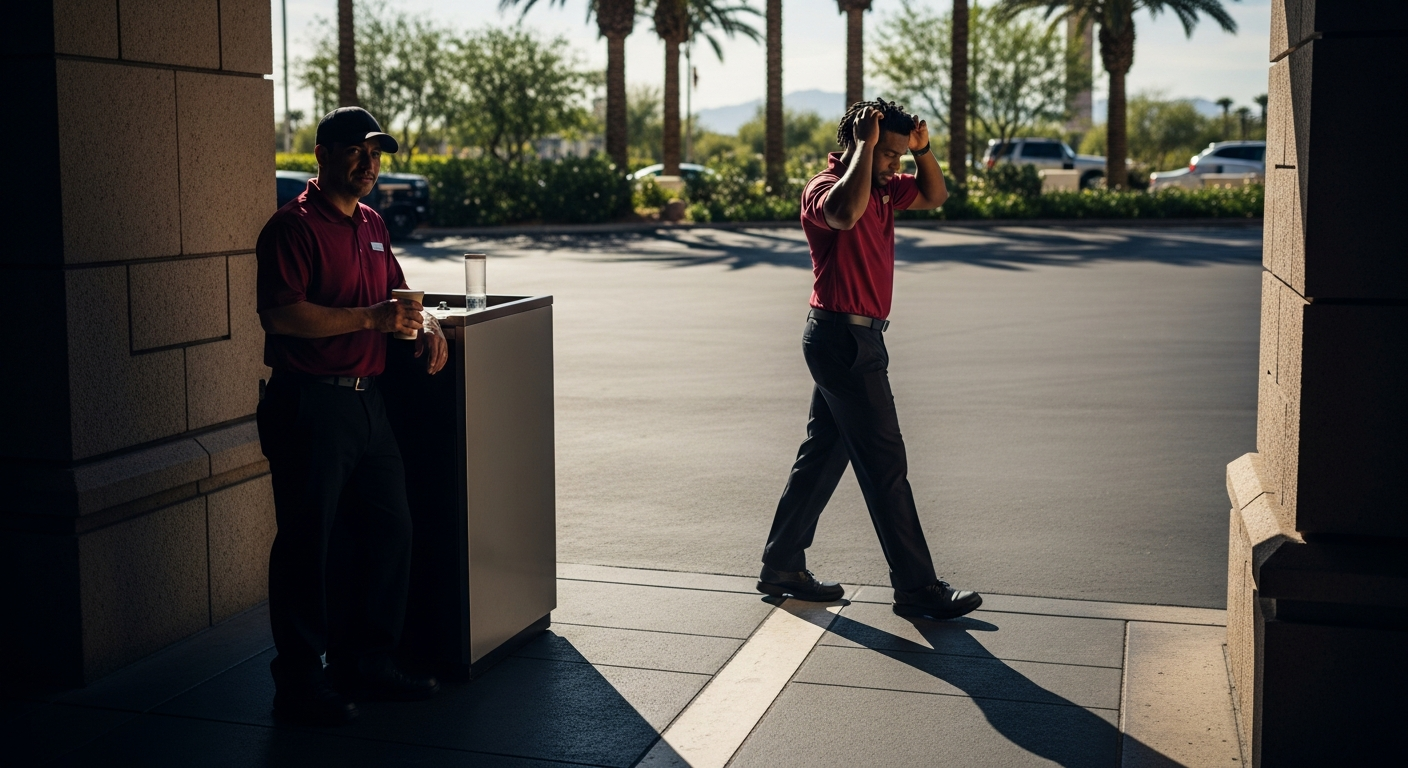
Las Vegas heat isn’t just uncomfortable; it’s sending more people to the hospital on a routine basis. Medical providers across the valley are seeing clear spikes in serious injuries tied to rising temperatures. The University Medical Center (UMC) recently reported 22 pavement-burn hospitalizations in June, more than double the expected 10 cases. That jump is a blunt warning for anyone spending long stretches outdoors through the summer. For hospitality workers who bounce between air-conditioned buildings and scorching sidewalks all shift, the hazard deserves real attention and better daily preparation.
Many hotel, restaurant, valet, pool, nightlife, and casino employees work in short bursts of intense exposure. Instead of staying outside all day like construction crews, they face repeated, rapid temperature swings. That structural difference in the workday makes the physical dangers easy to underestimate or shrug off. While the leisure and hospitality sector carries an overall injury rate of 4.3 cases per 100 employees across all workplace hazards—including slips, cuts, and strain—extreme summer weather adds a compounding thermal demand that can quickly become a medical emergency.
Why Las Vegas Heat Hits Hospitality Workers Differently
Kitchens, Loading Areas, Sidewalks, and Pool Decks Create Layered Exposure
Hospitality work often stacks indoor heat, outdoor heat, and hard-surface exposure into repeated transitions. In a single shift, a worker might move between a hot kitchen, an enclosed dish pit, an unshaded loading dock, and a busy valet stand. They may also supervise parking lots, manage outdoor event lines, patrol pool decks, or clean smoking patios without much recovery time. Those varied zones create overlapping layers of radiant heat from pavement and reflected glare off large glass buildings. The stakes are real: federal data shows 265 fatal work injuries recorded in the leisure and hospitality sector during 2023.
Early-Season Heat Waves Can Catch Crews Off Guard
Dangerous summer conditions often arrive before local crews have fully adjusted to the desert climate. Recent forecast models make the point, with the National Weather Service warning of major heat risk for the Las Vegas Valley. When extreme temperatures land early in the season, bodies lack the 1 to 2 weeks of gradual exposure needed to fully acclimatize. Workers can suddenly find themselves sweating heavily, losing electrolytes, and struggling to keep their normal pace of service. Supervisors and staff have to stay alert during those first spikes to head off illness across departments.
Local government takes these early warnings seriously through public safety measures. Recognizing the danger, Clark County has activated cooling stations across the valley to give relief to vulnerable residents. Hospitality professionals should read those municipal actions as a clear signal that their own outdoor work environments are hazardous too. Operating in triple-digit weather isn’t a simple inconvenience; it’s a recognized public health threat that calls for proactive adjustments. Taking extra precautions during declared high-heat periods matters for anyone working long shifts outside.
| Role | Common Heat Sources | Less Obvious Risk | Why It Matters |
| Line cook / dishwasher | ovens, grills, steam, poor ventilation | stepping outside on break into 110°F heat | the body has little time to cool |
| Valet / bell staff | asphalt, sun exposure, running between cars | heat radiating up through pavement | dehydration and heat exhaustion can build fast |
| Pool staff | direct sun, reflected glare, concrete deck | long hours with limited shade | burns and dehydration |
| Housekeeping / laundry | hot laundry rooms, stairwells, pushing carts | closed indoor spaces with poor airflow | overheating without direct sun |
| Security / guest services | indoor/outdoor patrols, entrances, queue management | heat spikes during crowd control | symptoms may be missed as ordinary fatigue |
The Main Heat Illness Warning Signs Workers Should Not Ignore
Early Signs Often Look Like an Ordinary Rough Shift
So how do you tell a normal rough shift from the start of something serious? Recognizing the first symptoms of heat stress can save a worker from a real medical event. The trouble is that early warning signs often look like the plain fatigue you feel after a rough double. Workers frequently notice warning signs such as dizziness or simply feeling unwell, yet brush them off as normal exhaustion. Thirst, minor headaches, irritability, and muscle cramps are common signs the body is losing its battle with the heat, and ignoring them can let mild dehydration escalate into a crisis.
The body can only sustain elevated internal temperatures for a limited time before major organs begin to fail. Local health statistics show the grim reality of prolonged exposure in Southern Nevada. The Southern Nevada Health District recently reported 284 heat-associated deaths in Clark County last year, a stark measure of the desert climate’s lethal potential. If you feel lightheaded or unusually tired, name it and speak up early. Reporting physical discomfort is a key prevention strategy, and management should never discourage it.
When Symptoms Move Into Dangerous Territory
When early symptoms get ignored, the condition can advance into a medical emergency fast. Staff should know the moment simple exhaustion tips into true physiological distress. Medical professionals consistently point to heavy sweating, dizziness, nausea, muscle cramps, and confusion as markers of severe illness. Fainting, a racing pulse, or skin that feels unusually hot and dry signals that a worker needs immediate medical care. If you spot a coworker showing any of these neurological or physical changes, step in and stop the work.
Stop Work and Get Help Immediately If You Notice:
- confusion or disorientation
- fainting or near-fainting
- vomiting
- chest pain
- severe weakness
- skin that feels very hot
- symptoms that get worse quickly instead of improving in shade or air conditioning
Pavement Burns Are a Real Workplace Hazard in Las Vegas
Why Asphalt, Concrete, and Pool Deck Surfaces Become Dangerous
Air temperature doesn’t come close to reflecting the thermal energy radiating off the ground. Dark pavement, concrete walkways, and exposed pool decks soak up huge amounts of solar radiation over the course of a day. That trapped energy turns ordinary walking surfaces into serious contact hazards for anyone who falls or kneels. The danger isn’t hypothetical, as the surge in pavement-burn hospitalizations at UMC shows. A worker who suddenly gets dizzy and collapses onto asphalt can suffer catastrophic skin injuries in seconds.
Which Hospitality Workers Face the Highest Contact-Burn Risk
Certain roles keep people moving across superheated outdoor surfaces during the brightest hours of the day. Valets crossing blacktop over and over, and cabana staff pacing hot deck surfaces, face continuous, direct exposure. Maintenance crews and groundskeepers often spend hours in unshaded outdoor corridors where airflow is limited. OSHA severe injury reporting data underscores the physical toll these jobs can take. Nightclub event staff working long outdoor queues face real risk too, as heat radiates upward off concrete sidewalks.
Why Closed Shoes Matter More Than Many People Realize
Proper footwear is the first line of defense against unforgiving desert pavement. Open shoes, thin soles, and quick trips outside can feel harmless, yet they raise the odds of a contact injury. Medical experts treating the recent spike in local injuries note that public-health advice includes wearing closed shoes outdoors to prevent direct skin contact. Thick rubber soles put needed insulation between the foot and the baking asphalt of a parking lot. Employers should enforce footwear policies that put closed-toe protection ahead of purely cosmetic uniform rules.
What Actually Helps Before and During a Hot Shift
Hydration Has to Start Before You Feel Thirsty
Proactive hydration is a different thing from downing one glass of water at lunch. Medical experts stress that thirst lags well behind the body’s actual fluid loss during a demanding shift. Health officials strongly advise outdoor workers to drink water before they feel thirsty to keep internal fluid levels safer. Steady, consistent intake through the day beats gulping a large amount all at once.
Cooling Breaks Work Best When They Are Planned, Not Delayed
Scheduled rest periods are practical tools for managing prolonged heat exposure on the job. Rotating tasks often lets team members step out of direct sun and bring their body temperature down. Supervisors should encourage staff to take breaks at shaded cooling stations before exhaustion sets in. Short recovery periods in indoor, air-conditioned spaces help the cardiovascular system return closer to baseline. Asking for a brief break early beats waiting until symptoms intensify and force an emergency response.
Clothing and Footwear Are Safety Equipment, Not Just Uniform Details
Uniform requirements should account for the reality of working outdoors in the desert. Breathable fabrics belong at the top of the list wherever employer policies leave room for flexibility. Occupational safety specialists often recommend that workers wear loose clothing to reduce sun exposure while letting sweat evaporate. Swapping out sweat-soaked layers midway through a double can head off skin irritation and improve comfort. Keeping backup water, electrolyte packets, and a wide-brimmed hat on hand adds protection against unpredictable afternoon spikes.
Supervisors Matter Because Heat Illness Often Shows Up in Behavior First
Leadership on the floor plays a big role in catching heat illness early. Because cognitive function slips as internal temperature rises, coworkers and managers often notice behavioral changes before the affected person does. The financial case for prevention is strong too, given the average workers’ compensation claim cost of $9,500 for hotel operations. Watch for unusual silence, unexpected stumbling, noticeable irritability, or slowed speech during routine guest interactions. A buddy system helps ensure team members keep an eye on each other and react quickly when someone looks disoriented or overly fatigued.
How Nevada Heat Rules Shape Workplace Safety Conversations
Heat Planning Is Becoming a More Public Workplace Issue
The conversation about workplace safety in extreme weather is widening fast across Nevada. Local jurisdictions increasingly recognize that leaning on individual responsibility alone won’t reduce severe climate risk. Current reports say regional officials intend to implement heat mitigation plans that include public cooling stations and drinking water. That legislative momentum reflects a growing view that extreme summer temperatures pose a systemic threat needing organized solutions. Hospitality businesses are increasingly expected to align their internal safety protocols with these broader community protections.
What Workers Can Reasonably Raise With an Employer
Talking about environmental safety with a manager doesn’t have to feel adversarial. You can frame these conversations around practical adjustments that improve both safety and service. With Las Vegas expected to see 110-degree heat, raising the question of shaded rest areas is entirely fair. You can reasonably request guaranteed access to drinking water, structured rotation schedules for outdoor tasks, and safer footwear expectations. Tie those requests to sustained productivity and hazard prevention, and supervisors tend to see that protecting the crew helps the whole operation.
What To Do If Heat Illness, Burns, or Dehydration Happen During a Shift
First Steps on the Job
Knowing how to respond when symptoms hit can keep a manageable situation from turning catastrophic. The first move is to tell a supervisor right away instead of trying to push through. BLS compensation data shows employers already budget for the benefits and insurance systems that address occupational injuries. If you’re in distress, get to a cooler, air-conditioned area immediately and seek a formal medical evaluation if symptoms persist. Note when symptoms began, where you were working, and who witnessed it, since that record matters later.
Why Reporting and Medical Documentation Matter
A condition tied directly to workplace exposure gets harder to address later without a prompt, official report. Medical professionals warn that extreme heat can quickly dehydrate the body and cause swelling and fatigue before a person realizes they are overheating. Because dehydration and heat exhaustion can seem temporary, workers sometimes head home without telling management. Those conditions can worsen overnight, though, leading to complications that put someone in the hospital the next day. Filing a timely report helps make sure any later treatment is properly connected to the occupational hazard that caused it.
Understanding Your Options After a Work-Related Heat Incident
Sorting out the aftermath of a work injury takes accurate information and clear guidance. Because Las Vegas temperatures routinely reach around 110 degrees, these incidents are common and legally recognized. If a heat-related condition happens on the job, workers may want to understand how hospitality industry workers’ compensation works in Nevada. Shook & Stone’s Las Vegas workers’ compensation team provides educational information about reporting the incident, seeking covered medical care, understanding wage-loss benefits when time off is needed, and consultation options for local hospitality employees. Recognizing these safeguards empowers you to make well-informed choices regarding your health and career.
A Safer Shift Starts With Taking Heat Seriously Early
The local climate means hospitality roles carry predictable physical risks. Public health data keeps proving the danger, advising people to keep children and pets off hot surfaces during peak heat hours; that warning applies just as much to adults working on those same surfaces. Las Vegas hospitality workers face a complex mix of indoor and outdoor exposure that’s easy to underestimate mid-shift. Closed shoes, consistent hydration, and planned cooling breaks give you practical protection against these extremes. In this industry, heat safety isn’t about overreacting to summer; it’s about recognizing when routine work conditions stop being routine and acting before a hard shift turns into a medical emergency.