
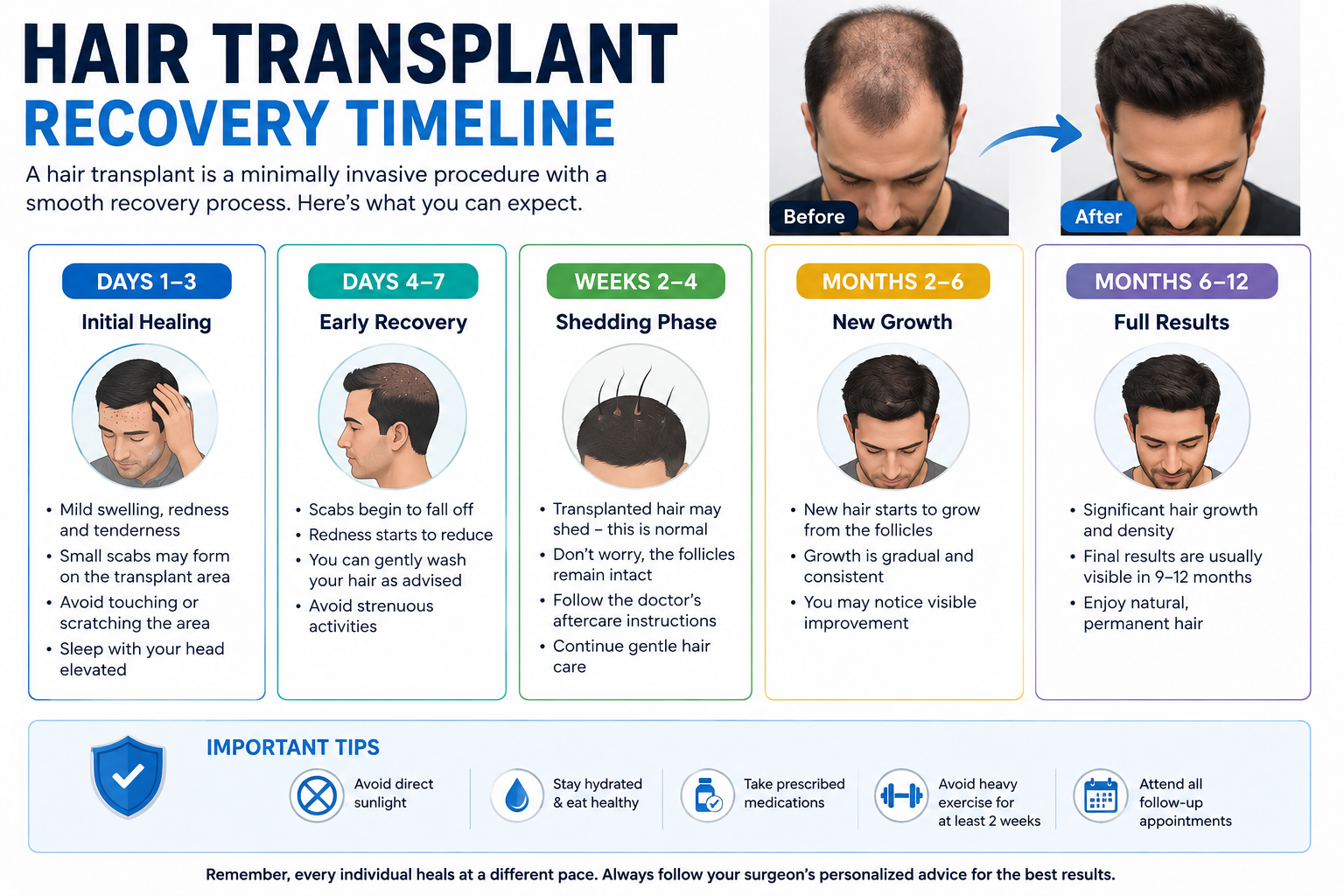
A successful result depends as much on what happens after surgery as on what happens during it. The hair transplant recovery process includes a short period of visible healing, temporary shedding, and several months of gradual regrowth. Knowing what to expect helps you protect the grafts, plan time away from work, and avoid unnecessary concern.
How Long Does Recovery Take?
Many patients ask, “How long is hair transplant recovery?” The scalp often looks noticeably better within 7 to 14 days, but the follicles need much longer to produce mature hair. Your hair transplant recovery time will depend on the technique used, the number of grafts placed, your skin response, and how closely you follow medical guidance. These same factors also affect cost, which is one reason many patients travel to Turkey, where clinics often offer procedures at lower rates than in Europe or North America. If you are comparing hair transplant turkey price packages, check whether post-operative care, medications, the first hair wash, and follow-up support after you return home are included.
Most people can return to work within a few days if their job is not physically demanding. Redness, swelling, and small scabs may remain visible during the first week. Full results are commonly assessed around 12 months.
The First 48 Hours
The first two days are the most important for protecting newly placed grafts. Mild soreness, tightness, redness, or swelling may occur in the donor and recipient areas. These changes are expected parts of the healing process, but worsening pain, heavy bleeding, fever, or drainage should be reported to your doctor.
Follow these practical steps:
- Avoid touching, scratching, or rubbing the transplanted area.
- Take prescribed medicines exactly as directed.
- Sleep with your head elevated to help limit swelling.
- Avoid bending deeply, lifting heavy objects, and strenuous exercise.
Days Three Through Seven
Swelling may move toward the forehead before it improves. Small crusts can form around individual grafts, while the donor area may feel tight or tender. During this stage, the grafts remain vulnerable to friction and impact.
Your clinic may allow you to gently wash the scalp after the first few days. Use lukewarm water, avoid strong water pressure, and do not pick at crusts. When instructed to wash your hair, apply the recommended cleanser with light contact instead of rubbing with your fingertips.
Days Eight Through Fourteen
By the second week, swelling usually decreases, and many scabs begin to loosen. Redness can last longer in people with fair or sensitive skin. Everyday activities may become easier, but you should still protect the scalp from direct sun, helmets, tight hats, and accidental contact.
During a follow-up appointment, Dr. Antonio Aguilar may check graft healing, donor-area recovery, and any signs of irritation. Ask when you may resume styling products, wear fitted headwear, or increase physical activity.
| Early Recovery Stage | What You May Notice |
| Days 1–3 | Tenderness, redness, and possible swelling |
| Days 4–7 | Crusting, itching, and visible graft sites |
| Days 8–14 | Less swelling and gradual scab release |
| Weeks 3–4 | Temporary shedding of implanted hairs |
Weeks Three Through Four
Temporary shedding often begins several weeks after the hair transplant procedure. This can feel alarming, but the visible shafts may fall while the follicles remain under the skin. The same stress response can sometimes affect existing hair near the treated region.
This phase is part of the normal hair growth cycle. It does not usually mean the grafts have failed. Avoid judging the outcome during this period because little visible growth may occur for several weeks.
Continue basic hair care without aggressive brushing, chemical treatments, or scratching. Ask your surgeon before using dyes, clippers, or strong styling products near healing skin.
Months Two Through Six
Months two and three may bring relatively little visible change. Some patients experience uneven early growth, fine hairs, or temporary patchiness. New strands commonly become more noticeable during the following months.
A general hair transplant recovery timeline may look like this:
- Months 2–3: Limited visible change while follicles rest.
- Months 4–6: New hairs begin to emerge and lengthen.
- Months 7–9: Coverage and texture become easier to evaluate.
- Months 10–12: Thickness and styling options continue improving.
Returning to Normal Activities
Desk work may be possible after several days, while jobs involving dust, heat, helmets, heavy lifting, or physical contact may require more time. Your surgeon should decide when exercise, swimming, and demanding work are safe.
Resume activities in stages:
- Start with light walking and avoid heavy sweating.
- Delay contact sports until the scalp is fully protected.
- Avoid pools and hot tubs while the scalp is still healing.
- Use sun protection once your clinician approves it.
Do not rush your recovery simply because the scalp looks better. Surface healing and follicle stability are related but not identical.
When Will the Final Result Appear?
Early strands may be thin, light, or uneven. They usually become stronger as the months pass. Changes in hair density are easier to evaluate after several growth cycles rather than during the shedding stage.
The final appearance depends on graft survival, placement, hair caliber, curl, color contrast, and future loss in untreated areas. Natural-looking results require sound surgical planning and realistic expectations. Compare progress through consistent monthly photos rather than daily mirror checks.
By Tom Oakley



