
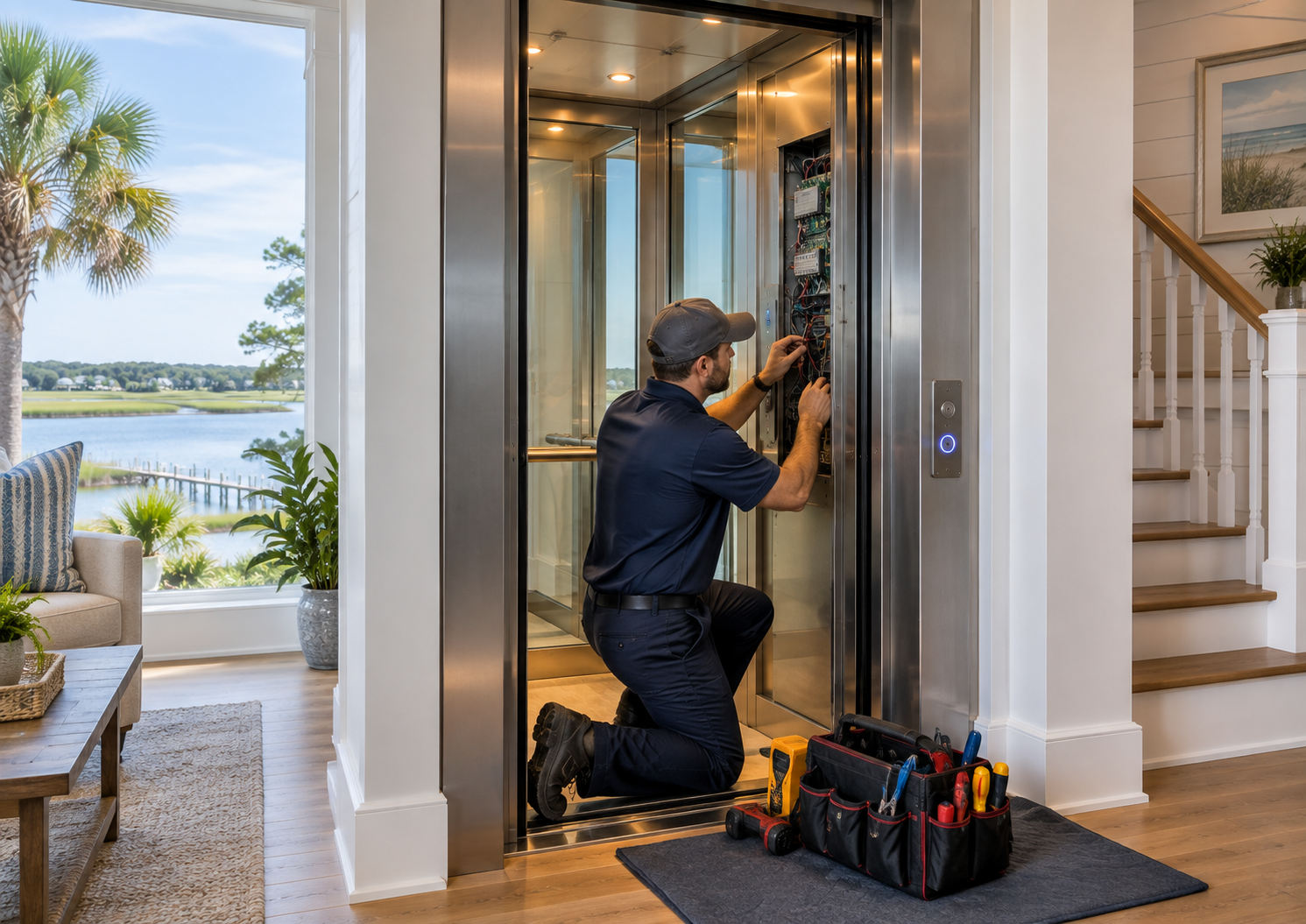
A residential elevator can make a multi-story home more convenient, accessible, and comfortable. For homeowners throughout South Carolina, particularly in coastal communities where elevated homes are common, elevators can simplify everyday movement while supporting long-term aging-in-place plans.
Like any mechanical system, however, a home elevator requires routine maintenance. Regular professional service helps identify wear, verify that safety components are functioning properly, and keep the elevator operating smoothly. South Carolina’s heat, humidity, and coastal conditions can make preventive maintenance particularly important.
So, how often should a residential elevator be serviced? There isn’t one schedule that applies to every system. The appropriate frequency depends on the elevator type, manufacturer recommendations, usage, age, installation environment, and condition.
Why Residential Elevator Maintenance Matters
A residential elevator contains numerous mechanical, electrical, and safety components working together. Even when an elevator appears to operate normally, individual components can gradually wear or require adjustment.
Routine maintenance allows a trained technician to inspect the system and identify potential concerns before they become larger problems.
Regular service can help with
- Reliable elevator operation
- Early identification of worn components
- Proper door operation
- Safety-system testing
- Smoother starts and stops
- Reduced likelihood of unexpected downtime
- Longer equipment life
Maintenance should therefore be viewed as part of normal elevator ownership rather than something homeowners arrange only after a problem occurs.
How Often Should You Schedule Elevator Service?
The correct maintenance interval should primarily follow the elevator manufacturer’s recommendations and the advice of a qualified service professional familiar with the specific system.
Some residential elevators may need professional attention every six months, while other systems or operating conditions may justify more frequent inspections or service.
Factors that can influence the schedule include
- Elevator technology
- Age of the equipment
- Frequency of use
- Number of floors served
- Installation environment
- Manufacturer requirements
- Previous repair history
- Coastal exposure
A heavily used elevator in a waterfront home, for example, may have different maintenance needs than a lightly used indoor elevator in a climate-controlled property.
South Carolina’s Coastal Climate Deserves Attention
Environmental conditions are particularly relevant for residential elevators in coastal South Carolina.
Communities such as Charleston, Hilton Head Island, Bluffton, Beaufort, and surrounding Lowcountry areas experience humid conditions for significant portions of the year. Properties closer to saltwater may also experience greater exposure to salt-containing air.
Humidity and moisture can contribute to corrosion and deterioration of certain components, especially when equipment is installed outdoors or in semi-exposed areas.
Technicians servicing coastal elevators may need to pay particular attention to metal components, electrical connections, doors, fasteners, rails, and areas where moisture can accumulate.
Outdoor Elevators May Require More Attention
Outdoor residential elevators are popular additions to some elevated coastal homes because they can provide convenient access between ground level and upper living spaces.
However, exterior installations experience much greater environmental exposure.
Depending on their location, they may encounter
- Humidity
- Rain
- Salt-containing air
- Temperature fluctuations
- Wind-driven moisture
- Dust and debris
For this reason, homeowners with exterior elevators should discuss an appropriate preventive maintenance schedule with their service provider.
Regular inspection can help identify early corrosion, weather-related deterioration, or other environmental issues before they affect elevator operation.
What Happens During Residential Elevator Maintenance?
The exact maintenance procedure varies depending on the elevator’s design and manufacturer requirements. A professional technician will typically inspect several important parts of the system.
This may include checking doors, gates, interlocks, controls, electrical equipment, mechanical components, emergency features, and overall operating performance.
The technician may also look for unusual noises, excessive vibration, signs of wear, loose components, or evidence of moisture and corrosion.
Where appropriate, components may be adjusted or lubricated according to manufacturer specifications.
The objective isn’t simply to make sure the elevator moves. The technician evaluates whether the complete system is operating as intended.
Pay Attention to Elevator Doors
Doors and gates are among the components homeowners interact with most frequently.
If a door doesn’t close correctly or an interlock isn’t functioning properly, the elevator may not operate as expected.
Homeowners should pay attention to changes such as doors becoming difficult to open, unusual noises during operation, inconsistent closing, or the elevator refusing to move after the door appears closed.
These issues shouldn’t be forced or addressed through DIY repairs. A qualified elevator professional should evaluate unusual door behavior.
Don’t Wait for the Elevator to Break Down
One of the biggest mistakes homeowners can make is treating elevator maintenance as repair-only service.
An elevator may continue operating while certain components gradually deteriorate. Waiting until the system stops working can turn a manageable maintenance concern into unexpected downtime or a more complicated repair.
Preventive maintenance provides an opportunity to catch developing issues earlier.
If you’re searching online for an elevator maintenance company near me, look beyond emergency repair availability. Ask whether the provider offers scheduled preventive maintenance and has experience servicing your specific residential elevator model.
Signs Your Elevator May Need Service Sooner
Even when you have a regular maintenance schedule, certain changes should prompt a professional inspection rather than waiting until the next planned visit.
Watch for signs such as
- Unusual grinding or squeaking noises
- Increased vibration
- Jerky movement
- Inconsistent leveling at floors
- Slow or irregular doors
- Unresponsive controls
- Unexpected stops
- Visible corrosion
- Moisture near elevator equipment
- Changes in ride quality
Homeowners shouldn’t attempt to diagnose internal mechanical or electrical problems themselves.
If the elevator begins behaving differently from normal, contact a qualified professional.
Maintenance Needs Vary by Elevator Type
Not every residential elevator uses the same technology.
A Lift Elevator may use hydraulic, traction, cable-driven, pneumatic, or another residential drive configuration. Each system has different mechanical components and maintenance requirements.
Hydraulic systems, for example, have different service considerations from traction or pneumatic systems. This is why generic maintenance advice can’t replace the service recommendations for the actual equipment installed in your home.
When hiring a service provider, confirm that its technicians are familiar with your elevator manufacturer and technology.
Older Elevators May Need Closer Monitoring
The age of the elevator can also influence maintenance requirements.
As components age, normal wear may become more noticeable. Older systems may require adjustments, replacement parts, or upgrades to continue operating reliably.
Homeowners with older residential elevators should keep detailed maintenance records. These records can help technicians identify recurring issues and understand which components have already been repaired or replaced.
If repairs become increasingly frequent, a professional can also discuss whether modernization or replacement should be considered.
Keep the Elevator Area Clean and Dry
Homeowners can support professional maintenance by keeping elevator entrances and surrounding areas clean and free from unnecessary moisture.
Avoid storing objects where they could interfere with elevator doors or equipment. Exterior landings should have appropriate drainage so water doesn’t accumulate around the system.
If you notice water intrusion, condensation, rust, or unusual moisture around the elevator, arrange a professional inspection.
Do not open electrical cabinets or attempt to dry internal elevator components yourself.
Maintenance Is Important for Aging in Place
For homeowners who rely on an elevator because of mobility limitations, dependable operation becomes especially important.
An unexpected breakdown can temporarily restrict access to bedrooms, kitchens, entrances, or other essential parts of a multi-story home.
Preventive service can’t guarantee that a mechanical system will never experience a problem, but it can reduce avoidable issues and help keep the elevator properly maintained.
This makes routine servicing an important part of an aging-in-place strategy.
Choose a Company That Provides Long-Term Support
Maintenance should be considered before purchasing an elevator, not only after installation.
When comparing residential elevator companies, ask
- Do you provide ongoing maintenance?
- How frequently do you recommend servicing this model?
- Do you service the equipment you install?
- Are replacement parts readily available?
- Do you provide emergency repair service?
- Do you have experience with coastal installations?
- What maintenance does the manufacturer require?
Selecting an elevator supported by experienced technicians in your service area can make long-term ownership much easier.
Keep a Maintenance Record
Homeowners should maintain documentation of inspections, repairs, and routine service visits.
A simple maintenance record can include the date of each visit, work performed, parts replaced, recommendations made by the technician, and the planned date for the next service.
These records can be useful when diagnosing recurring issues or discussing future upgrades. They may also provide helpful information to a future homeowner if the property is sold.
Conclusion
So, how often should a residential elevator be serviced in South Carolina? The safest approach is to follow the manufacturer’s recommended maintenance schedule and guidance from a qualified residential elevator professional. Depending on the equipment, usage, age, and environment, service may be recommended every six months or at another appropriate interval.
South Carolina homeowners should pay particular attention to environmental conditions. Humidity, moisture, and coastal exposure can create additional maintenance considerations, especially for outdoor elevators and waterfront properties.
Whether you own a traditional home elevator or another type of Lift Elevator, preventive maintenance helps support reliable operation, safety, and long-term performance. If you’re searching for an elevator maintenance company near me, prioritize professionals with experience servicing residential equipment and, where relevant, South Carolina’s coastal environments.
Regular professional attention, combined with awareness of changes in elevator performance, can help keep your home elevator dependable and ready when your household needs it.



