
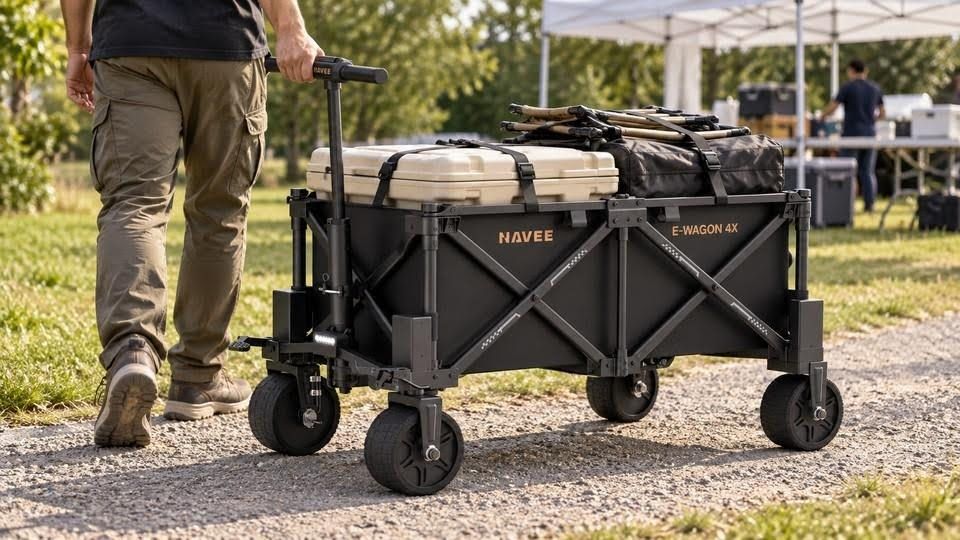
Moving coolers, folding tables, chairs, and canopy bags from a parking lot to an outdoor event space can be harder than the setup itself. Soft grass increases rolling resistance, while loose gravel can make a loaded wagon harder to steer.
The easiest approach is to choose a firm route, use a wagon suited to the terrain, and secure the equipment with heavy items low and centered. Keep each load manageable so you can move steadily without struggling through every rough patch.
Check Your Route
Spot Soft Ground and Loose Gravel
Walk the route before unloading. Grass can hide holes, sprinkler heads, and soft soil, especially after rain. Compacted gravel usually provides a firmer rolling surface than deep, loose stones.
Choose the most stable practical path, even if it is slightly longer. A shortcut through wet turf can cost more time and effort than a clear route around it.
Avoid Ruts, Obstacles, and Steep Slopes
Check for roots, drainage channels, curbs, narrow gates, and abrupt changes in surface height. Allow enough clearance for both the wagon and any long cargo.
Avoid slopes beyond the wagon’s operating limits and routes that require crossing an incline sideways. Confirm the venue’s unloading area and permitted access paths before moving supplies.
Choose a Suitable Wagon
Wheels and Tires for Uneven Ground
Small wheels that roll smoothly on pavement may struggle on grass or gravel. Larger wheels generally negotiate small bumps more easily, while wider tires can help distribute weight on soft ground. Performance still depends on tire construction, load, and surface conditions.
For mixed outdoor routes, consider all-terrain electric wagons with suitable tires, ground clearance, and controllable steering and braking.
| Feature | What it means for event setup |
| Wheel diameter | Influences how easily the wagon rolls over small obstacles. |
| Tire width and tread | Affect support and traction on soft or loose ground. |
| Ground clearance | Helps the underside clear roots and raised patches. |
| Cargo space | Determines whether bulky equipment fits securely. |
| Steering and braking | Help maintain control around obstacles and on permitted slopes. |
Load Capacity and Cargo Space
Check the transport weight limit and usable cargo dimensions. Coolers and canopy weights add substantial weight, while folding tables and canopy bags may be difficult to support even when the load is below the limit.
Use the moving load rating when separate static and dynamic capacities are provided. Also distinguish between cargo capacity and towing capacity, since they describe different uses.
When Electric Assistance Helps
Electric assistance is useful for long walks from parking, heavy supplies, and repeated setup trips. A manual wagon may be enough for a short route with a light load.
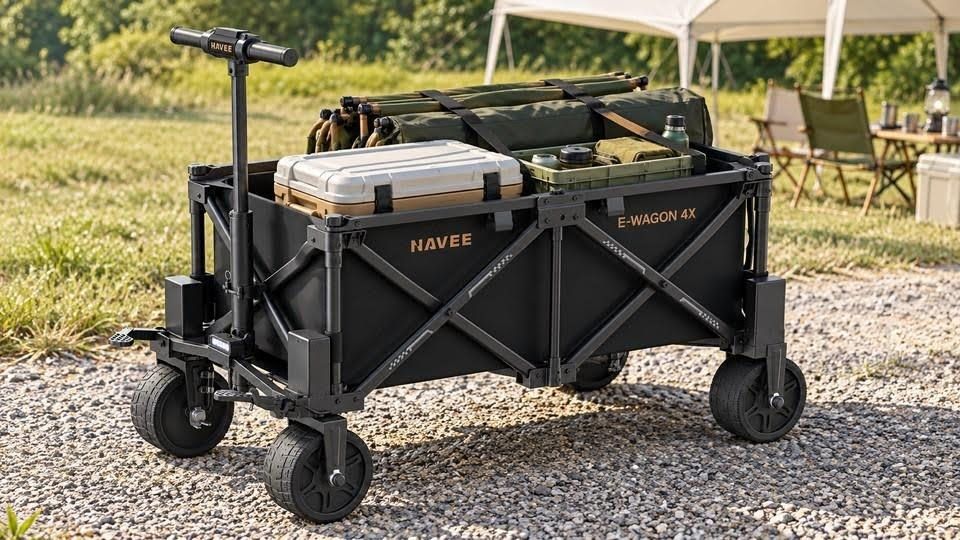
For heavier hauling, consider the NAVEE E-Wagon 4X electric utility wagon. Its independent four-wheel drive and all-terrain tires are relevant to routes that alternate between grass and gravel, where traction can vary. The 183L cargo capacity provides space for event supplies, although long tables and canopy bags still need to be checked for fit and support.
The foldable design also helps with transporting and storing the wagon between events. Match the load and route to the operating instructions; powered assistance does not make saturated ground or unstable slopes suitable for travel.
Load and Secure Your Gear
Keep Heavy Items Low and Centered
Place coolers, canopy weights, and dense supply bins low in the cargo bed. Distribute weight evenly from side to side and follow the manufacturer’s loading guidance.
Add lighter items without creating a tall stack. Keep the handle, controls, and your view of the route clear.
Secure Tables, Chairs, and Canopy Bags
Fasten bulky equipment with suitable straps attached to designated securing points. Support long items so they cannot slide, drag, or swing into people and obstacles.
Keep strap ends, cords, and loose fabric away from the wheels. Pack speakers and lighting in protective cases, with no heavy supplies stacked on top.
Split Bulky Loads Into Smaller Trips
Divide the equipment when it cannot be secured properly or makes the wagon difficult to control. Organize trips around setup order:
- Bring canopy components and weights together.
- Move tables, chairs, and signage next.
- Carry fragile equipment separately when extra protection is needed.
This keeps each trip manageable and reduces rearranging at the destination.
Move Gear Across Grass
Follow Firm, Dry Ground
Use permitted paths or firm sections of lawn. Avoid standing water, muddy patches, and soil that compresses noticeably underfoot.
Watch the wheels during the first few feet. Deep tracks or sinking tires are signs to stop and choose another route or reduce the load. Conditions can deteriorate after rain or repeated trips.
Start Slowly and Turn Gradually
Begin at a slow walking pace. With a powered wagon, select a low speed appropriate to the conditions.
Make broad turns to limit cargo movement and reduce resistance on turf. Approach depressions and transitions from pavement slowly, leaving enough room to stop before obstacles or pedestrians.
Stop if Wheels Sink or Slip
Stop pulling or applying power when the wheels sink or repeatedly slip. Continued wheel spin can deepen the rut.
Secure the wagon against unintended movement before removing cargo. Reduce the load and find a firmer recovery path. Avoid jerking the wagon free; get help if controlled movement does not work.
Move Gear Across Gravel
Use Packed Paths Where Possible
Choose compacted gravel over deep, loose stones. Watch for potholes and soft edges, particularly where gravel meets grass.
Approach uneven transitions carefully so a wheel does not drop suddenly and tilt the load.
Slow Down Over Loose Stones
A controlled pace limits jolts and gives you time to react when the wheels shift. Turn gradually and avoid abrupt stops.
If steering or stopping becomes difficult, pause on stable ground and reassess the load and route. More motor power cannot compensate for inadequate traction.
Check Cargo After Rough Sections
Vibration can loosen straps or allow equipment to settle. After a particularly bumpy stretch, check that heavy items remain centered, long bags are supported, and loose ends stay clear of the wheels.
At the setup area, park on firm, level ground and secure the wagon before unloading.
FAQ
What Wagon Works Best on Grass and Gravel?
Choose a wagon with wheels and tires suited to uneven ground, sufficient ground clearance, and controllable steering and braking. Its cargo dimensions and transport capacity should accommodate your equipment without unstable stacking.
How Do You Keep Gear Stable on Uneven Ground?
Keep heavy items low, distribute weight evenly, and secure bulky equipment with straps. Avoid tall stacks and excessive overhang, and check the cargo after rough sections.
Can an Electric Wagon Help Move Heavy Event Gear?
Yes. Electric assistance can reduce pulling effort over longer routes and repeated trips. Its effectiveness depends on the load, traction, terrain, and battery charge, while steering and speed remain the operator’s responsibility.
What Should You Do if a Wagon Gets Stuck?
Stop when the wheels sink or slip. Secure the wagon, remove some cargo, and find a firmer way out. Avoid sudden force and get help if controlled recovery is not possible.



