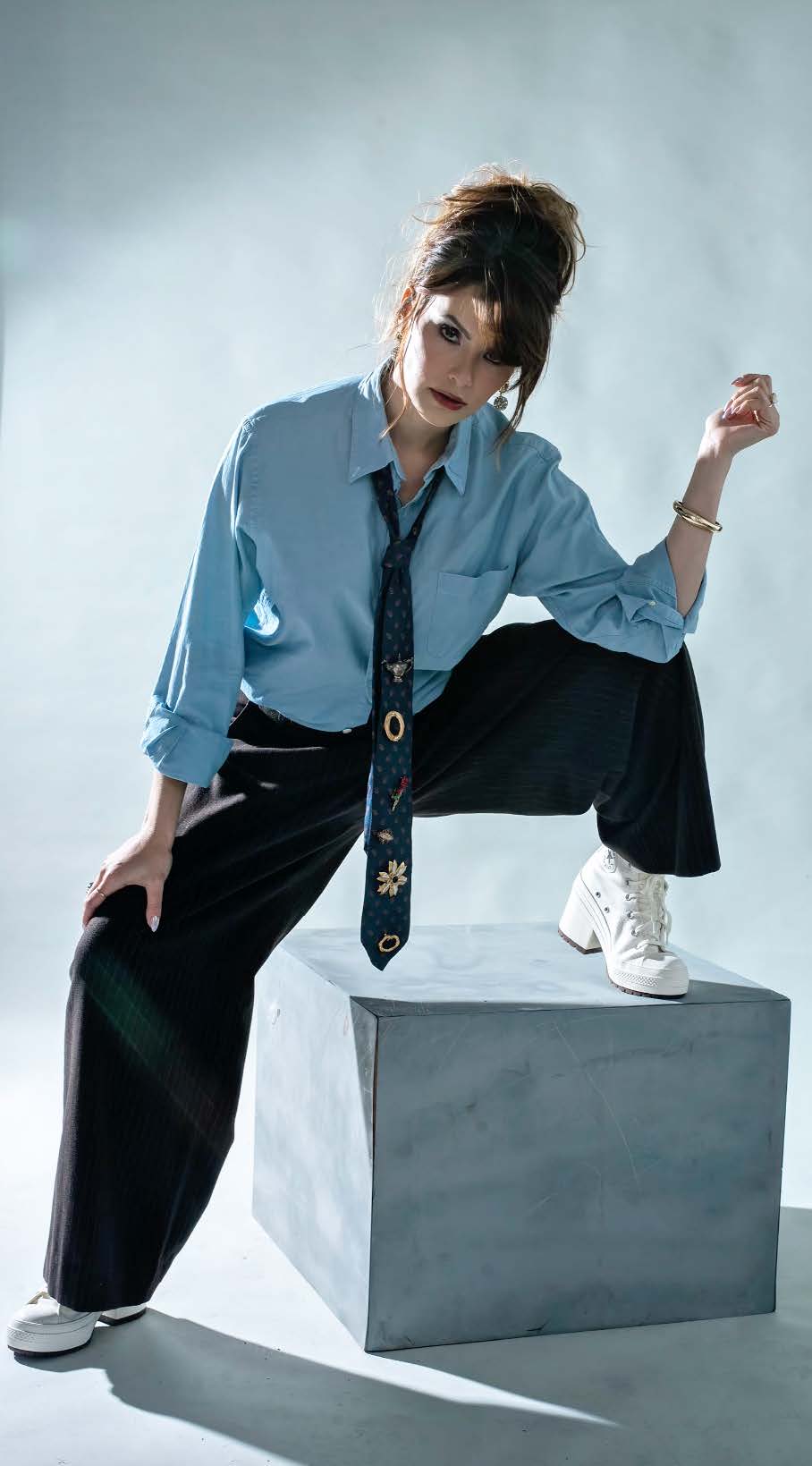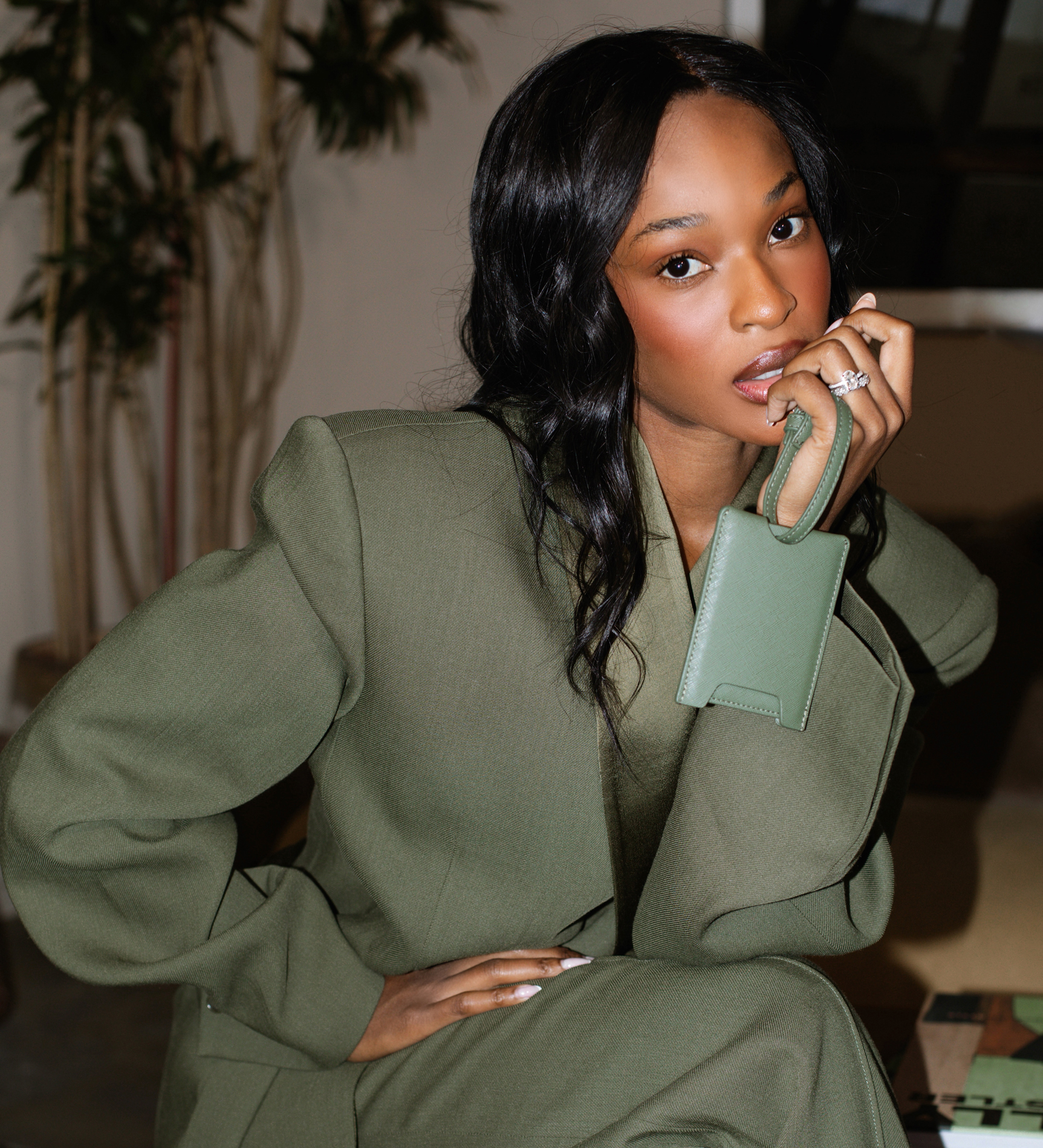
Uche Moxam spent years circling the thing she had wanted all along. Acting had been hiding in plain sight since childhood. She put on productions, made films with friends and once silenced a classmate who questioned whether a Black girl could credibly lead a school play. But growing up as the only Black girl in her grade, and the youngest daughter in a first-generation Nigerian family where her sisters became doctors, made the creative path feel far less certain.
Life took her elsewhere first. An appearance on Are You the One? introduced her to a wide audience, while her fashion, travel and lifestyle content helped her build a community of more than half a million followers. Yet acting never disappeared. After being told that establishing herself would take too long, Moxam returned to class, studied the Meisner technique for two years and decided to take herself seriously. Three months after signing with theatrical representation, she booked I Love LAopposite Rachel Sennott.
Now, she is stepping into a series connected to one of television’s most important Black cultural legacies. In Netflix’s A Different World, Moxam plays Nneka, a confident Nigerian-American model and head of the Haus Authority. The character was originally written as East African but evolved after Moxam was cast, making the role feel even more personal.
She is creating her own opportunities, too. Moxam developed Unpacked with Uche, pitched it directly to BÉIS and personally assembled its guests. It was a leap powered, as she puts it, by “a little bit of delusion” and a growing refusal to wait for permission.
In this 18 Questions interview with 1883, Uche Moxam discusses learning to take up space, the childhood dream she nearly abandoned, turning online criticism into something useful and why this next chapter is about finally allowing herself to be more than one thing.
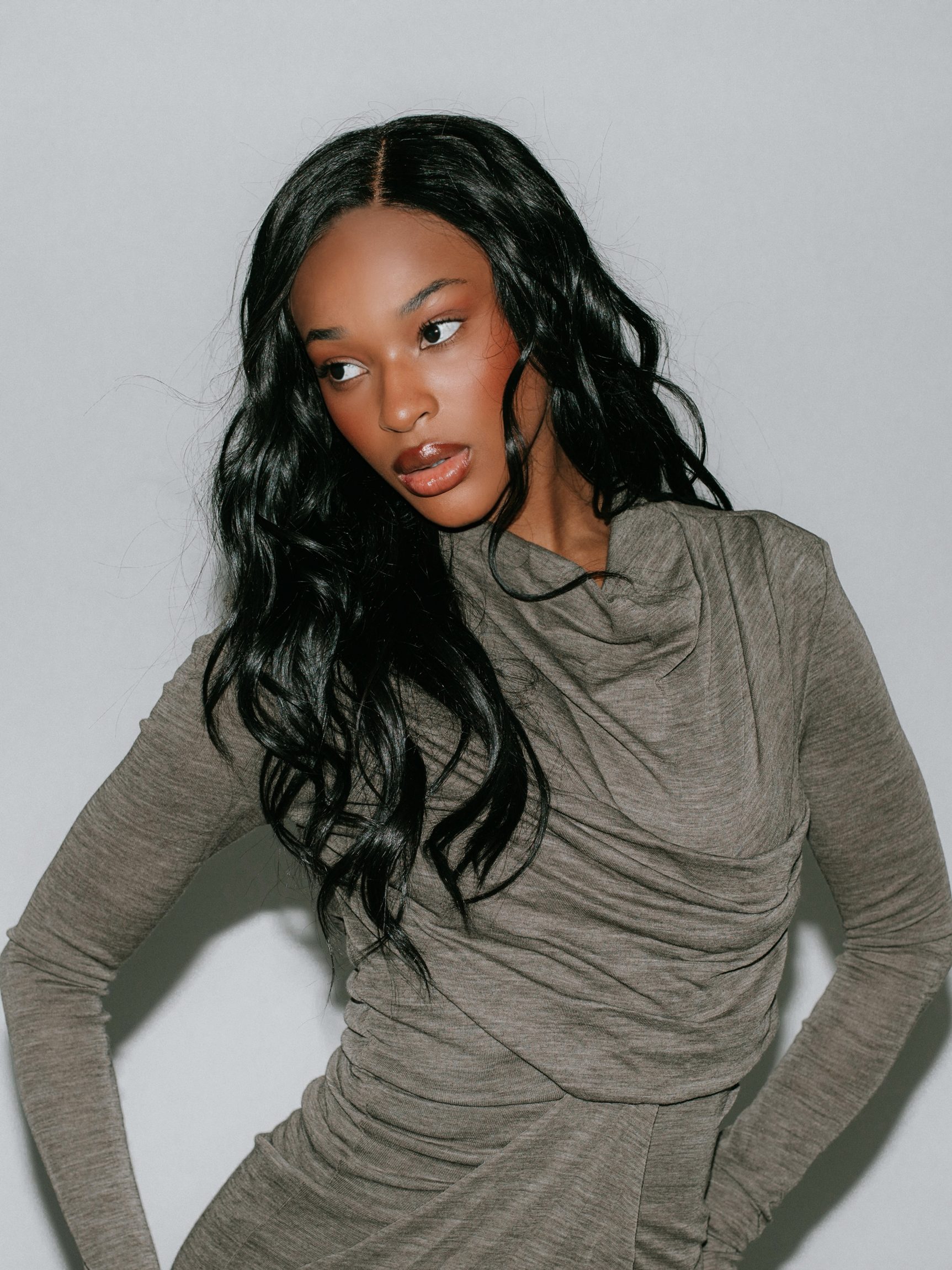
1. What is the first thing you do when you need to quiet your mind?
I hate that it’s true, because I never wanted to believe it, but moving my body really does help. I tend to overthink the most in the morning and late at night — those quiet hours when your brain suddenly schedules a meeting about every single thing that has ever happened to you.
I started doing reformer Pilates in the mornings, and it’s become one of my favourite ways to reset. There’s something about having to focus on what your body is doing that makes it harder to spiral about everything else. It gets me out of my head and back into myself.
2. What is something you understand about yourself now that you completely misunderstood in your twenties?
I used to think the path of least resistance was probably the smartest path for me. I’m a people person. I love connecting with people, making people feel comfortable, making people laugh. For a long time, I think I confused being easy to love with being easy to understand.
Some of that came from growing up and not seeing many people who looked like me get to be all those different things. We were so often given the funny friend, the best friend, the person who made everything lighter for everyone else. Not the romantic lead, the complicated protagonist, the ambitious one, the messy one — the person whose story was centred on her. I think I internalised some of those limitations without even realising it.
And I genuinely love that part of myself. I love being the person who can make a room feel lighter. I’m not trying to leave her behind. But I understand now that I don’t have to make myself smaller to make other people comfortable.
I can be funny and serious, soft and ambitious, vulnerable and confident. I don’t have to pick one version of myself and stick with it just because it makes me easier to understand.
There’s room for all of me. I think I’m finally starting to believe that.
3. Which film or television performance do you wish you could experience again for the first time?
The Worst Person in the World. That movie really stayed with me. There’s something so beautiful about the way it allows people to be messy and contradictory and human without insisting that they be perfectly good or perfectly likeable.
I think we’re so used to protagonists being people we can immediately root for, but life isn’t always that clean. Sometimes you make the wrong decision for the right reason, or the right decision for a complicated reason. Sometimes you’re selfish, sometimes you’re generous, sometimes you’re both in the same day.
I love stories that are willing to look at humanity honestly without judging it for being complicated. That movie made me feel very open and exposed in the best way.
Or Brandy’s Cinderella. Changed me. Very different reasons. Both important.
4. What is one small luxury you will always make room for?
Going into the lounge before a flight. I’m sorry, but I could be boarding. I could hear them calling my name. I could be the last person on Earth who hasn’t boarded — and I’m still going to the lounge. There’s something about getting settled, getting a little snack and pretending I have my life together that hits different before getting on a plane.
Delta, if you’re reading this, I’m available.
5. When do you feel most confident, and what tends to bring that side of you out?
Around my people. My family, my friends, the people who know me well enough that I don’t have to perform at all. I can be my silliest, most unhinged self, and somehow they still love me.
I grew up in the Midwest, so moving to LA and finding myself in spaces that can sometimes feel more transactional was definitely something I had to learn to navigate.
Finding my community as an adult has been everything. I’m really proud of the people I’ve surrounded myself with. They bring out the version of me that feels the most grounded, confident and completely myself.
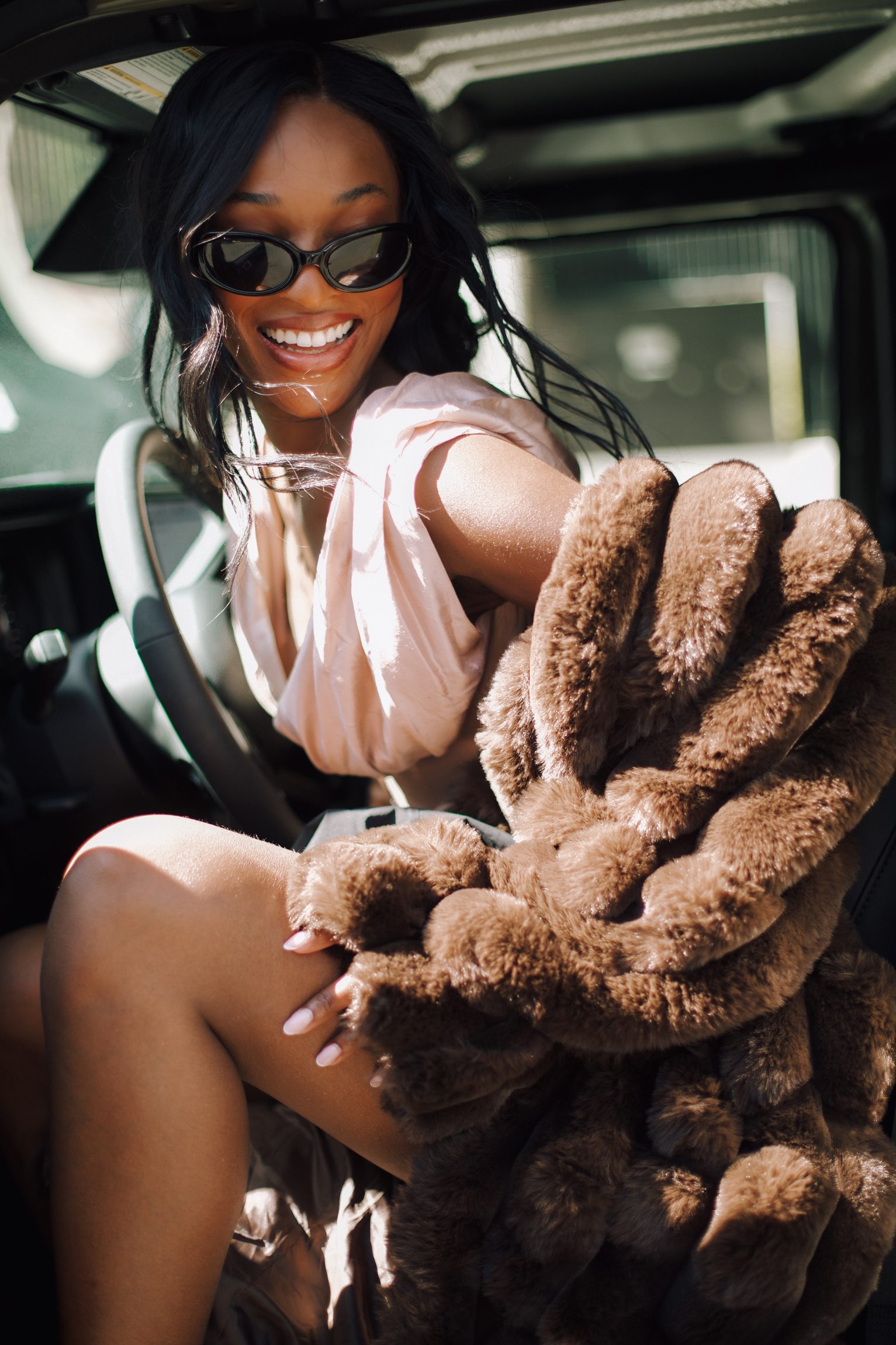
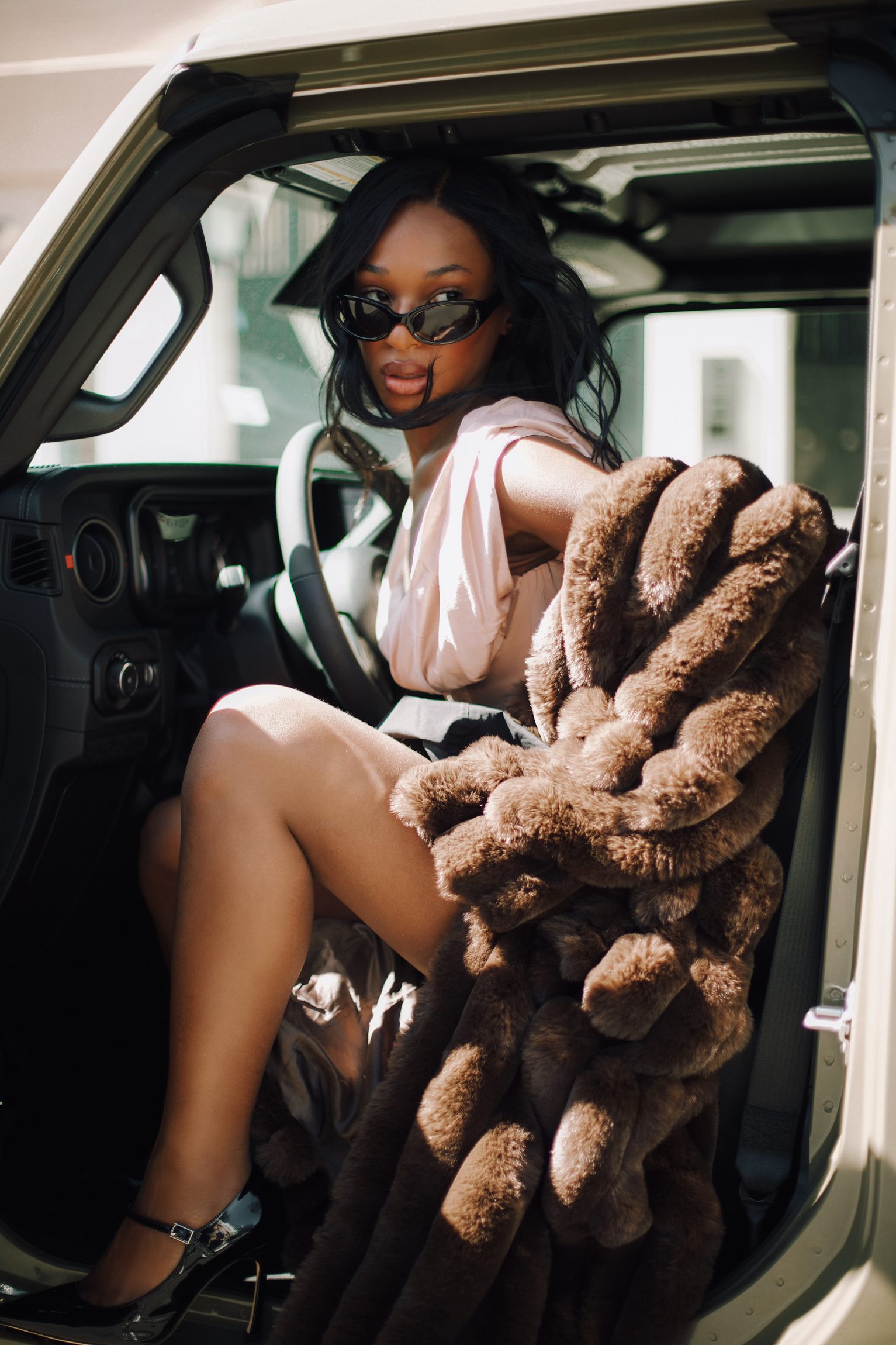
6. What is something you have recently done that pushed you beyond your comfort zone?
I went to Hawaii last month, and normally, on vacation, I’m comfortable spending most of my time exploring my hotel. If there’s room service and a beautiful view, I’m set. Please let me live.
But one day everyone wanted to do this hike, and everyone kept warning me that it was really hard. It went downhill first and then uphill, which felt personally offensive. I’m not a hiker!
Normally, I would have said, “That sounds beautiful. You guys have fun.” But I thought, you know what? I’m here. I have one life. Why am I automatically deciding that I can’t do something before I even try? So I went. And I’m not gonna lie — the way back up was one of the hardest physical things I’ve ever done. But it was also such a cool experience because I could literally feel my mind trying to convince my body that we were done. And then I had to talk myself through it.
It reminded me how much our thoughts affect what we believe we’re capable of. I got to experience, in real time, that sometimes the biggest limitation is the story you’re telling yourself about what you can do.
7. Which part of your personality tends to surprise people when they first get to know you?
I’m silly! It feels very weird and bleak to say, “I’m funny,” because I think anyone who calls themselves funny has immediately made themselves less funny.
Growing up, I think I became very attuned to people — to the energy in a room, to who feels comfortable, who feels left out and what might make someone feel a little more at ease. Humour was one way I learned to connect with people, but I think what I’ve always really loved is making people feel seen.
Whether that’s making someone laugh, getting them to open up or just making them feel like they belong in the room, I love creating that sense of connection. I think that’s probably one of the things that has followed me through everything I’ve done.
8. What is the best piece of advice you have received about building a life on your own terms?
There’s a quote I’ve always loved: if someone tells you no, maybe you’re just asking the wrong person.
I think I’ve had to learn that in a very real way. My mom is an immigrant, and I’ve watched her build a life from the ground up while putting her daughters first. I’ve watched her figure things out, make things happen and keep going even when there wasn’t an obvious path in front of her. That has probably influenced me more than I realise.
I think I owe it to myself to swing big. To ask for the thing. To try the thing. To bet on myself even when I don’t know exactly how it’s going to work out.
Maybe I’ll cry about it later — behind double-locked, bolted, vaulted doors. I’m a Scorpio, after all. But I’m going to figure it out.
I don’t want to get to the end of my life and realise I spent too much time wondering whether I was allowed to want something. I’d rather be brave enough to try, adjust, fail, try again and keep moving. I think the biggest luxury in life is knowing you gave yourself permission to really go for it.
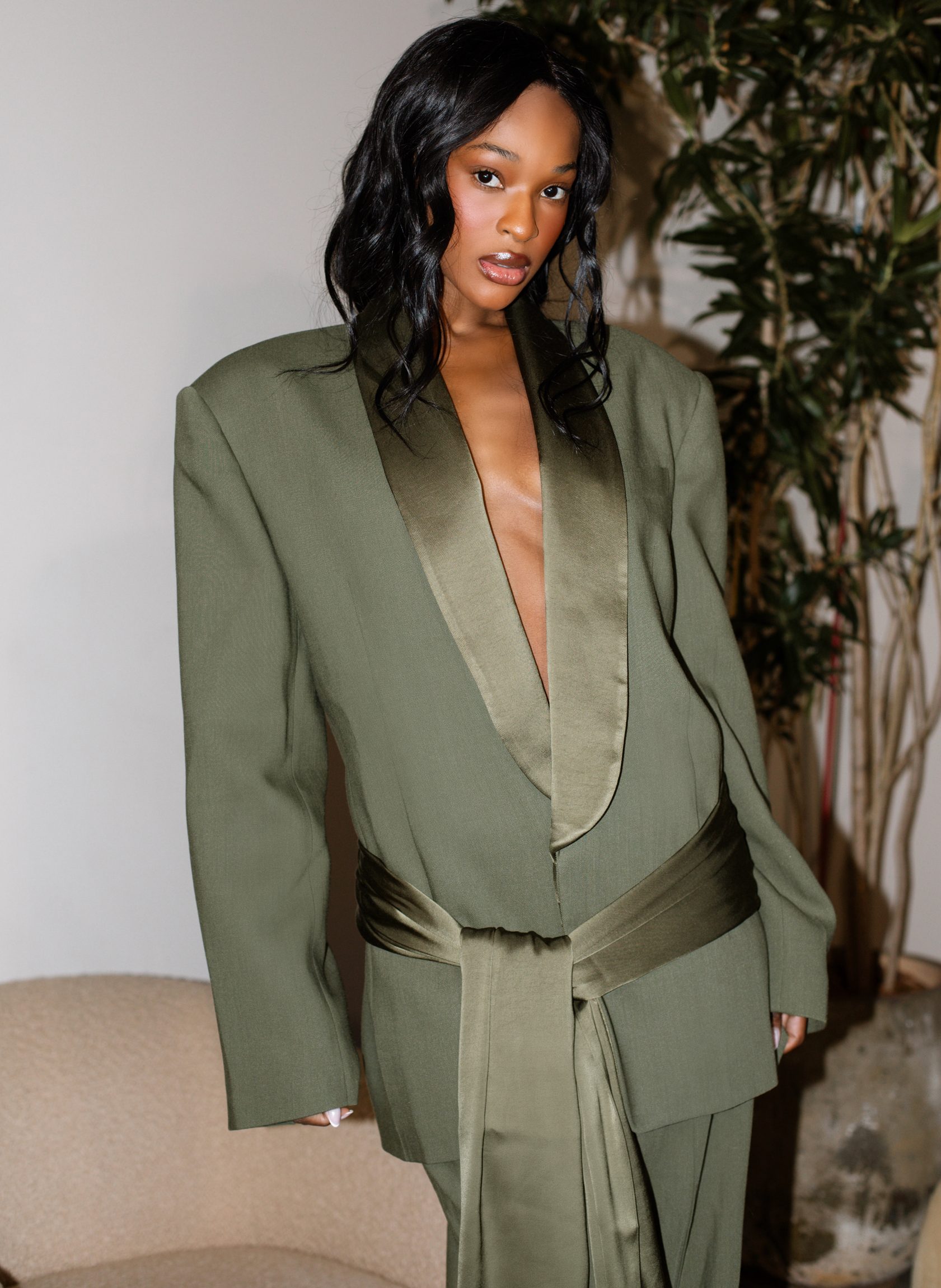
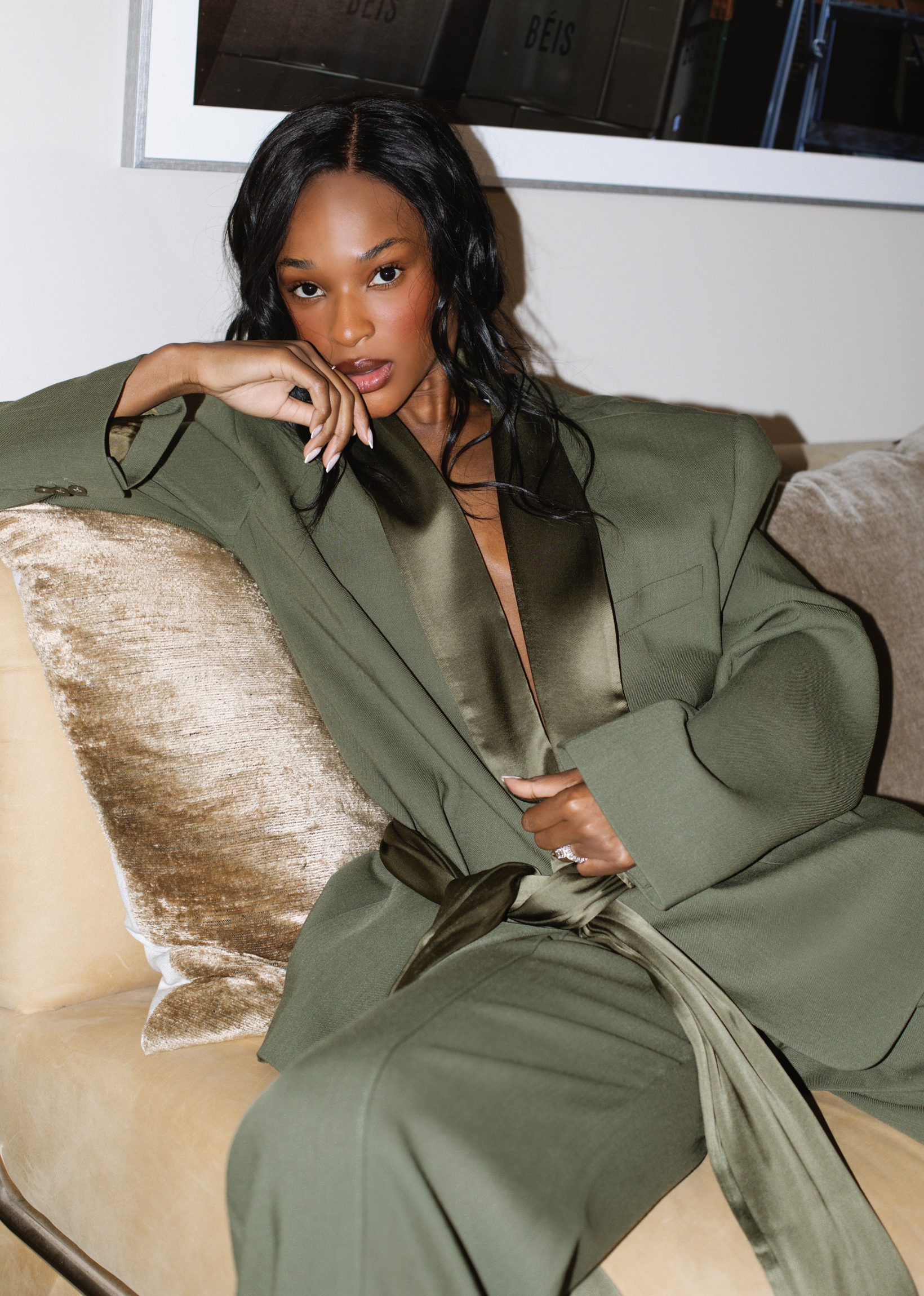
9. Your acting career is gaining momentum with I Love LA and A Different World. Was there a moment when acting stopped feeling like an ambition and began to feel like your real path?
Honestly, I think acting has been hiding in plain sight for most of my life.
I was always the kid who wanted to entertain, which was a slightly inconvenient career aspiration in my Nigerian family because “entertainer” was not exactly considered a job description.
I was the only Black girl in my grade, and my family was one of the only Black families in our neighbourhood. So I was very aware of being different, and representation meant a lot to me from a really young age. I clung to the movies and shows where I could see someone who looked like me and imagine myself somewhere in that world.
I remember being in middle school and getting a lead in a play about siblings fighting over an inheritance. One of the girls asked, “How can she get this part? She’s Black. How would that be believable?”
Obviously, I went on to bring the house down. Obviously.
But those moments stick with you. For a while, I think I internalised the idea that there were certain things I could be and certain things I couldn’t.
So I kept creating my own spaces. I was always putting on little productions, making my friends act in things, doing dinner theatres and making little films. Even when I didn’t call it acting, I was always finding my way back to storytelling.
Then life took me through college, moving to LA, working in digital, creating content and building a platform. Eventually, I realised that all of those things were still pointing me towards the same place.
I had to stop being afraid of being seen trying. I went back to acting class, studied Meisner for two years, got theatrical representation and decided that if I was going to do this, I was going to take myself seriously.
Then I booked I Love LA three months later.
It felt like one of those moments where you realise the childhood dream you thought you had outgrown was actually still waiting for you.
10. The original A Different World helped bring Black college life into the mainstream. What did joining its next chapter mean to you as a Nigerian-American actress?
It means more to me than I can really put into words. Growing up, shows like The Cosby Show, A Different World, The Fresh Prince of Bel-Air and Sister, Sister were such an important part of television and of so many people’s childhoods. They gave audiences the chance to see Black families, friendships, ambition, love, humour and everyday life reflected on screen in ways that felt expansive and joyful.
So to now be part of a series connected to that legacy is incredibly meaningful. Those shows didn’t just entertain people — they helped shape what generations of viewers understood was possible to see themselves in.
I love that this new chapter carries forward what made the original so special: its willingness to engage with the social issues of its time while also showing the fullness of Black life. We get to see Black love, friendships, family, joy, ambition and all of the ordinary, beautiful moments that make up a life.
The Black experience can hold struggle, but it has never been defined by it. There is so much joy, complexity, romance, humour and tenderness in our stories, and I love that the show makes room for all of it.
I also loved that my character’s identity evolved as the project came together. She was originally written with a different name and as East African, and after I booked the role, she became Nigerian-American. That meant a lot to me. It made the character feel even more personal.
To be part of that as a Nigerian-American actress is an incredible honour.
11. The new series brings its younger cast together with returning stars including Jasmine Guy, Kadeem Hardison, Debbie Allen and Cree Summer. What was it like entering a world with so much history behind it?
There’s something really special about realising that you’re not just watching that history anymore — you’re getting to contribute to the next chapter of it. I don’t take that lightly.
12. You cannot reveal much about your recurring role yet, but what can you tell us about the energy your character brings to Hillman College?
Nneka is Nigerian-American, a model and head of the Haus Authority. She knows who she is, and she is very much that girl.
She’s confident, opinionated, has a strong sense of herself and is not afraid to take up space. There’s also something about her that feels very familiar to me. She embodies a version of myself that I’ve always carried internally, and getting to play her was a joy.
13. The series follows a new generation trying to establish its own identity while surrounded by the legacy of those who came before. Is that something you can relate to within your own career?
Very much so.
I come from a first-generation Nigerian family, and I’m the youngest of three girls. My sisters are both doctors, and growing up, the traditional path was pretty clear: become a doctor or a lawyer. I was the rogue one.
My family gave me a foundation, but they also ultimately allowed me to find my own way. I think I’ve always felt a little bit different, even within spaces where I belonged.
What’s funny is that I now have a career that is so tied to perception — how people see you, how they receive you, what they think you should be. But I’ve been navigating that question my entire life: Where do I fit? Is there room for me here? Can I be all of these things at once?
I’m finally realising that maybe I don’t need to find the box that fits me. Maybe I’m supposed to build my own.
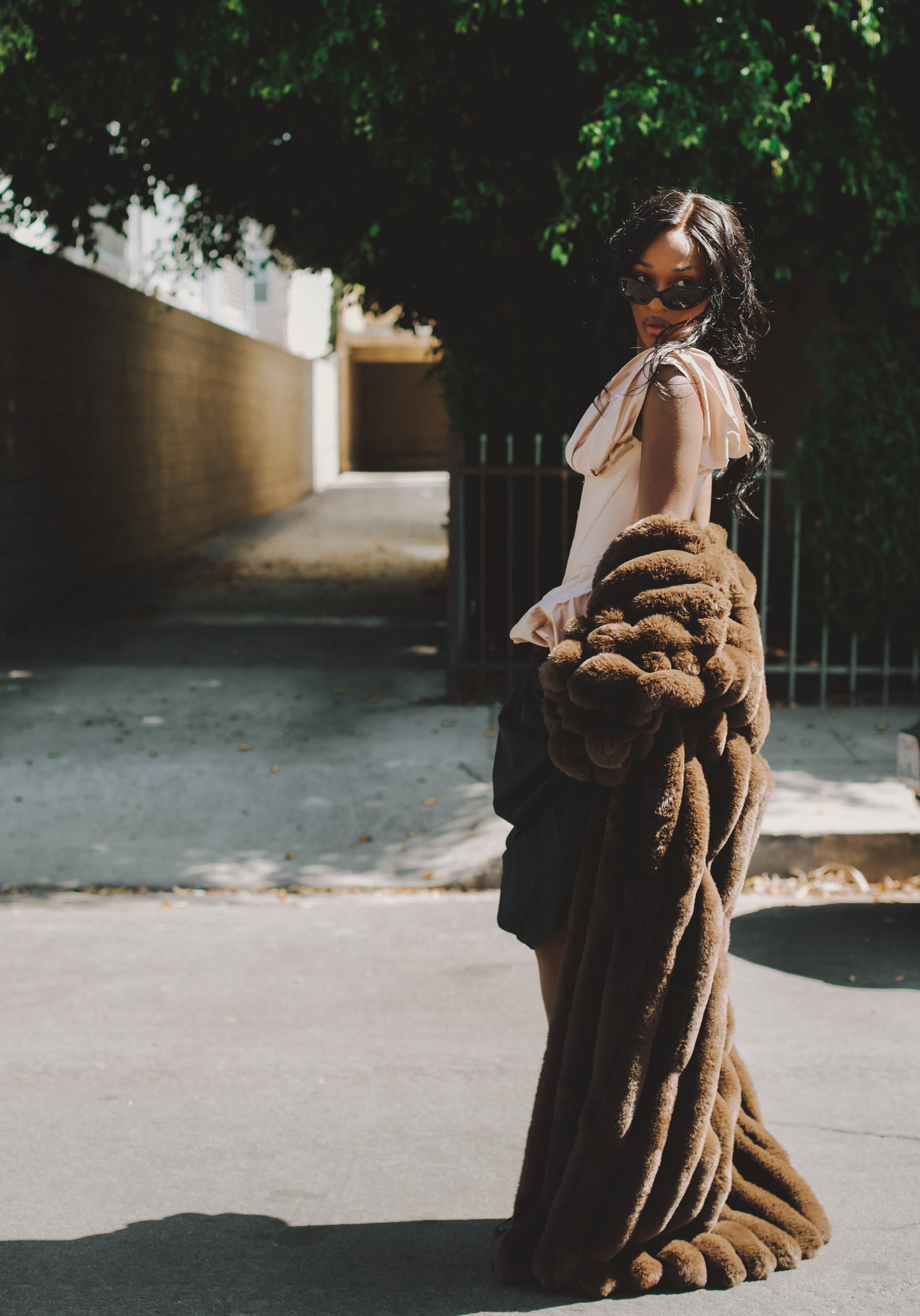
14. After working opposite Rachel Sennott in I Love LA, what did that experience teach you about comedy and trusting your instincts as a performer?
For a long time, I was afraid to even say out loud that I wanted to act. I remember telling my former digital manager that I wanted to pursue it and being told that it would take too long — that I should take the opportunities I already had and be happy with where I was.
So when I finally decided to fully pursue acting, I made a conscious decision to stop attaching expectations to it and just bet on myself. I was incredibly lucky that my first real experience was with such kind, generous people.
That was probably the biggest lesson for me: preparation matters, but at some point you have to trust yourself enough to actually play. Nobody can fully prepare you for your first time on a set. You can study and rehearse and think you know what you’re going to do, and then someone says “action” and you just have to be there.
It taught me that instinct is a muscle. The more you use it, the more you trust it.
15. You developed Unpacked with Uche, pitched it directly to BÉIS and personally booked its guests. What gave you the confidence to stop waiting for an opportunity and create one yourself?
Honestly? A little bit of delusion.
I think one of the beautiful things about building a career digitally is that I didn’t build it by being the best makeup artist or hairstylist, or by having one very specific skill. I built it through relationships — through connecting with my audience and with brands and people I genuinely believed in.
BÉIS was one of those relationships. I travel so much, and BÉIS was always with me. Over time, the relationship became much deeper than a traditional brand partnership. I genuinely loved the product, loved the people behind the company and had developed a real relationship with the team.
So when I started thinking about what the next chapter of my career could look like — particularly as I was thinking about creativity, marketing, storytelling and wanting to build something beyond being a creator — it felt like a natural place to start.
I put on my little power blazer and my performative glasses and went over there with a PowerPoint. I pitched the idea without really knowing what would happen. They believed in it, and it became something much bigger than I could have imagined.
That experience taught me that sometimes you don’t need to wait until you feel qualified to have the idea. You just need to care enough about it to make the case for why it should exist.
16. BÉIS used negative TikTok comments as a blueprint for redesigning some of its best-known products. As someone whose career has developed online, how have you learned to recognise useful criticism without allowing every opinion to influence you?
I’ve had a lot of practice with that.
There was a period of my life, particularly through reality TV, when I was exposed to an incredible amount of criticism and projection online. I learned pretty quickly that not every opinion deserves access to you — especially when people are reacting to a version of you they’ve created in their own heads.
For a while, I responded to criticism by making myself smaller. I thought, if I say less, do less and reveal less, maybe there will be less for people to criticise.
But the problem with that is that you also give people less of the real you.
At some point, I realised that being seen is inherently vulnerable. You can’t be fully yourself and also guarantee that everyone is going to like you.
So now I try to ask myself: Is there something useful here? Is there something I can learn? If there is, I take it. If there isn’t, I let it go.
That distinction has become really important to me.
17. With acting, hosting and producing all moving forward at once, what do you hope people will understand about Uche Moxam by the end of this next chapter?
For a long time, I put myself in a box. I tailored different versions of myself to whatever I thought would be easiest for people to understand or most acceptable for people to receive.
I’m realising now that I don’t have to choose.
I can act. I can host. I can produce. I can be funny and serious. I can make something silly one day and something deeply meaningful the next.
I want to make things that make people feel something. I want to tell stories. I want to create beautiful things. And, selfishly, I want to make the kinds of things I needed when I was growing up — the things that made me look at a screen and think, “Oh. There’s a place for someone like me here.”
If there’s a little girl somewhere who feels like an outsider, or who doesn’t quite see where she fits yet, I want my career to be part of the evidence that there doesn’t have to be one predetermined way to build a life.
You can be more than one thing. You can change your mind. You can surprise yourself. You can create your own space.
I think this next chapter is really about giving myself permission to do all of that — and hopefully giving someone else permission to do it, too.
Follow via @uchechi