
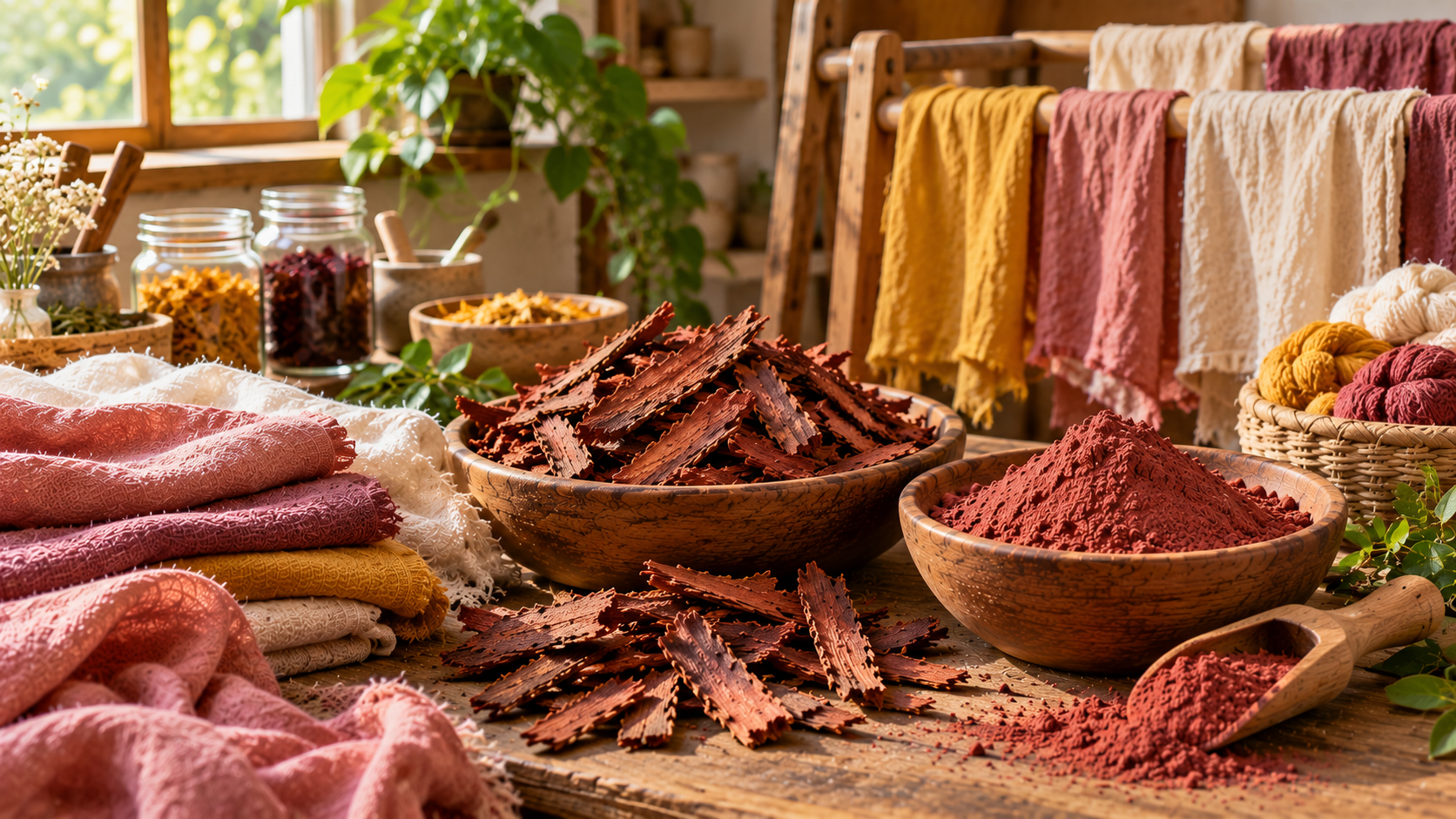
A small textile project involving Mimosa root bark powder should begin with a manageable quantity and clearly defined testing goals. Working with plant-based materials offers opportunities to explore traditional coloring methods, experiment with natural textures, and create distinctive handmade textiles.
However, one common challenge beginners face is purchasing more dye material than their projects actually require.
Botanical ingredients are available in various forms and package sizes, making it tempting to order large quantities before understanding how the materials behave. Without careful planning, this can lead to unnecessary expenses, storage problems, and unused supplies.
The key to a successful small botanical dye project is to begin with realistic quantities, choose suitable materials, and gradually expand based on documented testing.
This guide explains how to select botanical dye materials, compare different formats, estimate project requirements, and avoid overbuying.
Why Small Botanical Dye Projects Need Careful Planning
Natural dyeing involves using coloring compounds obtained from plants, including roots, bark, leaves, flowers, and fruits.
Different botanical materials contain different compounds, which can influence their interactions with textile fibers.
For beginners, purchasing decisions should focus on learning and experimentation rather than immediate bulk production.
Starting small provides several advantages:
- Reduces unnecessary spending on unfamiliar materials.
- Makes it easier to compare different botanical ingredients.
- Limits waste from unsuccessful experiments.
- Simplifies storage and inventory management.
- Helps establish realistic material requirements.
- Allows artists to develop practical experience before scaling up.
Careful planning is particularly useful for small studios operating with limited budgets or workspace.
Understanding Common Botanical Dye Material Formats
Before buying supplies, it is important to understand the different forms in which botanical dye materials are sold.
1. Fine Botanical Dye Powders
Fine powders are produced by drying and grinding plant materials into small particles.
They are generally convenient to measure and divide into smaller portions, making them useful for controlled craft experiments.
However, fine powders may create airborne dust during handling and can require additional filtration when used in liquid preparations.
A finer powder does not automatically guarantee stronger coloration or improved fabric performance.
2. Shredded Bark and Root Materials
Shredded botanical materials consist of larger plant fragments.
They may be suitable for artists who prefer working with recognizable botanical pieces during traditional dyeing processes.
Depending on the preparation method, larger fragments can be easier to separate from liquids than finely ground powders.
However, shredded materials may require additional preparation and can occupy more storage space.
3. Whole Leaves, Flowers, and Roots
Whole botanical ingredients are often used in experimental textile crafts and traditional natural dyeing.
Examples include dried flowers, leaves, and selected plant roots.
These materials may require more preparation than powders, but they allow artists to examine the original botanical structure.
4. Concentrated Botanical Dye Extracts
Some suppliers offer concentrated plant-derived colorants.
These products may reduce the need to handle large quantities of raw botanical matter.
However, extract concentrations and ingredients vary, so buyers should review the manufacturer’s instructions and documentation carefully.
How to Choose Botanical Dye Materials for a Small Project
Selecting the right material begins with identifying the intended craft application.
For example, dyeing a small cotton scarf may require a different approach from coloring wool yarn or creating decorative fabric samples.
Consider the Textile Fiber
Cotton and linen are cellulose fibers, while wool and silk are protein fibers.
These fibers can respond differently to botanical colorants.
Fabric preparation, water chemistry, and processing conditions may also influence the results.
Research the Botanical Species
Different plants have different chemical compositions.
Before purchasing, confirm the scientific name and identify which part of the plant is being sold.
Common names alone may not provide enough information for accurate material identification.
Review Material Documentation
Look for clear product descriptions, ingredient information, storage recommendations, and relevant safety guidance.
When possible, request information about batch identification and processing methods.
Finding Reliable Botanical Material Suppliers
Choosing a dependable supplier is an important part of preventing unnecessary purchases.
A supplier should ideally provide clear product descriptions, accurate package weights, transparent policies, and accessible customer support.
For example, craft buyers researching Mimosa hostilis root bark materials can explore https://mimosahostilis.shop/ to review its botanical product listings and purchasing information.
The website markets Mimosa hostilis root bark in different quantities and material forms for craft-related applications.
Before ordering, buyers should confirm the exact product format, botanical identification, packaging details, and current availability.
Descriptions such as “premium quality,” “organic,” or “sustainably sourced” should be evaluated carefully rather than accepted without supporting documentation.
Reliable purchasing decisions depend on verified product information, not promotional language alone.
Choosing Between Small and Medium Botanical Material Packages
Package size can significantly influence the overall cost and practicality of a small craft project.
Small Packages for Initial Experiments
Small quantities are often the most practical starting point when testing an unfamiliar botanical ingredient.
They allow artists to evaluate material characteristics without committing to a large inventory.
Medium Packages for Repeat Projects
Once a workshop has established a suitable process, medium-sized packages may become more convenient.
For example, a buyer considering 500g MHRB powder should first confirm that the selected product is currently offered in powdered form and that its specifications match the intended textile or craft application.
A 500g package represents a larger purchasing commitment than a small trial quantity.
It should not be assumed to produce a particular shade, number of dyed garments, or level of colorfastness without testing.
Large Packages for Established Production
Bulk packages are generally better suited to workshops with documented material requirements and adequate storage space.
For beginners, ordering large quantities before completing initial experiments can create avoidable financial risk.
Estimating Material Quantities Before Purchasing
Accurate planning begins with understanding the size and scope of the project.
Step 1: Identify the Project
Decide whether the project involves a scarf, fabric sample, yarn bundle, decorative textile, or another craft item.
Step 2: Measure the Fabric Weight
Weigh the fabric before beginning the project.
For example, three cotton scarves weighing 150g each have a combined weight of:
3 × 150g = 450g
This provides a useful starting point for project planning.
However, fabric weight does not independently establish the required quantity of botanical dye material.
Step 3: Conduct Small-Scale Tests
Use appropriately small material quantities to evaluate handling characteristics and textile compatibility.
Document the process carefully rather than assuming a universal material-to-fabric ratio.
Step 4: Calculate Future Requirements
Once a repeatable process has been established, use actual workshop records to estimate quantities for subsequent projects.
This reduces guesswork and helps prevent unnecessary purchases.
Avoiding Common Botanical Dye Purchasing Mistakes
Buying in Bulk Too Early
Large packages may appear economical, but unused material can eliminate potential savings.
Ignoring Shipping Costs
Compare the complete purchasing cost, including delivery charges and applicable taxes.
Choosing Materials Without Checking Labels
Unclear botanical identification or processing information can make it difficult to evaluate a product’s suitability.
Assuming Natural Dyes Always Produce Consistent Results
Botanical colorants can vary between plant species and batches.
Fabric preparation and processing conditions may also influence outcomes.
Storing Materials Incorrectly
Poor storage conditions can expose botanical ingredients to moisture, contamination, and deterioration.
Safe Storage and Handling of Botanical Dye Supplies
Proper storage helps maintain an organized and practical craft workspace.
Keep botanical powders and dried plant materials in suitable, clearly labeled containers.
Protect supplies from excessive moisture, direct sunlight, and contamination.
Fine powders should be handled with appropriate ventilation and protective equipment when necessary.
Avoid using kitchen utensils for botanical dyeing, and keep craft chemicals separate from food preparation areas.
For workshops using mordants or other processing agents, follow the relevant safety instructions and disposal requirements.
Frequently Asked Questions About Small Botanical Dye Projects
How much botanical dye material should a beginner buy?
Beginners should generally start with small trial quantities. The appropriate amount depends on the botanical species, textile fiber, and intended project.
Is botanical dye powder better than shredded bark?
Neither format is universally better. Powders may be easier to measure, while shredded bark can be easier to separate from some liquid preparations.
Can botanical dyes be used on cotton fabric?
Yes, various botanical dyes can be used on cotton. However, suitable preparation and testing are important because different colorants behave differently.
Should beginners purchase 500g of botanical dye powder?
A 500g package may be appropriate for repeat projects, but smaller quantities are often more practical when evaluating unfamiliar materials.
How can I avoid wasting natural dye supplies?
Plan projects carefully, maintain inventory records, test unfamiliar materials in small quantities, and store supplies according to their requirements.
How should botanical dye powders be stored?
Keep them in properly labeled, moisture-resistant containers in a cool, dry environment away from direct sunlight and food preparation areas.
Conclusion
Starting a small botanical dye project does not require purchasing large quantities of plant-based materials.
For beginners and small textile studios, careful material selection, realistic project planning, and small-scale testing provide a more practical foundation.
Understanding the differences between powders, shredded bark, whole botanicals, and concentrated extracts helps buyers select materials that suit their equipment and workflow.
By comparing package sizes, reviewing supplier information, and maintaining accurate inventory records, craft enthusiasts can reduce unnecessary expenses and make more informed purchasing decisions.
The best approach is to begin with manageable quantities, learn from each project, and expand only when actual material requirements justify a larger order.



