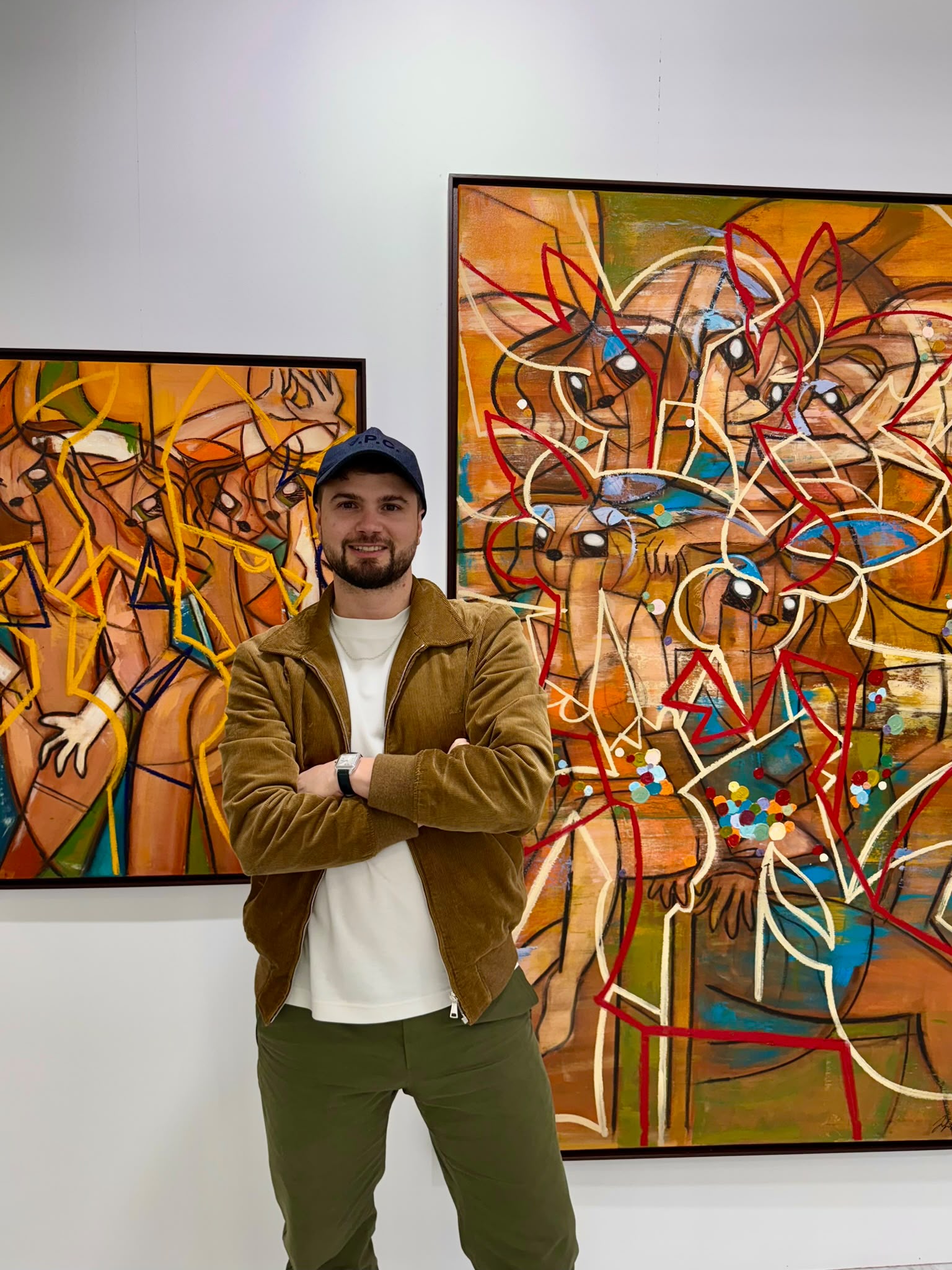
Few topics divide opinion quite like the use of Artificial Intelligence in the creative industries, particularly when it comes to its impact on artistic expression. As the role of AI across the cultural sector continues to grow, so does the debate over what it means for human ingenuity and the future of art itself.
The conversation around AI and art doesn’t end with creativity, however. For Hector Vidal, the founder of Art Circles, an integrated platform built specifically for the art trade, the issue centres on a question every bit as crucial as that of the technology’s ramifications for artistic practice and originality: How can it improve the way the art market operates?
Having experienced the market’s inner workings firsthand as a gallery owner, he saw how fragmented systems and outdated processes drag art professionals away from what matters most: the human connections and engagement that sustain and drive the sector. With Art Circles, Hector Vidal has put AI to work to address the operational challenges facing the industry, bringing efficiency to the trade without losing sight of its human core.
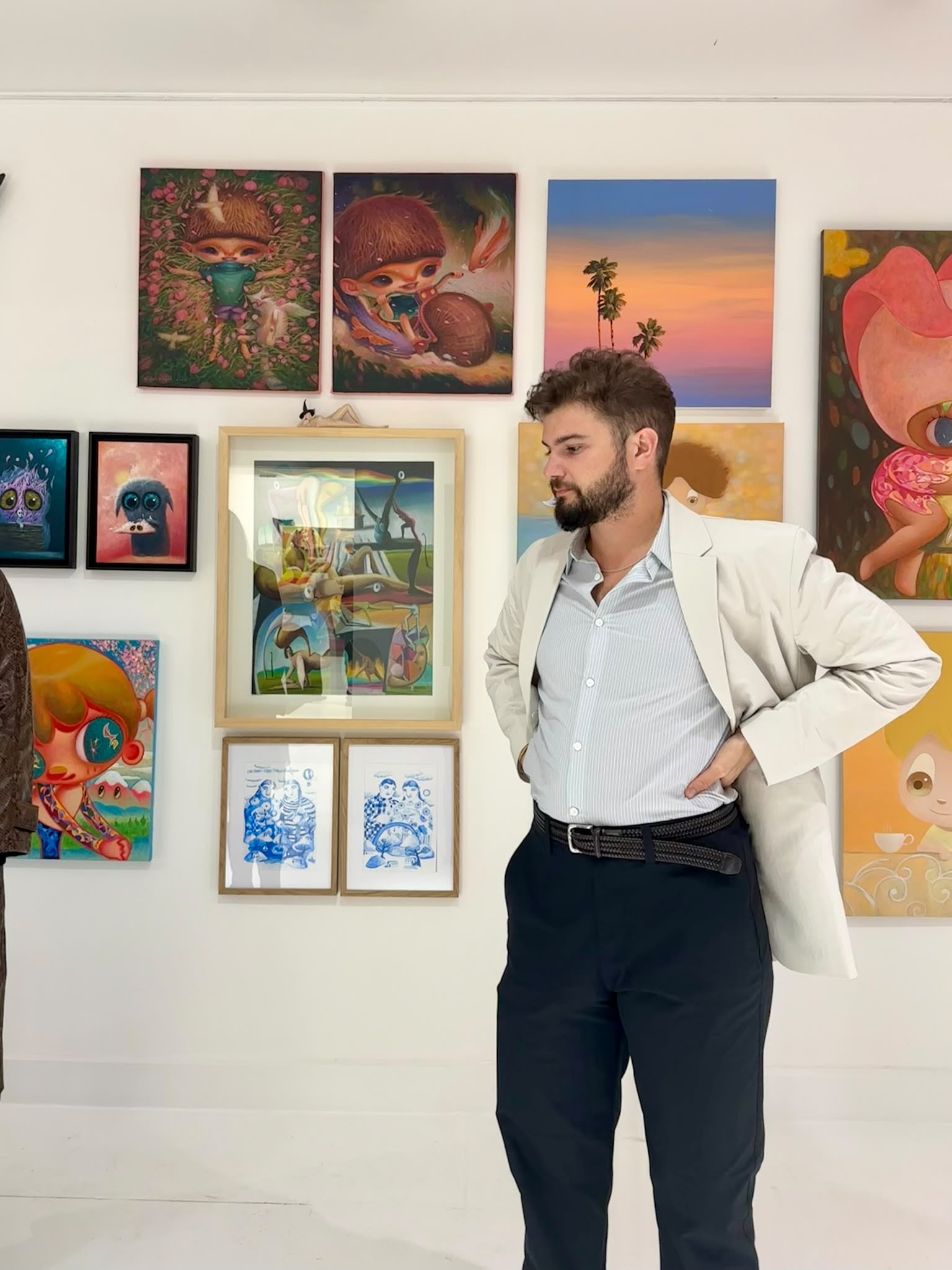
Hello Hector, thank you for finding time for 1883 Magazine. What first drew you to the art world? Was there a particular experience or encounter that made you realise this was the world you wanted to be part of?
Art was around me before I even knew to call it that. I grew up in Albaida, a small town in Spain’s Valencia region, in a family deeply immersed in culture. My uncles were painters, and my cousins and brother are musicians. As a child, I would watch my uncles paint the countryside. The green fields, the mountains of the valley and the skyline of our town. Soft, pastel colours, very Mediterranean. I still think about that light.
That early exposure to art became something more tangible after I moved to London, when I saw Basquiat: Boom for Real at the Barbican. I’d never seen art speak so directly to the world I’d grown up in. Fine art colliding with street culture, hip-hop and the city, all within that brutalist building. I walked out wanting to be part of that world. I started going to every exhibition I could and building a network of artists, gallerists and people working at auction houses.
But the real turning point came from something rather unexpected: a rug. When I moved to Notting Hill, in West London, I became obsessed with finding the right one for my flat. That rabbit hole, from handmade pieces that can take twelve months to produce to machine-made ones that take just three, led me to start collaborating with artists to turn their work into rugs. I launched the business as an e-commerce platform, using models such as dropshipping to make artists’ work accessible to a much wider audience. That was when it all clicked. Working with true masters of their craft was what I wanted to do, and technology offered a way to open that world up to more people.
Having run a gallery yourself, you experienced the art market from the inside. What challenges did you encounter, and what did they reveal about the way the market operates?
My gallery was called Untitled Gallery. Before a painting is finished, it has no name: it’s untitled. That idea shaped how we started, with live painting, where the works we showed were quite literally untitled. The name reflected that moment of creation. From early 2024 until January 2026, we never had a traditional white cube. Instead, we partnered with five-star hotels and Michelin-starred restaurants. These included the Thompson in Madrid, the Andaz in Vienna and the Hyatt near Central Park in New York, as well as venues in Paris and London. In summer 2025, we staged an immersive exhibition in Ibiza with local artists, designed entirely with collectors in mind. It worked beautifully as an experience.
Behind the scenes, though, it was a different story. I was using different systems for everything: collectors, events, the catalogue, inventory and shipping. Then I had to make sense of all that data. I first built automations with Zapier on top of Excel files. When ChatGPT arrived, I tried to bring everything together with that, too. It was incredibly difficult. Data got lost, nothing was properly structured, and I spent more time fighting with tools than working with artists and collectors. That experience revealed a lot about how the art world really works. Its infrastructure is chaotic, it makes very little use of data, and it remains deeply fragmented. That’s not a lack of passion; the art world has plenty of that. It’s a lack of infrastructure. And I realised that if I was struggling this much, others must be facing the same challenges.
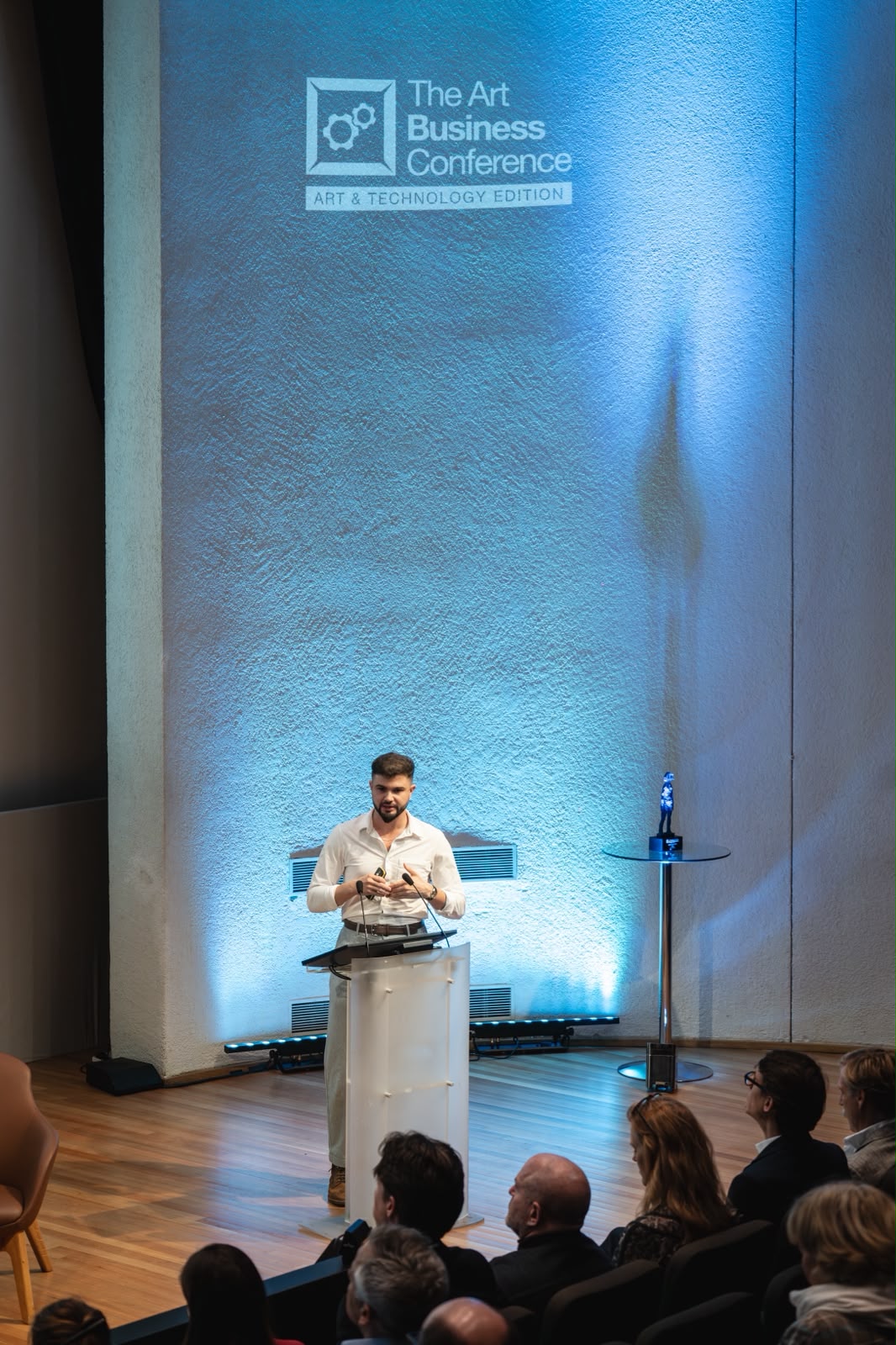
You eventually moved from running a physical gallery to building Art Circles, a technology platform serving the art market. What prompted that transition? Was there a specific moment as a gallery owner that made you see an opportunity to rethink how the art market operates?
The moment wasn’t one big event. It was a thousand small ones. From the very beginning, I wanted to capture the different touchpoints with collectors to better understand them and curate the best possible experiences, stories, artists and works for them. But I had to use several tools that weren’t connected, which meant spending late nights exporting information from different sources into spreadsheets. My background is in computer science and venture capital. I’ve spent years working in technology, across venture capital and tech startups in London, where every customer interaction is understood and every system is connected. In the art world, I found the opposite.
So I asked a simple question: is it just me? I started speaking to people across the market: galleries, art fairs, dealers, auction houses and collectors. I had more than 250 conversations, one by one. Everyone described the same problems: rising costs, too many tools, no shared data and fees that keep climbing. At that point, it stopped being just my problem and became an opportunity. As 2025 came to an end, I made the decision. I left my executive role at the startup I was working for, closed the chapter on Untitled Gallery and put everything into Art Circles: an AI-powered operating system for the art market.
It almost feels like fate. To solve a problem like this, you need someone who thinks in terms of technology, data and systems, but who has also worked hands-on in the art market. I happened to stand in both worlds at once. I didn’t design Art Circles from the outside looking in. Instead, I built it from the inside to solve the problems I’d experienced firsthand.
Stepping back from your own gallery and looking at the industry as a whole, what are the biggest structural barriers to digitising the art world? And why do you think traditional art businesses have been slower than other industries to adopt new technologies?
I’d push back on the idea that the art world is simply slow. It’s careful, and often for good reasons. I think three things hold it back. The first is trust. This is a market built on reputation and discretion, and no one hands over their collector list to a piece of software lightly.
The second is that the tools were never built for it. Most software was designed for other industries and then adapted to fit. A CRM built for selling insurance doesn’t understand an edition, a consignment or a collector who buys once every three years. The third is fragmentation. A typical gallery runs on around twenty disconnected tools, spreadsheets and WhatsApp threads. So even when galleries adopt technology, the data remains disconnected, and no one has a complete picture of the client, the artwork or the deal.
When we spoke to more than 250 galleries, art fairs, dealers and auction houses, the message wasn’t, “We don’t want technology.” It was, “We don’t have time for ten more tools.” The answer isn’t more software. It’s a single layer that fits the way the business already works.
The art market has traditionally relied on personal connections, established networks and intuition. How can AI help art professionals cultivate those relationships at scale without making the market more transactional or algorithm-driven? Can you share a real-world example of how Art Circles has helped a gallery or art professional build a meaningful connection that might otherwise have been missed?
The art market will always run on relationships, and it should. The problem has never been too much data; it’s been too little attention. A gallery might have thousands of contacts but only really know its top twenty, while the rest quietly drift away. That’s where AI can make a difference. One of our clients, Atelier du Temps, is a contemporary gallery in Geneva whose collectors are mostly bankers and financiers, both in the city and around the world. These are busy people. They rarely pick up the phone first, and they don’t casually ask for prices. But they do look.
One collector kept returning to the gallery’s catalogue on Art Circles, again and again. They never sent an enquiry, asked for a price or got in touch. In the past, that interest would have gone unnoticed. Art Circles picked up the pattern and automatically flagged it to the gallery. The gallery then called the collector and invited them in, and they ended up buying two artworks.
That’s what this technology is for. We bring together signals of genuine interest, such as return visits, time spent looking at a work, saves, shares and price enquiries, alongside a collector’s history of attending openings and making purchases. This helps the gallery understand who it’s engaging with, whether that’s an institution, a returning collector, a first-time buyer or an art lover who has never bought a work but clearly cares about art. None of that replaces the human moment. It makes it possible. The technology tells you who to reach out to and when. The relationship is still about why, and that will always be human. For me, the best technology in the art world should be invisible. It handles the data so people can focus on the relationships.
Looking ahead, how do you see technology, and AI in particular, reshaping the art market over the next five to ten years? What changes do you think might be hardest to imagine today?
I think the art market will become even more personal, but also more polarised, much as it is today. At one end, you have multi-million-dollar masterpieces. At the other, art that’s more accessible than ever. I think both will grow. Discovery will become hyper-personalised. People will find artists through social media and increasingly through AI assistants like ChatGPT, Claude and Gemini. But the more digital discovery becomes, the more weight real-life experiences will carry, at every level. You might discover an artist online, watching them paint and share their process, but you’ll still want to stand in front of the work, see how it looks in real life and feel what it provokes in you for the first time. No screen can replace that.
The biggest change will be invisible: the back office. One principle has guided my whole career: never repeat yourself. If a process is repetitive and manual, it should be automated. In ten years, the routine work behind every sale will largely run itself, with everyone involved able to see what’s happening. Operating costs will fall, and galleries, dealers, fairs and auction houses will have more time for what really matters: the art, the artists and the relationships around them.
Some things, though, must never change: the desire to build a community around art. The dinners, openings, previews and vernissages. Even a Sunday yoga session inside a gallery. The buzz and fever of an art fair, and the rush and adrenaline of an auction. Privacy must remain, too. When someone buys a piece, that’s their business.
What needs to change is transparency around the process: how a work is priced, verified and paid for. That balance is what excites me most about Art Circles right now. We’re expanding steadily into the secondary market, with KYC and AML checks, shipping, storage and consignment, alongside tools such as our PR platform, which connects galleries with leading publications through relationships we’ve built over the years. The goal is to bring everything together in one place, so the people in the art world can get back to what they love.
Follow Art Circles on Instagram.
More information about Art Circles can be found here.
Interview Jacopo Nuvolari