Technology increasingly mediates our relationships, determines our movements and shapes our understanding of the world. Yet the systems governing these interactions remain largely beyond our control. At Peckham Digital: Festival of Creative Computing, artists are reclaiming these technologies as materials for creative experimentation, exposing the political structures embedded within the digital systems of everyday life.
At the festival this October, which has been running for five years, artists will gather to create, exhibit, deliver talks and workshops, and to discuss how best artists can express themselves through technology. This year’s theme, Mediating Behaviours, considers the increasingly complex relationship between human agency and technological systems. For Bea Taylor Searle, Co-founder of Peckham Digital, the relationship between art and technology is reciprocal: “There is a really exciting space between where art makes tech more accessible, and tech makes art more accessible.” Yet this exchange also raises a more troubling question: when technology mediates human behaviour, who determines the terms of that interaction?
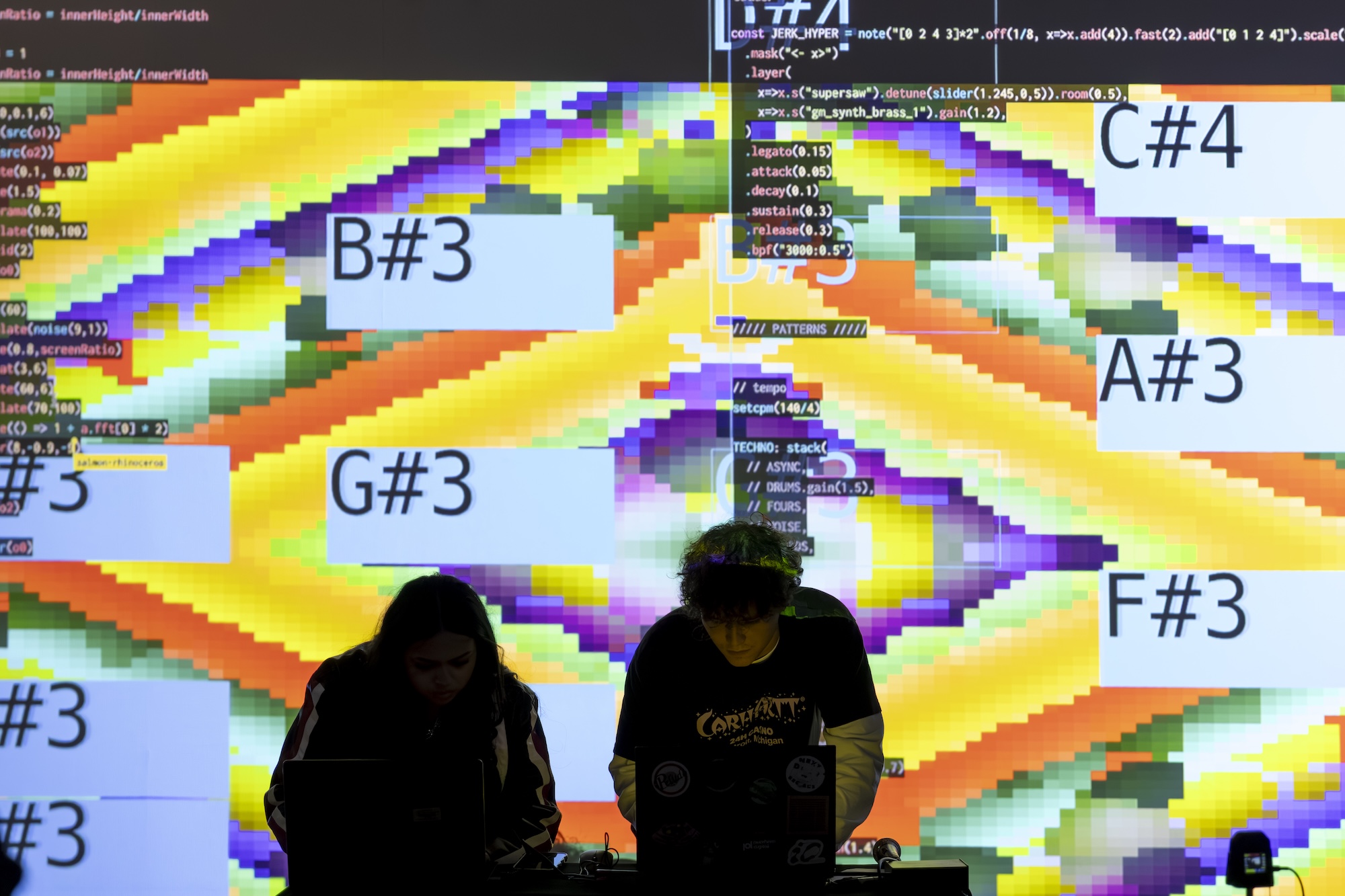
Searle’s curatorial approach is informed by her research into the relationship between creative computing and digital literacy, the subject of her current doctoral studies. Her work situates artistic experimentation within a wider question of technological access: how might creative engagement with computational systems enable people to understand technologies that otherwise remain opaque? Her approach to curating this festival is: “I’m looking at hands dirty programming as a way to curate and as a way to structure a festival, provide literacy and agency for people to then develop a better relationship with the technology. I’m hoping I’m not developing a space which says ‘yes, use everything without questioning it.’ It’s more a ‘yes, do use everything, but question it whilst you’re using it.’”
Searle founded Peckham Digital with Matt McDonnell in 2020. She said: “We have always adopted creative computing as an umbrella term. Anything that suggests it’s creative and involves some form of computing fits underneath that umbrella, and we try through the curation to have different elements of creative computing, because it’s so vast between physical computing and websites and large language models.”
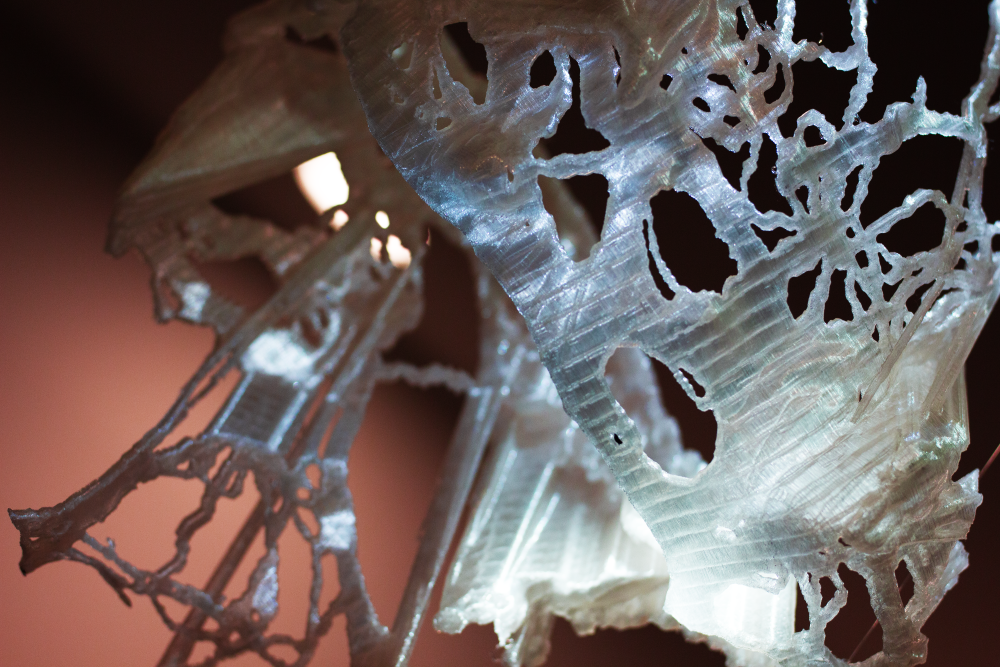
Amongst the artists involved with the festival is Fran Hayes, a digital artist whose work spans 3D animation, video, writing, installation and computation. Hayes said: “My practice revolves around creating these otherworldly landscapes, entities and creatures, and using them as vessels or as a lens to see the human world that we inhabit.” Her work also explores our relationship with technology. “I’m very interested in mutations and the processes between both different softwares, but also what happens when you take something out of digital space and then put it back.”
At the festival, Hayes is hosting SLIME CITY, a workshop born from her ongoing research into facial recognition where participants will be growing their own algorithmic slime mould anti-surveillance mask using the free mobile app Scaniverse and Blender, to become undetectable in heavily surveilled society. It will be beginner-friendly and open to all, with no coding or 3D experience needed. Hayes is one of over 70 creatives at the festival. “The program is incredibly vast,” Searle said. “We’ve got 10 workshops, eight talks, a debate, a film screening with eight artists. There’s the Processing Community Day, which involves another five workshops and a town hall event. I’m really excited that 90% of our workshops are open-source software. The majority are free.”
In Fashion Police Drones, computer scientist, AI engineer and artist Ahnjili ZhuParris transforms the machinery of surveillance into an instrument of satire. Inspired by the use of drones to police women’s clothing in Iran, the installation subjects visitors to the scrutiny of five drones that follow them and assess their appearance. By relocating the logic of authoritarian surveillance into the gallery, ZhuParris implicates the viewer in the mechanisms of technological control, making the experience of being watched central to the work. Where ZhuParris examines technology’s capacity to observe and discipline the body, Evander Duncan’s Echo explores its ability to reconstruct our physical presence. Employing computer vision, a television screen, stretched elastic fabric and 100 motors, the installation translates the visitor’s outline into a shifting material form. The work invites questions about what remains of the human body when its physical presence is interpreted through computational systems.
The festival’s political commitments extend beyond the subjects of the artworks to the conditions under which they are produced. Selected through open calls, the participating artists include practitioners who have yet to establish themselves within conventional institutional networks. According to Searle, 12 of the festival’s 15 artists are receiving their first paid artistic opportunity. In a cultural economy where visibility, funding and technological resources are distributed unevenly, Peckham Digital’s approach raises questions about who is afforded the means to experiment with emerging technologies.
These questions of technological mediation extend into the domestic sphere in Minimal Viable Home, a secondary exhibition that reimagines the spaces and experiences associated with home. Christina Bianchi’s game The Long Way Round draws upon her childhood in Tower Hamlets, where navigating dangerous alleyways shaped her experience of the built environment. By translating these memories into an interactive digital form, Bianchi explores how the architecture of everyday life can be reconstructed through the language of computational art. Together these artists and others explore themes such as the ways computational systems shape human behaviour, surveillance and the use of open-source technology in the contemporary technological infrastructure and artistic process. “This year there’s definitely a heightened sense of surveillance and behaviours being manipulated,” Searle said when asked about the connection between the artworks.
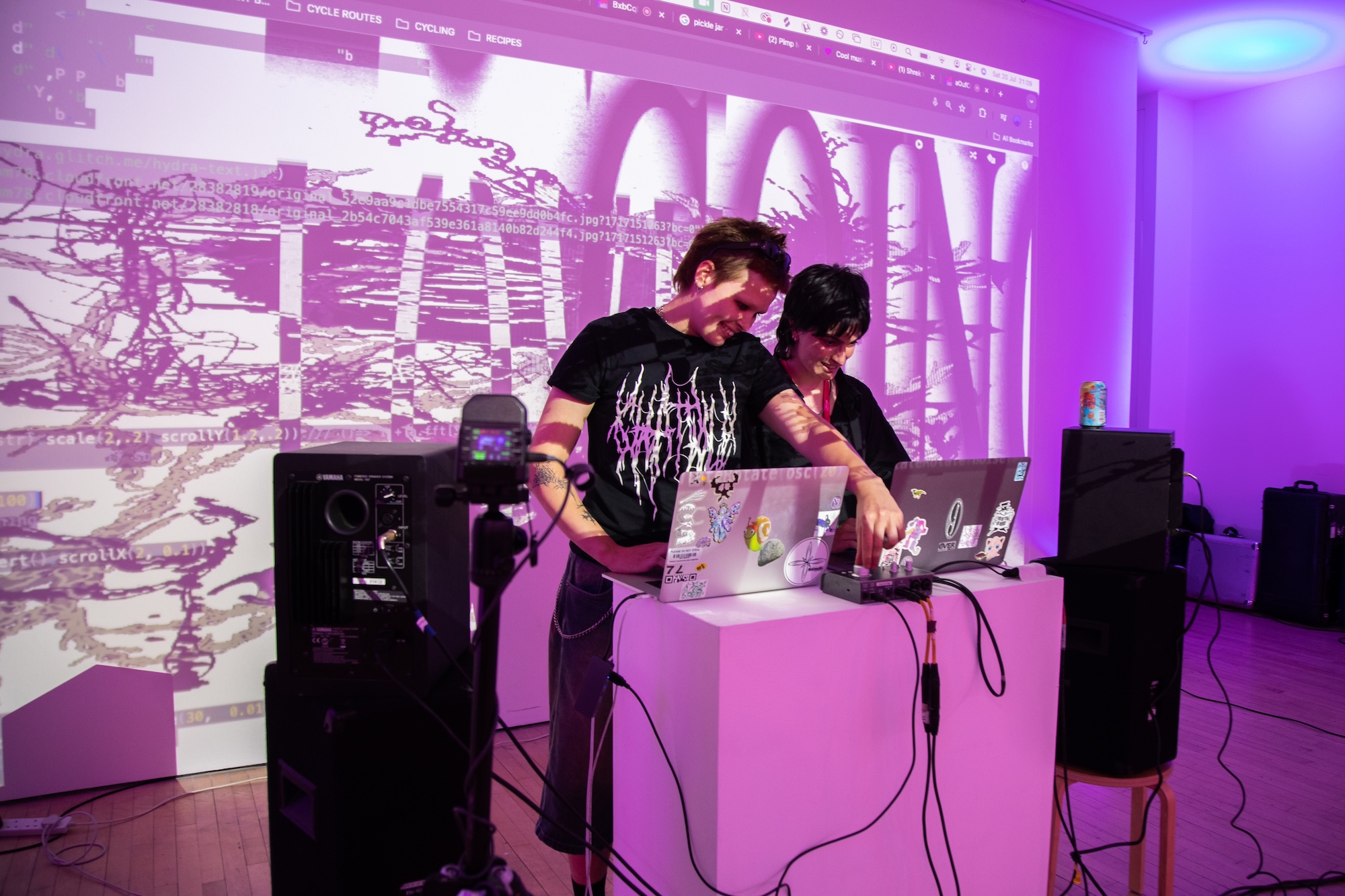
The festival aims to make these complex themes accessible to visitors. “I am a bit fed up with inaccessible spaces,” Searle said. “There’s a really exciting place where both tech and art function within one another to be more accessible to a larger range of people and to question it [technology] more.” Searle added: “Within the context of tech, open-source technology is incredibly important because it means that when someone comes to one of our workshops, there is no cost barrier for them to then develop that skill that they’ve picked up at the festival. An example of that was a visitor coming to one of our festivals a few years ago to learn Hydra, which is a program for live visual coding, and then learned so much that she did a workshop in her hometown in Italy.”
As computational systems become increasingly embedded within the organisation of everyday life, the distinction between technological participation and technological control grows less certain. The artists of Peckham Digital approach this tension through surveillance, bodily interaction and the reconstruction of familiar environments. Their work suggests that the significance of creative computing lies partly in its capacity to make the operations of technology perceptible, opening systems ordinarily encountered as seamless and inevitable to interpretation, experimentation and critique. As Searle said: “Technology is completely interlaced in our lives and has been made ubiquitous throughout my life. I was born in the mid-90s. I was brought up with computers, and they were part of the house. I vividly remember when the iPod Nano came out and the different variations moving away from CDs to having these devices that hold everything into more and more ubiquitous tech.”
This digital infrastructure that increasingly organises everyday experience is in the hands of a few powerful companies. We need art to provide insights into how technology is changing our society, how we relate to each other and how we can express this through art. Searle said: “There is an assumption that you have to be a computer scientist, or that you have had to do some form of coding at school, or that you need to be good at maths, and you don’t need any of those things to be involved in technology, to have an opinion of technology, and most importantly, to question the technologies that we’re using.”
This festival is essential as its artists are using the very technologies that increasingly mediate and regulate human behaviour to expose, question and reimagine those relationships.
Peckham Digital: Festival of Creative Computing is from Thursday 22nd to Sunday the 25th of October at venues across Peckham. The full programme can be found here.
Fran Hayes workshop SLIME CITY is on Saturday 24th of October from 10:15am to 12:15pm at The Hub, Peckham. Book your tickets here.
Words Alastair Ball
Top image credit: Peckham Digital Photo courtesy of Mati Granica