
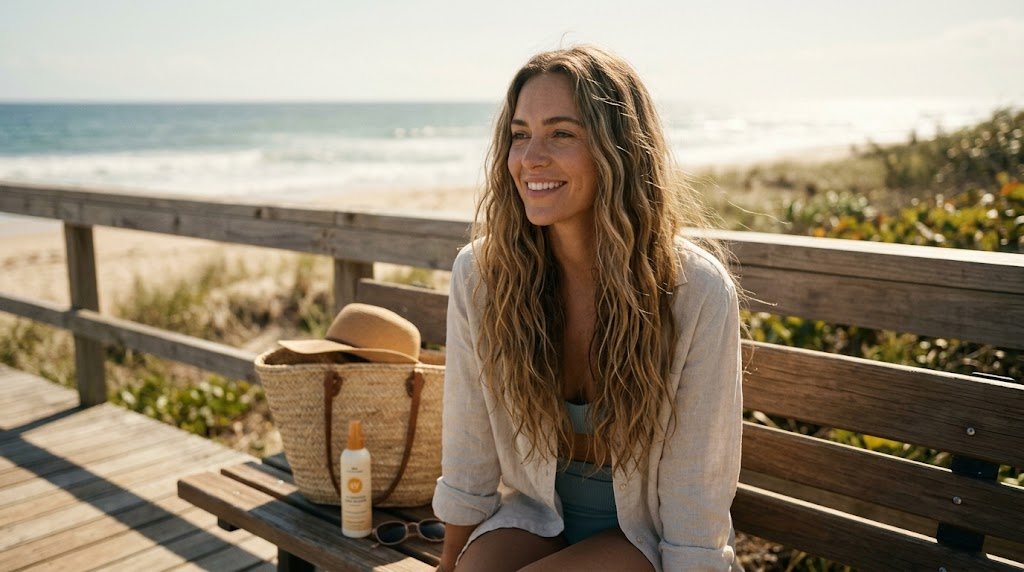
The prevailing aesthetic of modern haircare reflects a decisive cultural pivot: the “skinification” of hair. Just as skincare evolved beyond superficial cover-ups toward cellular hydration and barrier preservation, contemporary hair wellness now prioritizes long-term cuticle health over quick styling fixes. In coastal regions where high humidity, persistent ocean breezes, and relentless ultraviolet light converge, maintaining this effortless, healthy aesthetic is both an art and a science.
For those living in or visiting subtropical hubs like South Florida, understanding how to protect hair from sun damage, ocean minerals, and atmospheric moisture is no longer an occasional vacation concern. It is a foundational lifestyle practice. The combination of intense solar radiation, hyper-saline ocean water, and high ambient moisture demands a proactive strategy that keeps hair luminous, vibrant, and structurally sound.
Solar Radiation: Cuticle Degradation and Tone Oxidation
Hair is frequently left unprotected under intense sunlight, despite being just as vulnerable to solar exposure as the skin. Solar radiation impacts the hair shaft through two primary mechanisms: photochemical protein degradation and chromatic oxidation.
The Breakdown of Keratin Bonds
The hair fiber is composed primarily of keratin proteins bound together by disulfide and hydrogen bonds. Prolonged exposure to ultraviolet radiation, specifically UVB rays—erodes the protective lipid layer (18-MEA) coating the outer cuticle. Once this natural hydrophobic shield deteriorates, UV rays penetrate the inner cortex, degrading structural amino acids. The result is depleted elasticity, brittle mid-lengths, and frayed split ends that break under everyday brushing.
Chromatic Oxidation in Color-Treated Strands
For anyone sporting dimensional balayage, lived-in brunette tones, or bright platinum highlights, UVA exposure accelerates oxidation. UV rays penetrate the hair cortex and break down natural and artificial pigment molecules. As cool salon toners fade, underlying warm pigments are exposed, turning refined dimensional color brassy, coppery, or dull.
Mastering how to prevent hair color from fading requires an understanding of this oxidation process. When unprotected color encounters ultraviolet light, tonal drift begins within days. Incorporating targeted UV protection for hair has therefore evolved from an optional summer accessory into an essential daily barrier. Modern formulas deliver invisible protection through antioxidant-infused micro-mists and botanical filters, deflecting solar rays without leaving behind an oily, heavy residue.
Ocean Salt and Pool Chlorine: The Osmotic Threat
A dip in the ocean or an afternoon lounging poolside may feel refreshing, but it subjects strands to immediate osmotic dehydration and mineral buildup.
Saltwater Osmosis
Hair fiber is naturally porous and functions much like a sponge. When dry hair is immersed in saltwater, an osmotic gradient forms: the high concentration of salt outside the hair draws fresh moisture out of the cortex. As water evacuates the fiber, the cuticle scales become rough, dry, and flared. Once dry, crystallized salt remains deposited inside the cuticle layers, creating mechanical friction that accelerates breakage every time you comb or tie back your hair.
Chlorine and Heavy Metal Deposits
Chlorinated pool water presents an equally difficult chemical challenge. Chlorine is an aggressive oxidizer designed to eradicate organic matter, which means it strips away the hair’s natural sebum instantly. In lighter blondes and high-porosity hair, chlorine bonds with oxidized trace copper and other pool minerals, depositing a dull, greenish tint that regular shampoo cannot rinse clean.
The 4-Step Pre-Swim Protocol
To prevent hair from absorbing damaging elements, implement the “freshwater barrier” technique:
- Saturate Before Entry: Thoroughly drench hair with clean tap water before stepping into the ocean or pool. When the hair shaft is already saturated with fresh water, its capacity to absorb saline or chlorinated water drops dramatically.
- Apply a Protective Lipid Barrier: Smooth a generous layer of leave-in conditioning cream or hair oil through mid-lengths and ends. This creates a temporary hydrophobic film that slows down water exchange.
- Secure in a Low-Tension Braid: Fasten long strands into a secure, low braid or twist to minimize physical knotting caused by surf and ocean winds.
- Immediate Post-Swim Rinse: As soon as you exit the water, rinse thoroughly with fresh water to wash away lingering surface salts and minerals before they crystallize.
High Humidity: Engineering Frizz Defense at the Cuticle
In coastal climates, humidity is an everyday styling hurdle. Frizz is not simply an aesthetic nuisance; it is a direct symptom of moisture-depleted hair attempting to hydrate itself from the surrounding air.
The Mechanics of Humidity Expansion
When the hair cuticle is dry, porous, or chemically compromised, ambient moisture penetrates through microscopic gaps in the cuticle layer. This moisture rushes into the cortex, disrupting temporary hydrogen bonds and causing the hair shaft to expand irregularly. Smooth, heat-styled alignments collapse into unpredictable waves, puffiness, and flyaways.
Rethinking Humidity Products: Polymers Over Heavy Silicones
Historically, combating humidity meant coating strands in thick, insoluble cosmetic silicones. While effective for a few hours, heavy silicones accumulate on the hair shaft over time, forming an occlusive seal that blocks genuine hydration from entering during washing. This leads to dry, brittle hair beneath a falsely shiny exterior.
Determining the best hair products for humidity requires looking past outdated heavy formulas in favor of modern polymer science. The most effective products today utilize heat-activated cross-linking polymers and biomimetic lipids. These lightweight ingredients form a breathable, waterproof matrix around each strand. Rather than suffocating the cuticle, they seal it flat, allowing hair to retain internal moisture while reflecting external atmospheric humidity.
The In-Salon Defense Strategy
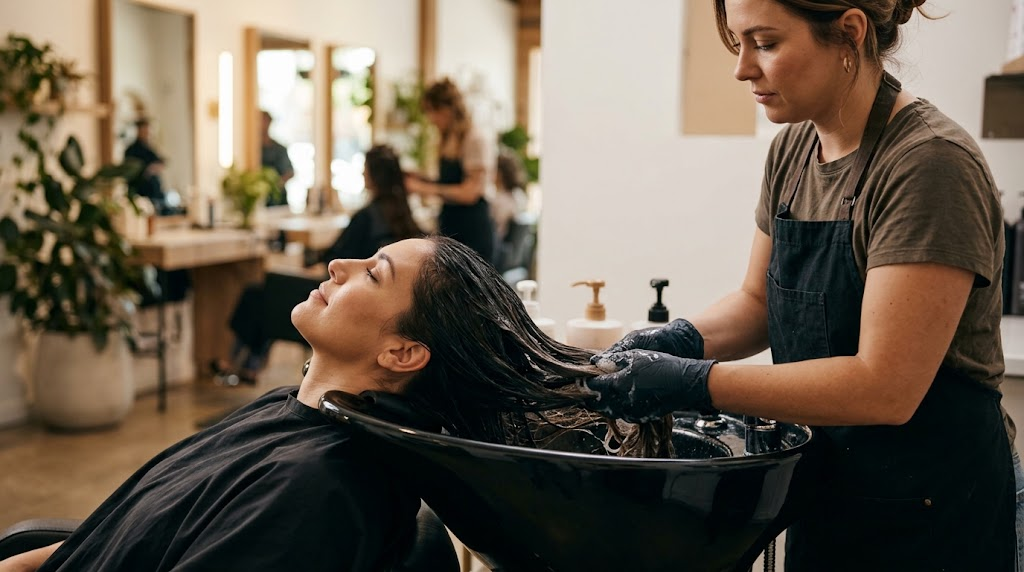
While disciplined home care minimizes day-to-day damage, sustained environmental exposure eventually breaks down even well-maintained cuticles. Professional, in-salon intervention resets the hair’s structural integrity, replacing the lipids and proteins stripped away by sun and surf.
Scheduling a routine hair gloss treatment acts as an invisible shield for coastal hair. Unlike permanent dyes that open the cuticle to deposit pigment, an acidic hair gloss treatment lowers the hair’s pH balance, smoothing lifted cuticle scales flush against the shaft. This tight closure seals color pigments inside, blocks ambient moisture, and creates a glass-like surface that reflects light. Incorporating this service every four to six weeks is one of the most effective strategies for how to prevent hair color from fading under year-round sun.
For hair that has experienced significant protein loss or chronic seasonal frizz, customized professional services provide deeper reconstruction. Visiting the best hair salon in Fort Lauderdale allows a trained stylist to evaluate your exact porosity levels, balance internal weight removal against coastal humidity, and administer targeted premium haircare and treatment options like specialized hair botox or micro-keratin smoothing.
The Weekly Coastal Care Schedule
A consistent maintenance rhythm prevents coastal wear-and-tear from turning into chronic, irreversible damage:
- Daily Morning Routine (Protect & Defend): Mist a lightweight antioxidant shield with UV protection for hair before stepping outdoors.
- Post-Beach / Pool (Cleanse & Replenish): Rinse immediately with fresh water; wash with a sulfate-free, chelating cleanser to lift minerals.
- Weekly Treatment (Deep Lipid Restoration): Apply a nourishing mask infused with ceramides and plant lipids; leave under a warm towel for 15 minutes.
- Bi-Weekly Maintenance (Neutralize & Balance): Incorporate a targeted purple or blue toner wash to eliminate brassy tones caused by sun oxidation.
- Every 6 Weeks (Salon Gloss & Micro-Trim): Receive a professional gloss to realign cuticles and remove split ends before fractures travel up the hair shaft.
Frequently Asked Questions
Can the sun cause permanent damage to natural, uncolored hair?
Yes. Even on hair that has never been chemically colored, ultraviolet rays break down melanin (the natural pigment that protects the hair fiber) and degrade structural keratin bonds. Over time, uncolored hair develops split ends, feels coarse to the touch, and exhibits natural lightening that leaves strands vulnerable to mechanical breakage.
How do I protect bonded hair extensions when swimming in the ocean?
Natural human hair extensions dry out faster than natural hair because they lack a direct supply of sebum from the scalp. When swimming in saltwater, keep extension bonds dry whenever possible. If swimming underwater, drench the hair in clean tap water first, apply a leave-in conditioner solely from the mid-shaft down (avoiding adhesive or keratin bonds), and braid the hair loosely to prevent tangling.
What is the primary benefit of a seasonal hair gloss treatment?
A seasonal gloss acts as a protective sealant. By lowering the cuticle’s pH and coating the shaft in a translucent, acidic layer of conditioning agents, it locks in tone, boosts light reflection, and prevents coastal humidity from penetrating the inner cortex.
Why does hair feel hard or stiff after swimming in the ocean?
When saltwater evaporates from your hair under the sun, it leaves solid salt crystals lodged between lifted cuticle layers. These microscopic crystals draw out residual moisture and create physical friction between individual strands, resulting in that characteristic stiff, crunchy texture. A freshwater rinse immediately following swimming washes away these minerals before crystallization occurs.
Coastal living does not have to come at the expense of your hair’s vitality. By shifting your approach from reactive styling to proactive barrier defense, you can spend your days in the sun and surf while keeping your hair resilient, radiant, and effortlessly healthy.



