Virtual platforms have become embedded in daily life because they meet people at every level of interest, attention span, and technical comfort. Some users want quick mobile puzzles, social hangouts, or interactive live streams, while others spend time in design sandboxes, open-world games, or highly structured competitive environments.
Even in more specialized sectors, the pattern holds: people look for digital spaces that are easy to enter, rich in choice, and flexible enough to fit short breaks or longer sessions. That is also why interest extends across formats, including digital gaming experiences for downtime, where both real-money and sweepstakes models present broad game libraries built around different user preferences.
For avant-garde fashion labels and art collectives, this wider shift matters because it has changed how audiences gather, discover identity, and respond to visual ideas in networked spaces.
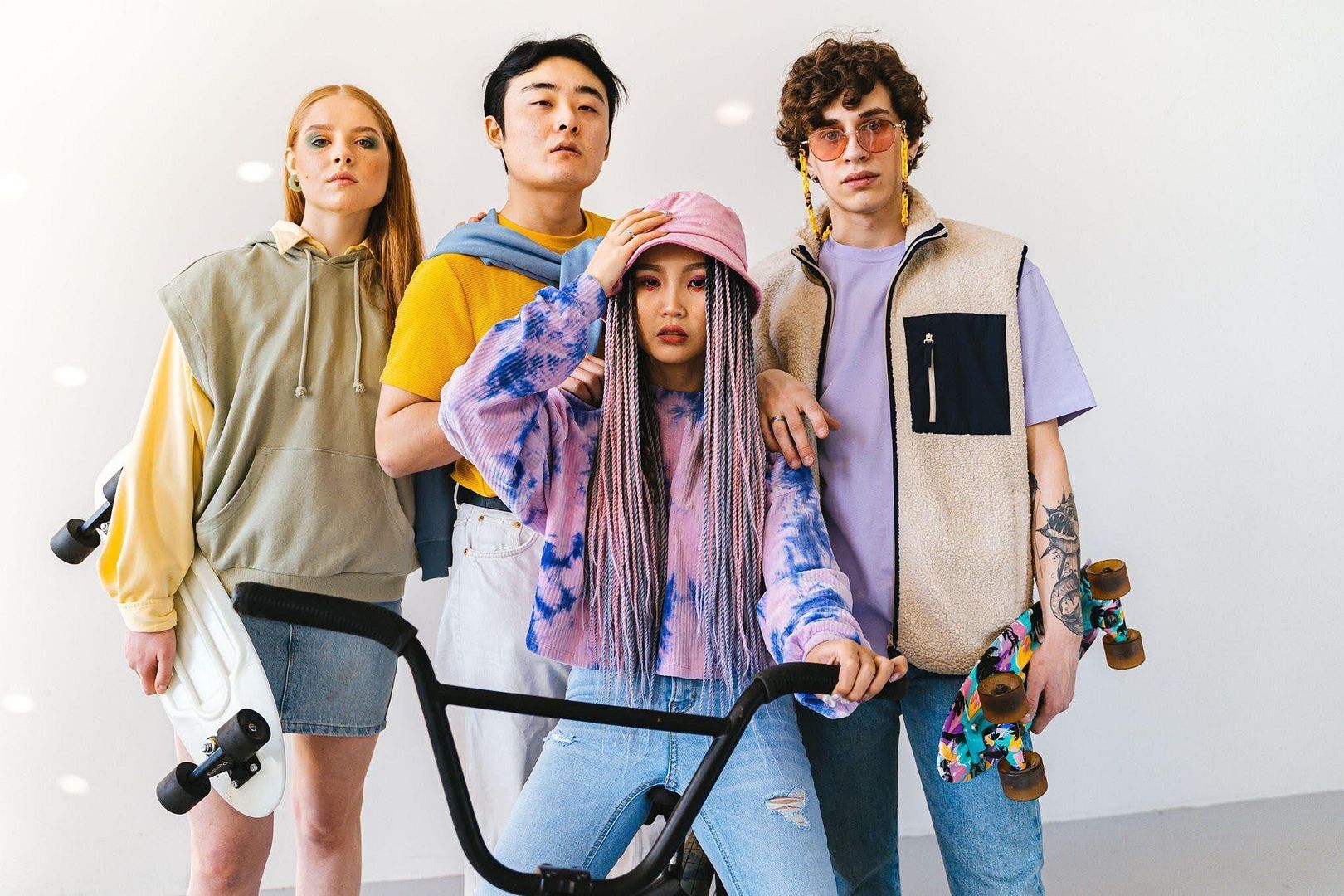
Why Experimental Fashion and Art Groups Are Moving Into Digital Spaces
Avant-garde collectives have always sought formats that stretch audience expectations. Physical runway shows, gallery installations, printed lookbooks, and pop-up events still matter, but each has limits in space, cost, and reach.
Virtual settings remove many of those barriers. A collective can stage a release for a global audience, build layered visual worlds, and adjust the experience in real time based on participation.
Budget is another factor. Renting venues, transporting materials, and producing one-off physical environments can drain resources, especially for smaller groups.
By contrast, a digital release can scale across platforms with lower distribution costs once the core assets are made. That makes experimentation more viable. A team can test one concept in a game engine, another in a live-streamed avatar performance, and a third through a browser-based interactive drop without rebuilding its entire production model.
Creative control also improves in many cases. In virtual settings, gravity, material constraints, and manufacturing limits no longer define what a garment or object can look like. A sculptural coat can move like liquid. A mask can react to sound. A room can change shape when viewers enter. For collectives interested in concept, distortion, or social commentary, those tools are more than visual effects; they become part of the message.
Digital Fashion as a Working Medium, Not a Novelty
Some of the strongest examples come from labels and artists using digital fashion as a standalone medium. The Fabricant helped establish this shift by treating clothing as a fully digital product rather than a sketch for future physical production.
Its work showed that virtual garments could carry scarcity, status, and design value on their own. That idea has influenced smaller collectives that now release capsule pieces for avatars, social media visuals, and immersive spaces.
Auroboros offers another clear case. The label combines fashion, science, and digital design to create garments that would be difficult to produce conventionally. Its pieces often read like speculative objects instead of retail items, which suits collective practice well.
Groups working across performance art and fashion have borrowed this model by producing digital skins, motion-responsive costumes, and augmented visual layers that can travel across online presentations.
Virtual Showrooms, Avatar Culture, and New Audience Behavior
Audience expectations have changed quickly in spaces built around avatars and customizable identity. For experimental fashion groups, that shift helps because it makes stylization part of everyday participation.
People no longer approach digital clothing as a strange add-on. In many online environments, appearance is central to how users present taste, mood, and affiliation.
DressX built momentum by making digital wearables accessible to a broad user base. Independent collectives have learned from that behavior. Rather than limiting work to editorial imagery, they design pieces users can inhabit. This changes the relationship between creator and audience: people become carriers of the project rather than spectators standing outside it.
Virtual showrooms strengthen that connection. A collective can release an environment where each room reflects a theme, a political idea, or a material study. Visitors can explore in their own order, attend timed performances, or unlock alternate visual layers.
The showroom becomes a hybrid of exhibition, retail space, archive, and social venue. That format works especially well for groups with interdisciplinary practices because it allows film, sound, clothing, sculpture, and text to exist together without competing for wall space.
Collective Identity Is Being Shaped Through Online Collaboration
Avant-garde groups rarely operate through a single discipline. They bring together stylists, coders, musicians, 3D artists, set designers, photographers, and performance makers.
Virtual production fits that structure because it enables remote collaboration without flattening the work into a standard video-call workflow. Shared files, real-time rendering, and cloud-based asset pipelines let contributors build one project from different cities and time zones.
This has helped younger collectives form faster. A team does not need permanent studio space to produce a coherent digital release.
One member can develop an avatar rig, another can create spatial audio, and someone else can handle garment simulation and interface design. The finished result can still feel unified if the concept is strong. In practical terms, that lowers the threshold for entry and makes collective experimentation less dependent on institutional funding.
Performance, Live Drops, and Timed Access Are Driving Engagement
Static uploads rarely hold attention for long, so many collectives are building timed events around digital releases.
A garment debut might happen through a live avatar performance, a limited-entry virtual room, or an interactive stream where the environment changes as more users join. This event-based model borrows from gaming, music, and online commerce without copying any one of them directly.
Performance collectives have taken a similar route by using motion capture and live-rendered visuals to create events that sit between runway presentation and digital theater.
In these cases, clothing is not isolated as product. It becomes one active element inside a larger temporal work. That gives the audience a stronger sense of presence, even when the entire event is mediated through a screen.
The Commercial Layer Is Growing
Virtual fashion can generate revenue through digital sales, branded collaborations, paid access, memberships, and licensing. It can also function as a testing ground.
A collective can gauge reaction to forms, colors, or themes before committing to physical production. Data from participation, dwell time, and item uptake provides signals that traditional gallery attendance often cannot match.
Still, the strongest projects do more than chase novelty or short-term monetization. The most credible collectives use digital formats to ask harder questions about identity, labor, ownership, visibility, and the body.
For example, some build garments that shift according to biometric input, raising questions about surveillance and self-presentation. Others create impossible silhouettes to challenge conventional sizing and beauty standards. A few use anonymous avatars to separate style from race, gender, or status markers, forcing viewers to confront how they read appearance in the first place.
That balance between concept and commerce will likely determine which groups keep attention over time. Audiences can spot empty spectacle quickly. Projects that last tend to offer a genuine visual language, a clear technical point of view, and a structure that rewards participation.