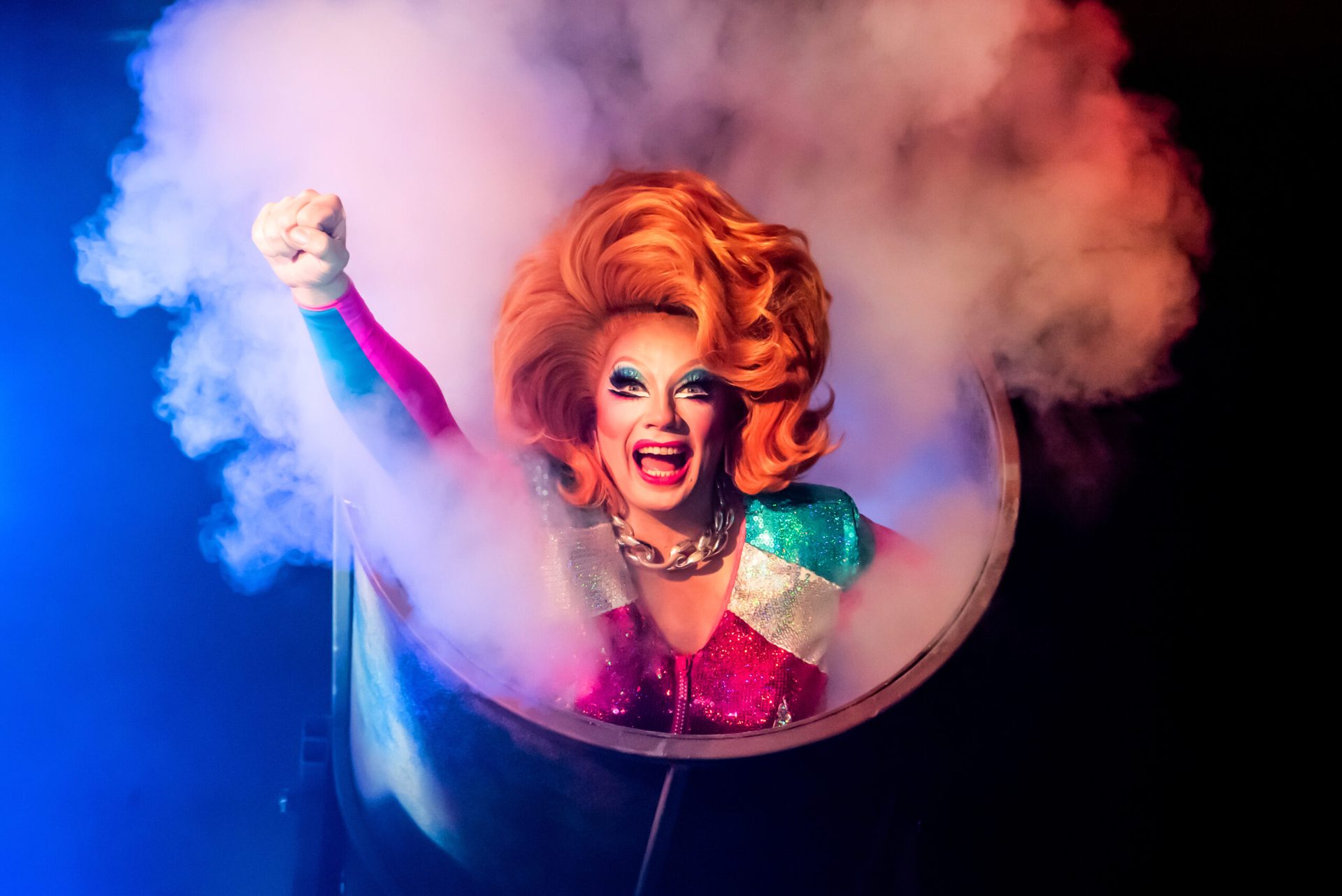
I came away from Show Pony at Soho Theatre full of endorphins from laughing, and unexpectedly moved by Ginger Johnson’s stories about family, loneliness, and growing older. Along the way, there was an imaginary pony, a lickable toad, and a smokin’ hot ‘chakrapractor’. I usually review a show or interview the person behind it. Having enjoyed this one so much, I wanted to do both (review here).
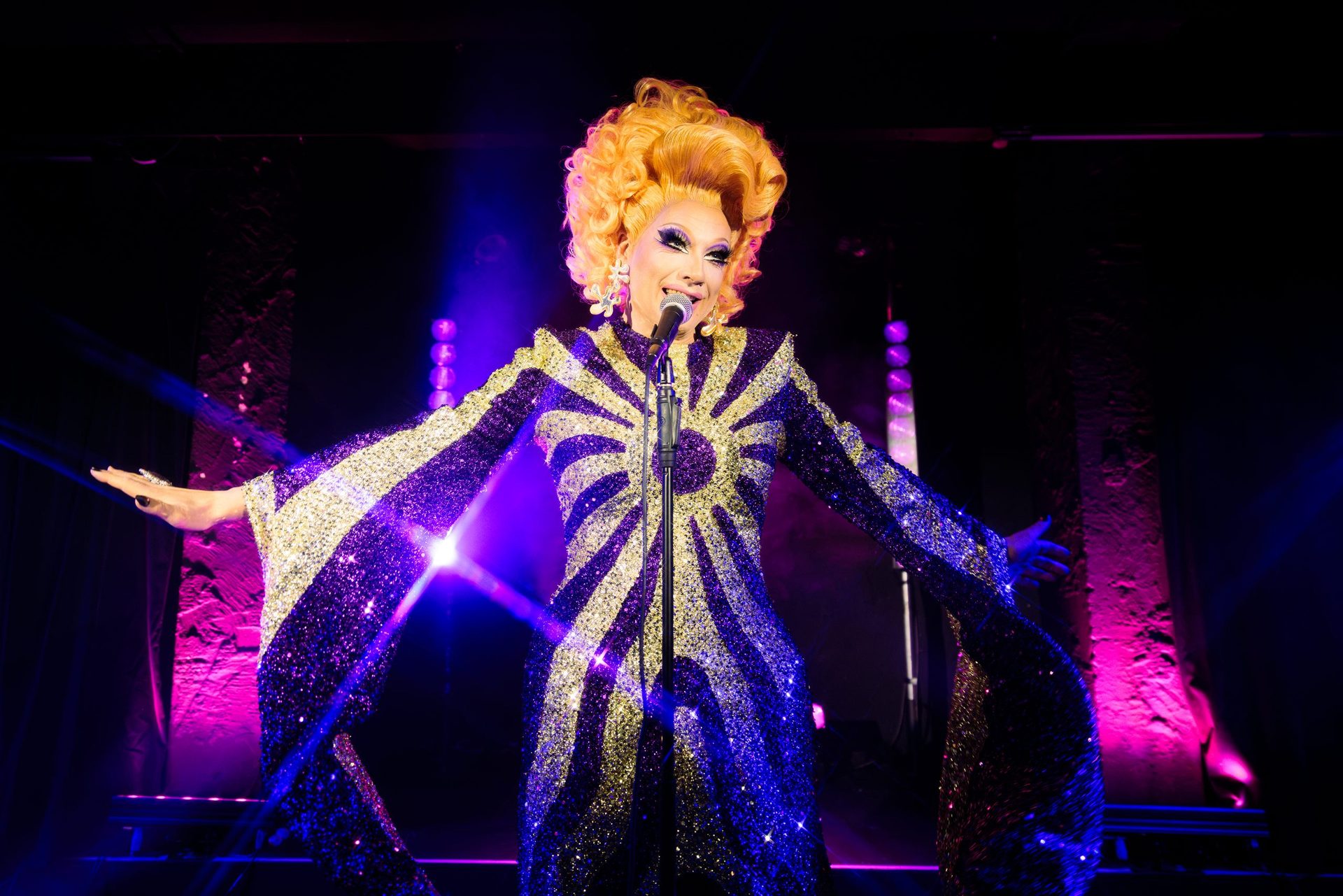
When we speak, Ginger is calling from her home, a draughty old warehouse with space to make costumes and film her work. The wigs live on the top shelf, provided the cats haven’t kicked them off! Long before she won RuPaul’s Drag Race UK and Celebrity MasterChef, Ginger was writing, directing, and performing in East London. Now she’s making Pony Lover, an album of songs from the show. It began with a Christmas present to herself and a man dancing around his kitchen with a spatula.
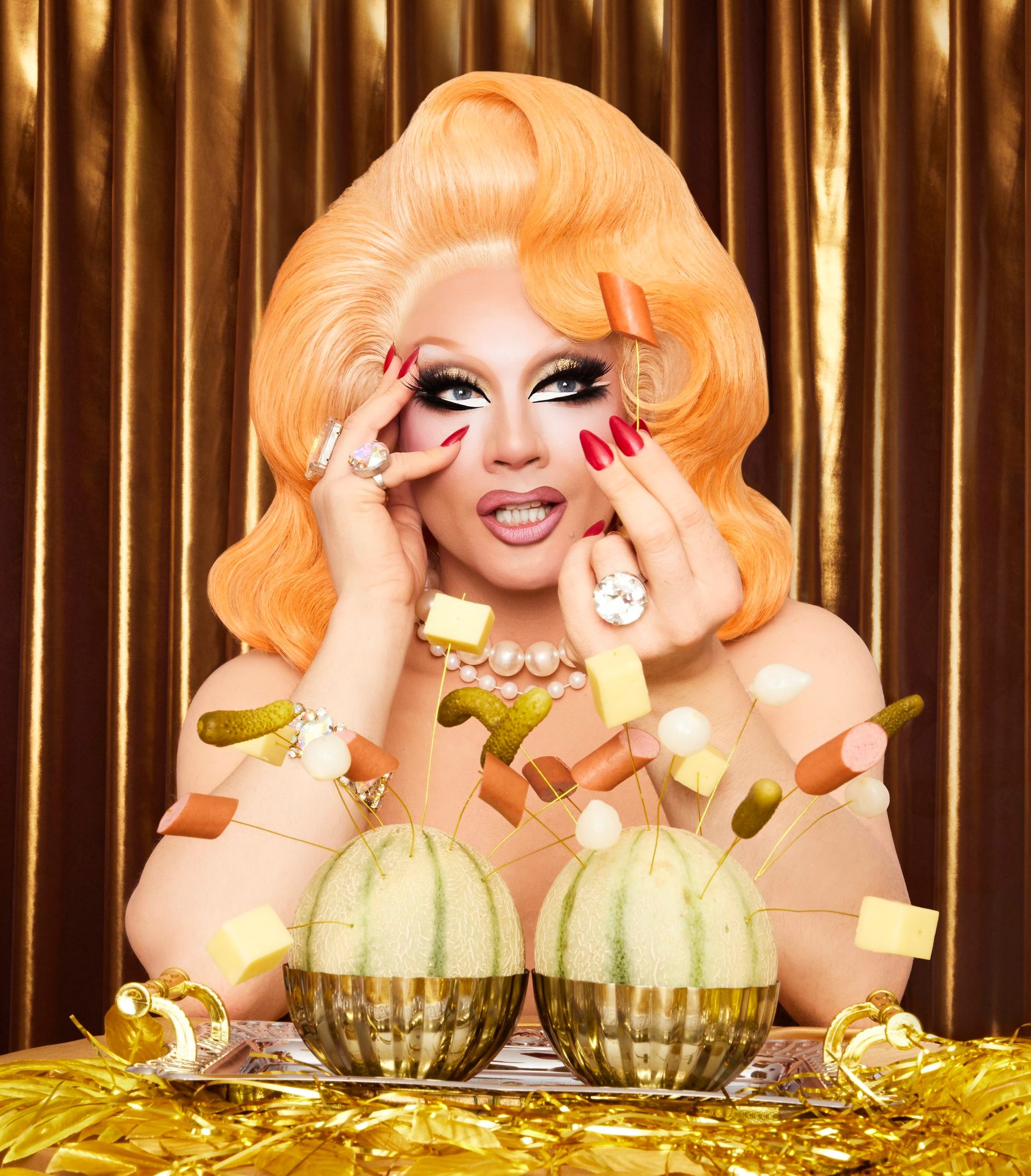
What were you like growing up in County Durham?
I imagine I was a bit of a nightmare, to be honest. I’ve always been a true show-off at heart. I was always in the plays at school. I was the school pantomime dame. I started doing magic tricks just to make me even more weird. Gay, strange, and does magic. Very common combination.
I started doing magic shows in my local library when I was seven or eight. Then I started doing kids’ birthday parties. I did Punch and Judy shows, balloon modelling, and magic tricks. Then I got into drama workshops near where I grew up. Very busy child.
You’ve said the dame had the best clothes, the best jokes, and the biggest applause. Do you remember the first one you saw?
My mum was in the local amateur dramatic society, and she used to put on and be in pantomimes. I think one of the first ones I saw probably would have been one my mum was actually in. She used to quite often play the dame as well. She’s a real funny character.
We always used to go to Glasgow, where my grandma lived, and we’d go to the Pavilion and see the Krankies. I used to love them. We’d go to Darlington and Sunderland and Newcastle. Lots of theatres make their money for the whole year off the panto. It’s a real institution, and I love it so much.
How did that feed into the Christmas shows you made with Sink the Pink?
In about 2016, I started to make my own big ensemble Christmas shows in London. They were like adult pantomimes, but they were all original stories. We did one called How to Catch a Krampus, about a Victorian spirit medium looking for a missing child who’d been eaten by the Krampus. We did Escape from Planet Trash, which came out in December 2019. The storyline I’d written was that the planet had been overtaken by a mysterious virus. Then two months later, that pretty much started to happen.
I did one in the basement of Selfridges called Down the Rabbit Hole, about a cabaret club in the deep dark wood run by animals and characters from different fairy tales. It got bought by a character called Fat Cat who was going to knock it down and build luxury flats. I’m really hoping that next year might be the return of the Ginger Johnson Christmas dynasty. We shall see.
Ginger began with a woman you wrote for a university radio play. How did she become your drag persona?
Completely by accident. When I went to uni, I was doing a course in scriptwriting. We shared a module with the performance students, and I just thought, God, these people are fun. I rather presumptuously thought I could teach myself to write, but I’d never get actor training in the way I could if I switched to this other course. So, that’s what I did.
We had a module where you had to write a one-person radio play. Mine was quite dark. It was about a child who’d been washed out to sea on the beach at Tynemouth. I based the character on all the amazing women I grew up around in the North East. To get it marked, you had to record it. I didn’t know any actresses who were old enough, and I definitely didn’t have any money to pay anybody. So, I just did it myself. Then someone asked me to do it live, and someone else asked me to do something else. It all just completely spiralled from there.
What really appeals to me about drag is that you have to master so many skills to be good at it. You have to be every single part of a creative business. I’m quite an obsessive person, so it gives me something to obsess over. There’s always something to learn about or to be working on. I think that’s what’s kept me going for 20 years.
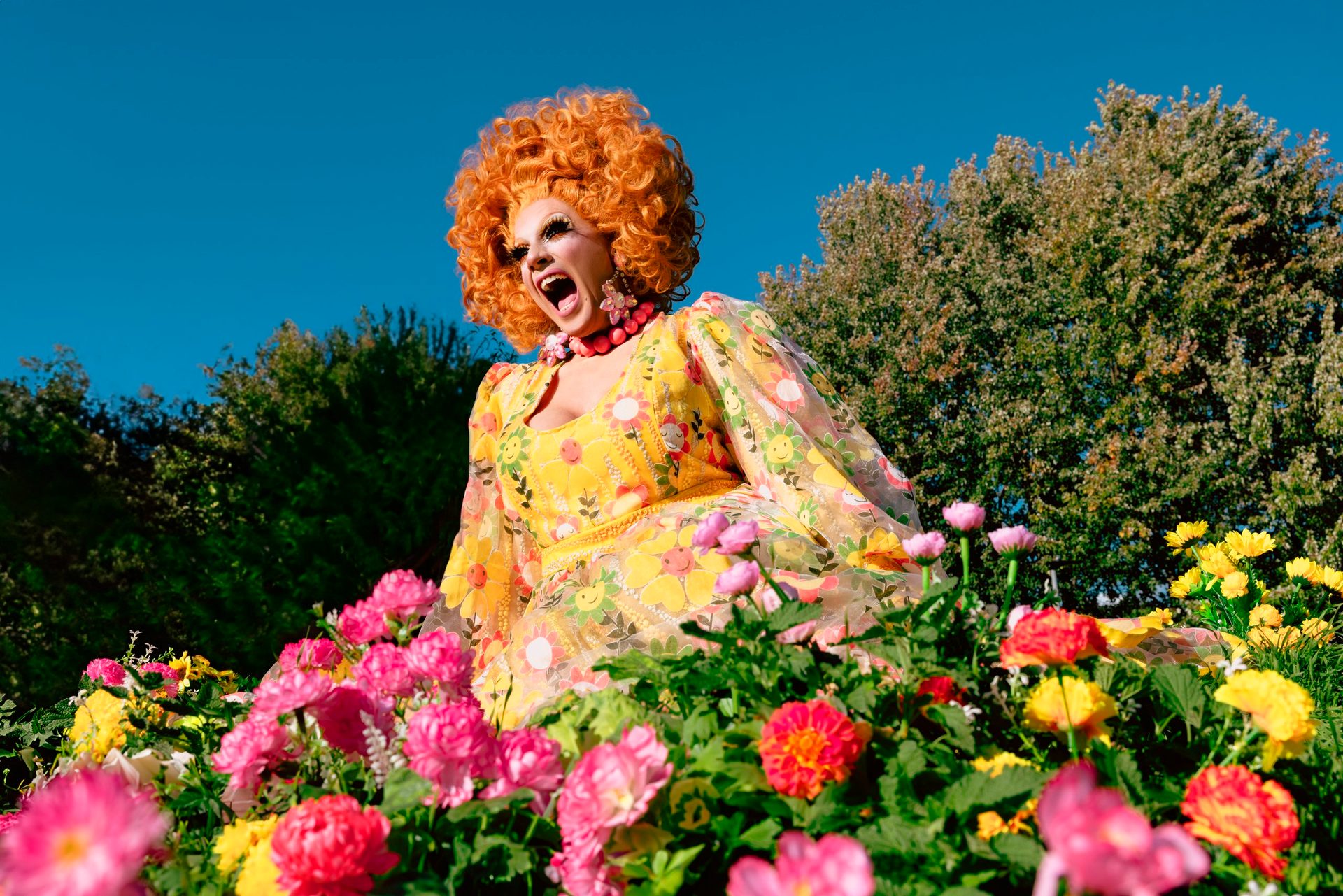
What did those years in cabaret teach you before Drag Race?
Realistically, everything. I was lucky enough to land in the East London alternative cabaret, comedy, drag, and live art scene around 2010. I was surrounded by artists from loads of different disciplines, trying new stuff all the time, writing stuff just before you go onstage, and then changing it while you’re out there.
Talking onstage into a microphone, no matter who you are, you’re going to be really bad at it for quite a while. You’re learning the rhythm of how to speak to an audience and how to get them into the state you want them to be in for the next bit of performance. You can only learn it onstage, making an absolute tit of yourself. Thankfully, I got lots of opportunities to make a tit of myself.
There’s such confidence and warmth in the way you hold a room. How does that sit alongside the anxiety you’ve spoken about?
In my real life, I’m quite an anxious, shy person, truthfully. I don’t know if shy is the right word. I’m quite reserved. Ginger does not feel anxious in the way that I do. Whenever I’m in drag and performing, my goal is always to be the most ridiculous person in the room, because it lets everybody else off the hook. They see you being an absolute nutter and they think, ‘At least nobody thinks I’m the stupidest person in the room.’
A big turning point for me was getting a job presenting a breakfast show called Wakey!. It was an app where your alarm went off in the morning, and it was a ten-minute micro breakfast show. We had a big house that we ran around in and did cooking and stuff like that. It was made in conjunction with Dr Iain, and it gave you tips on how to have good mental health. We started right at the beginning of 2020, so we went into lockdown doing it. I ended up writing it as well. I learned so much about managing mental health and really practical things that you can do to help yourself out. That changed my life in a really, really big way.
In Show Pony, you have us laughing at something outrageous, then reveal something quite lonely underneath. What does laughter allow you to talk about?
Everything. Laughter is very freeing, and it’s very communal. No matter what’s going on in people’s lives, what’s happened that day, or what their differences in what they believe or how they live might be, in a moment when everybody’s laughing you’re all so beautifully, organically connected to each other.
That opens the gateway for people to experience other emotions as a group in a way that feels safe, because everybody else is there with you. By flipping between the two, you let people dip their toe into an emotional space, and then you pull them back in for a hug again.
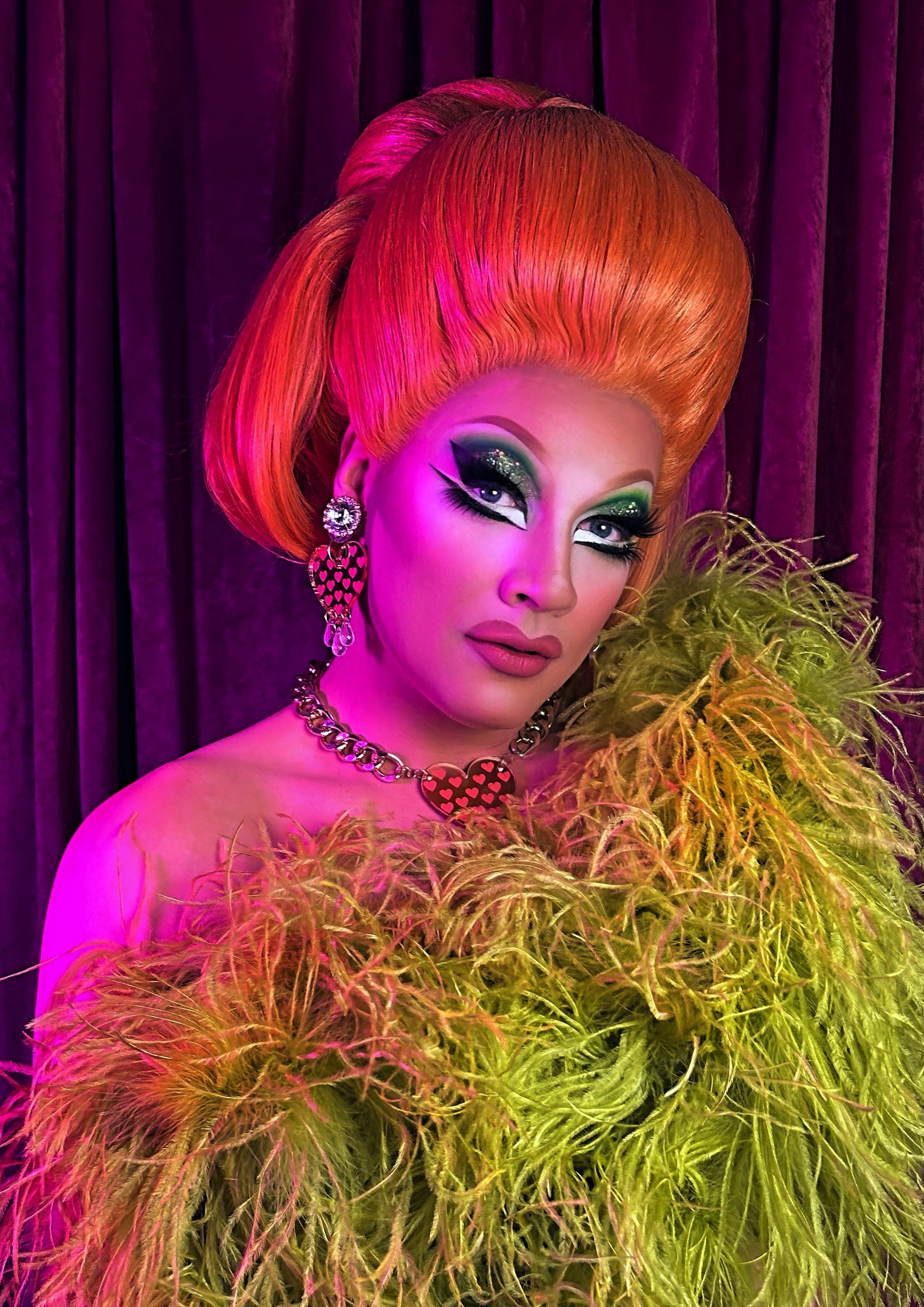
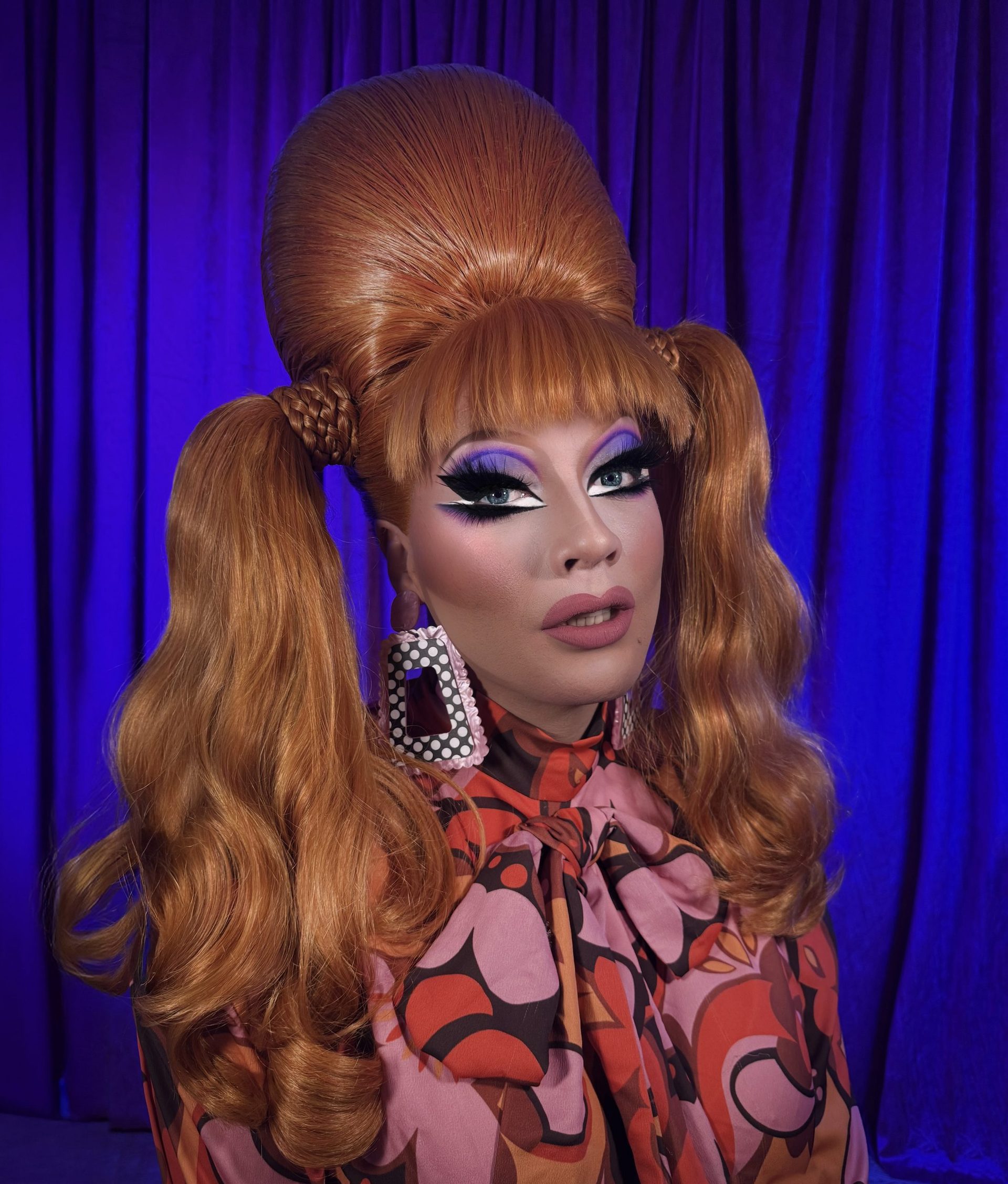
One of the loveliest moments for me was hearing how cooking gave you and your parents a new way to connect during MasterChef. What did those conversations open up?
A lot of reminiscing about childhood, which is something my parents and I don’t do very much. We’re not a particularly sentimental family. We’re quite busy people. We’d much rather talk about what’s going on and what’s coming up. But food is such an emotional thing, and it’s so connected to memory. Some of the challenges we were given on the show really poke that as well. A meal for a special person, or something that reminds you of childhood.
Both my mum and my dad are really good cooks. It was interesting to learn how many of the memories of my childhood are tied up in the food we were eating at the time. It was really nice to share that with them.
You also talk about your dad becoming seriously ill. How is he doing, and has that changed how you spend time with your parents?
He’s doing really, really well. It’s not even a year ago yet since it all happened, and it really did happen as rapidly as it happens in the show. It was a real shock. It came out of nowhere. When I think about how I was feeling at the time to how he is now, it’s miraculous, honestly. I definitely try to be more attentive about going home now.
The pony becomes a way of reconnecting with the freedom and imagination you had as a child. When did you feel you’d lost touch with that?
I think being a big, visible queer person in the media is tough. You can attract a lot of negative attention, and that’s really hard to deal with, especially when you don’t feel like you’re putting anything out into the world that’s intended to harm or annoy anyone. Just by the nature of being visibly queer in the media, you get bashed. That can really come for your spirit, I’ve found.
Since being on Drag Race, I experience the world in quite a different way, especially online. It makes me want to retreat from the internet, but by the nature of my job now, I have to live on the internet. This show is an attempt to reclaim a little bit of that by saying it out loud.
In the show, you sometimes describe your younger self as a little girl. How do you think about the relationship between Ginger’s story and your own?
It was quite hard when I was first performing the show. I would get a bit lost in the sauce and get the pronouns wrong. It’s a bit disorientating for an audience because Ginger is, I hope, a very rounded character that you can take at face value. I don’t want to put the pin in that balloon for people during the show. So, I use she/her pronouns because we’re all in on the gag there, really.
My gender is male. Drag has never really been much about exploring gender for me. It’s been more about exploring character. I know a lot of people find great things out about themselves through the process of doing drag in relation to gender, but that’s just not the path that I’m on. I try and leave my non-drag self out of things as much as I possibly can. I just steal his stories and then take them onstage with me.
How do you decide that a moment needs a song?
That’s the great big question in writing theatre. I knew singing a song about the chakrapractor would be more evocative than just describing him, so I knew that needed a song.
The ballad near the end, She Almost Looks Like You, I wrote two days before going out on tour. I wrote it in about a day. I knew the show needed a soft moment in it, but I also felt there was something left that I had to say, and I wanted the support of the music to say it. This is the first time I’ve written what you could call a concept album. It’s been so fun. I think I already know what the next one is.
Who did you work with on the music?
My really good pals Bourgeois & Maurice are a musical cabaret duo, and they mentor me in songwriting. I make the demos myself. I’ve got a little synth that I got myself as a Christmas present last year, and that’s how I started with this.
I was scrolling TikTok one day and came across this guy who’s called Guru. He’s in a band called Guru that he writes for. It was a TikTok of him dancing around his kitchen with a spatula in his hand, cooking his dinner, dancing to this psychedelic jazz fusion music he makes. I knew that was what I was pushing towards. I just messaged him and said, ‘Look, I’ve written these demos. What are you doing for the next couple of months? Do you want to write this album with me?’ He said yes, and that was it. We did all of it remotely. He came to the show in Leicester, and we got to meet for the first time, which was really special.
Are you going to release the album?
Well, yeah. Why the hell not? I’ve got all of the instrumentation, but I haven’t recorded a vocal onto it yet. I won’t put it out until after the show’s over because it’s spoilers. I’ve also got maybe ten more songs that didn’t end up in the show. I’ve half written a Christmas song, and there’s no way I can get it out in time. So, that’s going to have to wait.
You’ve spoken about watching Graham Norton late at night with the volume turned down. With Drag Race UK leaving the BBC, what’s at stake for people looking for that glimpse of themselves on television?
I think young people can find queer representation out there. They’re not watching it on TV. It’s a shame Drag Race is going, and it’s not the only queer show going in these cuts. But it’s an older audience that aren’t going to get the representation they need to see of what it’s like to be a young queer person out in the world. Young people have got each other, and they’ve got TikTok and the internet.
The thing we’re losing is that intergenerational experience. Kids watching it with their parents or grandparents, or older people who maybe have never had access to a queer scene. We need those conversations happening in people’s living rooms, in safe, comfortable environments around the people you love. I think the young people are going to be all right. It’s everybody else that I’m worried about.
For someone who’s lost touch with their own version of that pony, what would you want them to take away from an evening with you?
The show is partly inspired by The Artist’s Way. One of the tasks is about reconnecting with something special from your childhood and having a creative date with that thing. It’s really powerful to be reminded who you were before the pressures of the world got to you, because that version of you is very, very much still in there.
You’ve got to thank that kid that got you to where you are now by entertaining them every now and again. Get other people around, get their show ponies out, and have fun with each other. Having fun with other people is the biggest act of generosity you can do. I think the world needs generosity right now.
Show Pony is touring the UK.
For dates and tickets, visit gingerjohnson.co.uk
Ginger also makes a one-night guest appearance in Dick Whittington: Adults Only at the King’s Head Theatre on 3 December.
Book tickets at kingsheadtheatre.com
Words by Nick Barr
Featured photography Multitude Media