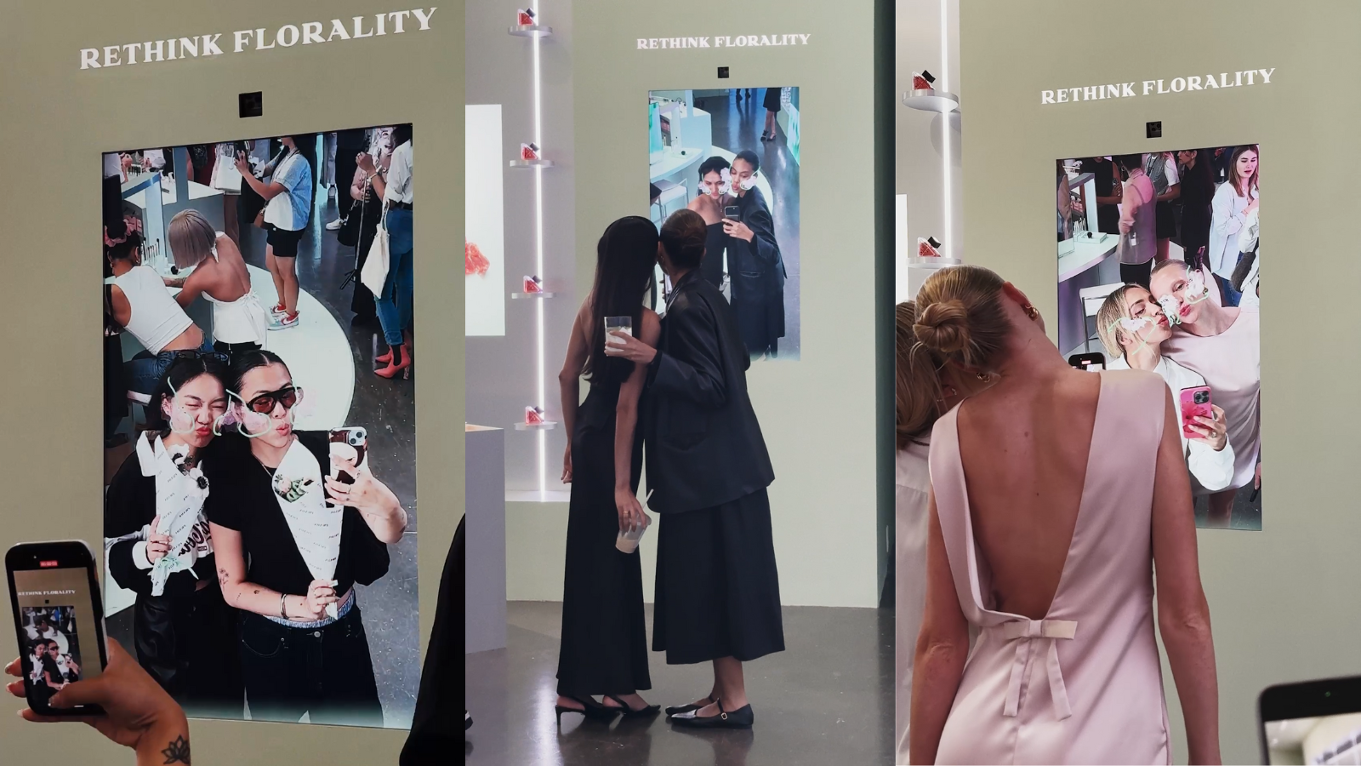
Walk into a modern store today and ask yourself one question: is this space simply displaying products, or is it trying to interact with you?
That difference matters more than ever.
Retail is no longer competing only on product, price, or location. It is competing on attention, memory, and experience. Shoppers have become used to digital environments that react instantly, personalize recommendations, and make exploration feel easy. So what happens when they walk into a physical store and see… just another static screen playing a loop?
That is exactly why more brands are turning to AR mirrors.
These mirrors are not just “cool retail tech.” They reflect a much bigger shift in how brands think about stores. A store is no longer just a place to place inventory. It is a space where a brand can capture attention, guide discovery, create emotion, and even collect insight about what people engage with.
What Are AR and AI Mirrors?
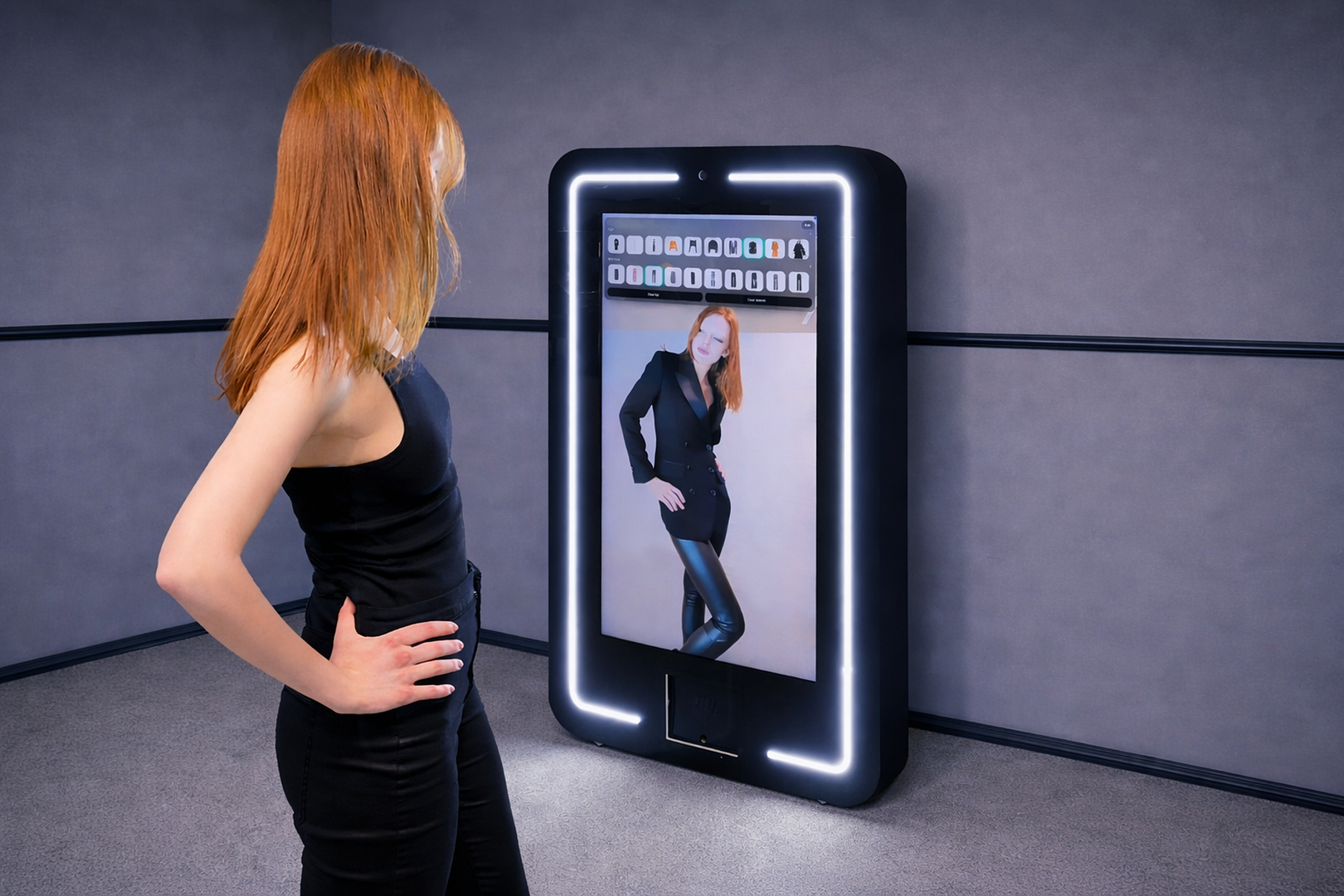
AR and AI mirrors are interactive screens that use technologies such as augmented reality, computer vision, and artificial intelligence to respond to the shopper in real time.
In retail, they can be used to:
- let shoppers virtually try products or effects
- guide product discovery in a more visual way
- create branded photo and video moments
- personalize content based on interaction
- turn a storefront or in-store display into an active touchpoint
The key difference is that these mirrors do not just show content. They create a two-way experience. Instead of broadcasting the same message to everyone, they invite people to engage, explore, and participate.
Why Smart Mirrors Are Becoming a Major Retail Trend
Most shoppers do not come into a store to look at another screen. They want something more useful, interactive, and memorable. Brands understand that passive displays are easy to ignore, which is why the role of in-store screens is changing. Instead of simply showing content, they are expected to help shoppers explore, compare, discover, and participate. That is why AI and AR mirrors are growing: they turn a screen from a passive display into an interactive retail experience.
That is why more brands are rethinking the role of screens in-store. A display is no longer just a support element. It can become a media surface, a virtual try-on point, a branded content tool, and a data-generating touchpoint at the same time.
This is especially relevant in categories where shopping decisions are visual and emotional, such as beauty, fashion, accessories, fragrance, and lifestyle. In these spaces, AR and AI mirrors help brands create experiences that feel both useful and memorable.
AI and AR Mirror Examples From Leading Brands
A big reason this category feels more credible now is that recognizable brands are already using it in real retail and campaign environments.
Prada has used AR mirror experiences as part of branded beauty activations and pop-ups, showing how the format can support luxury storytelling and highly visual customer engagement.
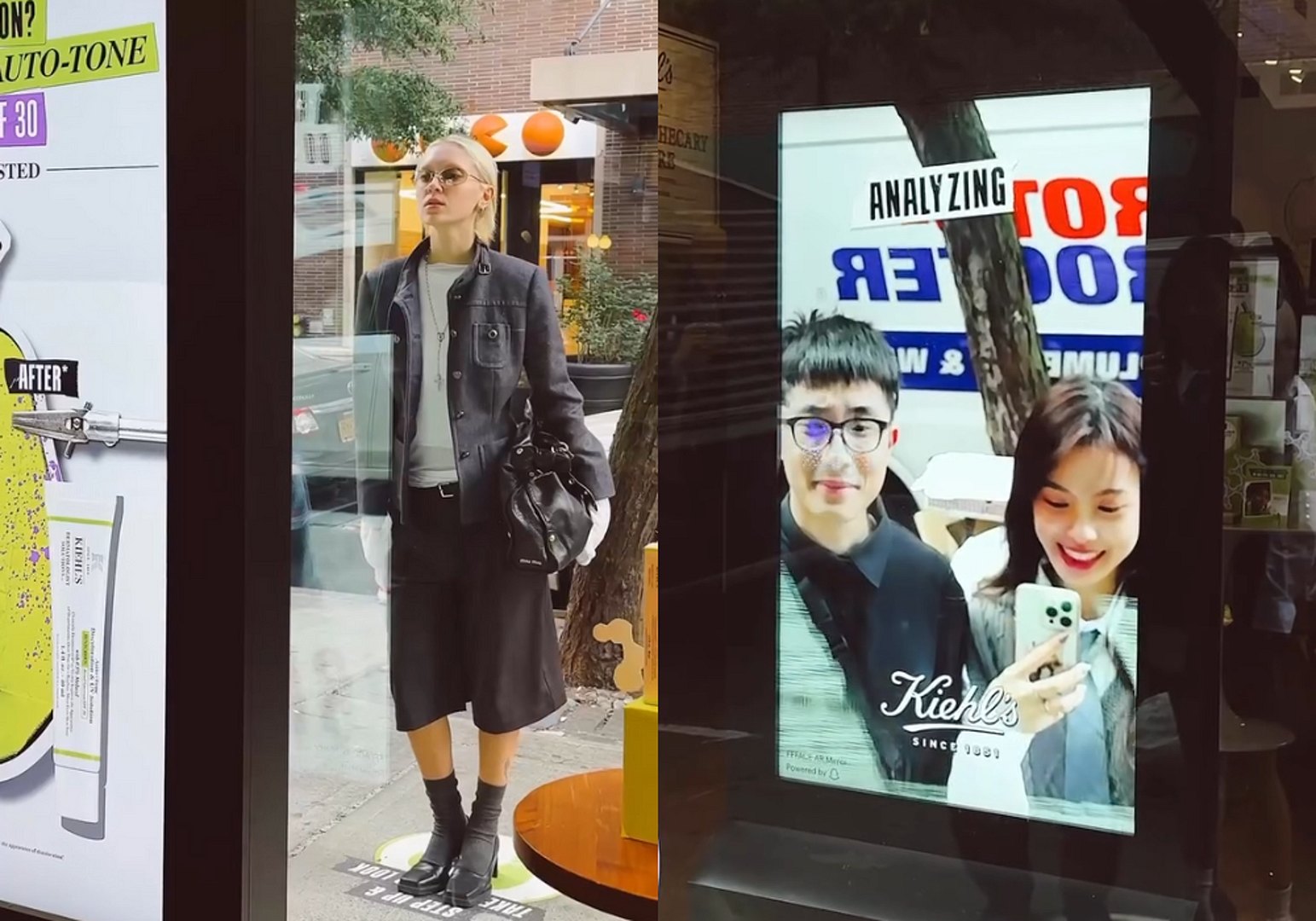
Kiehl’s demonstrates a more conversion-oriented use case. Interactive AR storefront experiences show how brands can use this technology not just inside the store, but also as a way to attract foot traffic and turn a storefront into an engagement channel. The activation generated 3118 total interactions and helped drive a 20% increase in foot traffic.
Calvin Klein represents the campaign side of the trend, where interactive mirror experiences become part of a larger branded launch or immersive activation.
Nike fits into the culture-led retail side of this movement. In that context, AR mirrors can become part of a more experimental in-store experience that connects product, identity, and visual expression.
Together, these examples show that AR and AI mirrors are not tied to one category or one format. They can be adapted to luxury, beauty, fashion, lifestyle, and experiential retail.
Benefits of AR and AI Mirrors for Brands
Brands are investing in AI and AR mirrors because they solve several retail challenges at once.
They help attract attention in spaces where static screens are easy to ignore. They improve shopper engagement by giving people something to do, not just something to watch. They support product discovery in categories where visual comparison matters. And they help create stronger branded moments around launches, campaigns, and activations.
They also bring an important media and content layer into the store. Many interactive mirror experiences lead to branded photos, videos, and user-generated content, which extends the impact beyond the physical location itself.
Another reason adoption is growing is measurement. Retail teams increasingly want physical spaces to be more accountable. Interactive mirrors can provide visibility into activations, engagement patterns, dwell time, and other signals that help brands understand how people interact with the experience.
This combination of engagement, content, and analytics is a big reason AI and AR mirrors are moving beyond one-off experiments and becoming a more serious part of retail strategy.
Benefits of AR and AI Mirrors for Consumers
For shoppers, the appeal is equally clear. These experiences can make shopping feel easier, more playful, and more personalized.
Instead of only looking at shelves, signage, or static displays, people can interact with products in a more visual and intuitive way. They can try, compare, explore, and participate. That makes the experience feel less passive and often less intimidating, especially in categories where visual decision-making matters.
For many consumers, the benefit is not just utility. It is also emotional. The experience feels more entertaining, more social, and more memorable than a standard store interaction.
How loook.ai Fits Into This Retail Shift
As more brands look for scalable ways to bring AR and AI into stores, platforms like loook.ai are helping make that transition easier.
loook.ai focuses on turning screens into interactive AR and AI mirrors for retail, storefronts, events, and branded activations. That makes it easier for brands to move from static display content to more immersive, measurable, and campaign-ready experiences.
In that sense, loook.ai is not just part of the AR mirror category. It reflects the broader market direction: retail technology that is visual, interactive, and designed to connect brand engagement with real-world performance.
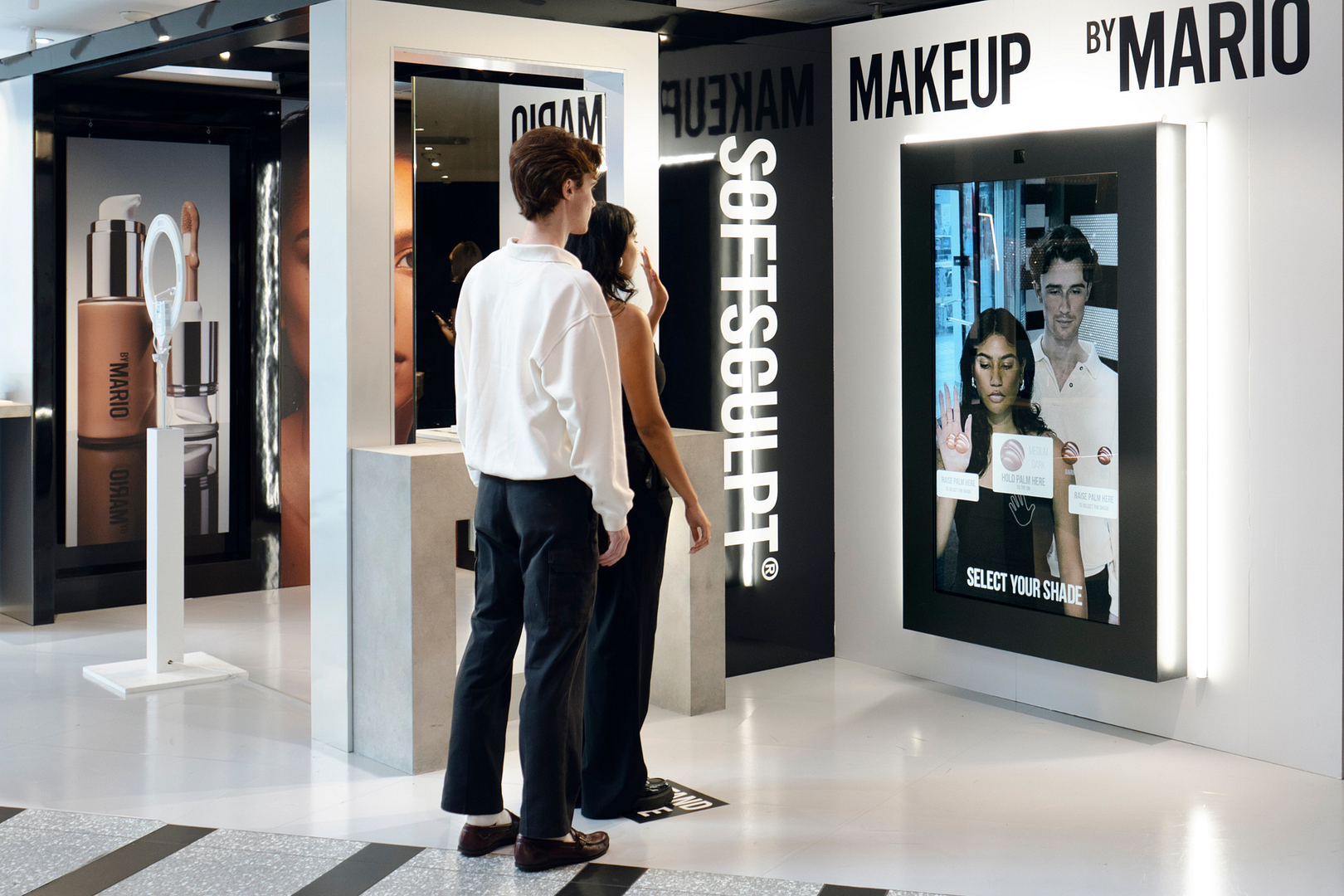
The Future of Retail Screens Is Interactive
More brands are using interactive retail displays because the expectations around physical retail have changed. Stores are no longer just places to place inventory and signage. They are spaces where brands need to capture attention, guide discovery, create emotion, and prove value.
That is what makes this trend important. AR and AI mirrors are not simply decorative tech. They represent a broader move toward more intelligent, participatory retail environments.
And as brands like Prada, Kiehl’s, Calvin Klein, and Nike show, this is no longer an isolated experiment. It is becoming a more visible part of how modern retail works.