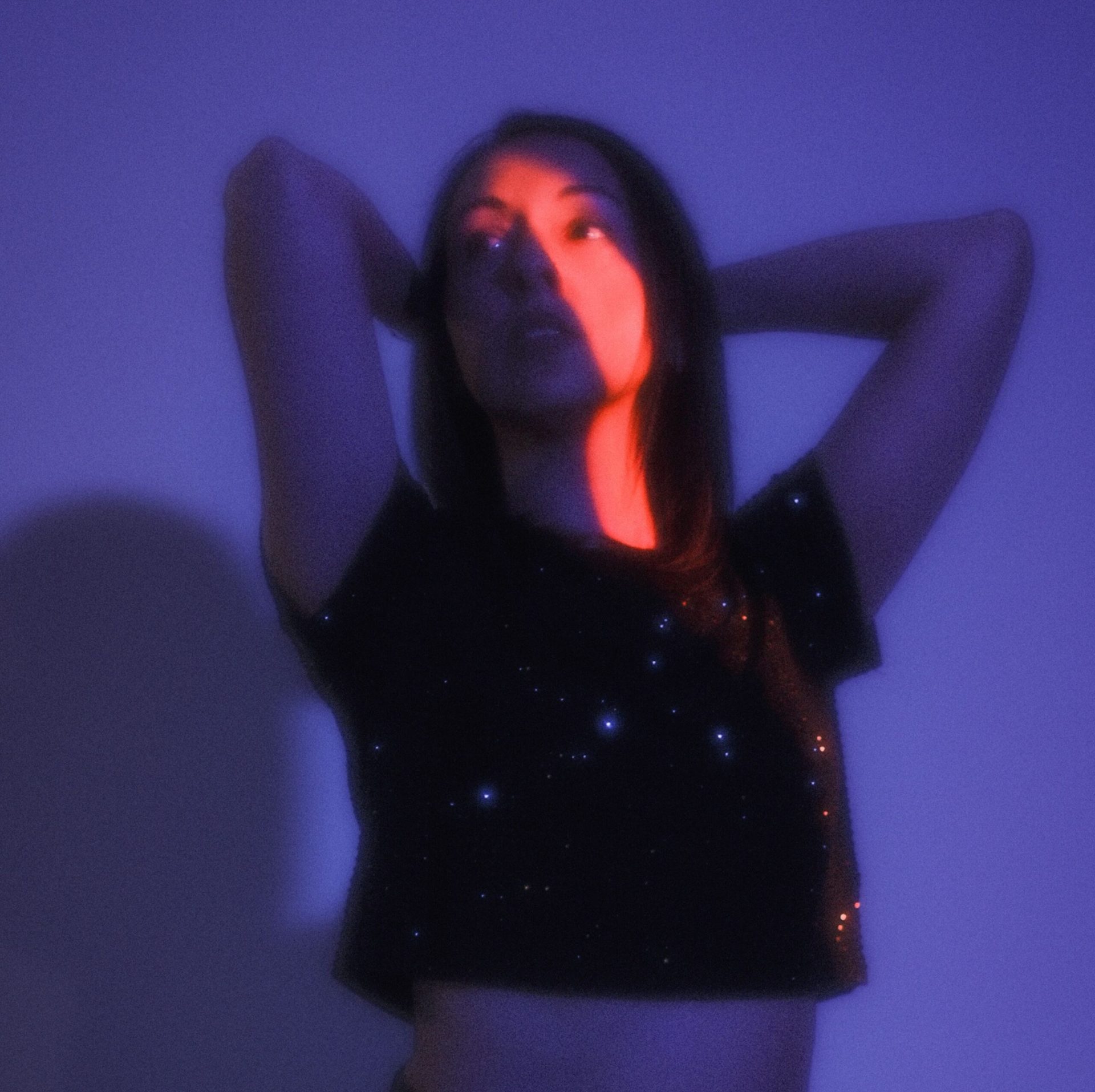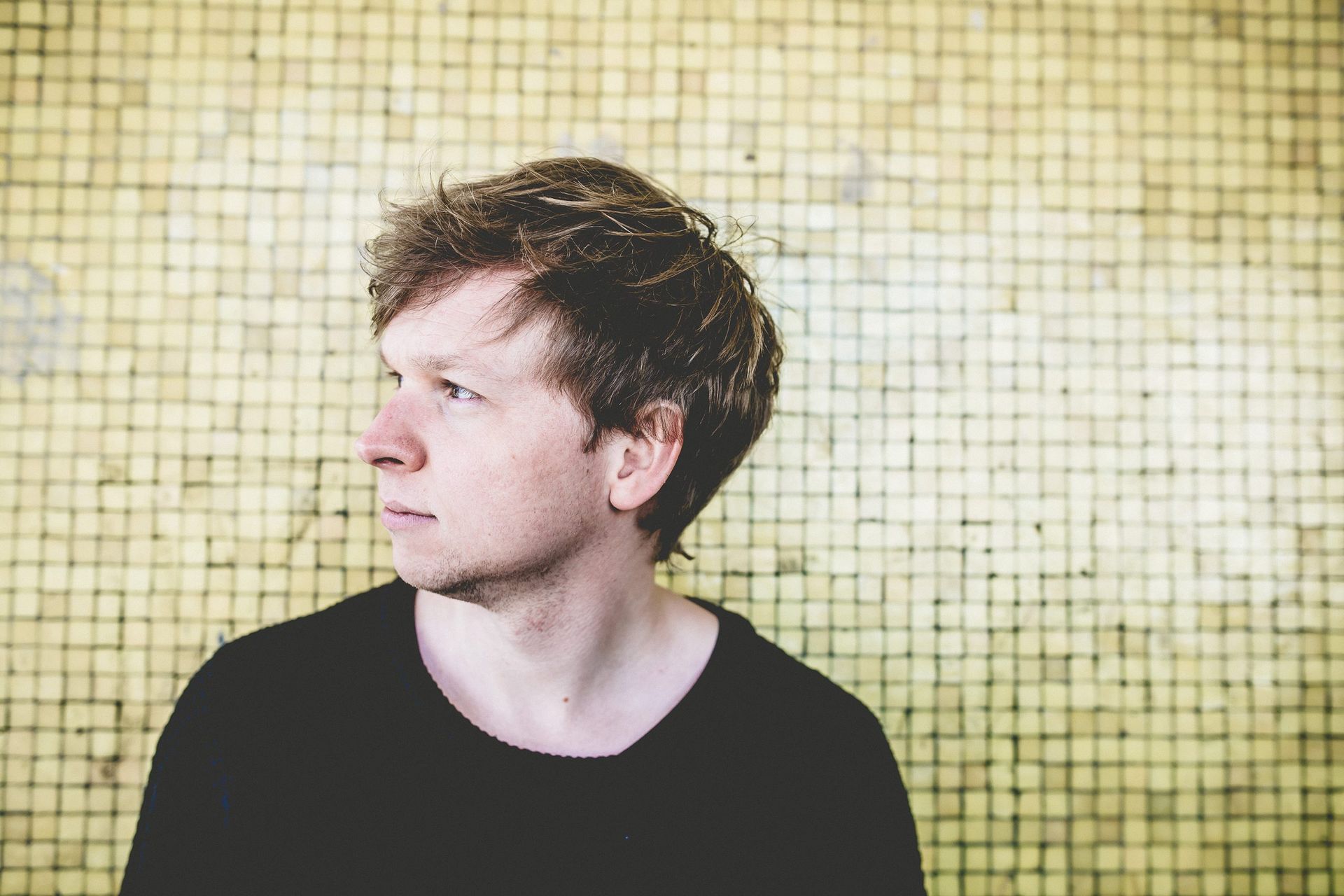
There’s something quietly radical about Rosenthal. In a landscape where electronic music either leans into clinical precision or emotional excess, Danish multi-instrumentalist Jeppe Kiel Revsbech has built something that refuses to sit still. Dark, synthetic, and deeply human all at once.
His debut album Luna, out May 8 via AfterImages, is the result of years spent behind drum kits, in journalism notepads and Copenhagen studios, and through personal grief, all of it compressed into eight tracks of shimmering dream pop that feels, above all else, like someone finally saying exactly what they mean. Rosenthal is a project shaped by the full arc of Jeppe’s life: church hymns heard from a pew as a child, late nights watching Alternative Nation on MTV with his sisters, seasons playing in Danish bands Aerobic Lyrik and Us With Millions, and conversations picked up during his time writing for Gaffa and Soundvenue. When his father died of cancer, making music stopped being about ambition and became something closer to survival.
The songs on Luna were the result.
Press comparisons to New Order, The Cure and the Cocteau Twins land easily, but there’s something distinctly Rosenthal about the way the record moves. The deep echoing basslines and programmed beats of Heart, the unrequited ache of Lashes, the kaleidoscopic release of The Home Stretch. Co-produced with Magnus Vad at Feedback Studio in Aarhus, it’s an album built to feel human first and electronic second.
We sat down with Jeppe for 18 Question feature to talk mornings, loss, My Bloody Valentine, and why making music was never supposed to be easy.
1. What’s the first thing you usually do when you wake up in the morning?
My mornings are quite average, I would say. I wake up, take a shower, eat breakfast, listen to the radio. I’m not much of a morning person, so everything usually happens in slow motion, and then I get up to speed during the day.
2. When do you feel most connected to yourself creatively?
Funnily enough, I feel my mind is sharpest in the morning, so I usually have a window of a few hours after the morning routines where my creativity flows quite freely, and I get to work on music or other projects in a very intuitive way. Many song ideas have appeared in that small window.
3. What kind of atmosphere or environment helps you write your best music?
I definitely prefer a quiet atmosphere without too many distractions. I have used my mom’s basement on many occasions as a songwriting space, as cliché as that sounds, and the majority of the songs for my album were actually written there. So, something rather basic and isolated works best for me.
4. Was there a specific record or artist that completely changed how you thought about music?
There have been a few of them over the years. I remember seeing the music video for ‘Smells Like Teen Spirit’ by Nirvana as a child and being blown away by the rawness of that song. That definitely opened my mind to the rock world. Later on, a record like ‘Loveless’ by My Bloody Valentine did the same thing to me, but in a more ‘ethereal’ way, you could say, combining noisy guitars with beautiful melodies. I guess I became a ‘shoegazer’ after that record.
5. You’ve described Rosenthal as dream pop with shoegaze and melancholic pop influences. What draws you to music that feels emotionally heavy but still beautiful?
I am quite a sensitive person myself, so those styles of music have always hit me in a deep way emotionally. But at the same time, there are some great melodies woven into the emotional heaviness of, for instance, The Cure or Cocteau Twins, and it’s really that combination of something beautiful and immediate that I’m drawn to.
6. What’s something people often misunderstand about sensitive or introspective artists?
I guess the cliché is that we’re sad and vulnerable and maybe feel a bit out of tune with the world. But life definitely has its moments, and I do enjoy hanging out with my friends and doing simple stuff like watching a football game, with the World Cup underway, or going out for dinner and drinks. So, it’s not just ‘sad and lonely’ all the time.
7. Do you think growing up around church hymns and spirituality shaped the emotional tone of your music?
Yes, definitely. My dad was a priest, and I spent many Sundays at church during my childhood listening to those beautiful church hymns and hearing my dad speak about the word of God. I think it’s impossible not to be influenced by that in some way because religion was such a natural part of the family I grew up in. But I’m proud of my background, and I feel it has given me a deeper perspective on life that I’m grateful for.
8. You started out as a drummer before stepping into songwriting and vocals. What did becoming the “main voice” force you to confront about yourself?
I definitely miss that feeling of brotherhood you get from being in a band and making music together as a collective. It’s been a challenge to be in charge of every aspect of the music – from making and recording it to finding the right people to release it. But I do have some great friends who help me with each part of that process, so, all in all, I’m happy with being the ‘main voice’.
9. Luna feels cinematic and immersive. Did you approach the album more like a collection of songs or like building an entire world people could disappear into?
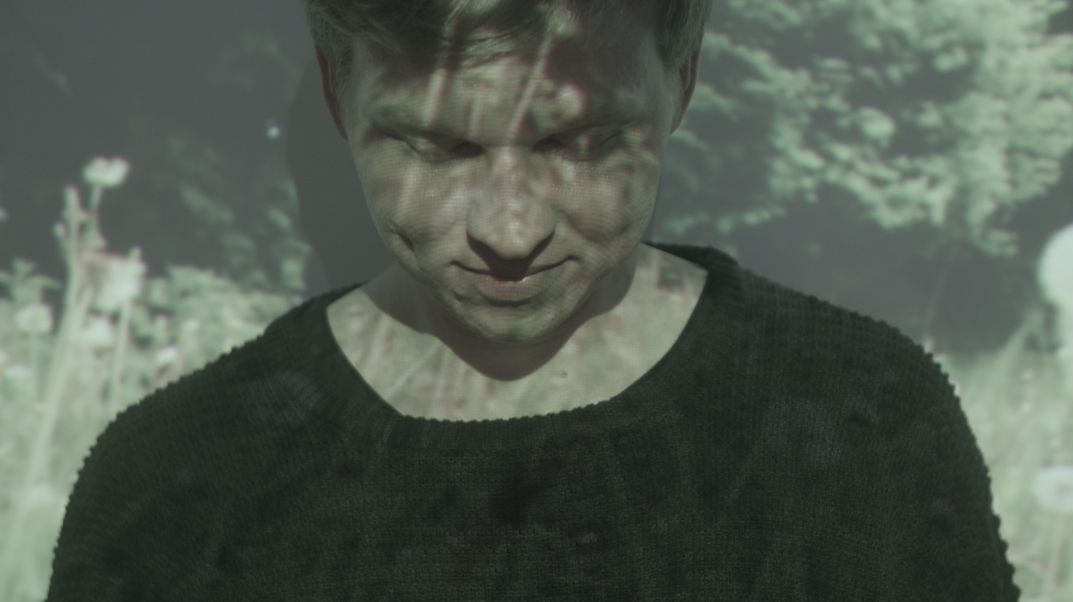
I approached it like a collection of songs, but with the underlying idea of giving the album an organic sound. The songs on ‘Luna’ are essentially pop songs, but with flaws and a rawness running through them that I really like. More than anything, I wanted the album to feel ‘human’, as corny as that sounds, and I hope that is evident in both the music and lyrics.
10. ‘A Dream’ has this uplifting shimmer underneath the melancholy. Were you consciously trying to balance hope and sadness on the track?
I don’t think it was a conscious decision, but I was definitely going for something more positive or uplifting in that song. The initial idea for ‘A Dream’ was really to play with sharp dynamics, shifting between heavy, guitar-driven verses and a soft, intimate chorus. The track came together very quickly and intuitively, and I think that gives it a certain flow and lightness that I really like.
11. The comparisons to bands like The Cure, Cocteau Twins, and New Order keep coming up around your music. Do you embrace those comparisons or try to avoid thinking about them?
I don’t really worry about them, to be honest. If anything, I feel honoured to be compared to those bands, because their music has meant so much to me, and as an artist, you’re always standing on the shoulders of your heroes. At least to begin with. Just like The Cure were influenced by David Bowie and New Order by Kraftwerk. So, all in all, I embrace those comparisons.
12. Your music feels very human despite all the electronic textures. How difficult is it to stop technology from making music feel emotionally distant?
I’m definitely not a big fan of AI when it comes to music. I think it’s become too easy to just let technology do the job for you, and making music or art is, in my opinion, not supposed to be easy. It’s a craft you learn from making mistakes along the way. That being said, a lot of great music has come from using technology in new and creative ways. So, I think it all comes down to how you approach it in order to maintain the human element.
13. You spent years playing in bands before launching Rosenthal. Was there a moment where you realised compromise was holding back the music you actually wanted to make?
I was in a band where we really tried to break into the Danish music scene, and that never really happened. I was a bit disillusioned after that experience and just wanted to make music without having a bigger vision for it. Simultaneously, my dad died of cancer, and making these songs became very much my way of dealing with the grief I was going through. So, the initial spark to start the project that became Rosenthal came more from a personal place rather than from being held back by compromises from the bands I was in.
14. As someone who also worked as a music journalist, did being around artists and interviewing bands make you more self-conscious creatively or more confident?
I think it has made me more confident, to some extent. I’ve met some pretty big artists over the years, and you quickly realise that they’re just human beings, as obvious as that sounds, struggling with life and their music too. So, if anything, it’s probably made me relax a little bit, because doubting your talent or skills is just a natural part of the creative process, whether you’re a nobody or a well-known artist.
15. A lot of dream pop hides behind abstraction, but your lyrics often feel deeply personal. How much of yourself are you comfortable exposing in your songs?
I’ve definitely felt that maybe I was exposing myself a bit too much on this album. But many of the songs are actually quite old – some of them date back to 2009 and 2010 – and were written by a much younger version of myself who was very open about how he was feeling. So I decided to keep that openness or rawness in the lyrics. But I definitely see myself taking a step back from the ‘lyrical spotlight’, so to speak, because I feel less comfortable with that position these days.
16. You mentioned wanting live shows to feel almost hypnotic and pull people away from their phones. Do you think audiences have forgotten how to properly lose themselves in music?
No, not necessarily. I was at a big music festival in Denmark recently and saw how people really disappeared into the music during some of the acts playing. So the desire to lose oneself in music is definitely still there. The problem is that people want to document every little experience they’re having for the rest of the world instead of just being in the moment. But if the artist or the show is interesting or unique enough, you still get those collective moments where people lose themselves in the music, I feel.
17. Looking back at the younger version of yourself watching MTV late at night and discovering bands like Cocteau Twins and New Order, do you think he’d be surprised by the music you’ve made now?
Yes, I think in some ways I would be. I was really into metal in my teenage years and bands like Deftones and Korn, so for a long time I wanted to be in a band that played aggressive and heavy music. But I’ve always been drawn to emotional music, whether that is channelled through rage, grief, or something else. So I would definitely recognize the emotional dimension of my music.
18. Luna is your debut album, but it already sounds like the work of someone with a very clear identity. What do you think this record says about you that ordinary conversation never could?
I think it shows that I’m a much more artistic person than I allow myself to be when I’m around friends or colleagues. Releasing this album has actually been quite a big relief to me, because I feel this is the first time I’ve let the world know who I am, so to speak. And even though it feels a bit shaky and vulnerable, I’m really glad I did that, because music is essentially my ‘reason for being’.
Luna is out now, follow via @rosenthalofficial