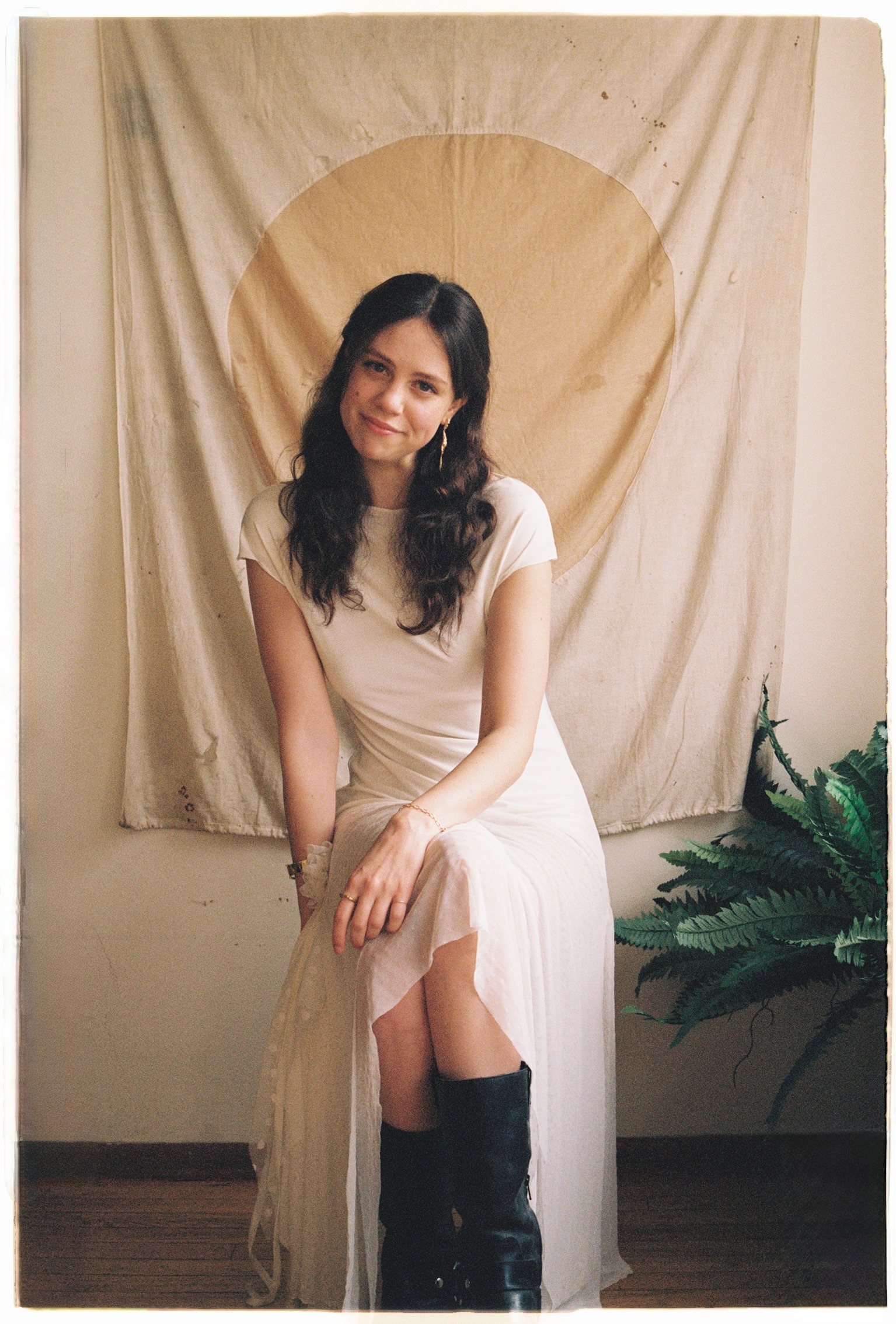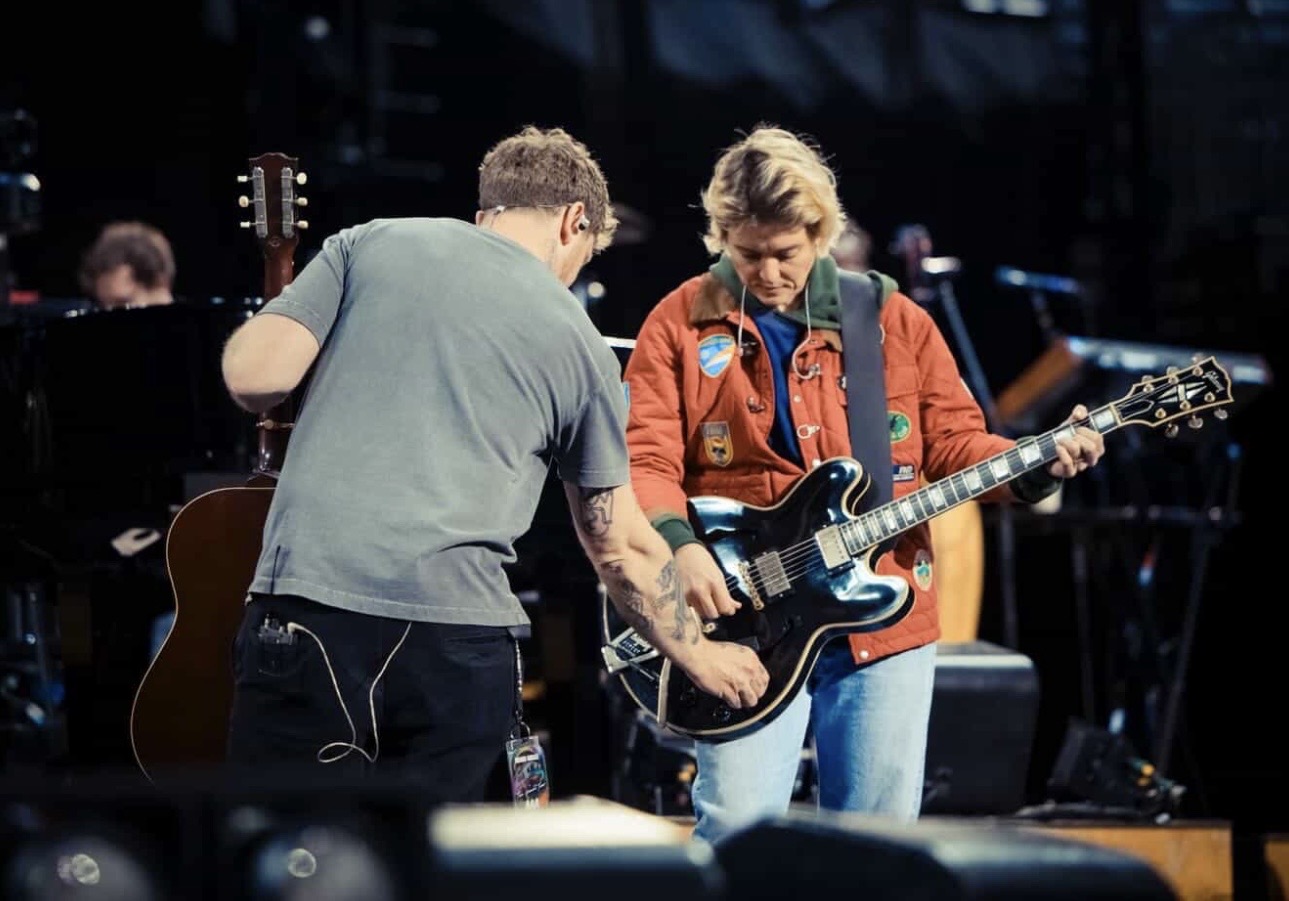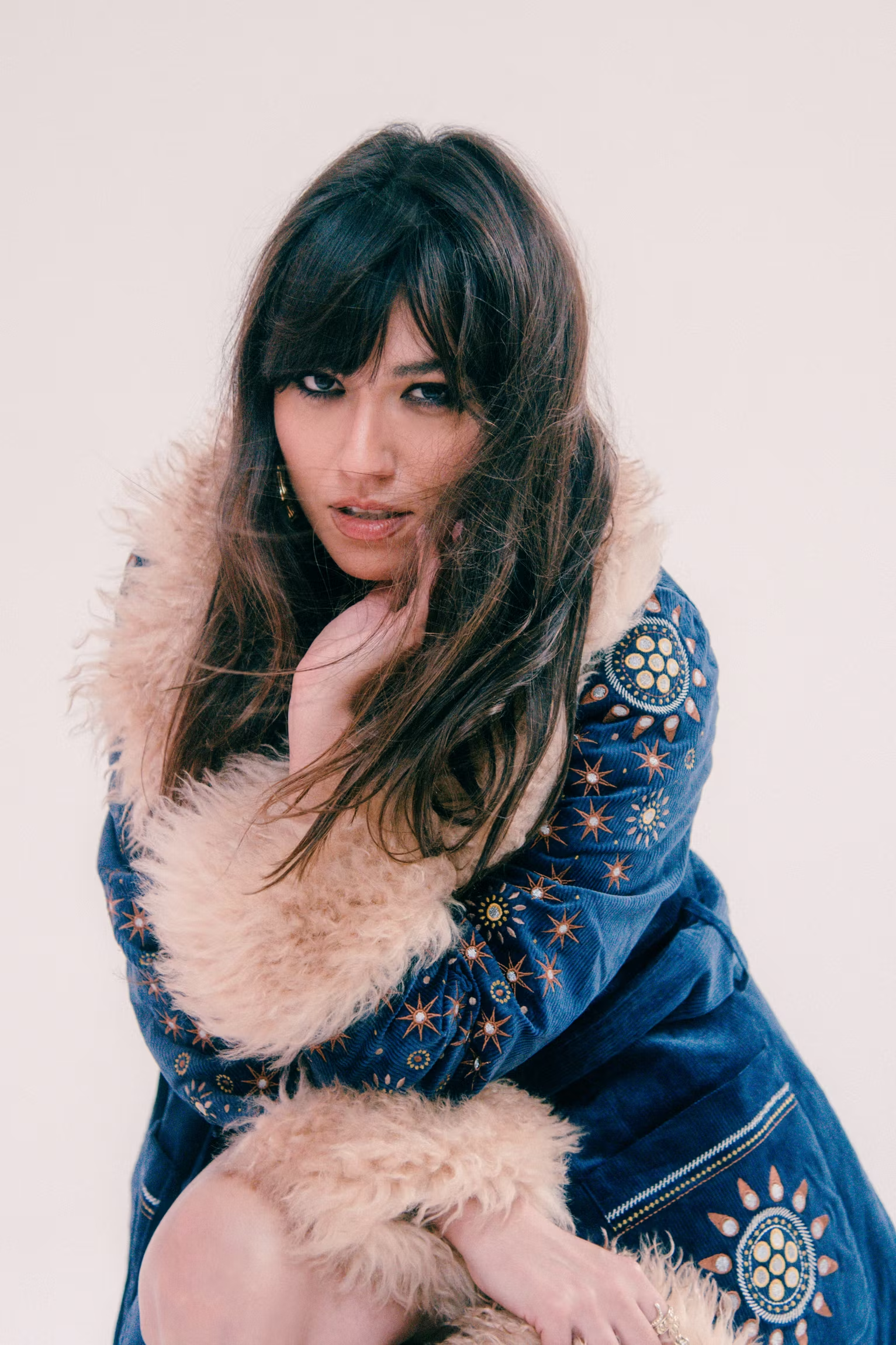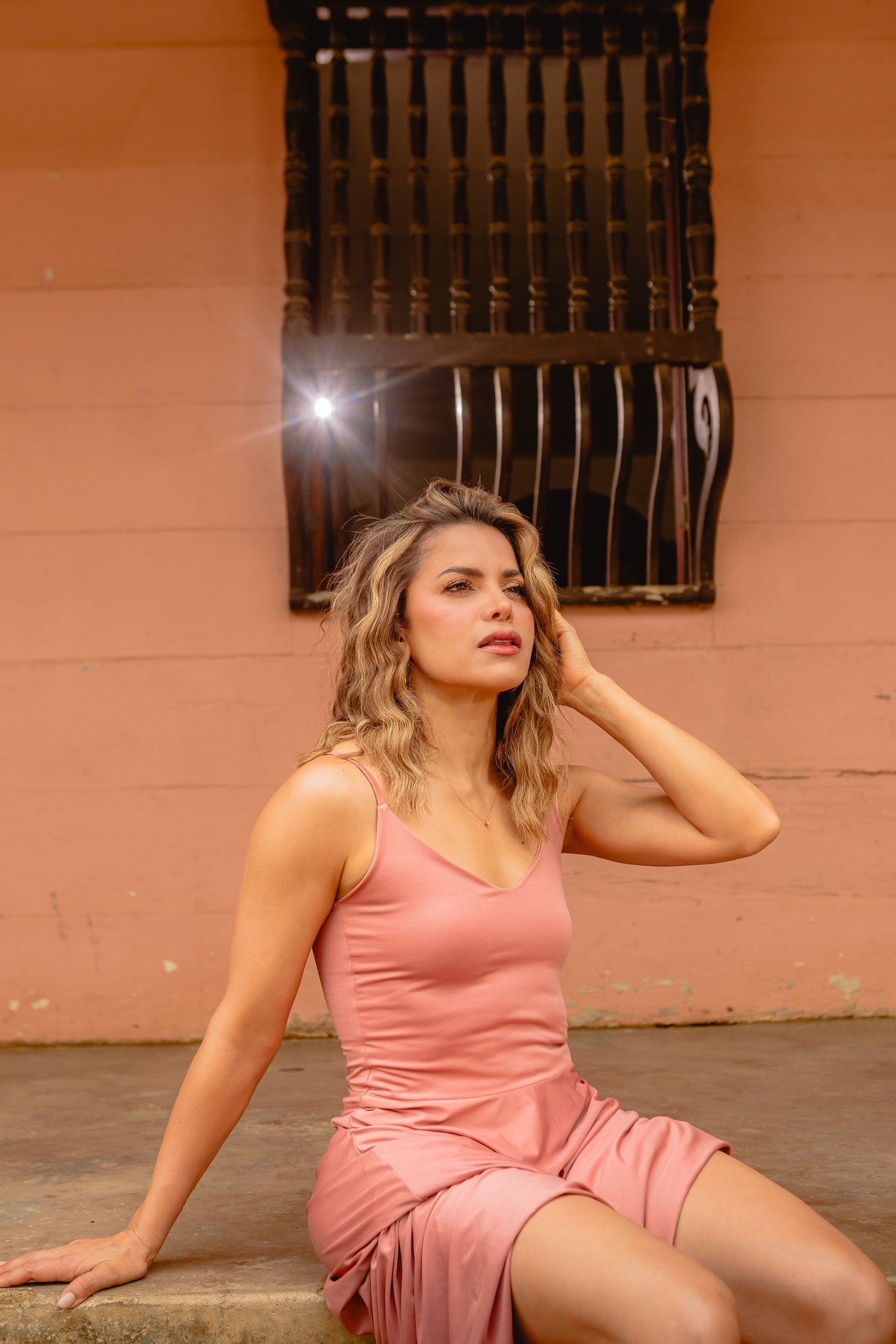
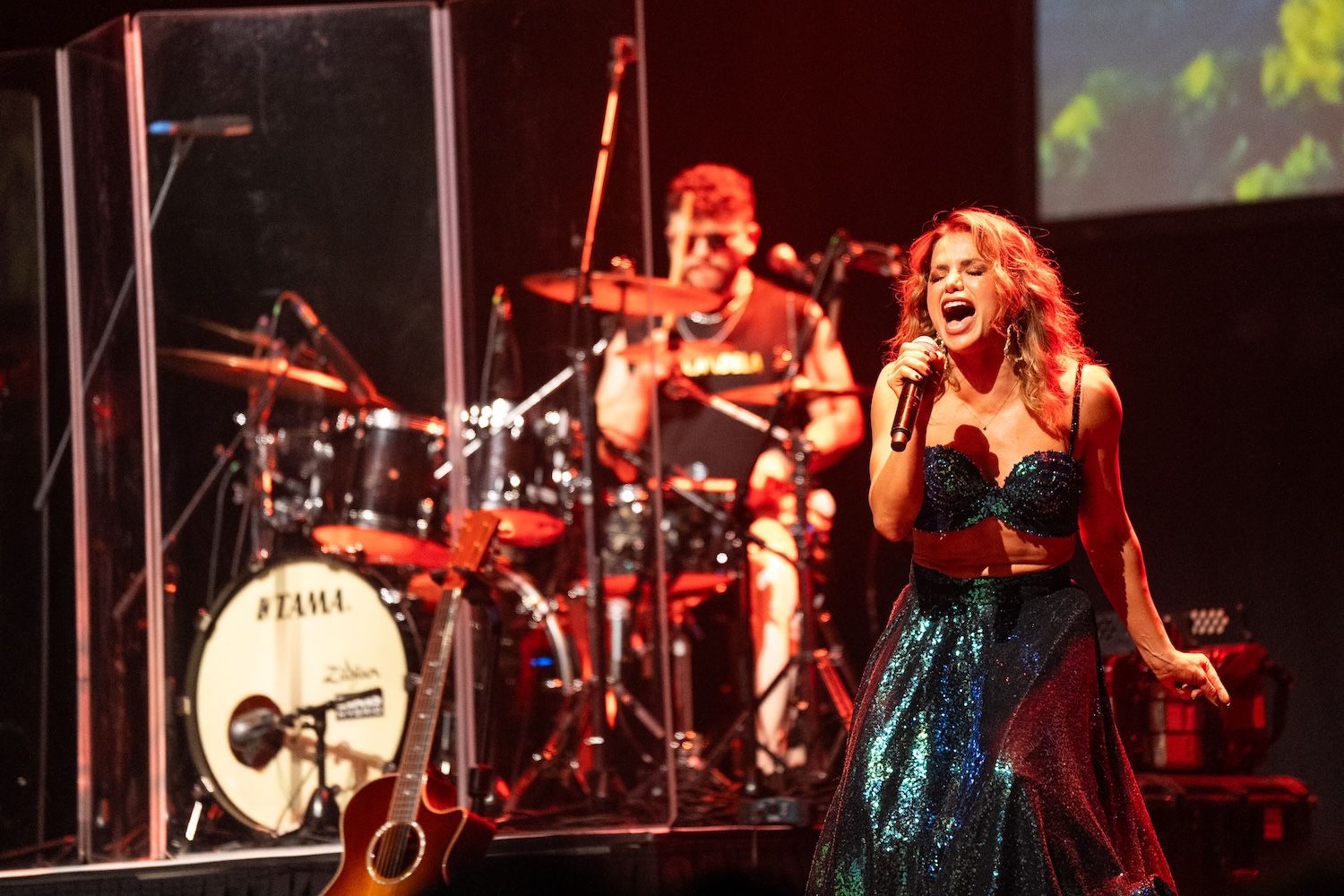
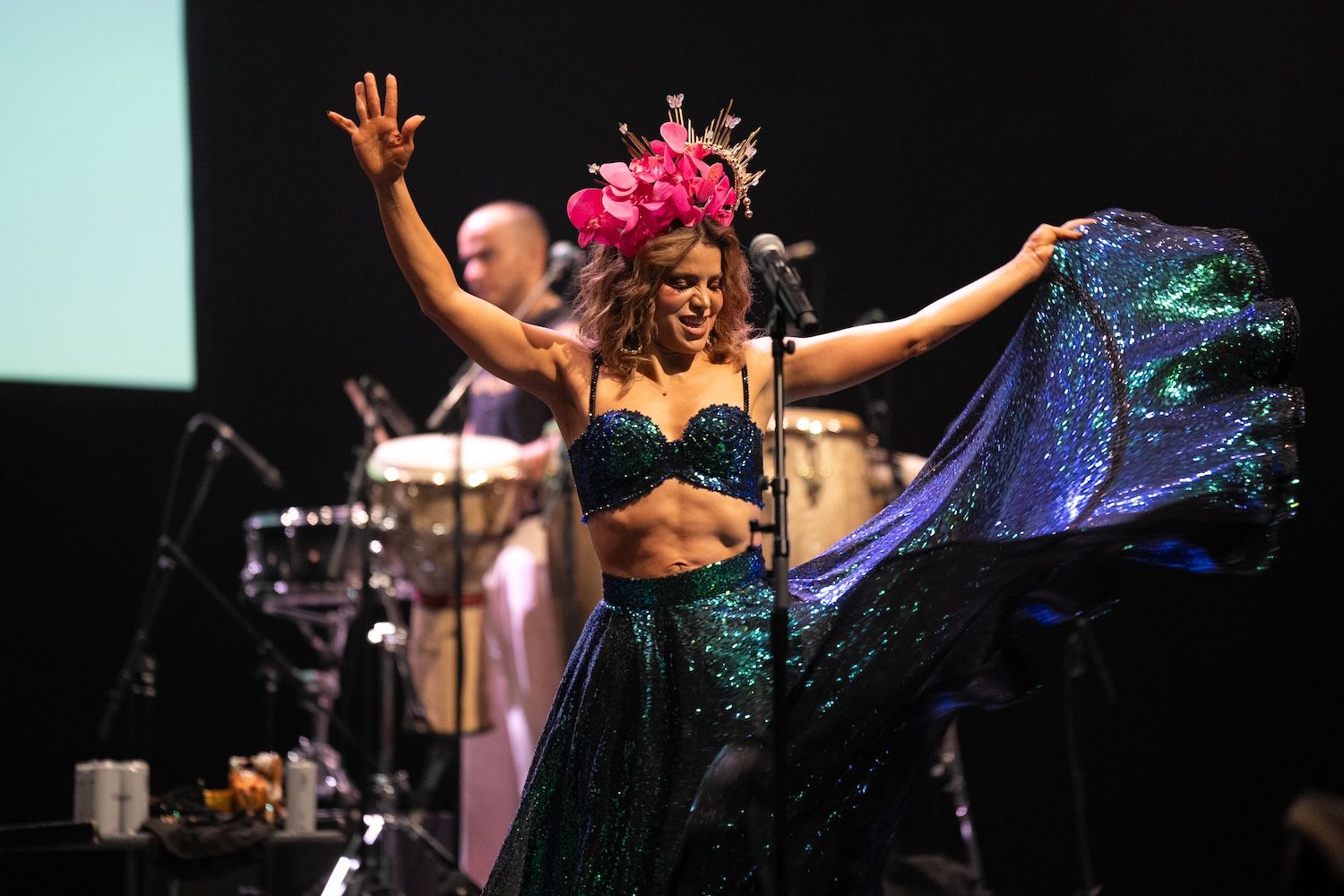
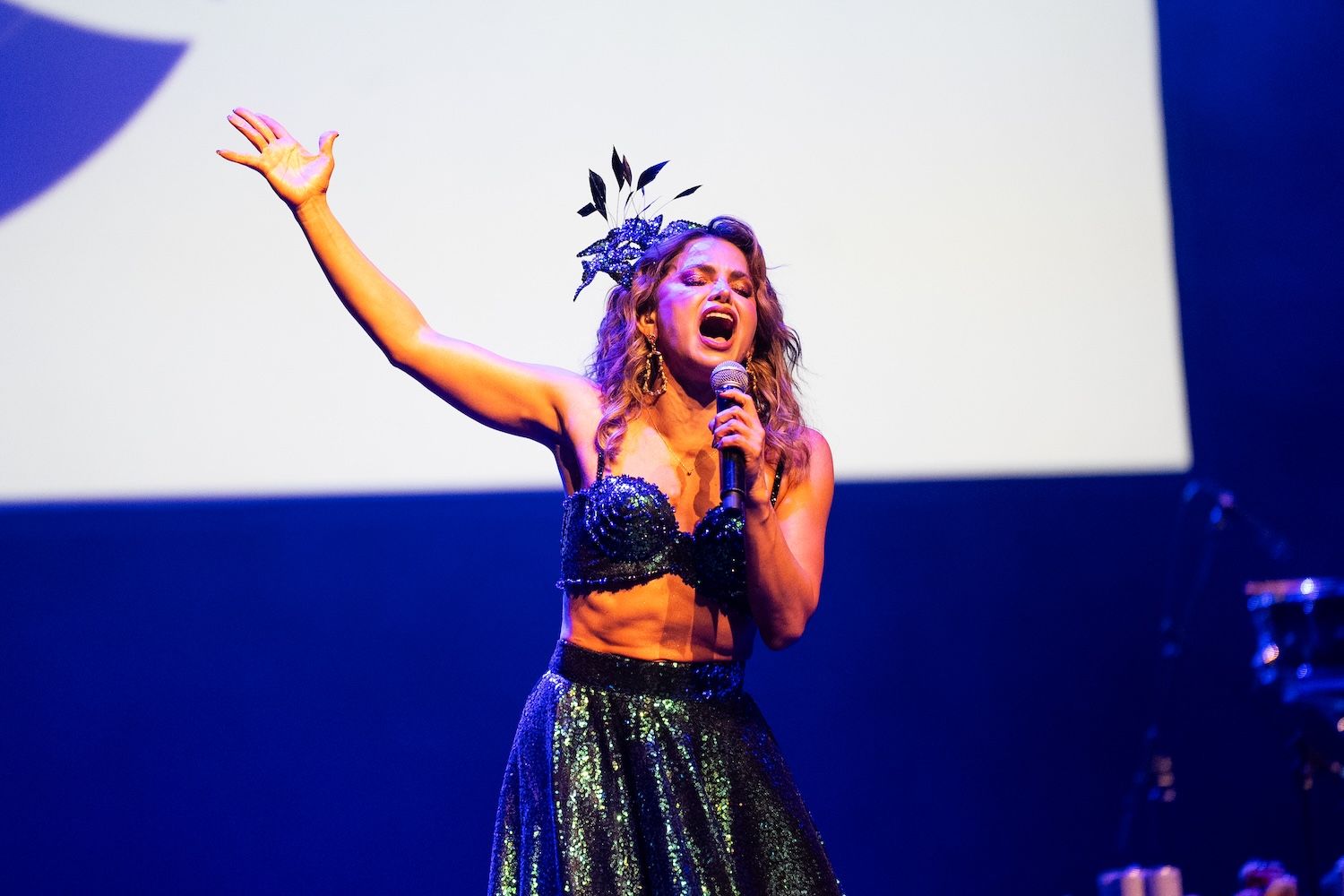
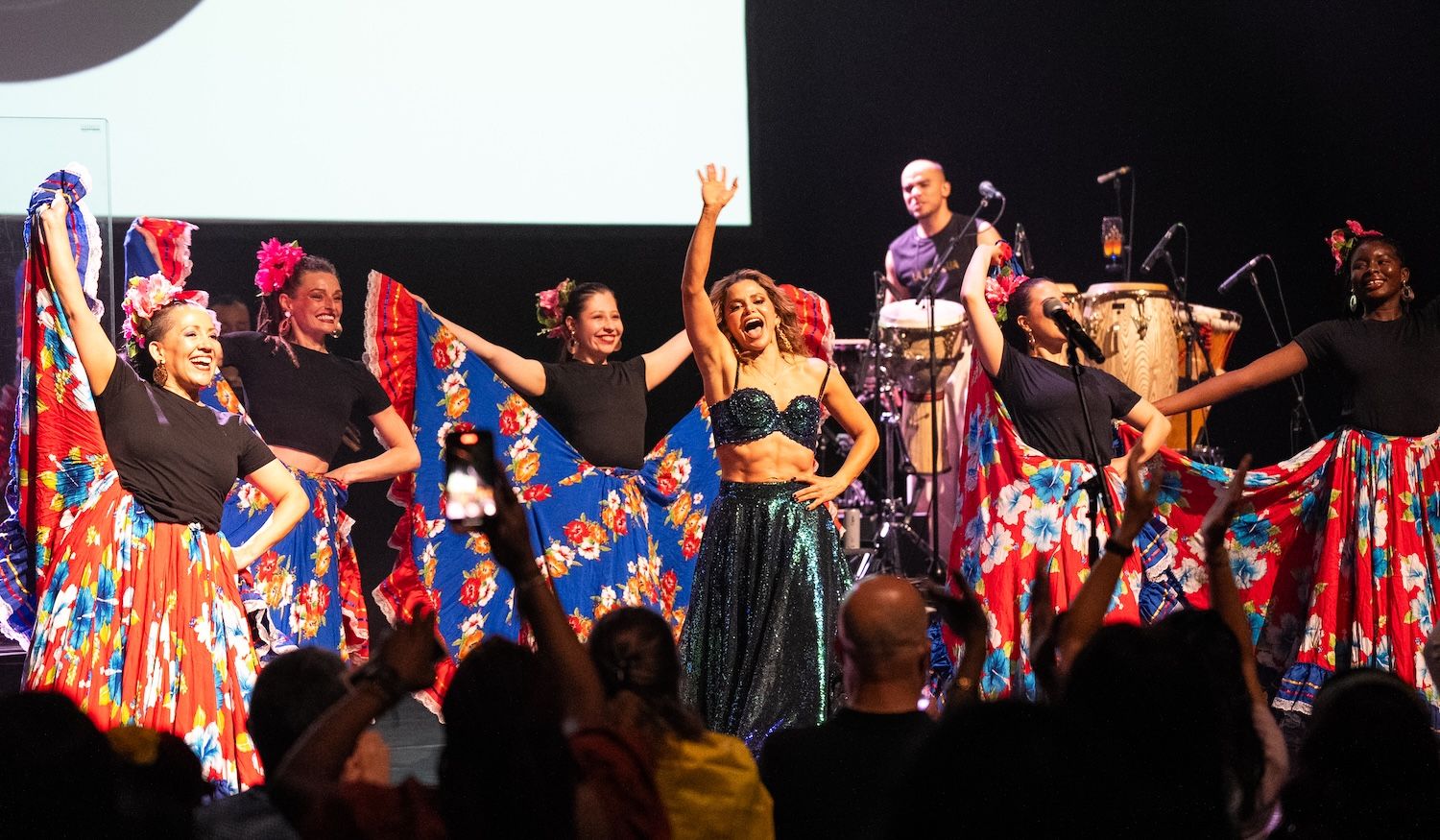
Adriana Lucía was refreshing to meet. Backstage hours before her headline show for La Linea Festival, Adriana carried a grounded warmth, sharing that music is something that brings people together emotionally, regardless of where they come from. That same warmth filled the Barbican, where audiences connected deeply with her music. The audience appeared to be completely at home – singing along to every word, dancing freely and waving Colombian flags throughout the arena.
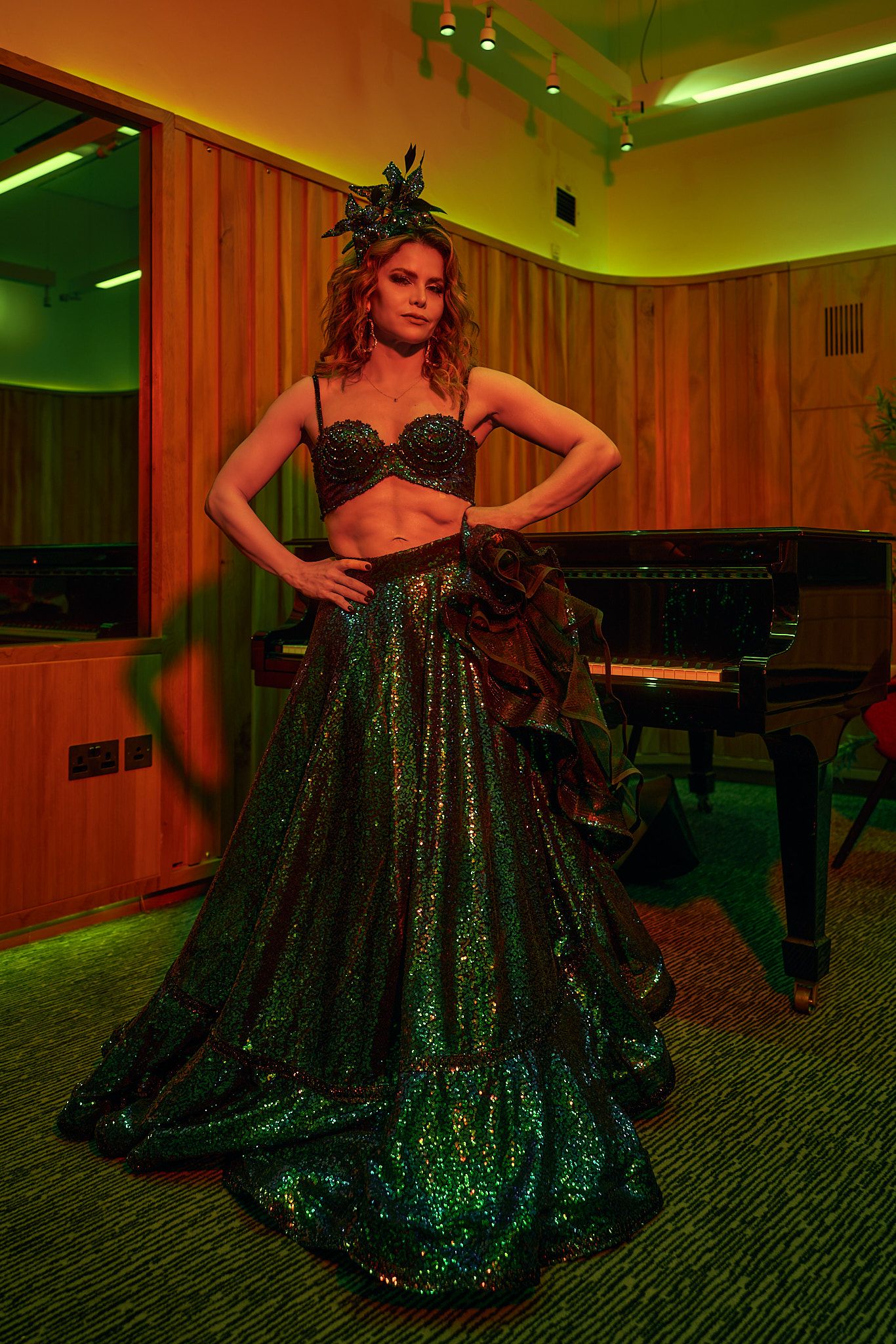
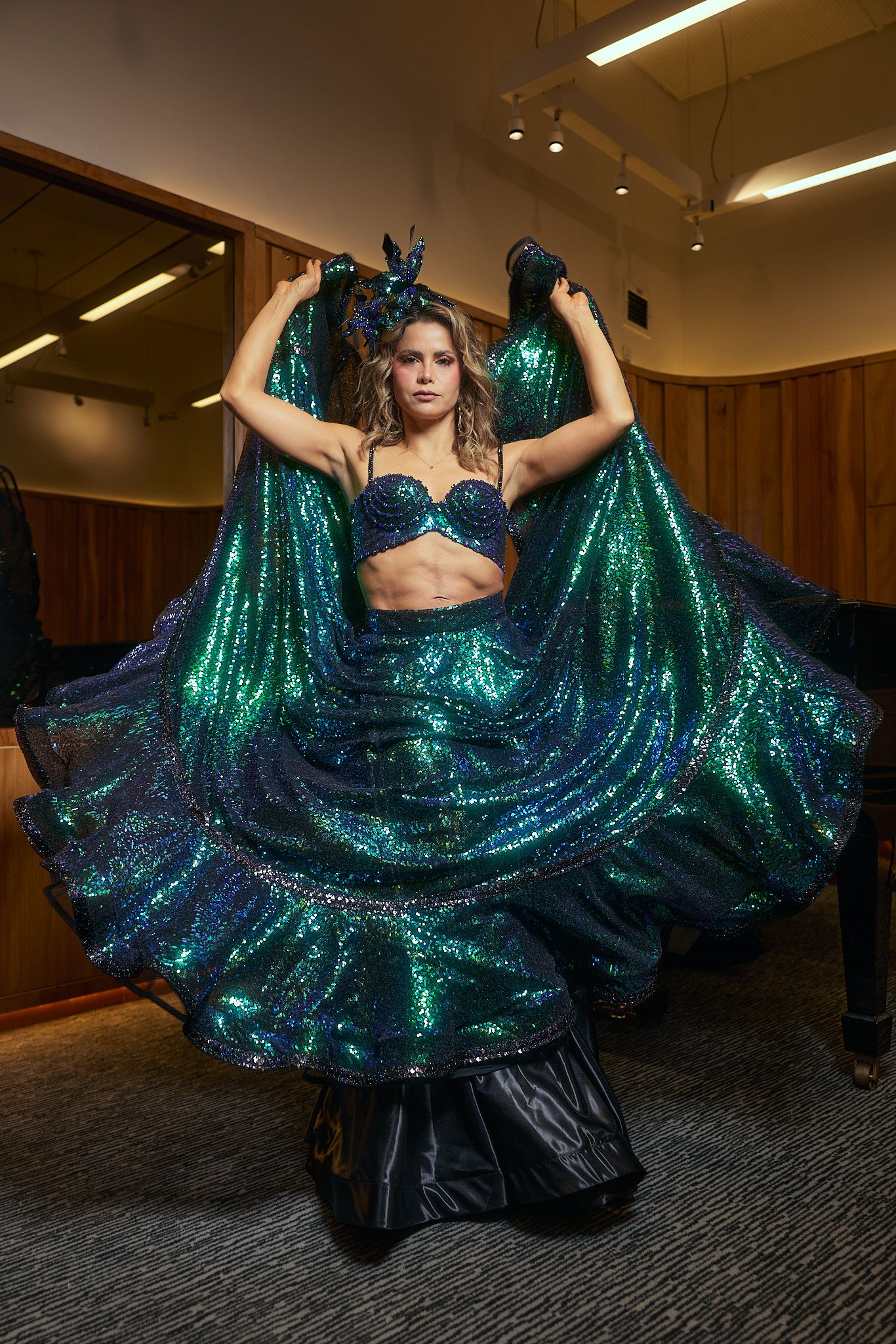
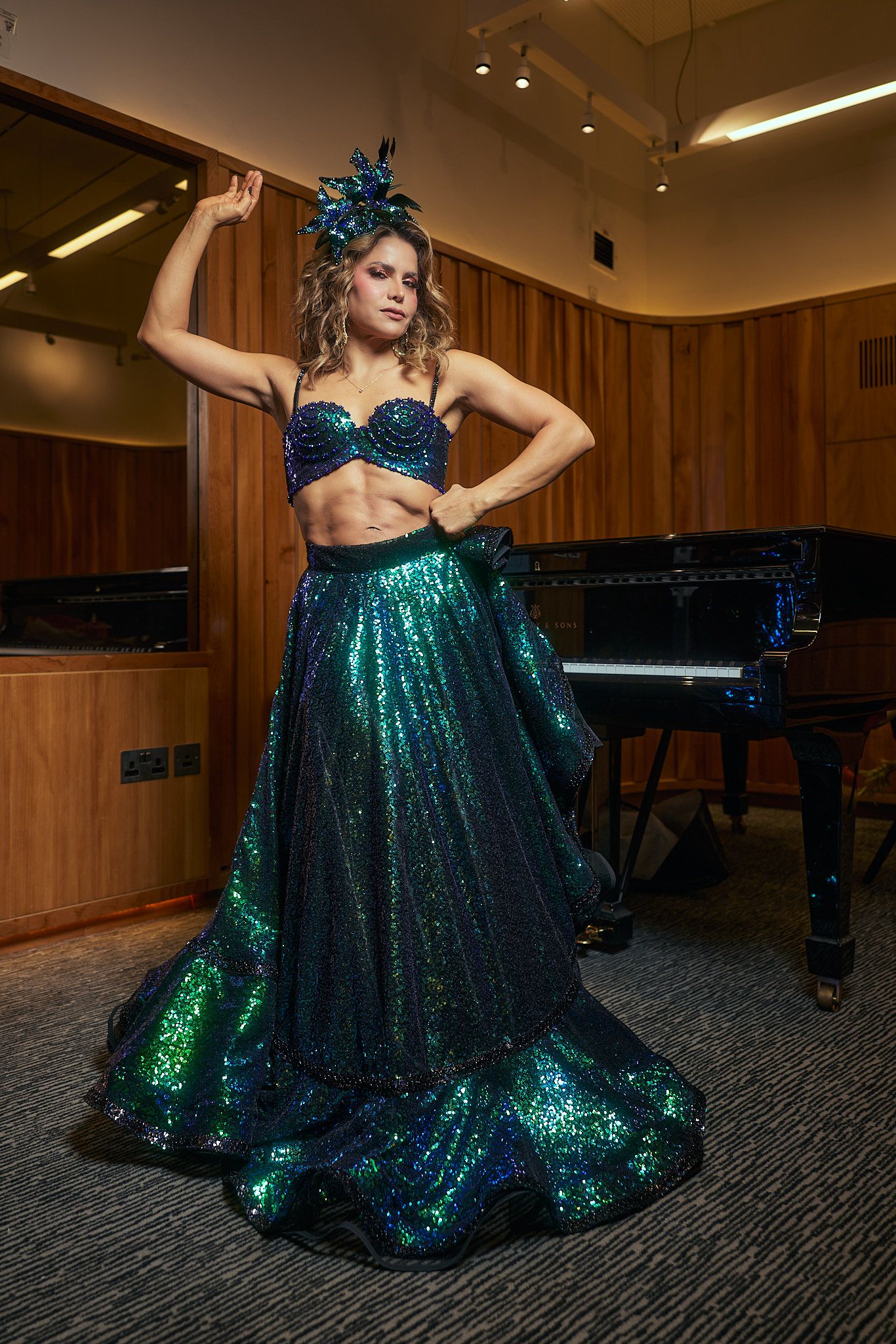
Dressed in green, she carried the stage with rhythmic elegance, her movements carrying the energy and spirit of the music itself. She moved through the set with natural ease as part of Las Poderosas: Colombian Queens, a vibrant performance that brought together Colombia’s most important female voices, including Nidia Góngora and La Muchacha, for a showcase rooted in heritage, storytelling and activism.
The Colombian Grammy-nominated artist also premiered her new single “Pueblerina”, warmly received by the audience. While Adriana’s music is deeply tied to Colombian identity and Caribbean rhythms, she does not see culture as something divisive or limiting. Instead, she sees music as proof that people from completely different backgrounds still share emotions, stories and humanity.
Ahead of the festival, Adriana speaks with 1883 about “Pueblerina”, her first time in London, what she has learned throughout her career and the importance of remaining connected to both community and her roots.
Hi, thank you for speaking with me today from 1883 magazine. How are you?
I’m very good, I’m very happy to be here at the Barbican. It’s my first time in London.
No way! How are you finding it?
No, I like it a lot, I love it.
You’re premiering “Pueblerina” live in London – what does that song represent for you right now?
There’s a huge contrast between coming from a small town and then performing in a huge city like London. But for me, being from a town isn’t just about a place or a piece of land, it’s something that lives inside you. It shapes the way you think, the way you love and the way you see the world.
Your work blends traditional Caribbean rhythms with contemporary sounds – how do you keep that rooted identity intact while reaching new audiences?
It can be a little difficult, but I think new audiences have made the world feel smaller. I’m starting to realise that we’re not as different from one another as we were told. There are so many things that connect us, and music makes that obvious.
It doesn’t matter where you were born, people can still understand and feel the music. Even if we come from completely different places, music always finds those points of connection between us.
At the Hispanic Day Parade in New York, you took that sound into the streets rather than a traditional stage alongside Martina – how does performing in that kind of public, open space change the way you connect with people?
Yes, it changes everything because there are people who are not necessarily there to see you. They’re doing other things, and then suddenly the music catches their attention. They don’t even know what they’re about to find. I think about that day often.
Why? What do you think when you think of that day?
I think about that day often because it showed me music can heal. I truly believe the world would be different if people had more contact with music, we would be a more sensitive society. Imagine walking through a park, and suddenly there’s a group playing music, then somewhere else there’s another person performing. Your whole day changes. You can see people go from angry or stressed to playful and excited. Music has the power to shift emotions instantly.
I think in a time where everything is so AI-focused, we have access to more music than ever before, yet we still seem disconnected from one another. What are your thoughts on music today versus the kind of music that can create a genuine emotional connection and positive change?
I don’t think technology is the problem. Technology has actually made it possible for us to listen to music from all over the world, something we couldn’t do before.
And when I talk about healthy music, I don’t just mean music that talks about positive things all the time. Music can be sad, too. You can find a very sad song, but the point is not to glorify that sadness, it’s about releasing it, letting it out.
I think music can be therapeutic, especially now when there are so many lonely people. Some people are surrounded by others and still feel completely alone. Music can become the thing that stays with you during those moments.
Early in your career, you explored different directions that weren’t always fully embraced – how did that shape your confidence in trusting your own voice?
I think if I don’t trust and believe in myself, nobody else will. But at the same time, you also need humility, you need to recognise when something isn’t working or when you haven’t been completely honest in what you’re trying to say.
For me, the most important thing has always been honesty. It’s not just about what you want to say, but also how you express it. That’s something you learn over years of experience, understanding people and learning how to connect with an audience.
There’s a global spotlight on Colombian music right now – what do you feel is still misunderstood about Colombia that your music tries to correct?
What really bothers me is when those stereotypes become the only thing people see about Colombia. In movies, soap operas and the media, it’s always drug trafficking or certain ideas about Latin American women, that is shown.
Through my music, I try to show there’s so much more to us than that. It’s the same as saying London is only fish and chips, every culture is much deeper and more complex than the clichés people are used to hearing.
It’s much more than that. I can understand how frustrating it must be when people reduce your country to stereotypes around drugs or the sexualisation of women, when that’s clearly not the full reality. I’ve never been to Colombia, but I hear so many beautiful things about the culture, the music and the food.
Wow, it’s really wonderful to hear you say that about Colombia, especially because that hasn’t always been the image people had of us. The fact that you already understand there’s more to the country is beautiful to me.
I think Colombians also need to believe that about ourselves, too. And honestly, I find it very curious that even though the universe is so big and so diverse, in the end, we all share many of the same stories.
This performance brings together three Colombian women with strong cultural voices – what does it mean to you to share that stage in this moment?
It’s wonderful because we are all women, and each of us has our own style and our own message. I think women are learning today that if we are powerful individually, then together we become even more powerful. That’s when we create real magic.
Thank you so much.
Thank you for interviewing me. It was a beautiful interview; your questions were really interesting!
“Pueblerina” is out now, follow via @adrianalucia
Interview Nancy Anekwe
Pre-show Photography Yoshitaka Kono