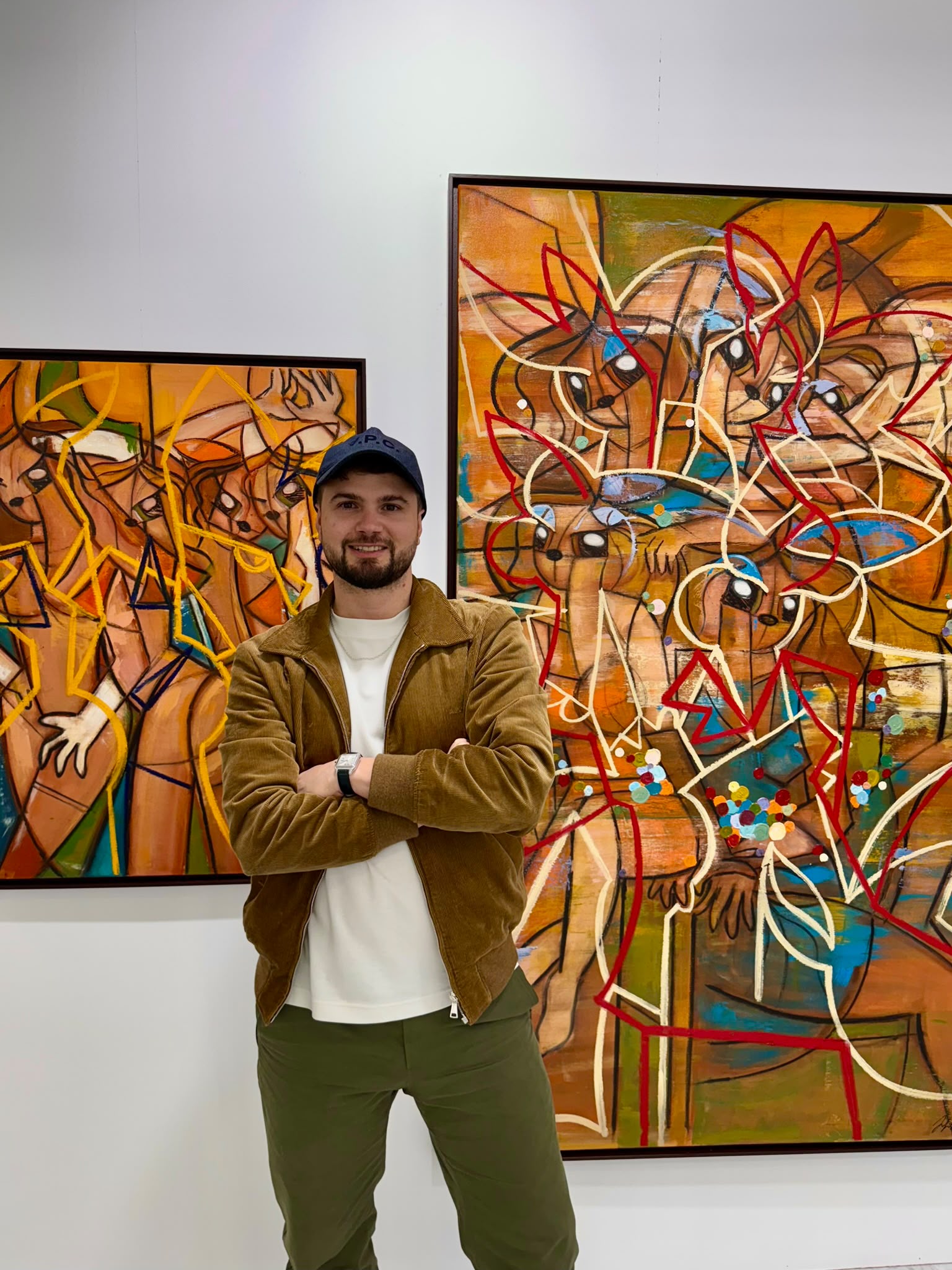
When Asif Choudhury, MD, stepped away from medicine in 2017, he wasn’t closing a chapter so much as continuing it in a different way. For more than two decades, he had cared for patients as an Interventional Gastroenterologist, building on medical training and research experience gained in the United States and abroad.
Known for his expertise and attentiveness, Dr. Choudhury earned the trust of people who came to him in pain and left with both relief and hope. Before leaving the field, he served as Section Chief of the Division of Gastroenterology at Lee Memorial Health System in Fort Myers, Florida. For six years, he led the department, helping shape the direction of digestive care throughout the region.
During his career, he lived by the belief that medicine is more than a profession. It is a responsibility to care for those who need it most, a conviction deeply rooted in his family’s history.
His maternal grandfather was a respected legislator in the Indian subcontinent who devoted his life to public service, and many of his paternal relatives were physicians whose work focused on treating the poor.
“Helping people is a core value I was raised with,” he shared. “My goal in life has been to serve the needy as much as I can.”
Their example of service left him with a profound sense of purpose that has remained a constant thread in his life, guiding both his years in medicine and the way he continues to live and help others today.
An Intercontinental Medical Journey
Dr. Choudhury earned his medical degree from the Institute of Post Graduate Medicine and Research in Dhaka, Bangladesh. After completing his studies, he came to the United States for residency training in Internal Medicine at Prince George’s Hospital in Maryland.
In 1995, he joined the Mayo Clinic in Rochester, Minnesota as a research trainee in gastroenterology. His research there was published in major gastroenterology journals, marking an early milestone in his career.
Following his research training, Dr. Choudhury entered an advanced clinical fellowship in gastroenterology at the State University of New York at Brooklyn. Eager to keep learning, he spent an entire month in Hamburg, Germany, training in interventional gastroenterology under Professor Suhendra, a world-renowned gastroenterology specialist.
Between 2000 and 2017, he built a respected medical career within Lee Memorial Health System, where he performed the highest number of ERCP and advanced endoscopic procedures in his practice.
He became widely known for his care of patients with serious airway and digestive injuries, often placing esophageal stents to repair complex perforations, strictures, and rare conditions like pneumomediastinum. Over the years, he also performed hundreds of gastrostomy feeding tube placements for individuals facing cancer or recovering from trauma.
Among his accomplishments, Dr. Choudhury says he is most proud of his published studies at the Mayo Clinic and of the successful procedures that led to the long-term healing and recovery of his patients.
Bringing Hope and Healing to Those Without Access
Outside of the hospital, Dr. Choudhury’s commitment to service never wavered. For over 20 years, he set aside time in his schedule each week to care for patients without insurance, often treating them free of charge within his practice.
He helped many of these patients access medications through drug company assistance programs and coordinated outpatient follow-up visits for those who couldn’t afford ongoing care. In his view, everyone deserves to get the medical assistance they need, regardless of their circumstances, and he has always been determined not to let financial barriers stand in the way of those essential services.
Asif Choudhury, MD, also extended his care to his faith community. Every Friday, he held free medical consultations at his local mosque, offering both medical advice and spiritual encouragement to those in need. These informal sessions gave people a place to turn in their most challenging moments, reflecting a cause close to Dr. Choudhury’s heart.
“I want to inspire people during the most difficult times in their lives,” he said.
A Voice for Wellness
Beyond his clinical work, Dr. Choudhury has remained actively involved in educational outreach, seeking to empower the people around him. He has spoken at many Bangladeshi cultural events and often shares health awareness talks with local religious and community organizations, where he emphasizes the importance of preventative care.
“I am also passionate about helping people live healthier lives through exercise and diet,” he said.
As a student in Bangladesh, he played soccer and cricket for both his high school and college teams. When he isn’t sharing his knowledge at a community event, he enjoys listening to band music and attending music festivals.
Dr. Choudhury has belonged to several professional and cultural organizations, including the Bangladesh Association of South Florida, the Bangladesh Medical Association of North America, the American College of Physicians, and the Mayo Clinic Alumni Network.
A Commitment to Service That Keeps on Giving
Although he no longer practices medicine, Dr. Choudhury’s work continues in a new form. He hopes to help train the next generation of physicians in Bangladesh, particularly in rural villages and other underserved areas where access to doctors and hospitals is limited or, in some cases, nonexistent.
He also plans to guide people toward healthier lives by teaching them practical habits focused on exercise and nutrition.
Through it all, Asif Choudhury, MD, wants to be remembered as someone who helped people in need and offered both medical and emotional support when it mattered most.
“I want to leave behind a legacy of compassion and service,” he said.
That legacy is already visible in the people who knew him as their doctor and in the communities that still benefit from his influence.
His story shows that healing and impact do not have to end when a career does. For Dr. Choudhury, helping people has never been limited to the four walls of a hospital or defined by a title. It is a commitment that continues to grow, reaching far beyond medicine into every community, conversation, and life he touches.