
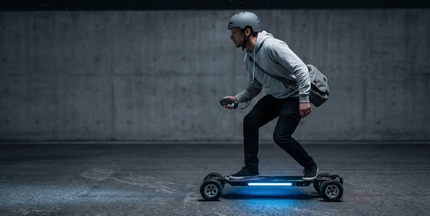
Can you ride an electric skateboard in the rain? The safest general answer is no. Wet pavement reduces traction and braking control, while water can reach bearings, motors, charging ports, and electronics. Even a water-resistant board is not automatically designed for rain, puddles, flooding, or long exposure to road spray.
Why Rain Changes the Ride
Rain affects both the rider’s control and the board’s electrical components. A route that feels predictable when dry can become significantly harder to manage after only a few minutes of rainfall.
Reduced Wheel Traction
Electric skateboard wheels have a small contact area with the ground. Water reduces available grip, particularly on smooth urethane wheels, making acceleration, braking, and turning less predictable.
Traction can decrease further on painted lane markings, metal utility covers, fallen leaves, polished concrete, wet wood, and oily road surfaces. Large or soft wheels may improve comfort, but they cannot remove the risk created by a slippery surface.
Longer Stopping Distance
Electric skateboards normally rely on electronic braking rather than the mechanical brakes found on bicycles or cars. When the road is wet, the wheels may lose traction before the braking system can apply its full stopping force.
A rider may therefore need more time and space to slow down. Abrupt remote input can make the wheels slide, while a downhill section can increase both speed and stopping distance.
Limited Rider Visibility
Rain can reduce visibility for the skateboard rider and for surrounding drivers, cyclists, and pedestrians. Water on glasses, low clouds, vehicle spray, and darker conditions can make surface hazards and turning traffic more difficult to identify.
Small lights may improve visibility, but they do not guarantee that other road users will notice a rider. They also do not make an unsuitable wet route safe.
Water Resistance and Waterproofing
Water resistance is frequently misunderstood. It describes a limited level of protection under specified conditions, not permission to ride through every form of rain or standing water.
IP Ratings
Some boards or individual components carry an IP rating for resistance to water ingress. The rating applies only to the product or component identified by the manufacturer and only under the relevant test conditions.
An IP rating should not be interpreted as a promise that the board can be submerged, ridden through deep puddles, washed with a hose, or exposed to prolonged rain. Seals can also wear, charging-port covers may be left open, and previous impacts or repairs may affect protection.
Exposed Components
Water can reach bearings, motor areas, cable connections, fasteners, and charging ports. Moisture may wash lubricant from bearings or contribute to corrosion, while grit carried by road spray can remain around moving parts after the board appears dry.
The underside of the deck receives more spray than the rider may notice. A relatively short trip can expose the enclosure and drivetrain to repeated water, dirt, and debris from the wheels.
Warranty Limitations
Water resistance and warranty coverage are separate issues. A product may have a published water-resistance rating while its warranty still limits or excludes damage caused by water, misuse, flooding, or improper storage.
Read the warranty and owner’s manual for the exact model before riding. Do not assume that a water-resistant description guarantees repair or replacement after moisture damage.
Active Rain and Wet Pavement
Riding during rainfall is different from using a board after the rain has stopped. Neither situation is risk-free, but active rain normally creates more variables and continued water exposure.
Riding During Rain
Avoid beginning a ride when rain is falling or expected along the route. Continued rainfall can increase surface water faster than drainage systems remove it, while visibility and traction may worsen before the rider has a safe opportunity to stop.
Water can also enter places that resist occasional splashes but are not designed for continuous spray. A short commute does not guarantee limited exposure when the wheels are repeatedly directing water toward the board’s underside.
Damp Roads After Rain
A road can remain slippery after the sky clears. Painted lines, leaves, shaded sections, metal covers, wooden bridges, and low areas may stay wet longer than open asphalt.
If the manufacturer permits limited use on damp surfaces, reduce speed, avoid sharp carving, and increase stopping distance. When the manual does not clearly permit those conditions, the safer choice is to wait until the route is dry.
Puddles and Standing Water
Do not ride through a puddle when its depth and surface condition cannot be seen. It may conceal a pothole, drain, loose gravel, broken pavement, or another obstacle capable of stopping a wheel suddenly.
Standing water also creates a greater chance of water reaching the enclosure, motors, bearings, and charging port. Riding around a puddle is only appropriate when the alternative line is legal, visible, and free from traffic conflicts; otherwise, dismount.
Choosing a Board for Changeable Weather
No electric skateboard should be purchased on the assumption that rain riding will be routine. However, specifications and construction still matter when a normal dry commute may occasionally include residual dampness or unexpected light spray.
Published Water Resistance
When comparing an electric skateboard, check whether the manufacturer provides a water-resistance rating for the complete board or only for a particular component. Also review the manual for restrictions covering rain, puddles, washing, storage, and charging.
Treat the rating as backup protection rather than a riding invitation. A higher rating does not restore dry-road traction or improve the rider’s visibility.
Wheel Size and Material
Larger wheels can roll more easily over shallow cracks and minor debris, while softer urethane may provide a more compliant ride than small, hard wheels. Pneumatic tires can add cushioning and surface tolerance, but their grip still changes on wet paint, leaves, metal, and contaminated pavement.
Wheel design cannot compensate for excessive speed or abrupt control input. The route and riding conditions remain more important than the wheel specification alone.
Deck Length and Stability
A longer deck can provide more room for foot placement and weight adjustment. Riders comparing an eletric longboard with a compact shortboard may find the larger platform more suitable for a stable stance, although deck shape, truck setup, wheel choice, and rider skill also affect handling.
The extra stability of a longboard does not make rain riding safe. A larger board may also be heavier and less convenient to carry when changing weather forces the rider to stop.
Predictable Braking
Smooth remote response is more useful in uncertain conditions than aggressive acceleration or a high maximum speed. Riders should already understand how the board brakes on dry, level pavement before considering any route with residual moisture.
Do not use wet conditions to test unfamiliar braking modes, new wheels, adjusted trucks, or a recently repaired board.
What to Do if Rain Starts Mid-Ride
Unexpected weather can occur even after checking the forecast. The priority should be ending the ride safely rather than reaching the destination on the board.
Controlled Slowdown
Reduce speed gradually and avoid sudden acceleration, braking, or carving. Move toward a legal stopping place with a stable surface and adequate separation from moving traffic.
If the board begins to slide, the route becomes flooded, or visibility deteriorates, dismount as soon as it is safe. Do not continue simply because the destination is nearby.
Board Shutdown
Turn the board off after reaching shelter. Do not connect a charger, open the enclosure, or operate switches unnecessarily while the board or charging area is wet.
Follow the manufacturer’s instructions for moisture exposure. If the board behaves unusually, becomes hot, develops an odor, makes unexpected sounds, or shows signs of battery or enclosure damage, move away from combustible materials when it is safe and seek qualified guidance.
Safe Transport
Carry the board rather than rolling it through additional water. Keep the charging port covered and avoid placing a wet board directly on carpet, furniture, or near a heat source.
Do not use a sealed bag for long-term storage while the board is still damp because trapped moisture may slow drying and encourage corrosion.
Drying and Inspection
A board that looks dry on the deck surface may still hold moisture around its wheels, bearings, hardware, and underside. Inspect it before charging or returning it to normal use.
Surface Drying
Switch the board off and wipe its exterior with a clean, absorbent cloth. Remove visible dirt and road spray without directing additional water at the electronics.
Place the board in a dry, ventilated indoor area. Avoid ovens, open flames, high-powered heat guns, and other intense heat sources that could damage the battery, seals, deck, or wiring.
Charging-Port Check
Inspect the charging-port cover and the surrounding area. Do not connect the charger until the port, plug, board, and nearby surfaces are completely dry.
If water appears to have entered the port or enclosure, stop using the board and follow the manufacturer’s service instructions. Do not attempt to charge the board merely to see whether it still works.
Wheels and Bearings
Rotate each wheel by hand after the board is dry and listen for grinding, roughness, or unusual resistance. Inspect bearings, wheel edges, belts where fitted, motor areas, fasteners, and truck hardware for trapped dirt or visible corrosion.
Any change in wheel movement, braking, motor response, or electrical behavior should be investigated before the next ride.
Rain-Ready Commute Planning
The most reliable strategy is to make stopping part of the commute plan. A rider should know what to do with the board before the first drop falls.
Forecast and Route Check
Review the weather forecast shortly before leaving and consider conditions during the return trip. Identify covered stopping points, public transportation alternatives, and locations where the board can be stored indoors.
Avoid routes with poor drainage, steep descents, leaf buildup, metal surfaces, or deep roadside channels when rain is possible.
Carrying Equipment
A compact absorbent cloth and a suitable carrying solution can make an unexpected stop easier. Protective covers may reduce exposure while carrying the board, but they should not be treated as permission to continue riding in the rain.
Personal protective equipment remains important in dry or wet conditions. A helmet cannot prevent a loss of traction, but it can reduce the consequences of some falls.
Alternative Transportation
If rain is likely, choose transportation that does not require exposing the board or rider to unsafe conditions. Walking, transit, or arranging a ride may be less convenient, but they avoid turning uncertain weather into an unnecessary equipment and injury risk.
Conclusion
You should generally avoid riding an electric skateboard in the rain. Water resistance may protect against limited incidental exposure, but it does not restore traction, guarantee braking control, or make the board waterproof. If rain begins unexpectedly, slow down, dismount safely, keep the board uncharged until completely dry, and inspect it before riding again.
FAQs
Is a Water-Resistant Electric Skateboard Safe in the Rain?
Not necessarily. Water resistance describes limited protection under specified conditions. It does not guarantee safe traction, reliable braking, or protection from prolonged rain, puddles, flooding, or immersion.
Can You Ride on Wet Pavement After the Rain Stops?
Wet pavement can still reduce grip, particularly on painted markings, leaves, metal covers, and smooth surfaces. Follow the manufacturer’s instructions and wait for the route to dry when conditions or product guidance remain uncertain.
Can You Charge an Electric Skateboard After It Gets Wet?
Do not charge it while the board, charging port, connector, or surrounding area is wet. Allow everything to dry completely and follow the manufacturer’s inspection and service instructions before connecting the charger.
Do Larger Wheels Make Rain Riding Safer?
Larger wheels may improve comfort and obstacle tolerance, but they do not eliminate reduced wet-surface traction or longer stopping distances. Wheel size should never be treated as permission to ride in unsafe weather.



