
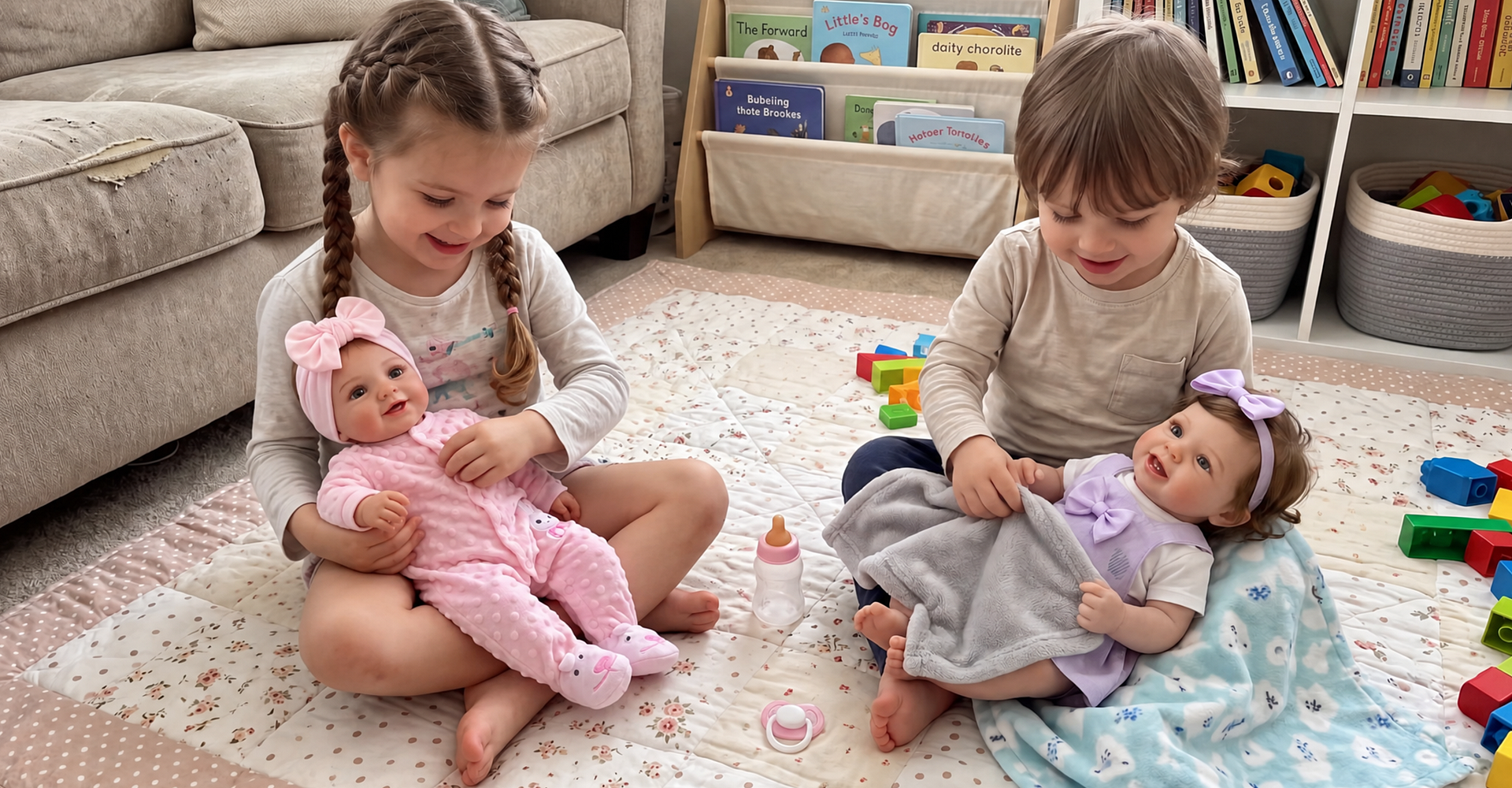
Interactive newborn dolls are designed to make pretend caregiving feel more engaging, but the right feature depends on how the doll will actually be used. Heartbeat and breathing effects are better for calm holding and soothing routines, while drink-and-wet systems are a stronger fit for children or collectors who enjoy feeding, changing, and more hands-on role-play.
For shoppers comparing an interactive newborn doll, the most important question is not which model has the most features. It is which feature creates the kind of interaction you actually want, whether that is cuddling, bedtime routines, feeding, or everyday pretend care.
Collectors and families who prefer a simpler design may also choose realistic baby dolls without extra electronics or water systems. These dolls can still support dress-up, storytelling, photography, and caregiving play while requiring less setup and maintenance.
Heartbeat Dolls: Best for Calm, Comforting Interaction
Heartbeat features are usually designed to create a quiet sensory experience rather than active play. When held close, the gentle heartbeat effect can make the doll feel more lifelike and give children or collectors a natural cue for cuddling, rocking, and bedtime routines.
This type of doll works especially well for people who enjoy slower, repetitive play. A child may pretend to check on the baby, wrap it in a blanket, or rock it to sleep. An adult collector may simply enjoy the added realism during holding or display.
The main advantage is simplicity. Heartbeat effects add interaction without requiring feeding, cleanup, or frequent accessory use. The trade-off is that the feature supports a narrower type of play than a drink-and-wet system.
Breathing Dolls: Best for Realistic Holding and Bedtime Play
Breathing effects add movement rather than sound alone. Depending on the design, the chest or body may rise and fall gently to imitate the rhythm of a sleeping baby.
This feature is particularly effective in quiet scenarios. A sleeping expression combined with breathing movement can make bedtime photography, nursery displays, or gentle pretend care feel more immersive.
Breathing dolls are often a good choice for buyers who care most about visual and tactile realism. They do not necessarily create as many different activities as a feeding system, but they can make one simple routine, such as rocking or putting the doll to sleep, feel more convincing.
For families, it is also worth checking how the feature is powered and whether the battery compartment is easy for adults to access while remaining secure during play.
Drink-and-Wet Dolls: Best for Hands-On Caregiving Play
Drink-and-wet systems offer the most active caregiving experience of the three options. These dolls are designed to take in water through a bottle and release it into a diaper, allowing children to act out feeding and changing routines.
For children who already enjoy pretend caregiving, this feature can add a clear sequence to play: prepare the bottle, feed the baby, change the diaper, then settle the doll afterward. That structure can make each play session feel more complete.
The trade-off is maintenance. Water-based features require more cleanup and careful drying after use. Only clean water should be used unless the product instructions say otherwise, and the system should be drained properly before storage.
Drink-and-wet dolls are a good fit for children who enjoy active routines, but they may be less practical for anyone who prefers low-maintenance play.
Which Feature Creates the Most Realistic Experience?
Realism depends on what you mean by “realistic.”
Heartbeat and breathing features add sensory realism. They make the doll feel more alive during holding, cuddling, or bedtime play.
Drink-and-wet systems add behavioral realism. They allow the user to imitate real caregiving tasks rather than simply respond to sounds or movement.
For collectors, sensory features may matter more because they support display, photography, and gentle interaction. For children who enjoy pretend care, feeding and diaper-changing may offer more ways to build stories.
The best feature is the one that matches the routine you want to repeat.
Consider Age, Weight, and Ease of Use
Interactive features should never be chosen in isolation. Size, weight, body material, and age recommendation still matter.
A large or heavy doll may feel realistic but be harder for a child to carry. A cloth-body doll may be easier to cuddle, while full silicone can provide a softer feel but usually requires more careful handling.
Accessories also deserve attention. Bottles, pacifiers, batteries, clothing, and small removable pieces should be appropriate for the intended user. Always check the manufacturer’s age guidance and included accessories before buying.
The most useful interactive feature is one the user can operate comfortably without constant adult help.
Do You Need More Than One Interactive Feature?
Not necessarily.
A doll with heartbeat, breathing, sound, feeding, and multiple electronic effects may look impressive on a product page, but more features do not automatically create better play. Too many functions can make the doll more complicated to maintain and may reduce the child’s own role in creating the story.
A single well-matched feature is often enough. A child who loves bedtime routines may get more value from breathing or heartbeat effects. A child who repeatedly feeds and changes dolls may get more from a drink-and-wet system.
For collectors, one subtle feature may feel more natural than several highly noticeable effects.
How to Choose the Right Interactive Newborn Doll
Start with the type of interaction you want most.
Choose a heartbeat doll if cuddling, soothing, and quiet role-play are the priority. Choose a breathing doll if visual realism and bedtime-style interaction matter most. Choose a drink-and-wet doll if feeding and diaper-changing are already a major part of pretend play.
Then check the practical details: doll size, weight, body material, battery requirements, cleanup, and care instructions.
The goal is not to choose the doll with the longest feature list. It is to choose the one whose features fit naturally into the way the doll will be held, played with, displayed, or cared for.
Final Thoughts
Heartbeat, breathing, and drink-and-wet dolls each create a different kind of interactive experience. Heartbeat and breathing effects are strongest for calm, realistic holding, while drink-and-wet systems are better for active caregiving routines.
Before buying, think about what kind of play or collecting experience matters most, then choose the feature that supports it without adding unnecessary complexity. A well-matched interactive doll is more likely to stay enjoyable long after the novelty of the feature wears off.



