
How do you give voice to a woman shrouded in myth? That’s the challenge facing Cassie Bradley, who plays Hannah Owens, the original witch and Maria Owens’s mother, in Practical Magic 2, the sequel fans have spent almost twenty years quietly willing into existence.
It’s a role built almost entirely in shadow, and one the actress approached with the same magpie-like instinct she brings to everything she does, gathering as much information as possible before ever stepping foot on set. That same instinct carries her, this October, into altogether different territory. Her next venture sees her take the stage in My Name Is Rachel Corrie, a one-woman play drawn from the real diaries and emails of the activist, tracing her decision to embed herself at the heart of the Israeli-Palestinian conflict. Where Practical Magic offers an escape from the weight of the world, Corrie’s words insist on facing it head-on.
In conversation with 1883 Magazine, Bradley talks about signing an NDA for a project then known only by its codename, “Project Thornfield,” and shooting most of her scenes a century away from Sandra Bullock and Nicole Kidman. She talks, too, about her drama school’s “emotional skydivers,” and why, however heavy a role gets, she’d rather sit with the discomfort.

Cassie, thank you so much for making the time for this. With Practical Magic 2 so close to being out in the world now, I imagine it’s been an especially big week for you, so I really appreciate you carving out a moment in the middle of it all.
Of course, it’s starting to feel very real. We’ve finally had the premiere last night, so I’ve seen the film now, which is great timing.
That must be so exciting, you’ve shot the film a while ago, but you never quite know how it’s going to come together before you get to see the final cut, right?
Yes, and you never quite know whether you’re going to be in it or not. There’s always that risk, but I had seen a few of the trailer shots, and my character, Hannah Owens, is quite key to the plot of the whole thing, so I was hopeful. Finally seeing it now, though, was wonderful, and it was so lovely to meet some of the cast. A lot of my stuff, because my character exists in a different century to everybody else, was done mostly with the DOP and the director. So I didn’t have a lot of interaction with the cast. It was so nice to finally meet them.
And what a cast it is.
I mean, what a dream, right? Just icons, and everybody’s so lovely as well. We had such a fun night.
The movie’s out in a couple of weeks and it’s a film that a huge number of people have been desperately waiting for almost 20 years now. When did you get into that world, and why do you think the story has endured for so long?
Everybody’s on some level interested in magic and this idea of faith and belief, even if you don’t align with any particular religion or faith system. Everyone can believe in good, and in the magic in individuals. That’s just an enduring human quality.
So much of the film, both the original and the sequel, is about challenging your own limits and your own power, and I think it’s so empowering for audiences, because it has that inspirational quality where you kind of go, “Oh my goodness, they’re using their powers, and they get to choose how they use them, for good or not.” It’s about stepping into that power, whether that’s magic or lifting up a sister, so I think it’s got those universal themes.
On another level, it’s just the most amazing, feel-good, family popcorn evening. You can watch it with your partner, you can watch it with your mum, and it just brings people together.
It does, and sometimes we just need something that feels magical, a bit of a change from what we’re going through on a daily basis. There’s a nice balance there, you get that aspirational quality, a bit whimsical and a bit different, that takes you out of your own life for a while.
Yeah, and speaking of whimsy, it’s funny too. Sandra Bullock and Nicole Kidman are so funny, and I think the original had that as well, even though it could be quite dark. When I got the self-tape request for it, there were a lot of NDAs even before getting the script. I had an overnight wait to get the sides, so I rewatched the original, which was really lovely, a chance to rediscover it. I remembered it from my childhood, it was a real favourite of mine. So it was great to rediscover it. But I think I saw a lot more of the darkness in it this time, the rosebush, the burrowing under the patio, the mud and the soil. I think you can’t have that lightness without the dark.

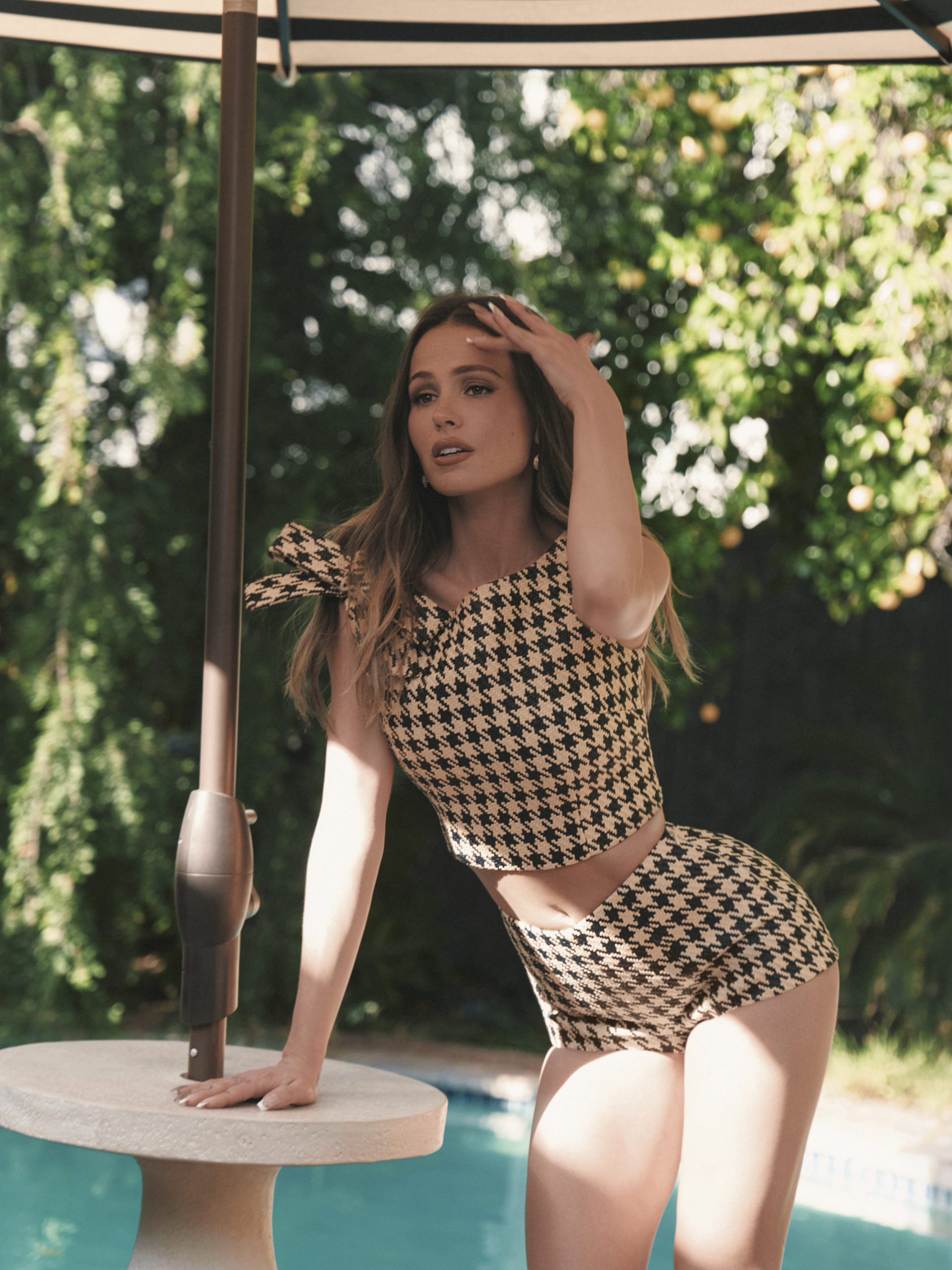
Dress Critter Shoes Gina Tights Tabio
I was going to ask if you have a personal connection to it, or if you remember the first one, but it sounds like you saw it back then. I love the idea of rediscovering it, because I think there’s going to be a bit of that with the second movie too. A lot of people saw the original when they were kids or teenagers, and I’m curious to see how that generation reacts to stepping back into this world, as well as how a younger generation might go back to the original. But you just mentioned the audition process, how early on did you know what you were even stepping into?
So it was through my agents at United, who are wonderful. They’re brilliant at sending through lots of information, and they’re very thoughtful about my audition process. They sent through an NDA and said the codename was Project Thornfield, and it was kind of intimated, but never firmly confirmed, that Project Thornfield was Practical Magic 2. So I signed the NDA, but then obviously I had to wait for the sides.
I thought, well, what a perfect evening to watch the original, it put me in the best head space. Then the sides came through the next morning. I remember it being such a hot day, and I remember curling my hair because I love the books, and I remembered them talking about Maria Owens having curly hair. So that was me, curling my hair and madly learning the lines, which was this amazing character piece about the Book of Magic. It didn’t end up making it into the film, we never actually used it in filming, but it was an amazing way to get into that headspace for the audition.
You sound like someone who goes quite in-depth with research and character building. How did you approach Hannah Owens, and does that mirror how you normally approach characters you play?
I always like to get as much information as possible. I think I’m one of those actors who almost saturates herself with books and reading. I find that so helpful, even if you never quite know what’s going to make it into the performance on screen, but it helps me trust that I have the knowledge and a base to jump off from. I see that as part of my creative process, doing my due diligence and doing my job. Everybody’s got their own process, but I’m a bit of a magpie in terms of collecting as many pieces of information as possible, and having lots of avenues to lean on.
We did a lot of this with Hannah, out in the wilderness. I felt able to improvise because I’d done that research and read the books, it gives me a creative freedom that I can’t always pinpoint.
Do you think part of it comes from your theatre background?
Definitely. I think sometimes with film and television, time just isn’t a luxury. There’s a lovely process in theatre where you sometimes have an R&D process for a play. I’ve been really lucky to work with the National Theatre Studio, where you get two weeks to play with a text they know they’re putting on maybe a year later. They assemble a group of actors and say, “Can we pull this apart a bit?” I love that process. And then, with rehearsals, you’ll have three to four weeks before the play goes up in front of an audience, that’s an amazing amount of time to play, stretch, and fail. So yes, I think that has influenced my process on screen too.
If you were to talk a little about your character in Practical Magic 2, what can we expect?
She’s the original witch, Maria Owens’s mother, and you’ll find out more in the film, but it really traces back the origins of the curse, going into history that’s covered in the book Magic Lessons. They’ve borrowed bits from that for Hannah’s character. So yes, I’m really excited to see what people think of it.
It’s really lovely that there’s also such a strong feminine, but also familial, thread throughout the movies, and that it’s so championed within it. I think that’s such a great thing to still see, because female stories, in whatever capacity, need to be told.
Yeah, and actually it was mirrored in the filming process as well. We had Suzanne directing, and Nicole and Sandra are producers on it. I remember it being the first time in my professional career that I’d had a female director on a television project, and I remember thinking, “I can’t believe this feels rare for me.” I think it’s definitely got better, but we still have a way to go on that. This was such a wonderful example, lots of the heads of department were women too.
I do think there is a difference as an audience. I won’t say you can always tell if it’s a women-led project, but especially as a woman, you kind of go, “This feels different,” and I love hearing that it’s also transferring to the process of making the movie, not just to the experience for the audience at the end.
Absolutely, and it was so lovely to see last night. There were so many scenes where it was just women on screen, and not defined in relation to men, but standing up as characters in their own right.


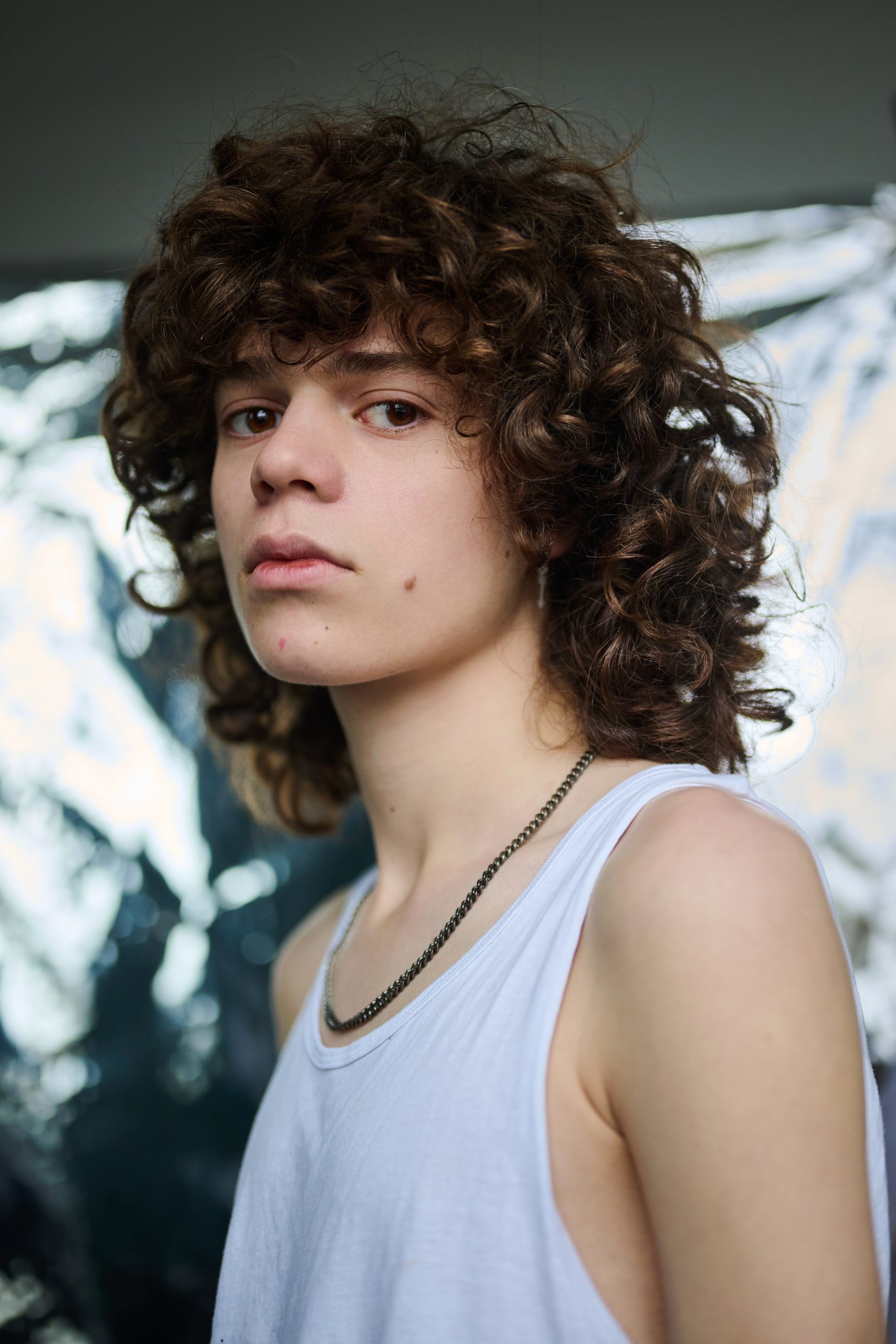
Top and Skirt Edeline Lee Shoes Gina
You strike me as someone who chooses projects with real care, and I think that’s especially true of your next play, My Name Is Rachel Corrie, a one-woman piece drawn from the real diaries and emails of the activist, tracing her decision to embed herself at the heart of the Israeli-Palestinian conflict. It’s devastating that a work like this still feels so urgent. How does it feel to be taking on something so monumental this October?
It’s actually scary how relevant it is, which is why I wanted to do it, and why it’s so important. That’s the other element of stories, they’re brilliantly entertaining, but they also make you think about the world. I think Practical Magic has that too, it’s a story about witches, and you can lose yourself in it, but on another level it questions the magic within you, how you uplift and empower the people in your life, and the bonds of family and sisterhood. So with Rachel Corrie, I think it’s a really challenging piece, and I think it will challenge an audience, given its relevance.
Did you know the play before you signed on to it?
Yes, I read it quite a few years ago, and it stayed with me. When this opportunity came up, I reread it and was shocked at how relevant her words still are, and how brilliantly she puts things, because it doesn’t provide easy answers. A lot of the play is about asking questions, about ourselves as observers of conflict on television, and what our role is within that. The sheer number of questions she raises, I feel like I’ve had that same experience watching things unfold on television, wanting to understand more, wanting to lean in more, and also recoiling because it’s too much and feels too heavy, but then realising, no, I need to lean in more, because that’s what’s important.
I’m also wondering, it’s a one-woman play. It’s just you on that stage. How do you sit with all of those emotions and all that intensity by yourself?
It’s been really interesting, because I think any actor, when working on a project, is influenced in some way by what they’re working on or reading. With Practical Magic, you take home some of that magical mysticism. You start looking at sunsets and thinking, “Yeah, I really understand what they’re saying about that.”
With this play, having just started rehearsals, there is a heaviness to it. It feels like it’s floating around in my consciousness, that constant questioning, looking at the news cycle, and thinking about what stories are being told and what’s being left out. So this one does feel quite heavy, but that’s part of what I love about being an actor, and what feels important about it too.

Are you able to shake it off a little at the end of the day?
Yeah, I think you have to, but I also think it’s helpful for it to sit there. There’s an amazing quality an actor needs, to sit with the discomfort of something where you don’t necessarily have all the answers, because on set it’s about collaboration. My voice teacher at drama school used to call actors “emotional skydivers,” and there’s that feeling right before you jump, where you think, “I know this is going to be really scary and challenging, but I have to do it.” So there’s an important quality in sitting with that discomfort, letting it stay with you while you’re doing a project, but it’s also important to shake it off and go and see your friends.
I think a lot of people have been really careful about speaking out on the conflict, and a lot of public-facing people are careful about how vocal they are about politics. Was that something you were weighing up when you took on the play?
I look at all projects from all different angles. I read Rachel’s words, and there’s a human quality to it where it doesn’t make condemnations. It talks about the human in people, and the questions we all have. That human quality, wanting to speak up about injustice, doesn’t mean you’re not sympathetic to both sides of an argument, but it means you go, “People are dying, and I’ve got to do something.” I think that was Rachel’s motivation. There’s an amazing line in it where she says we can look at history and decide what side we want to be on now, because we’re not outside of it, and I think we’re never outside of any situation.
Do you think your formal education in acting has changed the way you look at the profession and its purpose?
I feel so lucky and privileged, because without my scholarship to the Oxford School of Drama, I wouldn’t have this career. That’s why I’m on the board of trustees for my drama school, and why I want those scholarships and opportunities to continue. As actors, we’re playing people, and if you don’t represent people from all walks of life, all accents, all ages, all races, you narrow the stories you’re exposed to, and you create an echo chamber where it’s no longer believable. That being said, yes, drama school was just the most amazing place, it gave me so many tools. Oxford, in particular, exposed us to lots of different techniques. Our principal always said, “Just try everything, just dive in, you never know when it might come back in your career.”
Does it, in a way, teach you how to fail?
Absolutely. Our principal always used the Samuel Beckett quote, “Ever tried. Ever failed. No matter. Try again. Fail again. Fail better.” The idea that you’re not growing if you’re not failing.


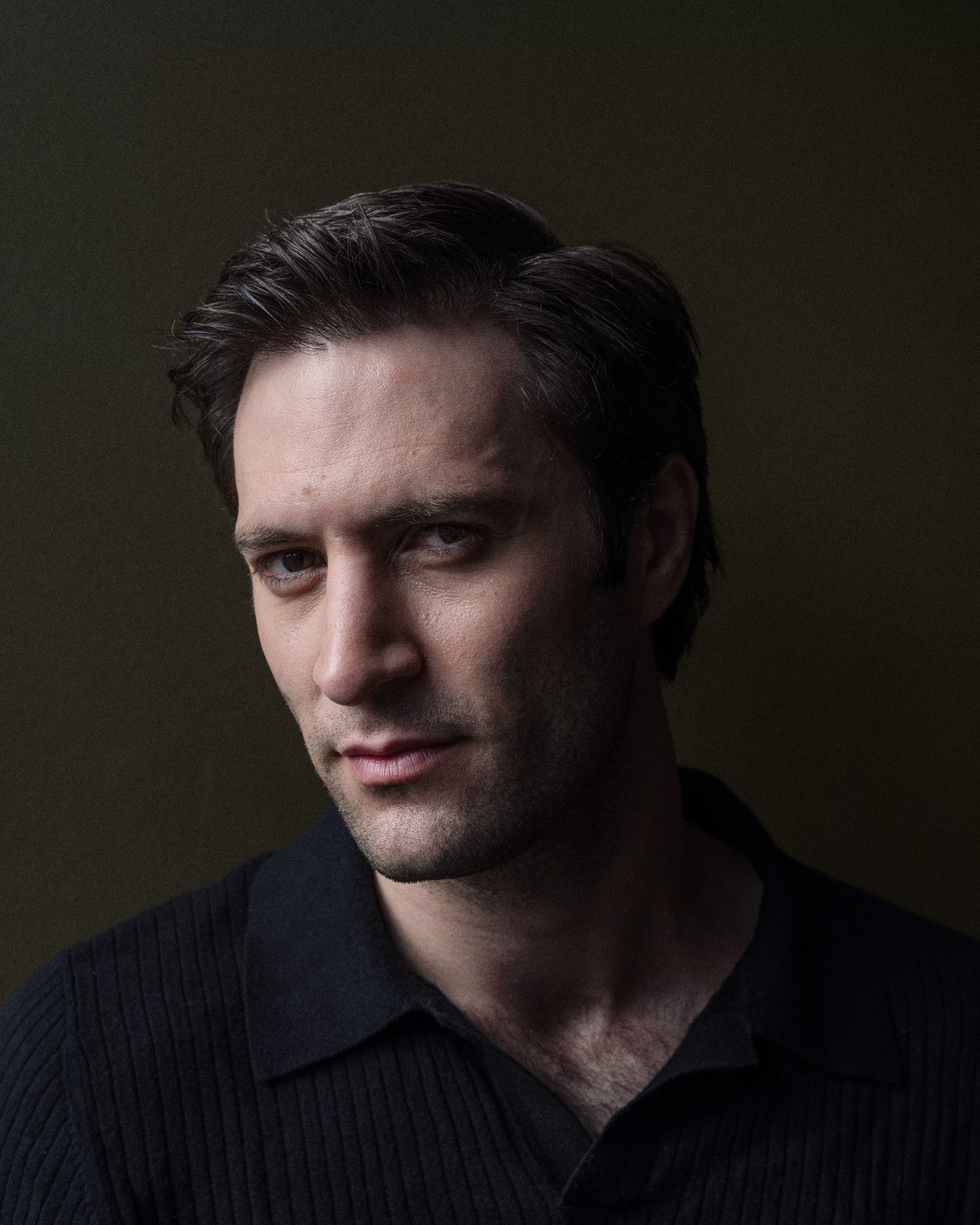
Suit Eudon Choi Shoes Gina Socks Falke

Which is very true.
Completely, but it’s sometimes very hard to hold onto, particularly the further you get into your career. I think the best directors and collaborators are able to create that environment on a set or in a rehearsal room, where you’re empowered as an actor to make bold decisions, fall flat on your face, and go, “Wasn’t that funny?”
I did also go through your Instagram and saw that you visited final-year students at Oxford, and in the caption you talked about “gold dust,” “guts,” and “what you get for free.” I loved that idea, and I wanted to ask if you could elaborate on those three things within acting, because that description really struck me.
Of course, I’d love to actually. When I had the chance to talk to the third-year students, I thought about what I would have loved to hear as a third-year, from somebody, almost like a letter to my younger self. I remember that, in the middle of third year especially, as an actor you take on all these different characters, and there’s a chameleon-like quality to the craft, but you can actually lose your base, your roots, and this concept of what you get for free.
I asked them to write down some key facts about themselves, where you come from, your native accent, your heritage, things you enjoy doing, whether that’s running, swimming, drawing, or other passions. Then I talked about how, in third year especially, you can end up feeling like you’re presenting your “brand” as an actor to the industry, and it’s easy to second-guess yourself and think, “Well, I’ve been told I’ll play these types of characters.” But actually, we’re designed as actors to shift and play different people.
So then I had them read those facts back to themselves, and I said, “That’s what you get for free as an actor.” Those are your foundations as you go into the industry, and those are your “whys.” It’s so important to hold onto why you wanted to do this and why you wanted to be a storyteller.


It’s strange, with acting, as an audience we fall in love with a character and mix them up with the actor, even though we don’t really know them at all. But a film is never loved just for how well the character was written, it’s what the actor brings to it. I love that idea of an actor celebrating themselves a little, because that so often gets lost in the noise of roles and awards.
Yes, completely, and that “why” matters, because it is tough. There’s a lot of rejection and failure, but at the end of the day, if you hold onto why you wanted to do it, that’s what matters most. If it makes you happy, you can weather those storms and develop a thicker skin.
Particularly if you’re in the middle of doing press for something, it can be quite a whirlwind, but I thought about this on the red carpet, or the “blue carpet,” as we had, and thought, “I just had the best time.” I think it’s important to remember that too.
It’s also, I imagine, the kind of night you dreamed about as someone who wanted to be an actor from a young age.
Oh, absolutely, it was at the Odeon in Leicester Square, and you just think, “This is really magical.” And also not taking things too seriously, I had a big scuff on my knee from falling off a bike the other week.
Was it a Lime bike?
No, it was a mountain bike. I was on holiday, and I’d just done this massive climb and a really gnarly descent over all these boulders. I survived all of that, and then, literally coming around the corner back to the hotel, a laundry tuk-tuk came around the bend. I panicked, slammed on my brakes, and went straight over. So I was getting ready for the premiere with a massive scab on my knee, thinking, “Hopefully they won’t focus on that in the pictures.”
If they did, at least it’s a funny story and a great memory. I won’t keep you much longer, you obviously have a lot going on as is, with Practical Magic 2 and Rachel Corrie running until mid-October. I do want to ask, though, what’s next for you after that?
I’m looking forward to what’s next, I have no idea at the moment, but it’s been such a creative time. I’m excited about Rachel Corrie, and I’m excited for audience responses to Practical Magic 2. I’m sure it’s going to be great. Just seeing what’s next in the stars, this is a job where things can change within a week, within a day. That’s an amazing thing to live with.
Practical Magic 2 is out now in cinema Rachel Corrie is on at London’s Greenwich Theatre until 17 October. To book ticket go to www.greenwichtheatre.org.uk.
Follow Cassie via @cassiebradley.ig.
Interview Jule Scott
Photographer David Reiss
Stylist Rachel Davis at One Represents
Make up Emma Miles at Caren using Elemis
Hair Valerie Benavides at Premier Hair & Make Up using Hair by Sam McKnight
Top image credit – Dress Critter