Most of us only knew Chadwick Boseman as the Black Panther. The global superstar. The passionate performances that cemented him as a firm favourite with Marvel fans. But before all of that, he was a visionary writer.
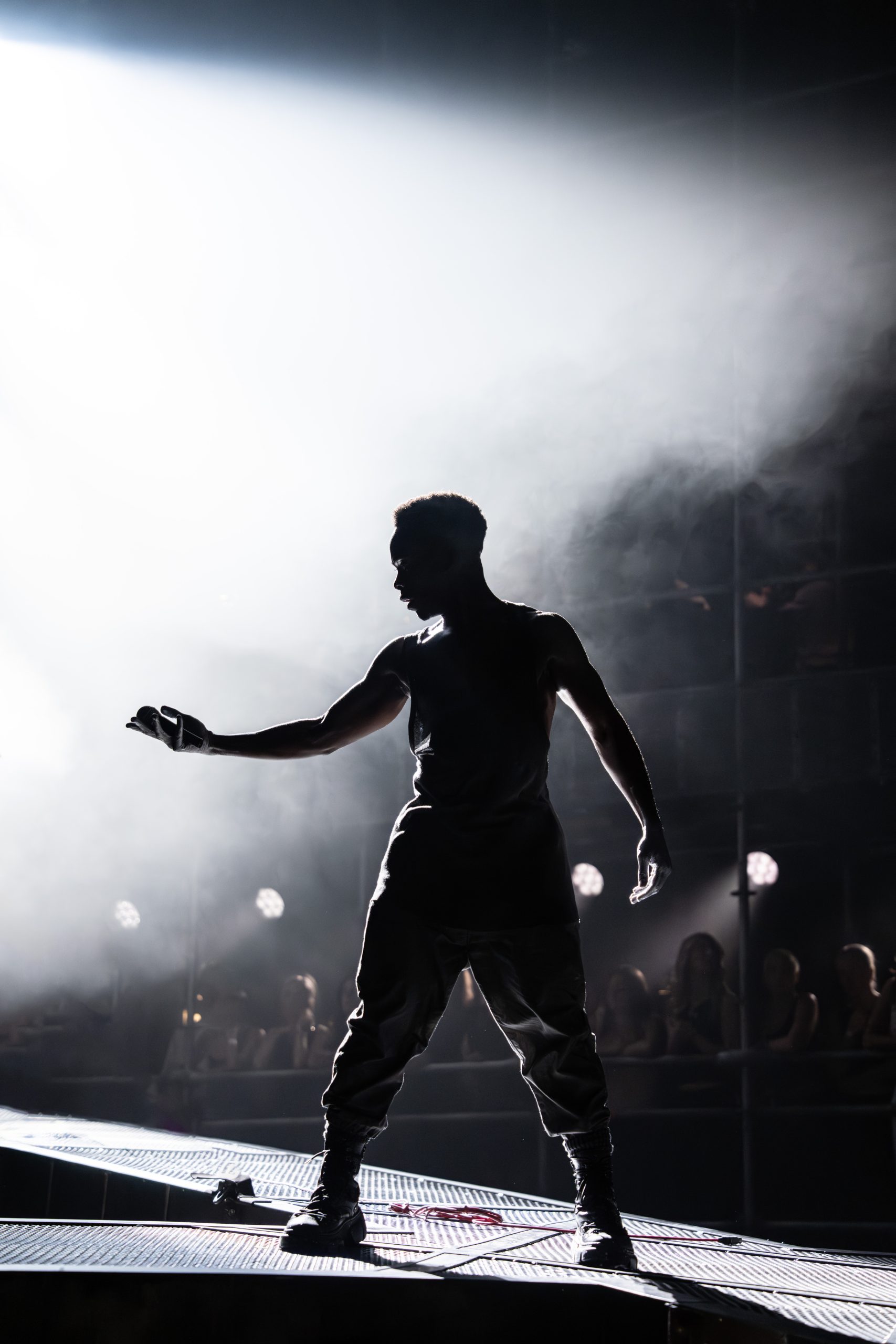
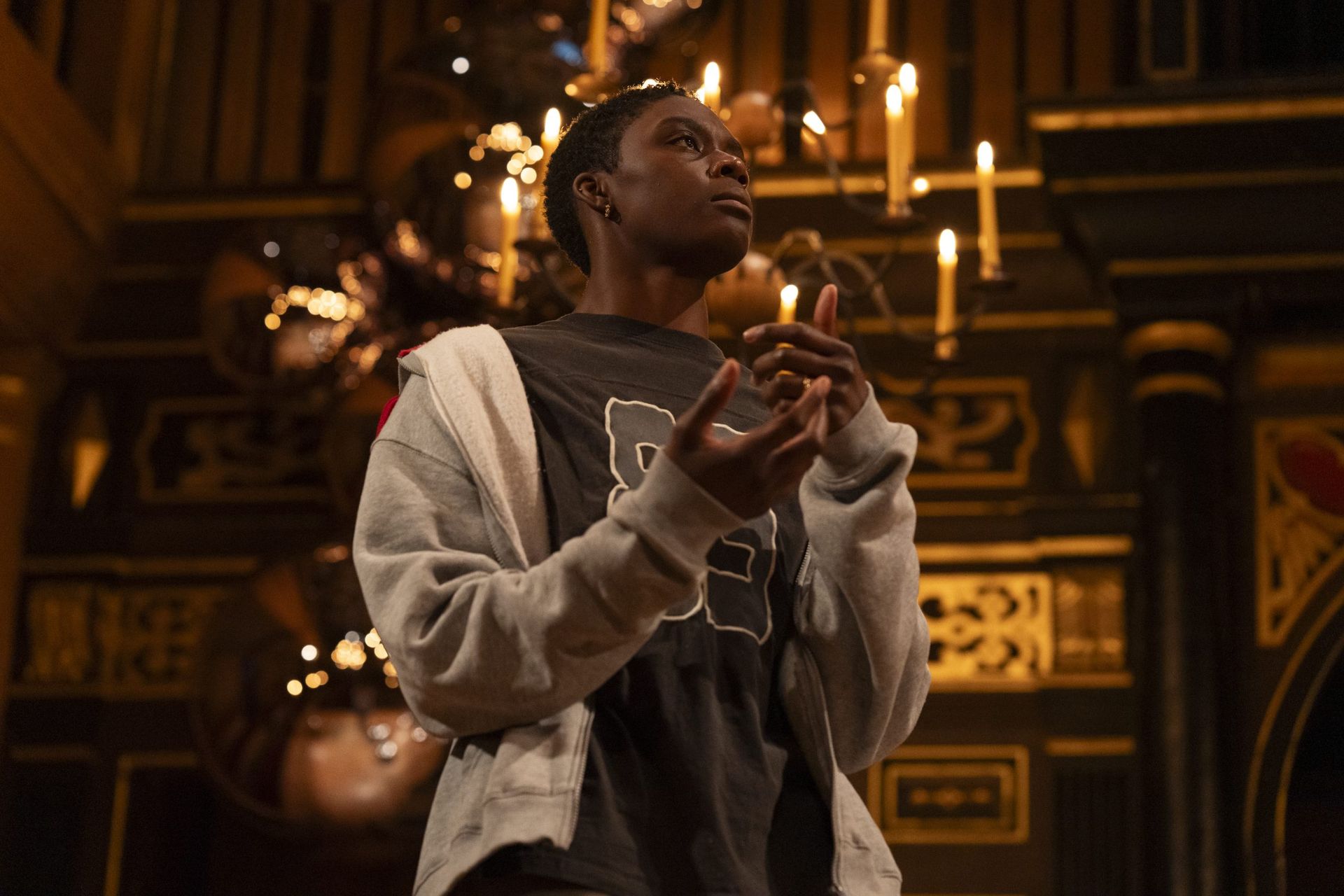
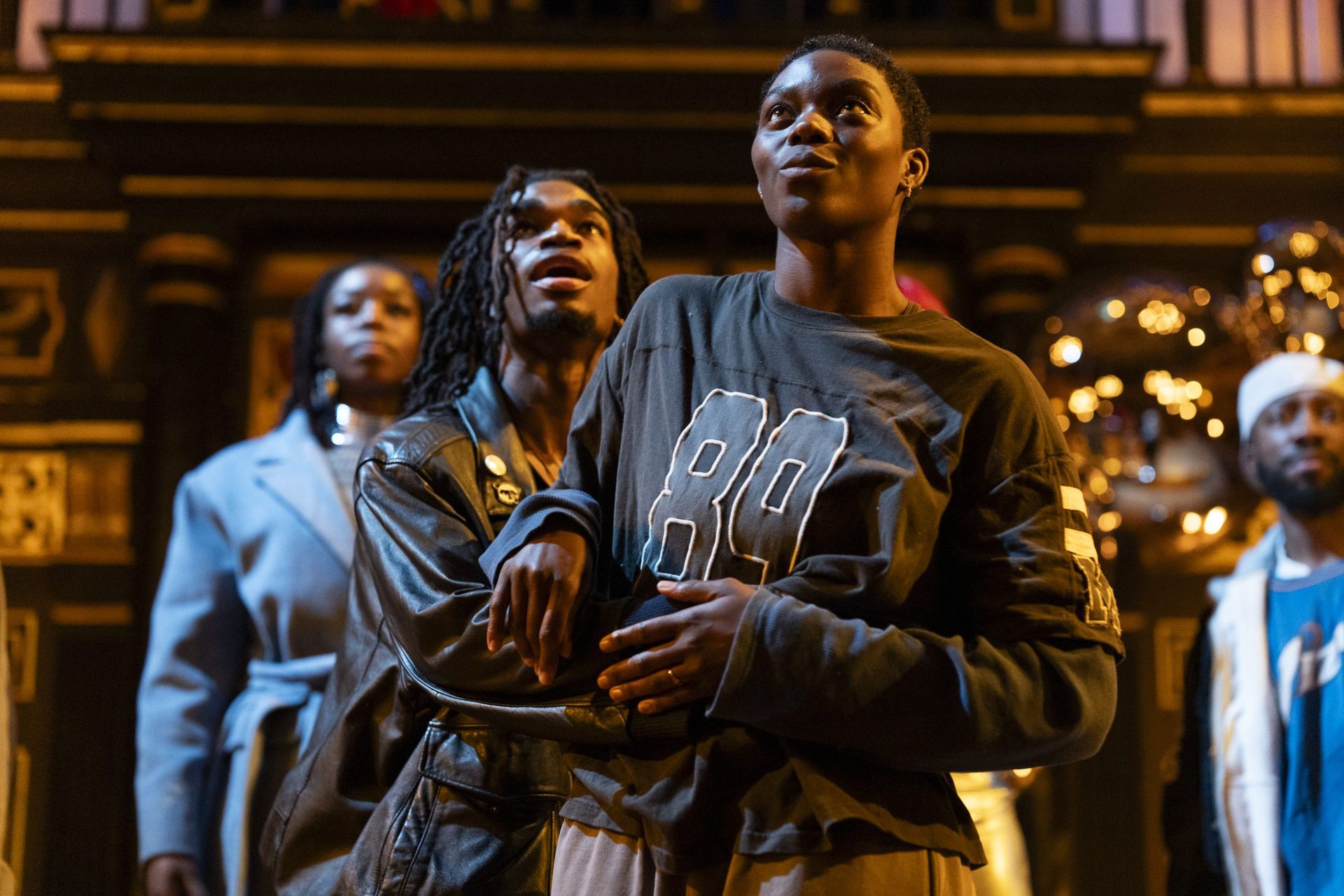
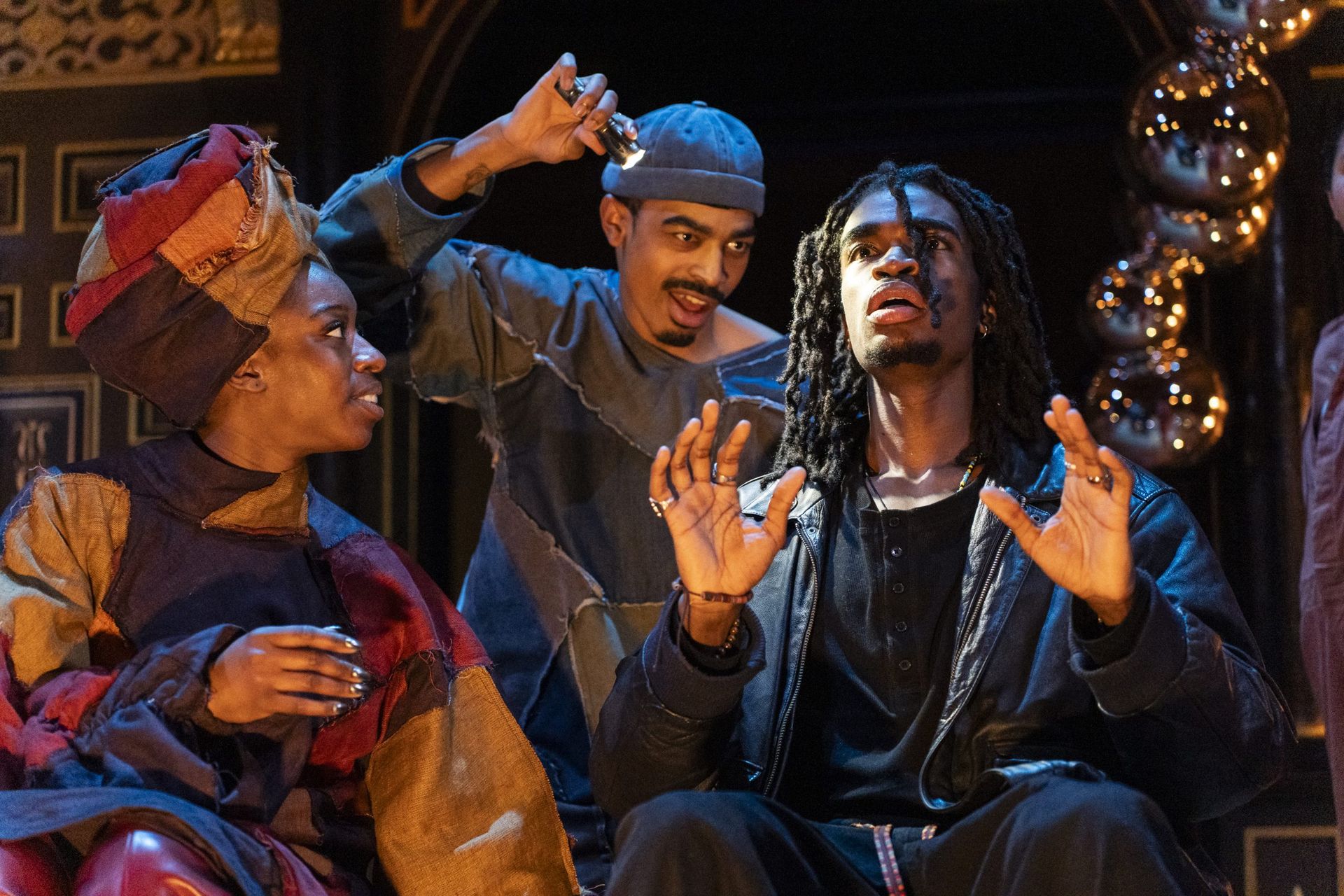
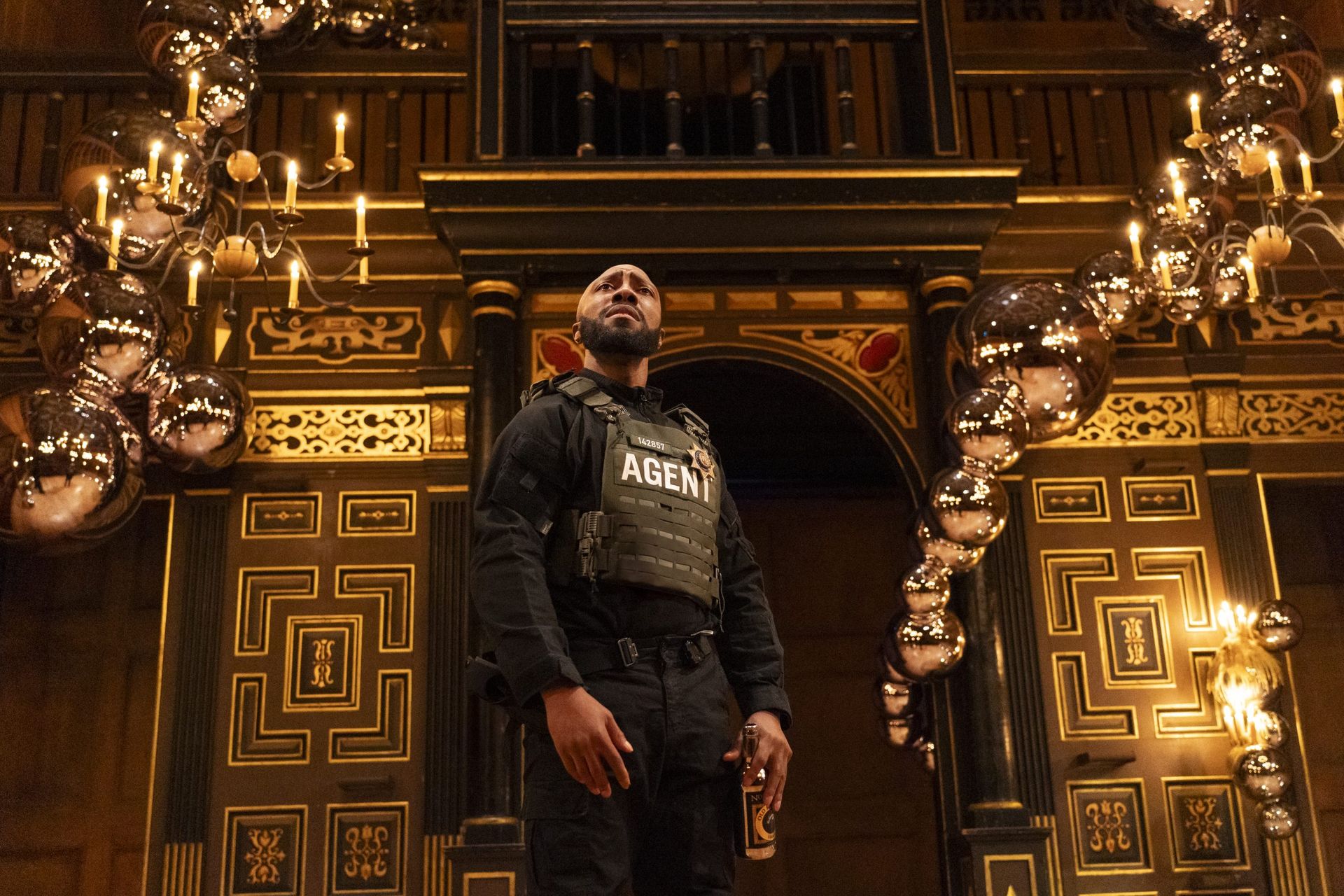
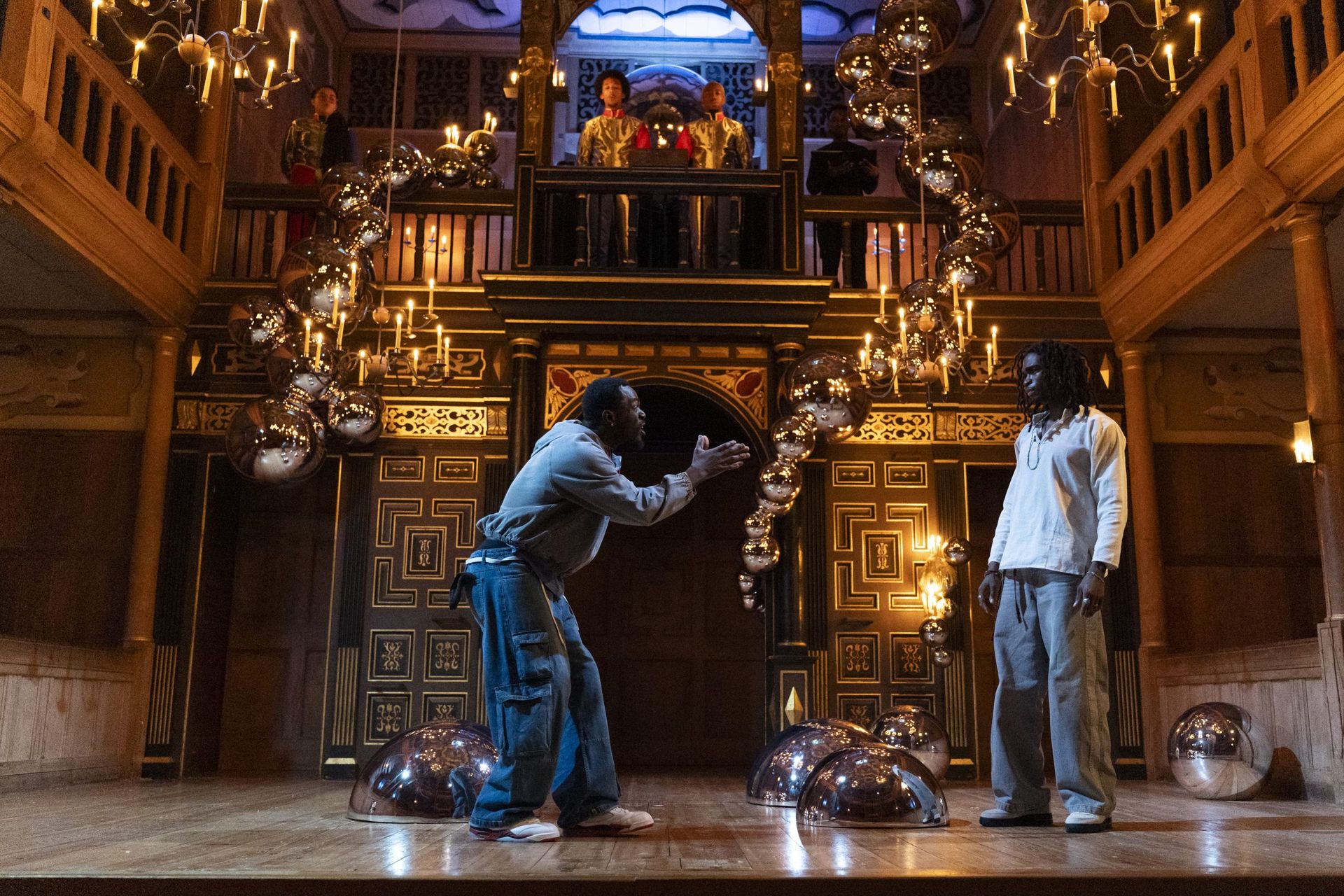
Deep Azure, now playing at the Sam Wanamaker Playhouse, is rooted in the killing of a young Black man by a police officer, and the grief, anger, and unanswered questions that follow. Written over two decades ago, it’s unsettling how current it still feels.
In Director Tristan Fynn-Aiduenu’s hands, that story becomes something expansive – part love story, part spiritual journey, part reckoning with a system that still seems to refuse to change.
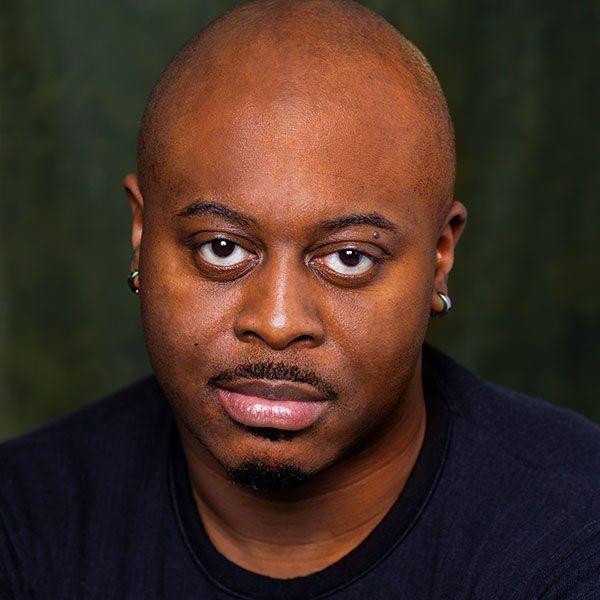
I sat down with Tristan to talk about bringing Chadwick’s writing to the London stage, the responsibility of telling a story rooted in real loss, and why Deep Azure continues to feel so sadly relevant today.
“The themes are still very current – police brutality, eating disorders – but it’s not just an issue-based play. It’s a Black piece of work that explores grief, justice, and life in all its complexity.”
I have to start by saying I thought it was beautiful. I found it really moving, and the performances were incredible. What really struck me was Chadwick’s writing – there’s something about it that just feels so alive and full of energy. What was it that stood out to you about his writing when you first came to it?
It’s exciting. That’s the word. This play was a precursor to what we now know as hip hop theatre.
So when you read it now and look at what Chadwick is doing with the language and form, it feels like it gives people permission to experiment, to push, to play with Black epic verse in different voices. Especially in Britain, where there hasn’t always been the same support for that kind of work, it either inspires, reignites something, or supports people already trying to do it.
This play was inspired by the death of Prince Jones Jr., a real young man killed by a police officer. What does it mean to you to be telling that story on stage now?
It means saying his name and honouring his memory. I was introduced to him through this play, and during the run we met his mother and his daughter. We were also able to bring them together with Chadwick’s family, which we were told was the first time they’d all been in the same space. That was incredibly powerful.
So doing this play is about honouring Prince, and also honouring Chadwick. And I think Chadwick would be okay with me saying that Prince should be honoured in the same vein, if not before him, because that’s why he wrote it.
The themes are still very current – police brutality, eating disorders – but it’s not just an issue-based play. It’s a Black piece of work that explores grief, justice, and life in all its complexity.
And to do that at the Globe feels significant. It’s about saying this kind of work belongs here too. What Chadwick is doing isn’t Shakespearean. It draws on multiple rhythms and flows. It is hip hop.
The play was written years before the Black Lives Matter movement happened, but it speaks so directly to it. How do you see the play sitting in that context today?
I always find that question quite sad, because it suggests Black Lives Matter is something new, when actually these movements have been happening throughout history. Black Lives Matter is just the name we use now. When Martin Luther King was marching in Selma, that was Black Lives Matter. When Rosa Parks refused to move, that was Black Lives Matter. We just didn’t call it that.
So yes, you can say the play feels relevant now because of Black Lives Matter, but I think that’s a reductionist way of looking at it, because these struggles and movements have always existed for Black people across the diaspora.
And if you do look at it through that lens, it’s not just about justice. It’s also about healing and care – about how we look after ourselves, how we connect, how we find tenderness with each other in the middle of all of this.
There have been so many names since Prince Jones. Do you feel a responsibility carrying that history into the room with you and the audience?
Always. Every time. I feel a responsibility to honour Prince Jones, but also to honour and really plug into the artistry of the piece, because that’s just as important. It’s about not shying away from how theatrical or expressive it is, but recognising that the way we explore these stories artistically is also a kind of truth.
So yes, I feel that responsibility, and I take it seriously, but it doesn’t feel heavy. And that’s because of the company. Everyone approached this with a real sense of purpose – knowing it’s about a real person and real experiences, but also wanting to tell the story in a way that could resonate, that could inspire, that could even help people heal.
So I feel the weight of it, but it doesn’t feel heavy. It feels like we have the care, the strength, and the trust in the room to hold it properly.
For a UK audience, this kind of story can sometimes feel like an American one. What did you want people here to recognise in it about their own world?
When I make work, I make it first and foremost in responsibility to my tribe, and a lot of my tribe is Black British people. And I can tell you now, we don’t see what’s happening in America as something separate. We know it. We feel it.
What I was really interested in with this production was bridging a gap between Black Americans and Black British people. There are forces that want us to see each other as separate, and I don’t think that serves us. We need to talk, to connect, to understand each other more deeply.
The play is rooted in African American culture, and that was something we really wanted to honour, not just in the work, but in the company, by having Black American artists involved across the production.
Then placing that in a space like the Globe, which is such a traditionally white institution, becomes about asking how those cultures meet.
As well as working with Black American artists on this production, you also brought in a group of students from Howard University, where Chadwick and Prince Jones studied, while you were developing it. How important was it for you to have that direct connection to where the play comes from?
That was really important. The students were already in Oxford doing the same course Chadwick did back in the day, so I reached out and said, ‘can you come and see what we’re doing?’ Everything aligned.
We brought them in, shared what we wanted to explore, and they were so generous. They helped shape the play as it is now, so I want to honour them as well.
Before he was known globally as an actor, Chadwick Boseman was a writer and director, which most of us didn’t know. What struck you most about his voice in this play?
It feels really rounded, but also effervescent. You can tell he enjoyed writing it, discovering things as he went, and you can feel that on the page. That’s what makes it exciting for me as an artist, because I can connect with that joy.
It feels soulful, very clearly a Black American soul, but one that reaches into other forms of Blackness. That’s something I wanted to explore in a British context as well.
Even with Deep’s mother, we made a choice to make her Caribbean, based on the heritage of the actor, and that opened something up. It speaks to the variety within Blackness, both here and in America.
And then there’s the duality in the writing. Every character moves between light and dark, and everything exists in between. No one is just one thing.
That reminds me of a line I loved from the play: ‘we’re all pimps and priests, killers and healers, good and evil’.
Exactly that. Yes.
There’s a very real love story at the heart of this, especially in the flashbacks between Deep and Azure. How important was it for you that the audience really feels that relationship, not just the loss of it?
Paramount. Because otherwise it just becomes a catalyst or a device. If we’re seeing the light and dark in each character, we also need to see that in the relationship. The script gives us moments where things aren’t working, and hints of when it was good, but I really wanted to explore that on stage so the audience could see the full breadth of who they were together and make their own conclusions.
It’s about understanding why Azure loved him in the first place, and then how painful it is when someone falls short of your expectations, or you fall short of theirs.
And also, I just think we don’t see enough of that on stage, especially when it comes to Black romantic love. It’s not that those stories don’t exist, they do, but they’re not platformed enough. And they’re important, because they shape how we see ourselves, how we imagine what love can be, and how we relate to each other.
We see grief turn into anger in so many different ways across the play, in the community and in the individuals. What were you most interested in showing about that?
The unwieldy nature of grief, and the fact that it doesn’t end. It doesn’t end because you still love that person, you’re still connected to them.
But I’m also interested in how powerful grief can be. You go through a loss, whether that’s a person or a relationship, and within that there’s learning, growth, even healing you didn’t realise you needed. That’s why the play becomes so theatrical – the music, the movement, the spiritual moments, all of that is part of the process.
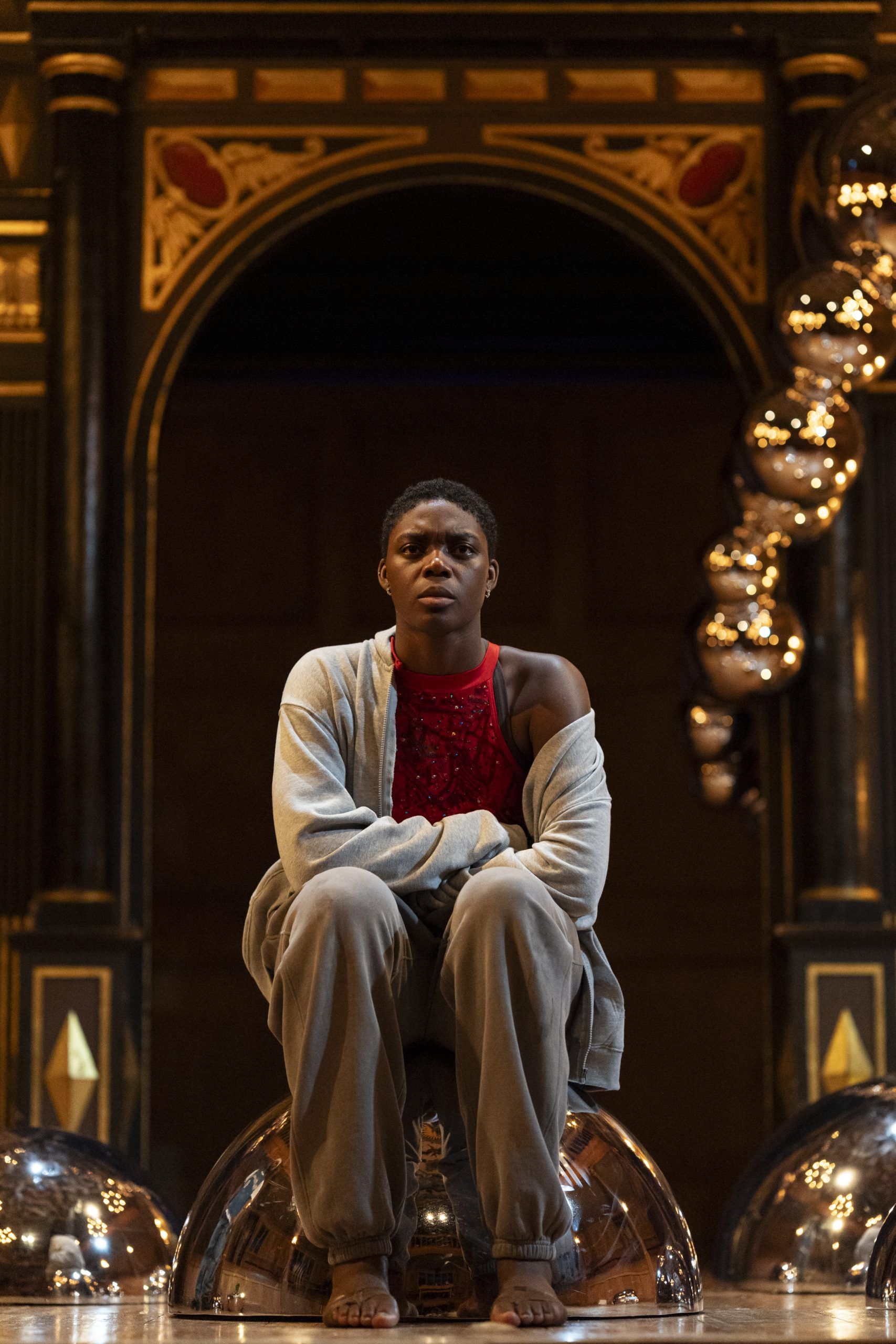
By the end, Azure isn’t the same person she was at the start, but she also is. She’s grown. And that’s what the butterfly ballet moment is about, that sense of what might be possible on the other side of all this, if she can find something true to hold on to.
Deep is gone, but he’s also kind of everywhere in the play. How did you think about his presence on stage?
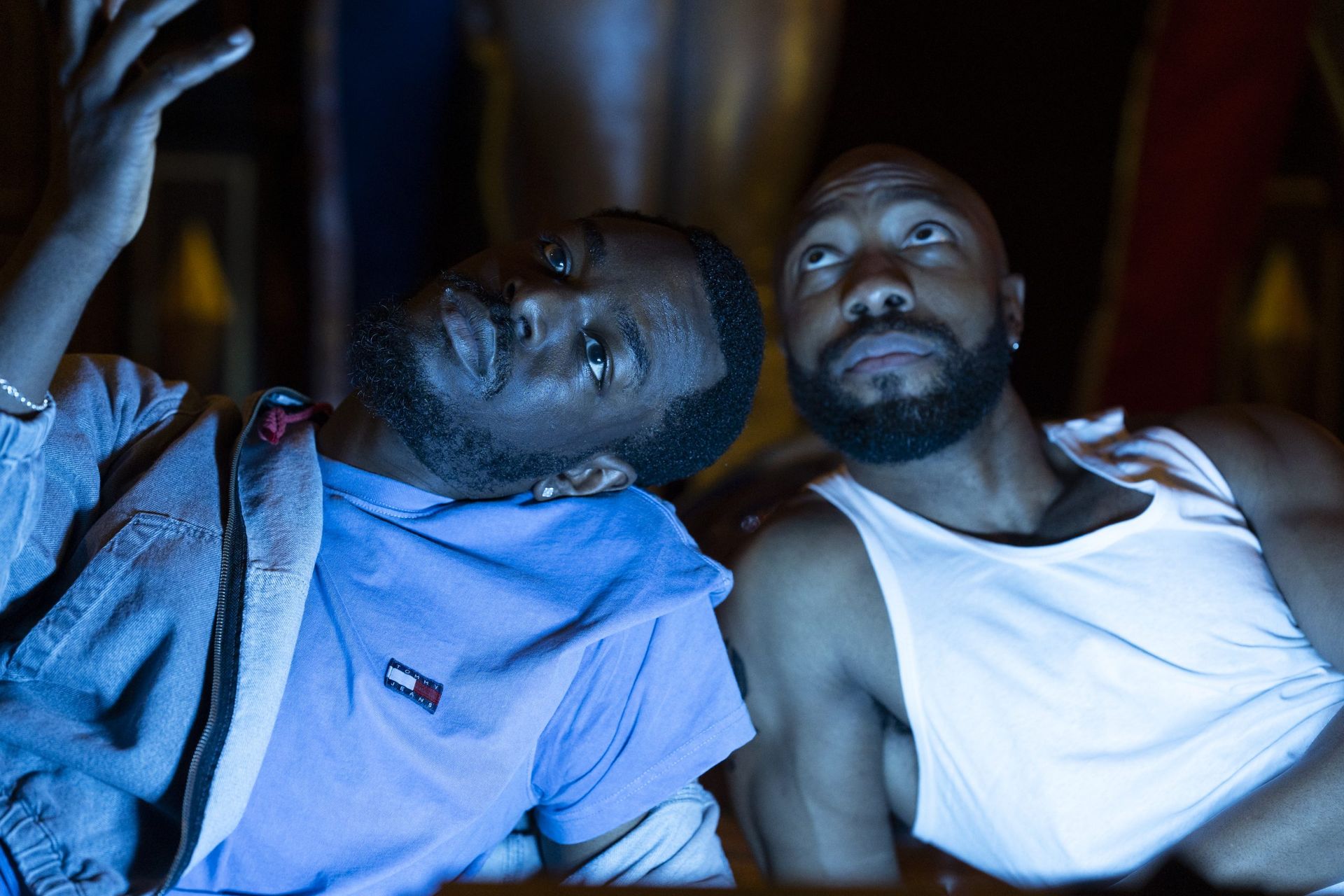
I wanted him to always feel like a presence, but not in just one way. We played with the idea of different versions of Deep – the one we see in flashbacks, the one just after his death trying to understand what’s happened, and then the one who understands what needs to happen and begins guiding the others through it.
He becomes a kind of spiritual guide, alongside Street Knowledge, helping them find their own truth and some kind of freedom.
That also comes from how I understand grief. Someone’s body is gone, but their spirit still exists around you and within you. You see that in the play in how the characters repeat his words, how he continues to live through them.
There’s a line from Deep’s mother about how many disasters a mother can foresee for a young Black man, and that fear really comes through. How important was her perspective in the production?
Her perspective is incredibly important because it affects every Black man in the play. But just as important is her presence and what she gives to Azure.
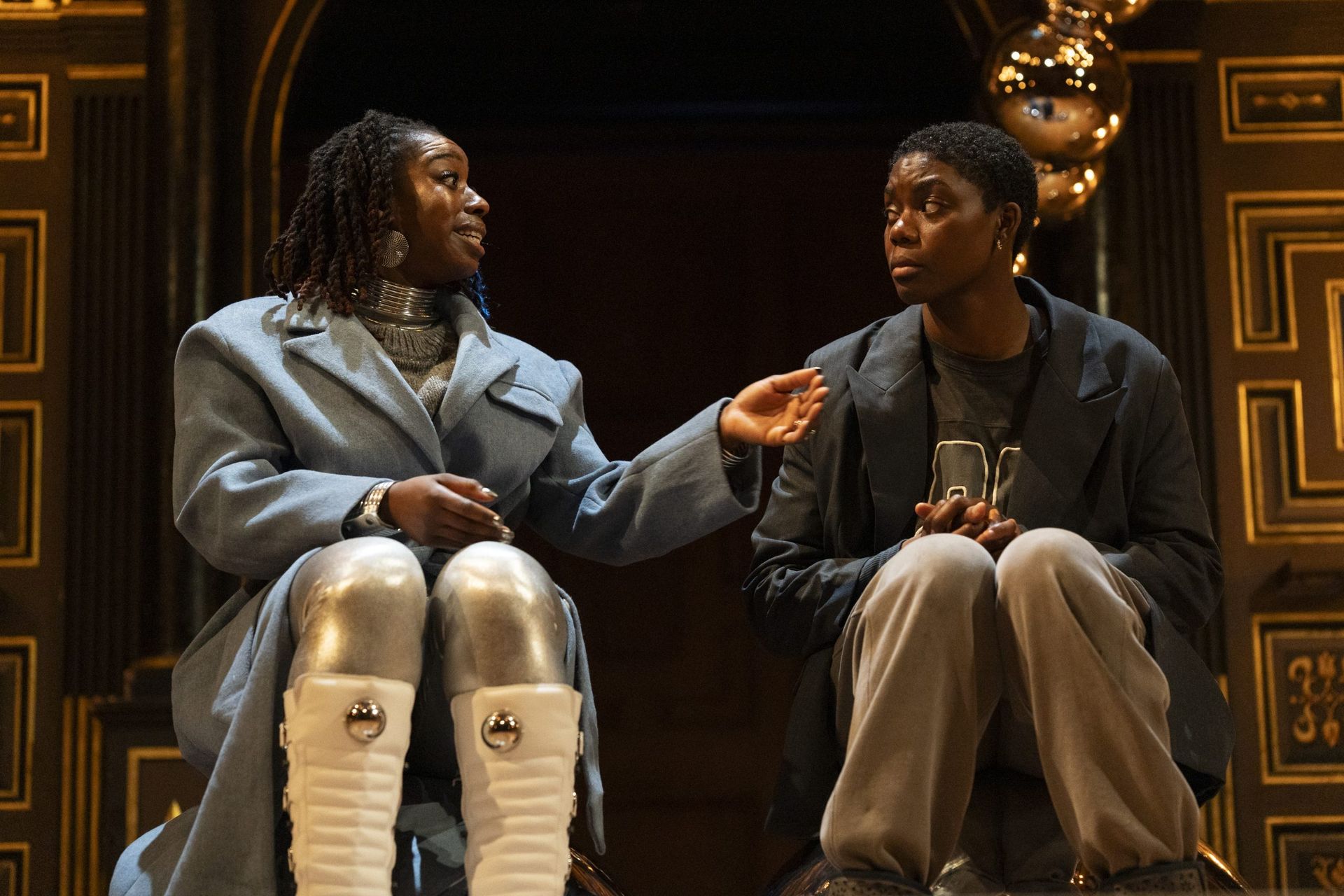
In rehearsals, we realised she offers the ability to hold both darkness and light. She shares her grief and fear, giving Azure permission to feel everything fully, and then asks her to find light as well.
That becomes something Azure can hold on to as everything gets harder. The mother becomes a source of truth and light in her life.
There’s also this idea in the play, in that line, ‘they give enough to quiet the throngs, but not enough to right the wrongs’ – that sense of people doing just enough to feel like they’re helping, but not enough to actually change anything. Do you see the play as being angry about that kind of response?
Yeah, absolutely. It’s angry, but it also understands why. The play is wrestling with what it means to be a revolutionary, and how that can feel necessary, but also ineffective.
You see that through Rashad. He represents that disaffected voice asking, what are we actually doing? You tell us to march, we march, and nothing changes. So what are the reasons now?
There’s also that sense that those bigger revolutionary figures aren’t there in the same way anymore. And for Rashad, there’s even the idea that Deep might have been someone who could have stepped into that space, and he never got the chance.
So yes, there’s anger, but also frustration and questioning, that feeling of doing everything you’ve been told to do and still not seeing change.
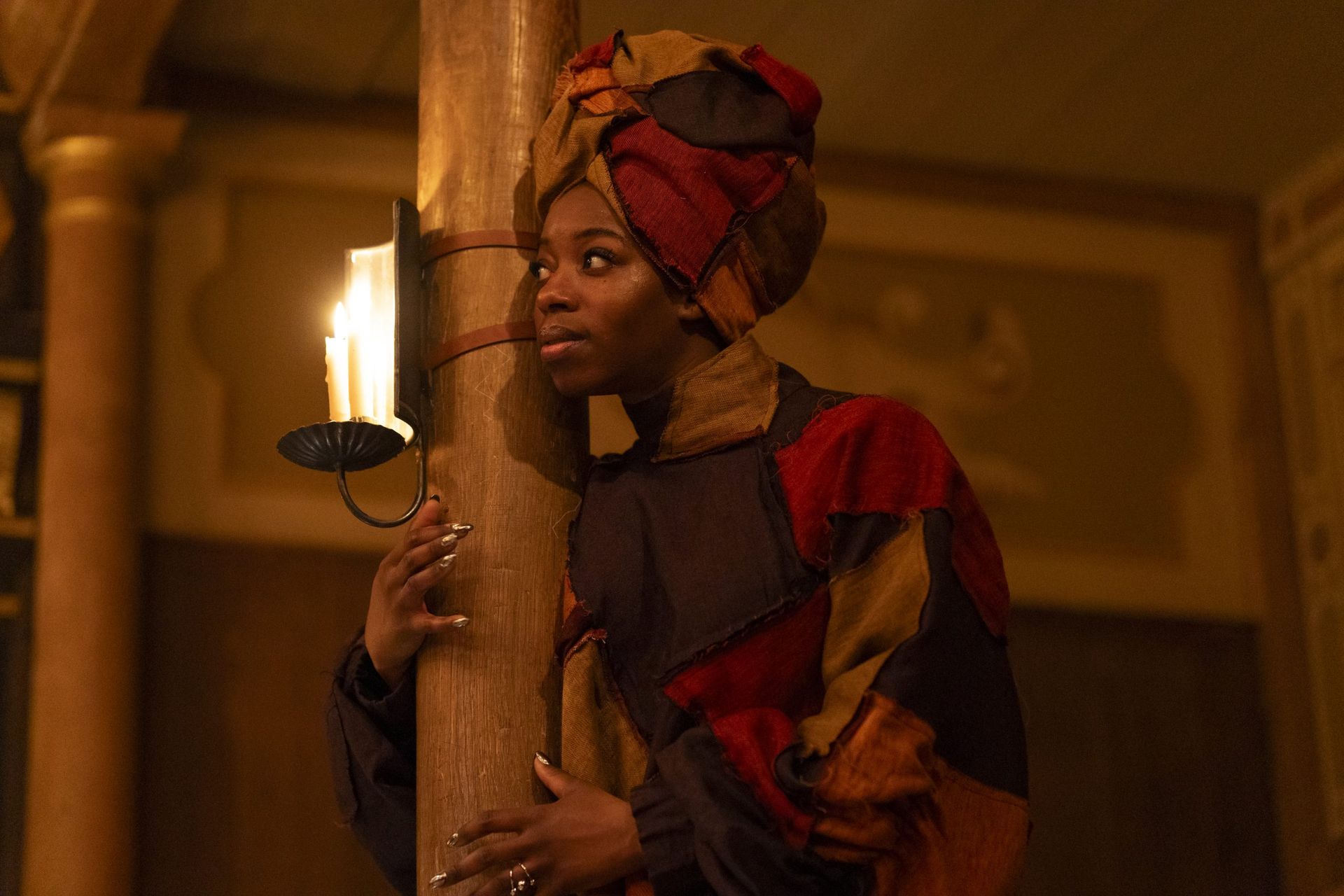
There’s a choice in the play to have a Black police officer responsible for Deep’s death. Why do you think Chadwick made that decision?
I remember being on a march once, and someone said, once you put on the uniform, you cross a line, you cross into a different kind of power. And I think that’s what this choice speaks to. It’s about showing that this is an institutional problem. It’s influenced by racism, sexism, all of those systems of power, but it’s not always going to show up with a white face. And that’s what makes it more insidious.
If it were that simple, it wouldn’t keep happening in so many different ways. There’s a moment in Boyz n the Hood where a Black police officer pulls them over, and they think he might help, but he’s actually the most aggressive of all. He’s bought into the power of the institution.
And that’s the point. Once you step into that system, if you choose to operate within it in that way, you become the aggressor. So it’s not just about individual racism, it’s about the institution itself and the power it holds.
There’s a moment where something devastating happens and then you have the Cheers theme coming in, which is almost jarring. What was the thinking behind that contrast?
That’s actually in the script – Chadwick has them sing it. And we spent a long time asking, why Cheers of all things? It’s such a white show, and that became part of the point.
It speaks to how pervasive white capitalist America is, and the paradox of it. You have these characters going through something so painful, and then there’s this TV world that doesn’t really reflect them at all, but is still held up as part of the culture they’re living in.
We didn’t try to make it fully make sense, we leaned into that contradiction. That’s why it feels so jarring, but also oddly funny, because it makes you go, what is this? What are we watching?
And it links back to the TV scene as well, the parody, the way TV can shape how you think, how it gets into you. What’s interesting is that when Azure is at her lowest point, that’s the song she connects to. And when you listen to the lyrics, it’s about wanting to be seen, to be known.
So there are all these layers and contradictions in it, and we chose to sit in that rather than trying to resolve it.
There’s this sense that Azure is searching for something beyond the physical, beyond the surface. What do you think she’s really searching for?
It makes me think of her final lines, that what she wants and what she needs are two different things. She wants control. That’s where the eating and not eating comes in. But what she needs is something else.
She needs to surrender, not to the injustice, but to something bigger than herself. To the universe, to God, to what’s within her. Really, she needs to feed the God within her, because that’s the only thing she truly has power over. She needs to take care of that part of herself.
And you see that in moments like the prayer, where it turns dark. Sometimes people pray for dark things. That’s still a real prayer. It’s her being completely honest, saying, this is where I am right now, this is my truth, this is what I want. And asking for the strength to move through it.
That’s why that moment becomes so powerful, because it’s not about being good or pure, it’s about being truthful. And that honesty, even in the darkness, becomes a kind of spiritual connection.
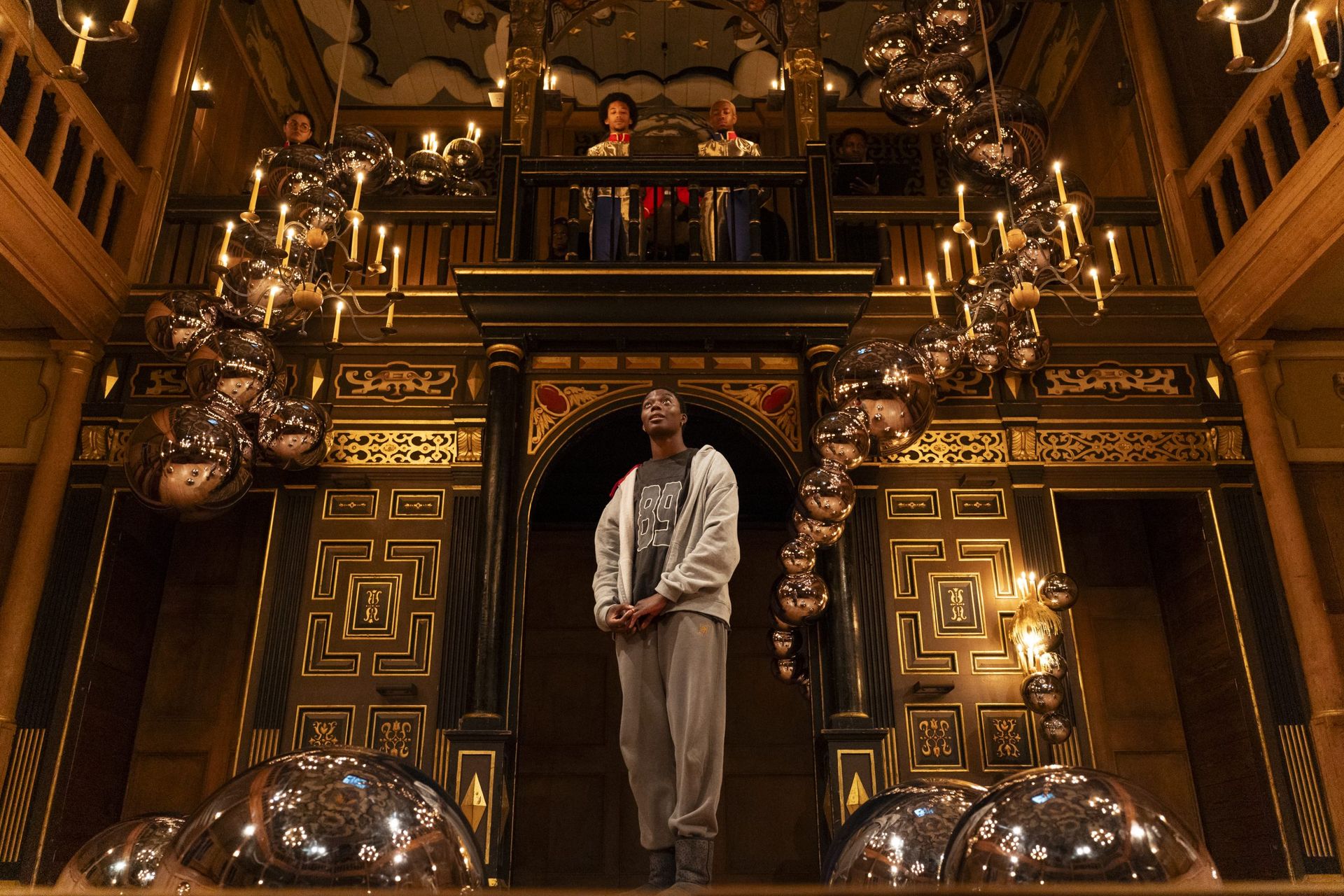
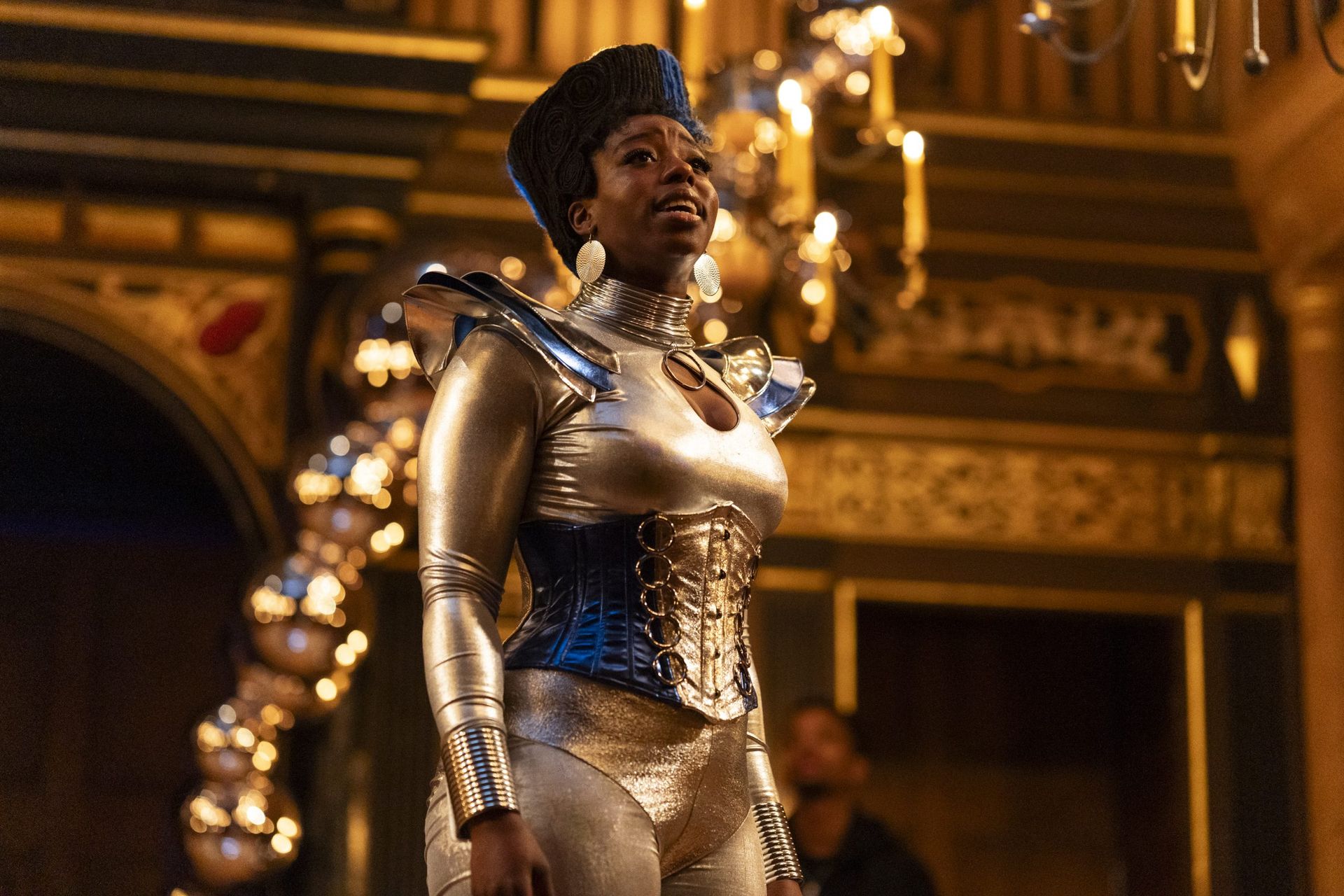
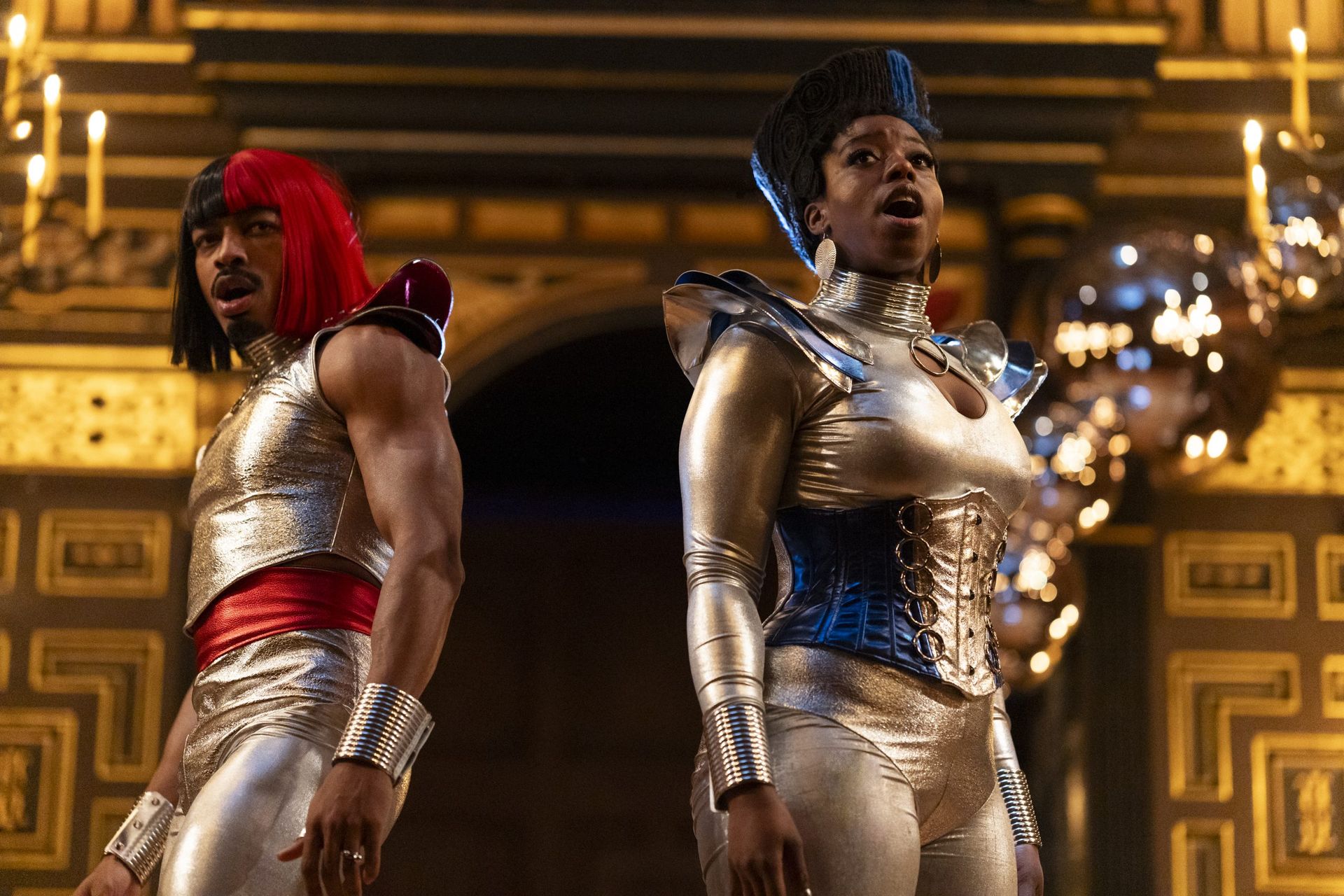
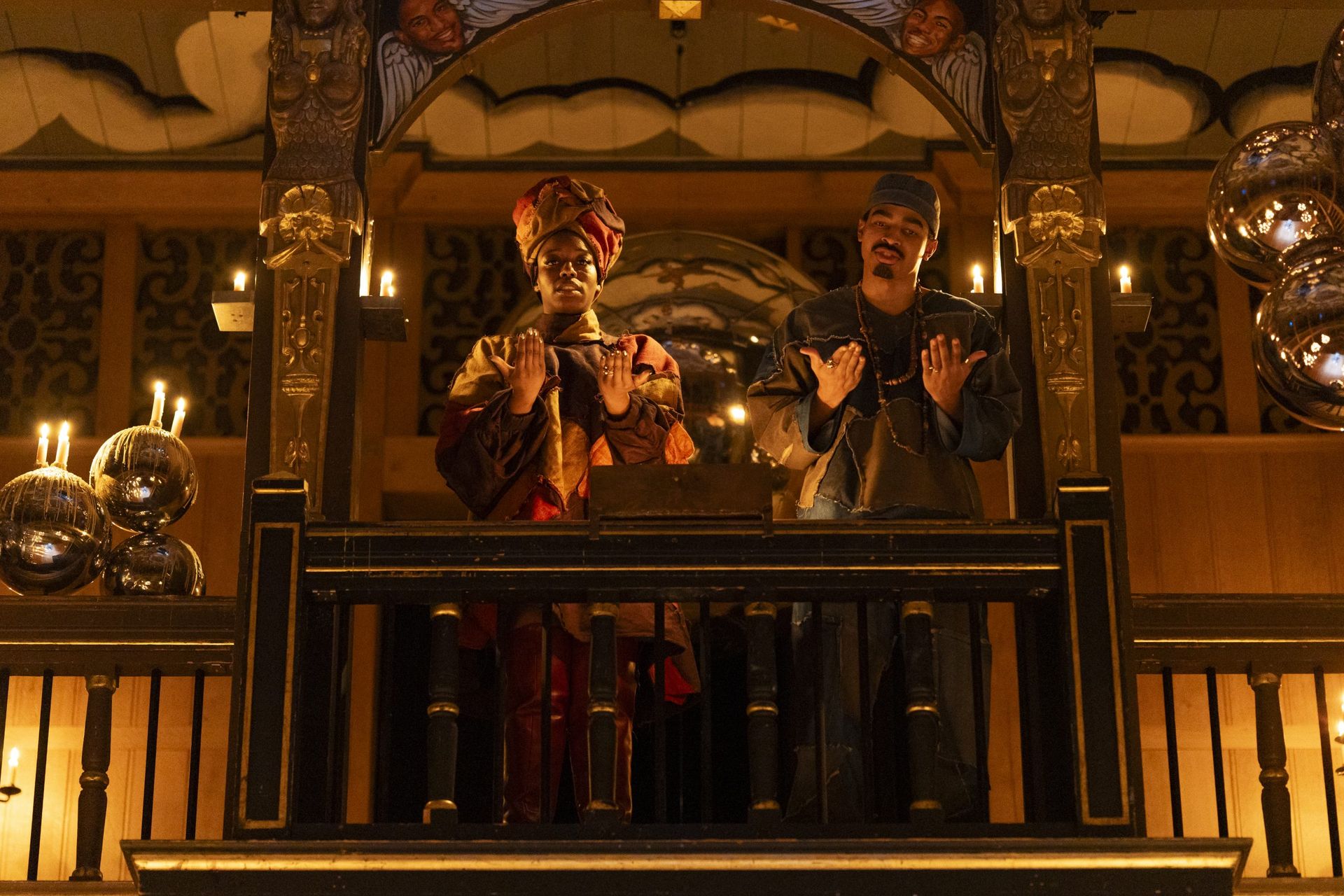
The costumes for Street Knowledge at the start really stood out to me, they felt almost like they were from a different time, maybe the future. What was the thinking behind that?
We were looking at the idea that this is an Afro-spiritual, futuristic play, so thinking about Afrofuturism, but also about how time works in the piece. The past, present, and future all exist in tandem, almost like they’re in conversation with each other.
From there, I started thinking about hip-hop, because it’s a hip-hop play. In the 90s and early 2000s, there was a real sense of futurism in hip-hop visually, people like Missy Elliott, Busta Rhymes, that bold, experimental energy.
And then that sits alongside something more grounded as well, a more natural, spiritual connection to the earth and the elements. So the costumes are holding both of those ideas at once, different expressions of Afrofuturism and Black spirituality.
There’s that line, ‘this is not life because we breathe, it’s what we believe and what we leave,’ and it feels especially resonant when you think about Chadwick and this play. What does that line mean to you?
It’s about legacy. That’s what it comes down to. What do we leave behind?
Prince Jones left a legacy that moved Chadwick to write this. Chadwick has now left this as part of his legacy. And now this play exists, here at the Globe, as part of that.
The fact that Chadwick gives that line to Rashad is really important as well, because he’s not just a disaffected young man. He has potential. There’s something in him that could become something more, and that line gives him that clarity.
And I think that’s Chadwick speaking directly to us in that moment. In the middle of all this grief and injustice, what has been left for you? What is the legacy you carry forward?
Deep Azure is at the Sam Wanamaker Playhouse until 2nd May 2026.
Get your tickets at shakespearesglobe.com
Words by Nick Barr
Portrait of Tristan Fynn-Aiduenu by Shakespeare’s Globe
Production photography by Sam Taylor