Like so many people, I first encountered Cynthia Erivo as Elphaba in Wicked. She was incredible, and my whole family – long-time fans of the stage show – became mildly obsessulated (it’s a Wicked ref) with the film and its stars.
Since then, I’ve seen enough footage of her offstage to get a sense of the person behind the talent, whether that’s the generous way she connects with fans or the powerful message behind her book, Simply More. It’s clear she’s not just an extraordinary performer, but someone who genuinely cares about the impact she has.
So when I heard she was coming to the West End with a one-woman Dracula, I couldn’t wait to see her perform!
The last one person play that I saw – not counting the farcical One Man Musical – was Eddie Izzard’s Hamlet. I expected this to be a similar sort of thing – one person jumping between characters, darting around the stage and talking amongst themself – but the reality of boundary-pushing director Kip Williams’ show is much, MUCH cooler than that.

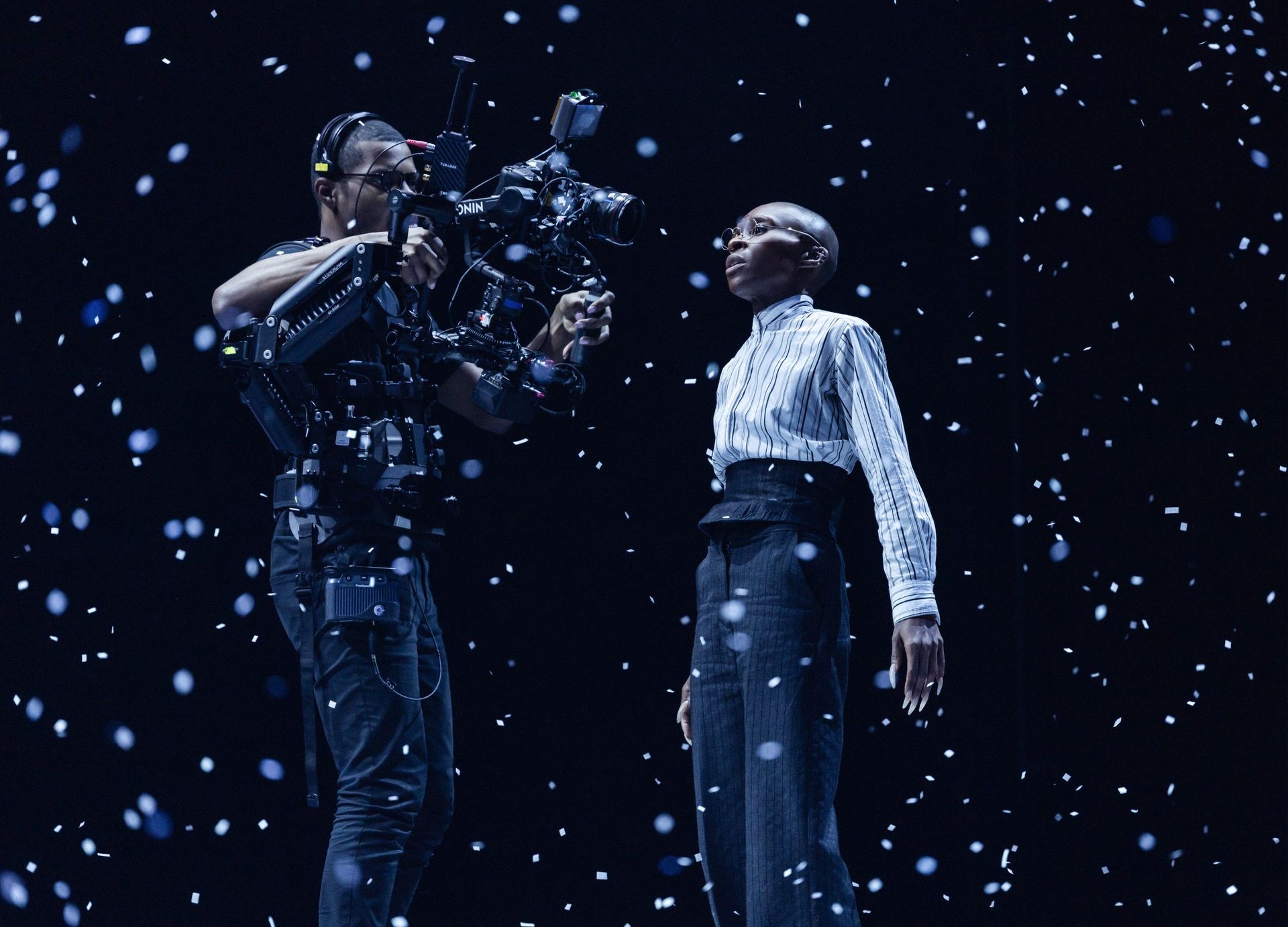
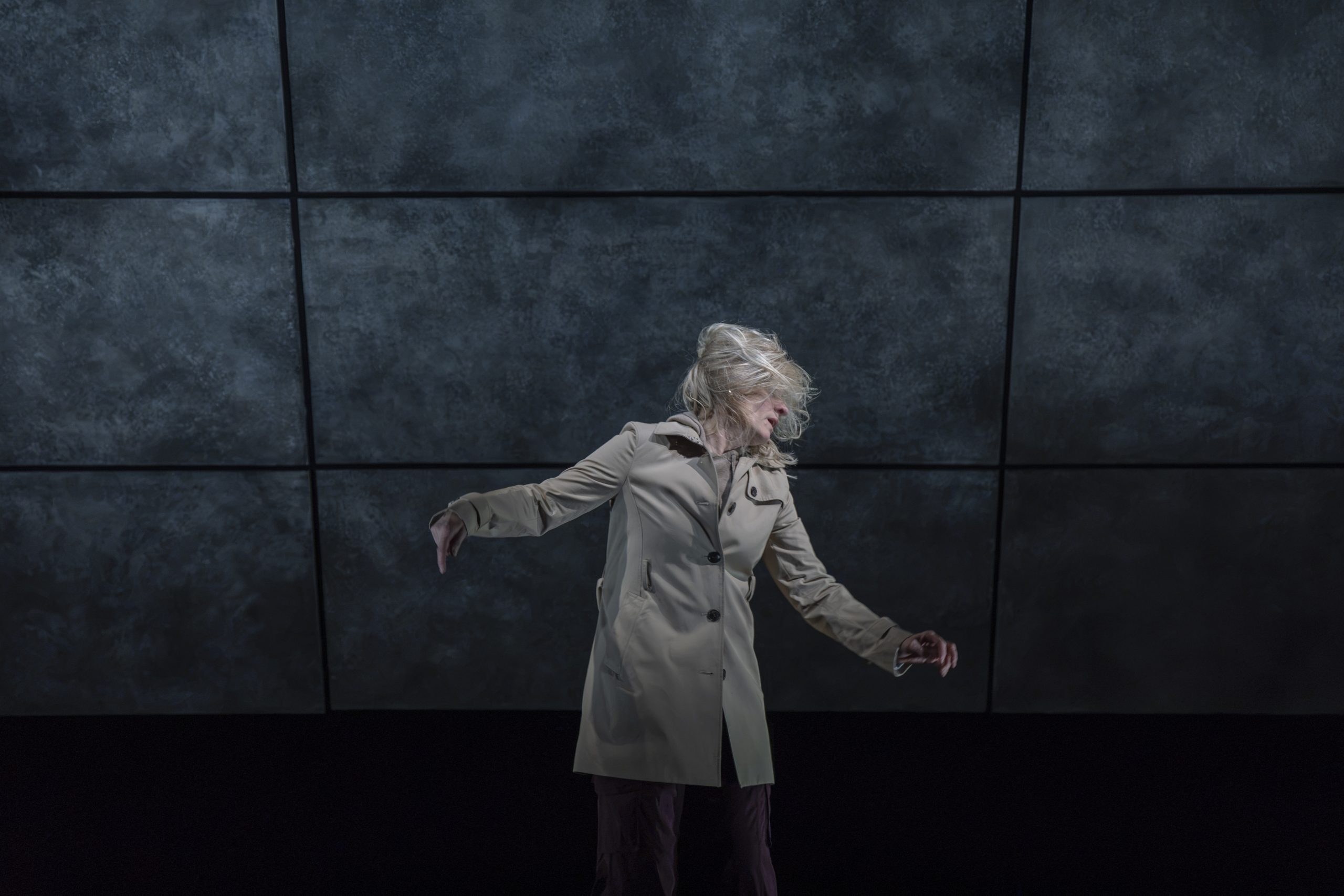
It starts abruptly. The house lights have not yet dimmed and Erivo walks onto the stage and lies down. She is wearing dark trousers and a tank top. There is a large screen hanging on stage and a camera drops down above her, as she begins telling us the story of Bram Stoker’s Dracula, beginning as Jonathan Harker, the solicitor who travelled to Transylvania to meet with Dracula, only to become a prisoner in his castle.
As Harker finishes his introduction, we get the first hint that something supernatural is happening. On the screen, Erivo’s image begins to distort, pulling apart in several directions at once. It’s a simple effect, but it immediately signals that all is not what it seems. She gets up, and from that moment on, the show opens out into something far more complex.
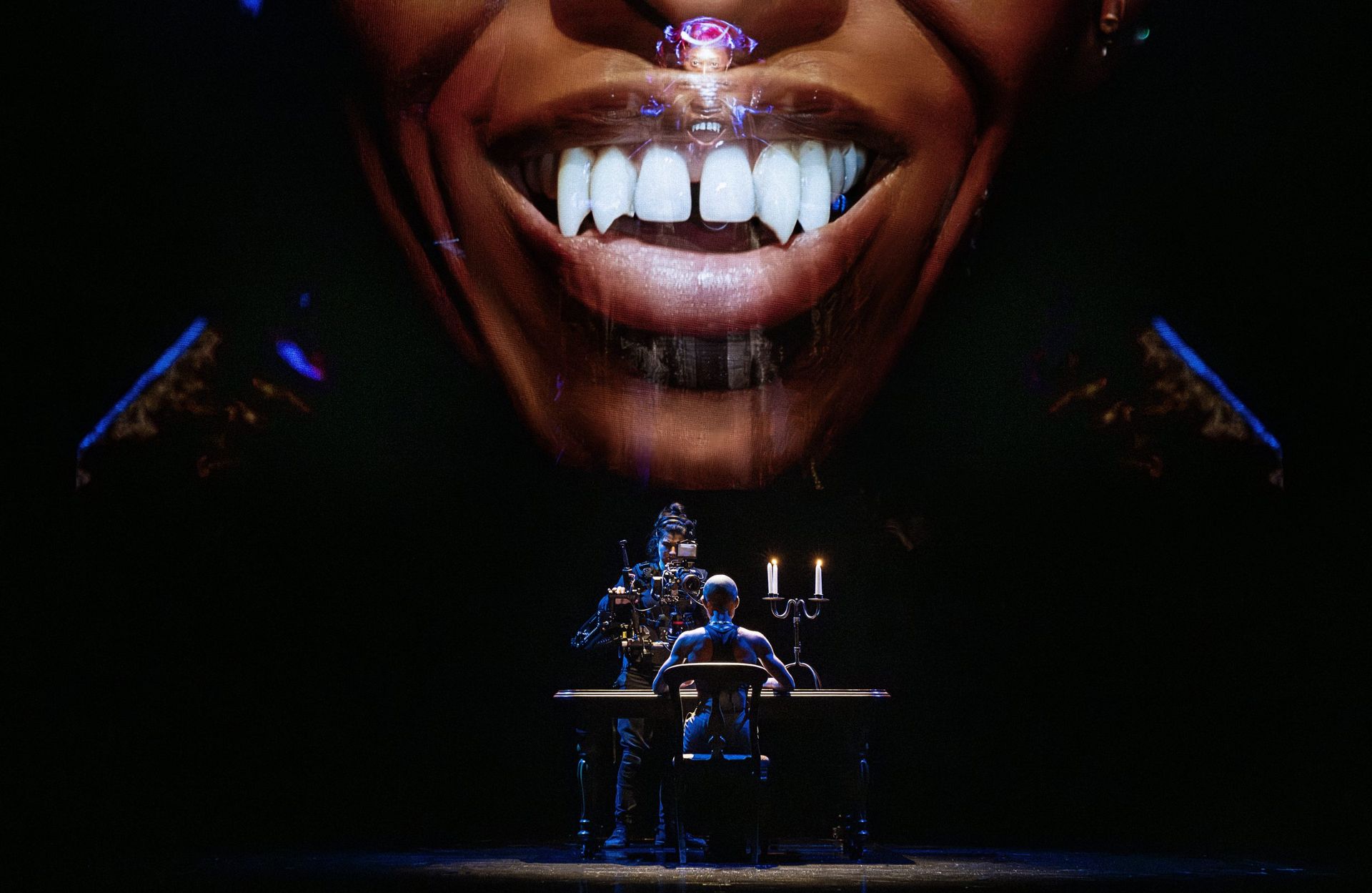
Cameras, pre-recorded footage, costume pieces and wigs all come into play as she begins to create the different characters. She transforms not only by switching physically between them, but by appearing as them on screen, often transposed over her live performance. What that means in practice is that we’re not just watching her perform one character at a time – we’re able to see multiple characters interacting with each other, all played by Erivo, in what feels like a kind of cinematic theatre.
As the story comes alive, she embodies a huge range of characters. She moves from Harker to his fiancée Mina – dark wig, long skirt – then to the beautiful, well-spoken Lucy, complete with blonde wig and a light, tittering laugh. She takes on Lucy’s suitors too: Dr Jack Seward, Arthur Holmwood, the ever-so-debonair Quincey Morris. Sometimes these are performed live, sometimes via the pre-recorded screen versions, but always they feel just as alive and real.
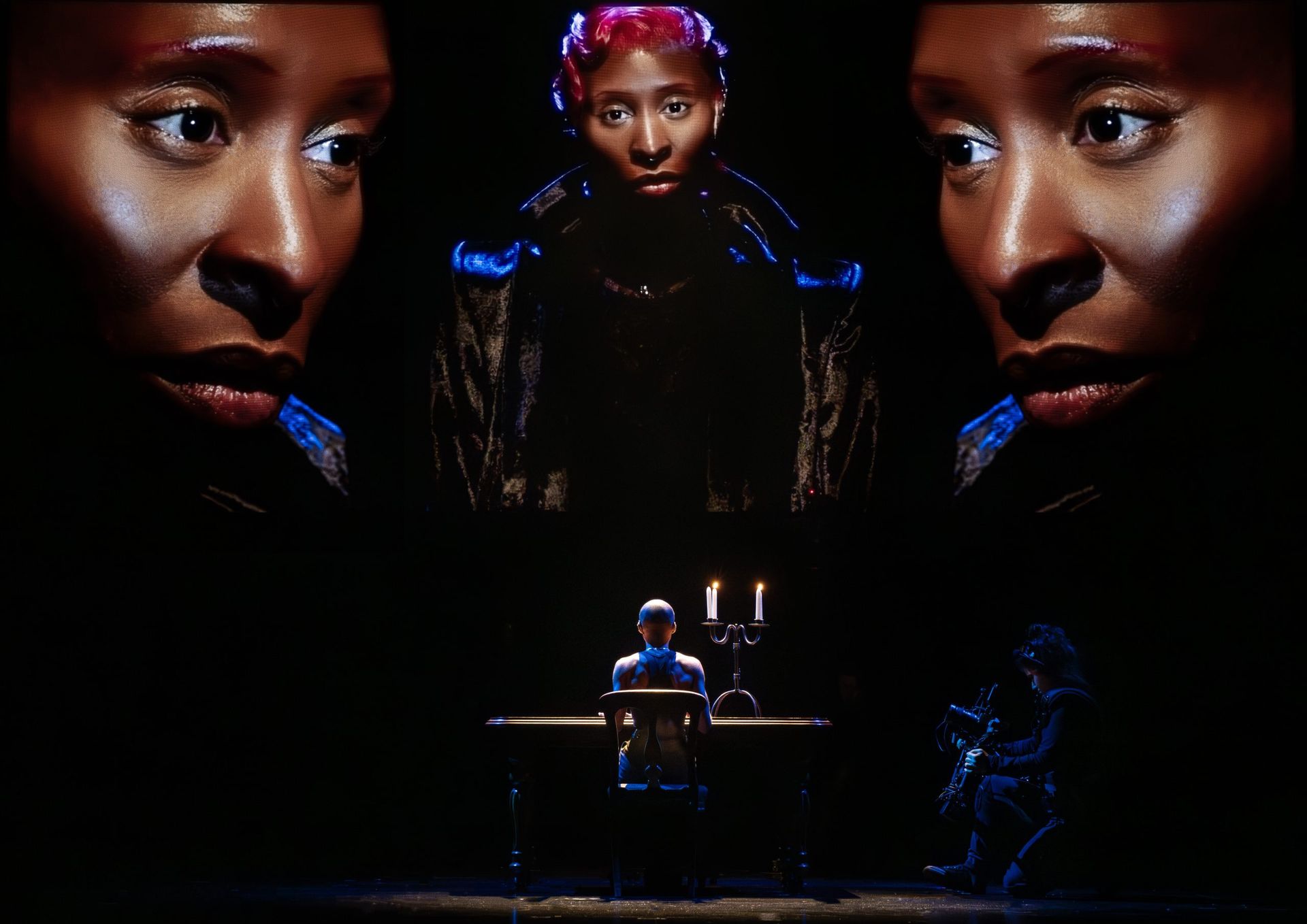
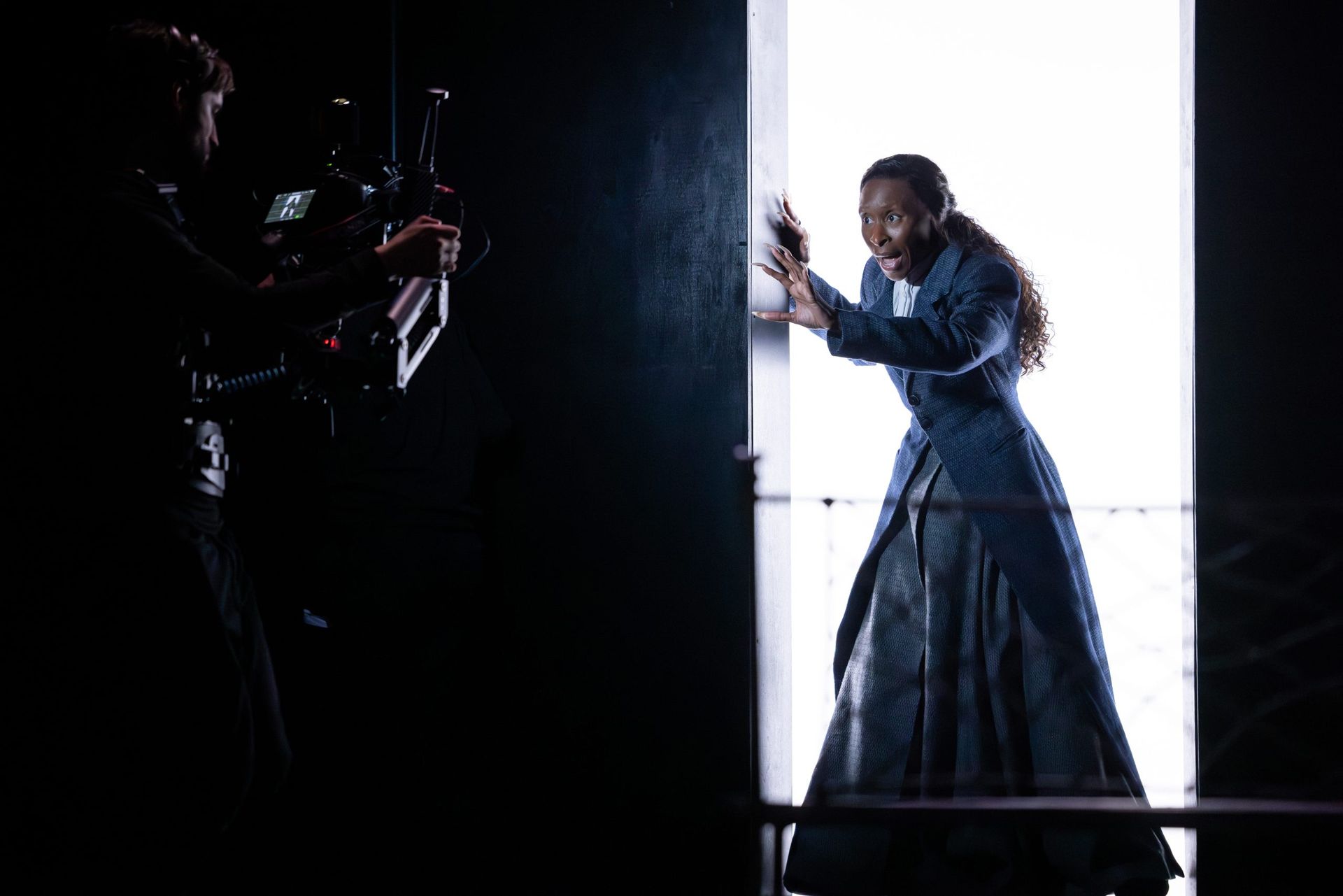
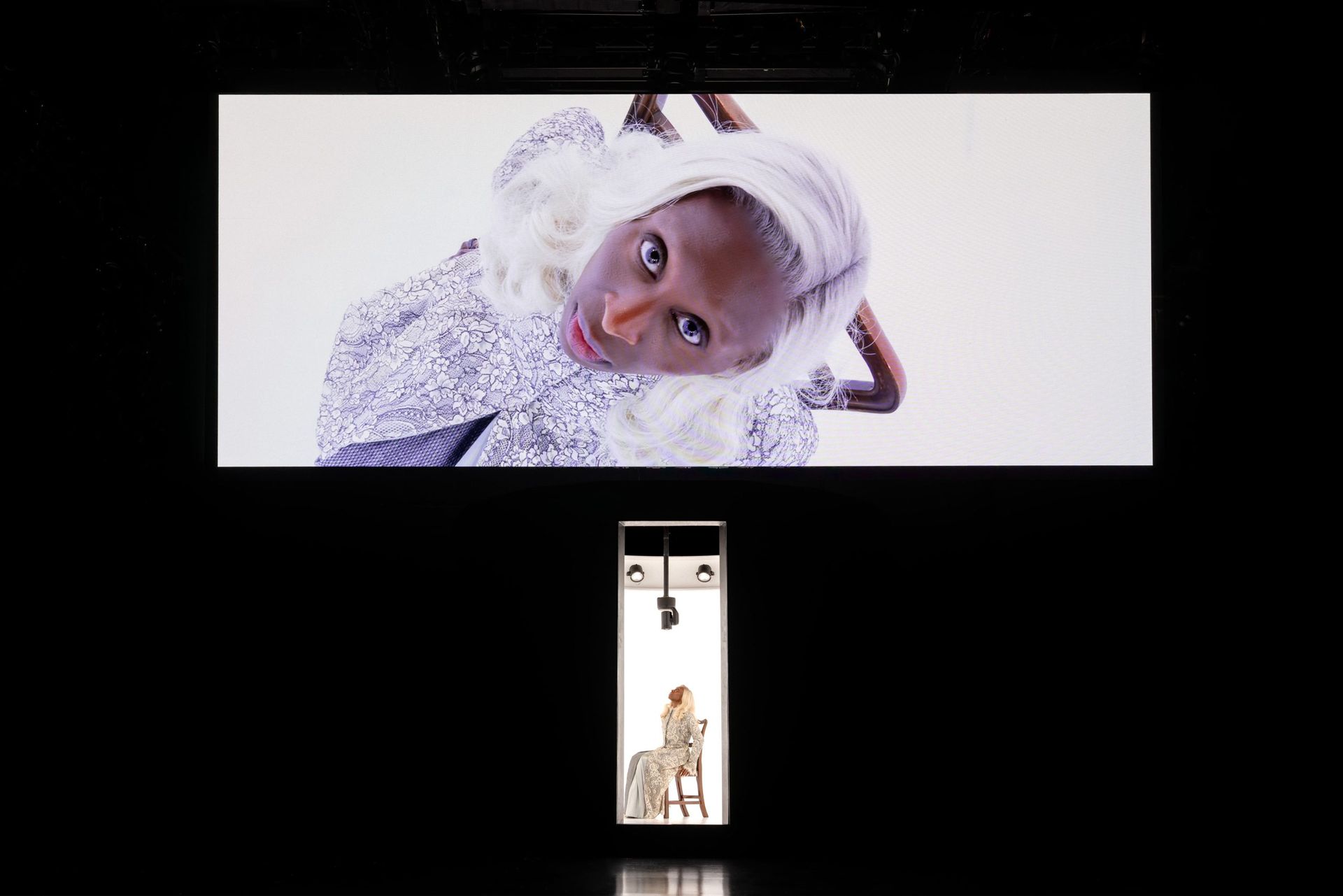
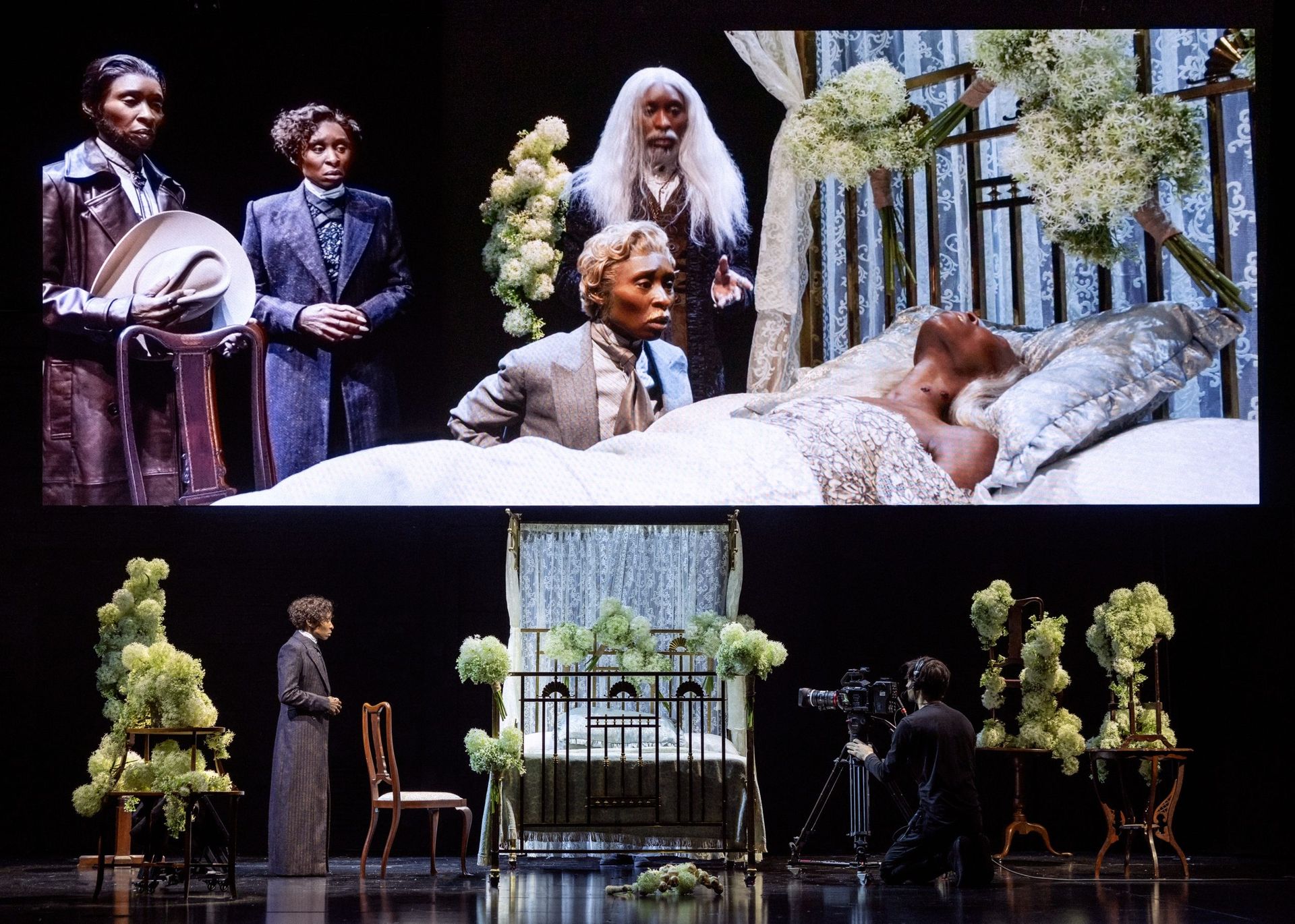
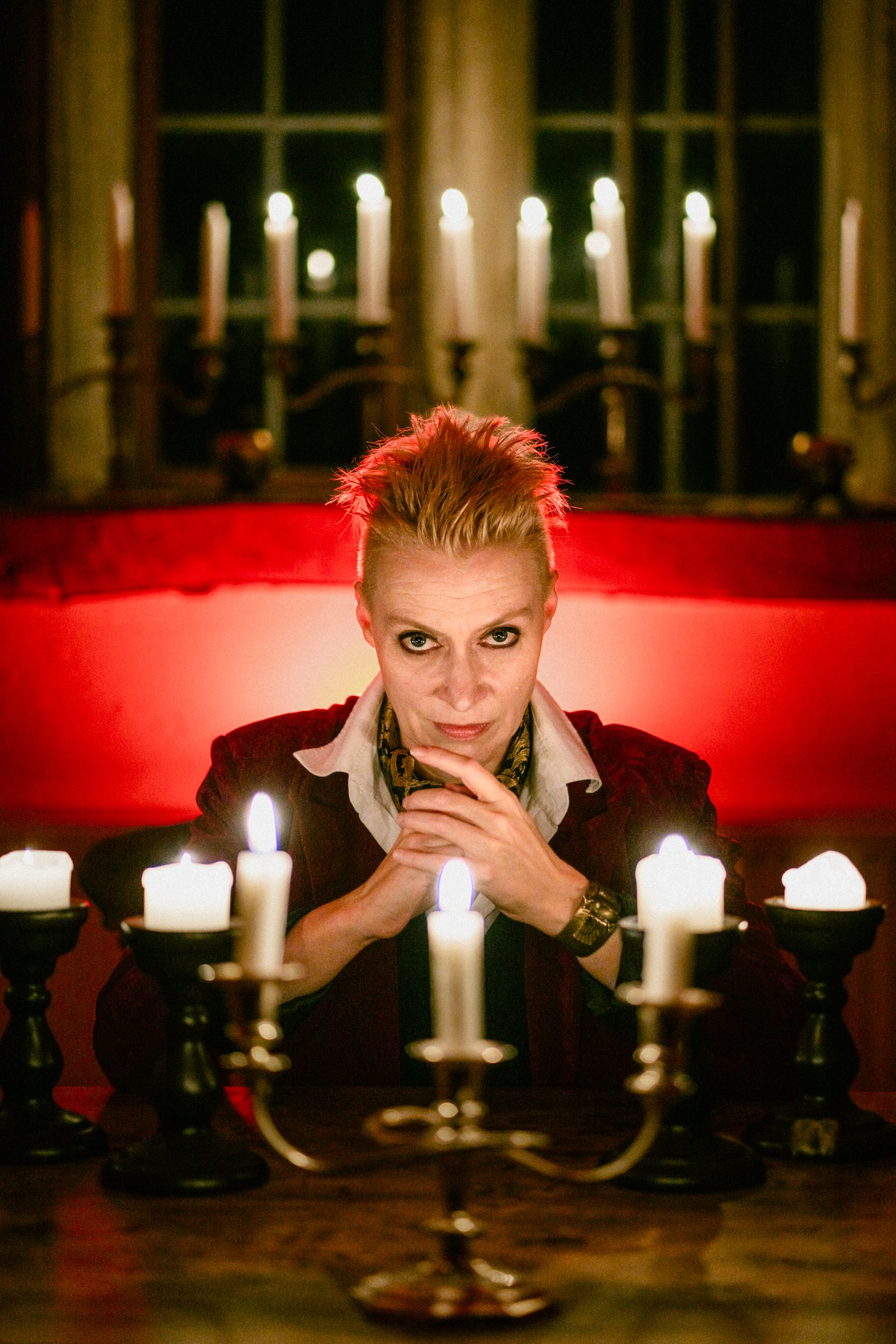
And then, of course, there’s the Count. On screen, he appears with striking, blood-red hair, and interestingly, Erivo chooses to give Dracula a Nigerian accent. It’s a reflection of her own heritage, and rather than feeling jarring, it actually works beautifully. We’re so used to a certain kind of Eastern European portrayal, but this gives the character a different kind of gravitas. With an actor of Erivo’s presence and heritage, it just makes sense, and it gives Dracula a weight and authority that really lands.
There are many moments where she is performing facing away from the audience and directly into the camera. I can imagine some people thinking, “Why have I come to the theatre to watch a screen?” But honestly, I felt the opposite. Sitting in the Royal Circle, it felt like a privilege to be given those close-ups – to see every nuance, every flicker of expression from such an incredibly expressive performer. It put me in mind of the incredible balcony scene in Jamie Lloyd’s Evita, as seen from within the theatre.
At times, it genuinely looks like the pre-recorded Erivo is touching, or almost touching, the live version of herself. In those moments, I found myself nearly forgetting that there is only one performer on that stage. It’s seamless enough that your brain just accepts it. And she is mesmerising. I was completely transfixed throughout.
The use of cameras and technology does give the show a sense of unreality, but that feels entirely right for the piece. This is a story rooted in fantasy and the supernatural, and the style leans into that beautifully.
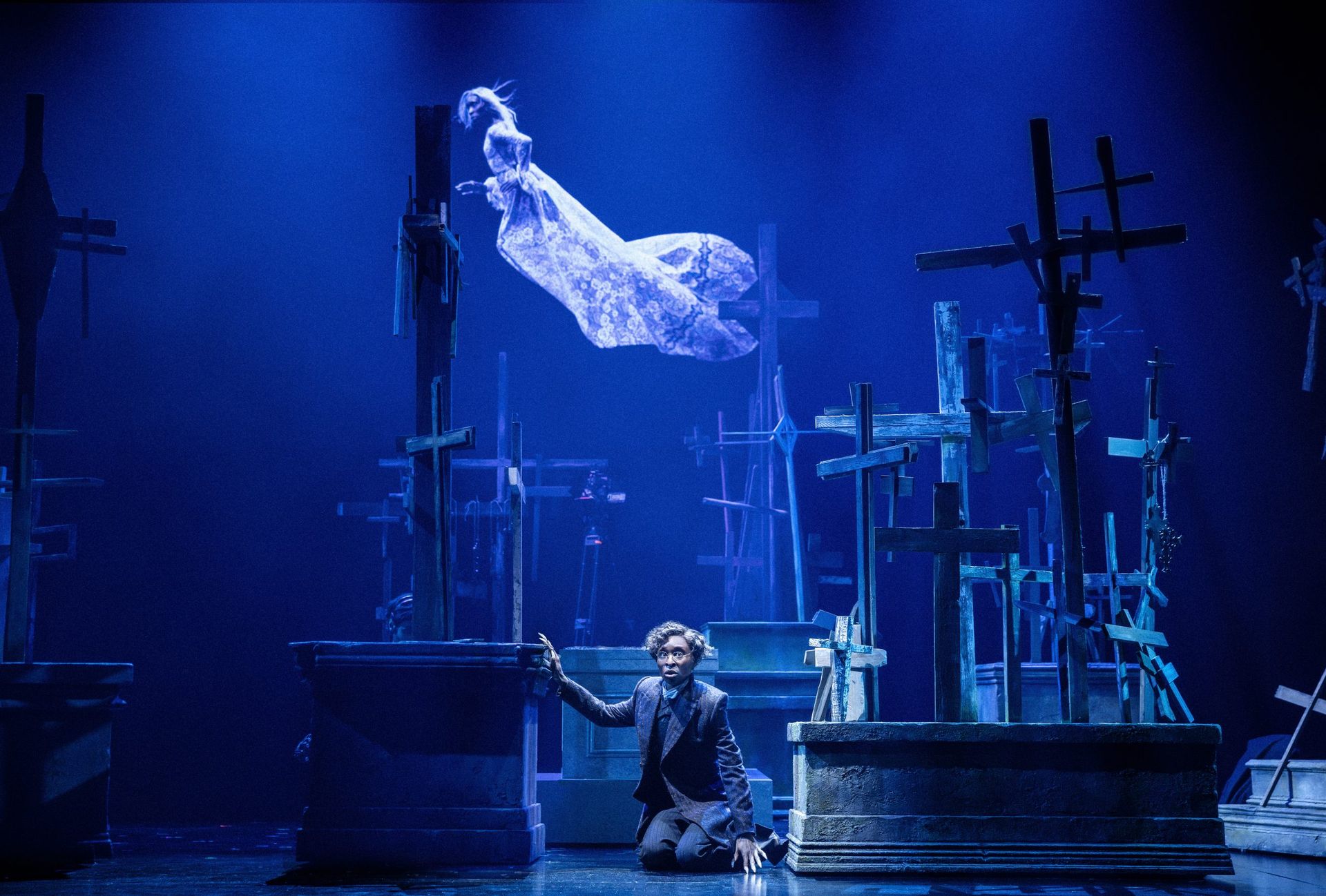
That’s not to say everything is happening on screen. There’s plenty happening on stage too. We have set pieces – the castle door, multiple coffins, a couch where Harker lies as he is approached by the three vampire brides. The brides themselves appear through the cinematic overlay, and the effect is genuinely eerie and beautifully done.
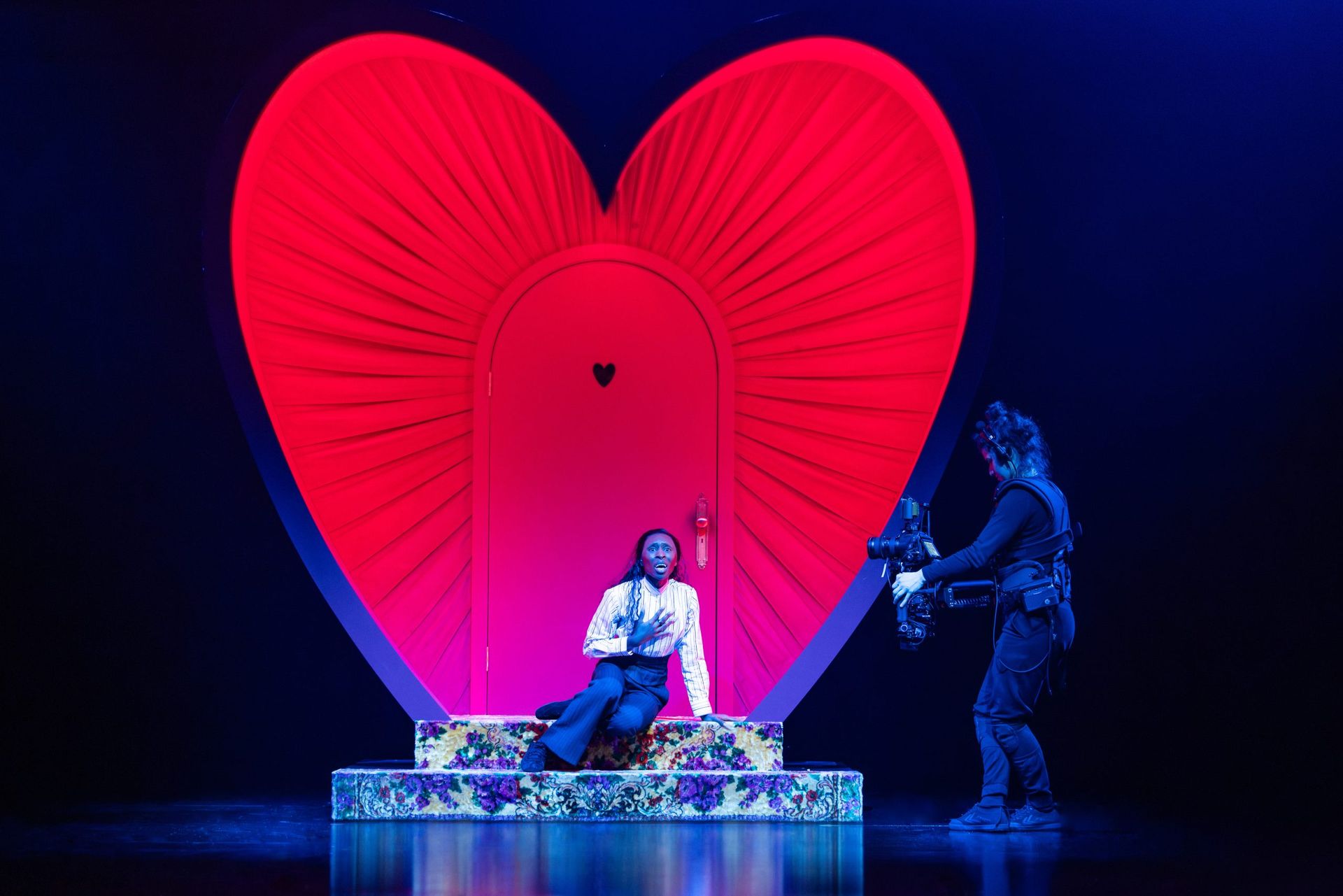
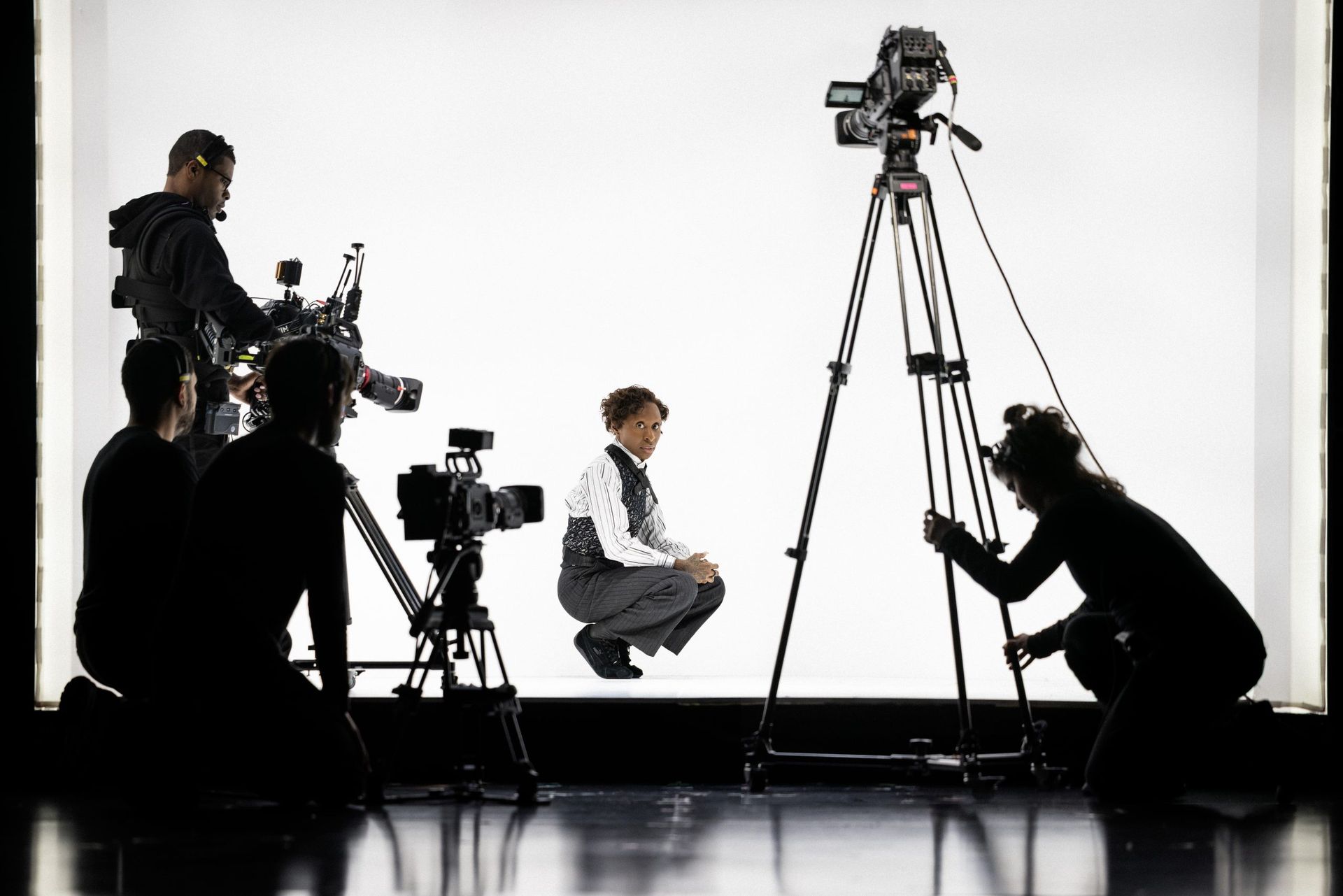
The design work is strong across the board. Marg Horwell’s costumes, along with Sophia Khan’s wigs, hair and makeup, are sublime. The pre-recorded elements especially benefit from the extra detail – Arthur Holmwood’s look, with the blonde hair and moustache, completely transforms Erivo. When you’re playing 20-plus characters, those visual distinctions really matter, and they’re handled gorgeously here.
Before writing this, I had a look at what some other critics had said, most of them having seen it much earlier in the run. One comment that came up was that it felt like Erivo was narrating an audiobook, and it was meant as a criticism. I actually thought of an audiobook too – but not as a negative. Her engaging performance made me realise how much I would love her to record an audiobook of Dracula. With the character work she’s doing here, it would be phenomenal. She’s an incredible storyteller, and she holds the audience completely.
At one point, the screen lowers and it genuinely feels like she is on stage with multiple versions of herself, interacting and performing together. The technology is used so cleverly, and at no point did it feel distracting to me – it only ever added to the experience.
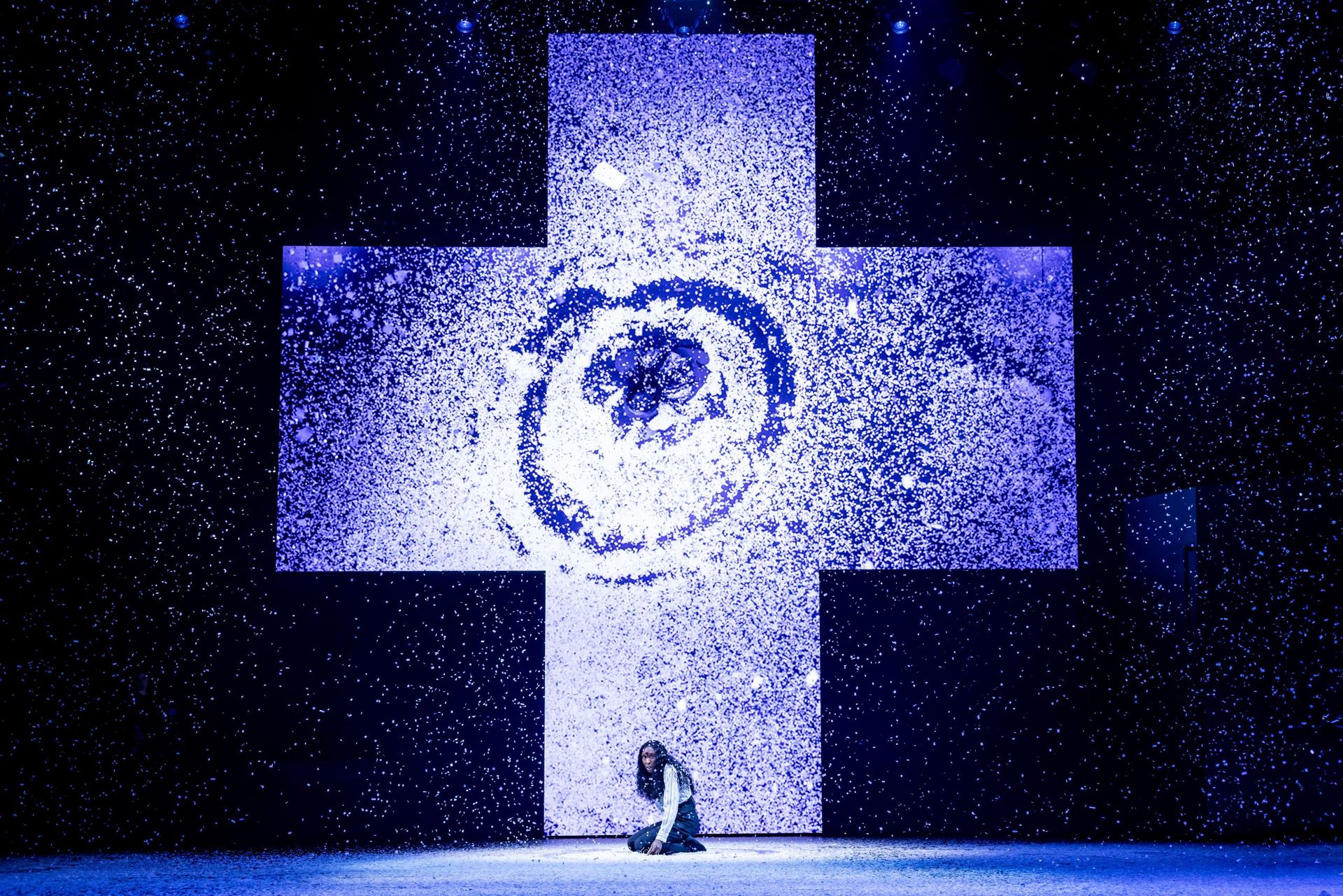
There are also some beautiful scenic ideas, including a cylindrical space that we initially only see through a doorway, like a window into Lucy’s world as she and Mina exchange letters. Later, that space opens up fully, becoming a sterile white canvas in which much can occur. There’s a stunning heart shaped doorway around which much of the final action focuses, that seems to symbolize the beating heart of the living characters, and the bloodlust of the Count.
The lighting design by Nick Schlieper works beautifully with the video design, reflecting off the costumes and even highlighting Erivo’s incredibly toned arms in a way that feels almost sculptural at times. Everything works together in stunning cohesion.
I had read some early reviews suggesting the show didn’t quite have any bite – yes, they really enjoyed that pun – but I have to say, I didn’t feel that at all. I found it consistently engaging, and often genuinely gripping, particularly as it led towards the final sequence.
There’s a brief moment of singing towards the end, as Dracula calls out, seductive and dangerous. It’s short, but enchanting, and a reminder of just how talented Cynthia Erivo really is.
Was I predisposed to love this because of how much I admire her? Probably. But love it I did. It never feels like a one-person show. It feels like a fully realised production, with a whole cast, all somehow embodied by one performer.
I haven’t seen Kip Williams’ other work, but based on this, I completely understand why he’s seen as such a visionary. This is bold, inventive theatre that really pushes what’s possible on stage.
With only a limited run left, I’d strongly recommend getting yourself to the Noël Coward Theatre to see it as soon as you can. Just remember to grab your crucifix, and maybe a clove or two of garlic, on the way in.
Dracula is playing at the Noel Coward Theatre until 30th May 2026.
Get your tickets at draculawestend.com
Words by Nick Barr
Photography by Daniel Boud