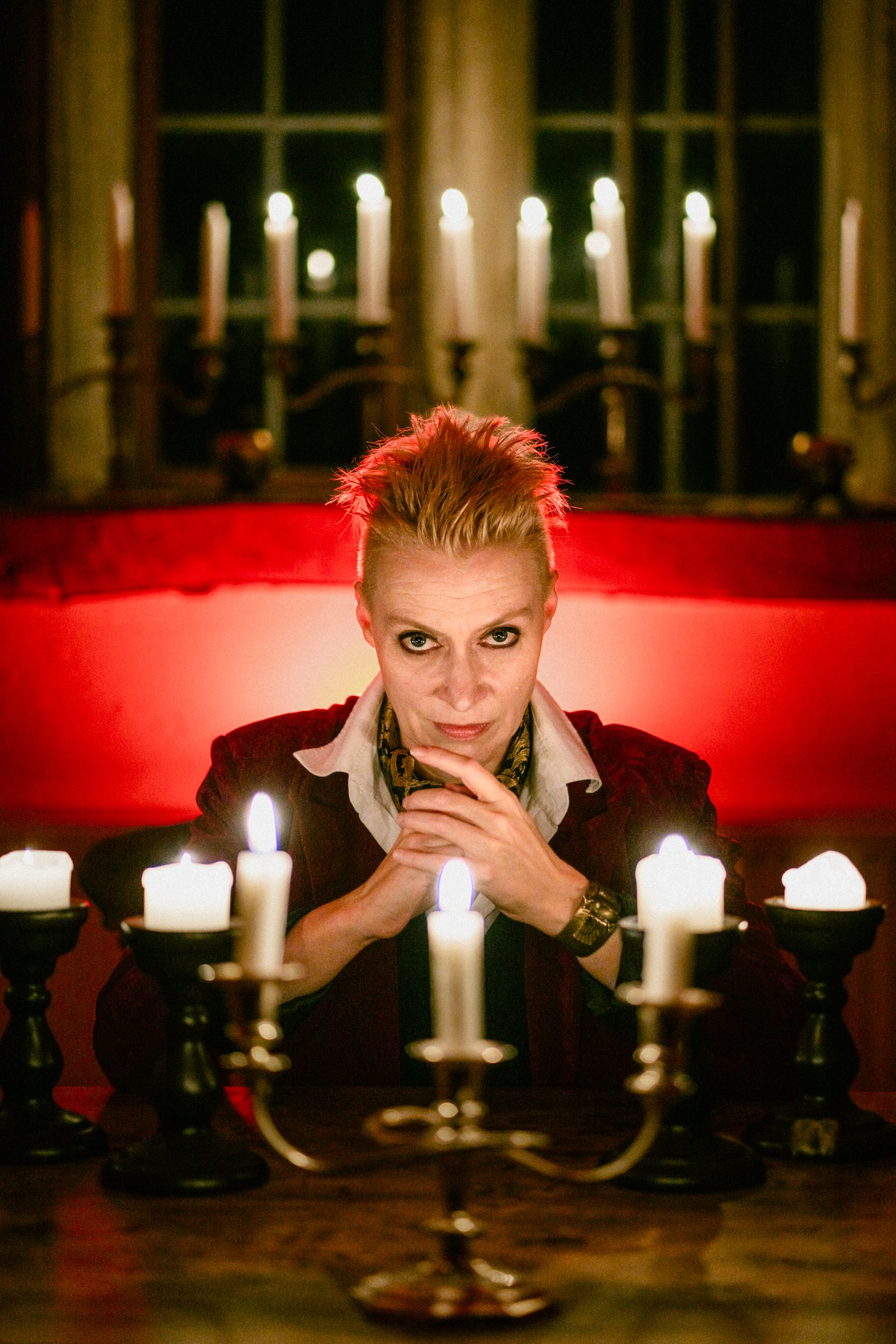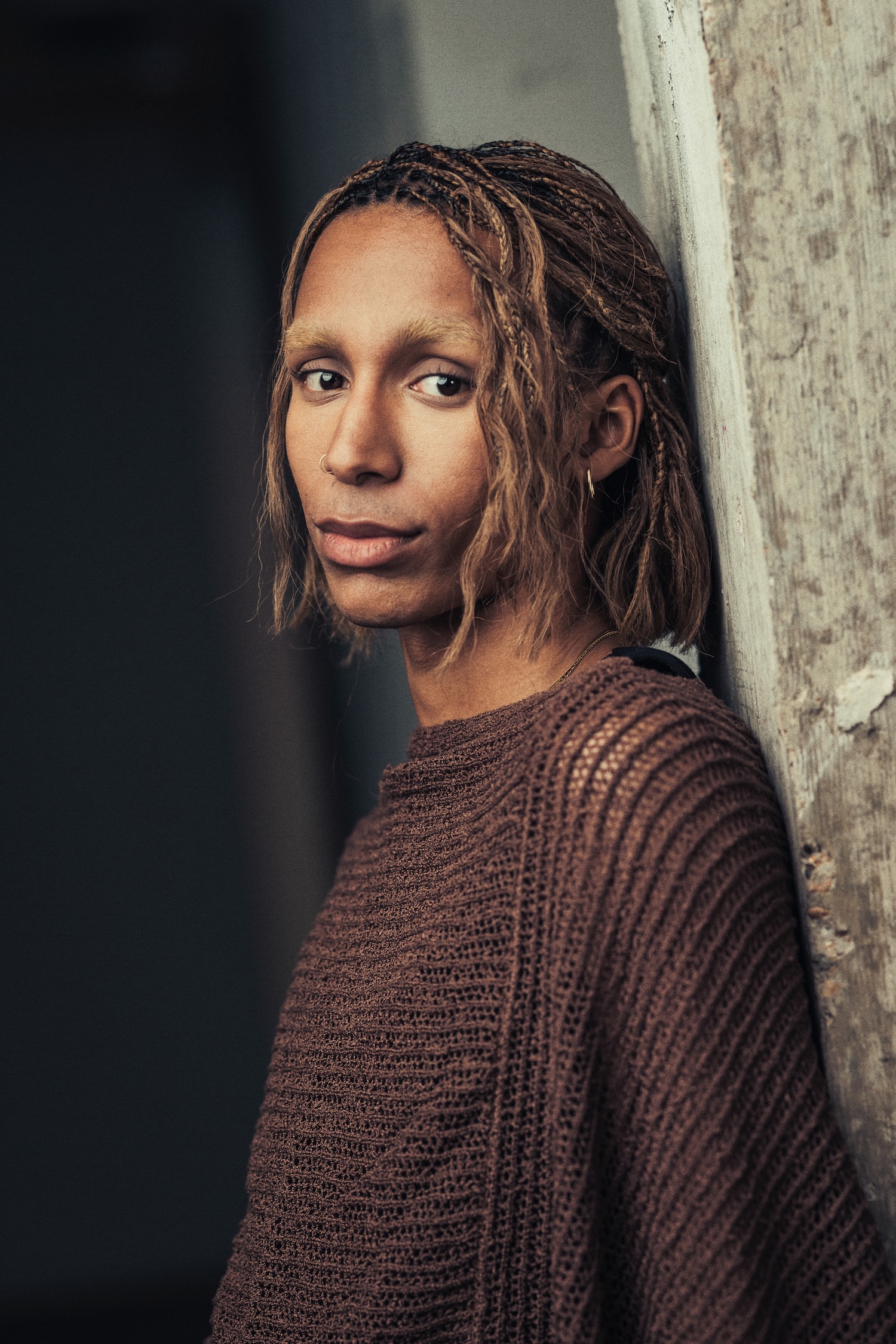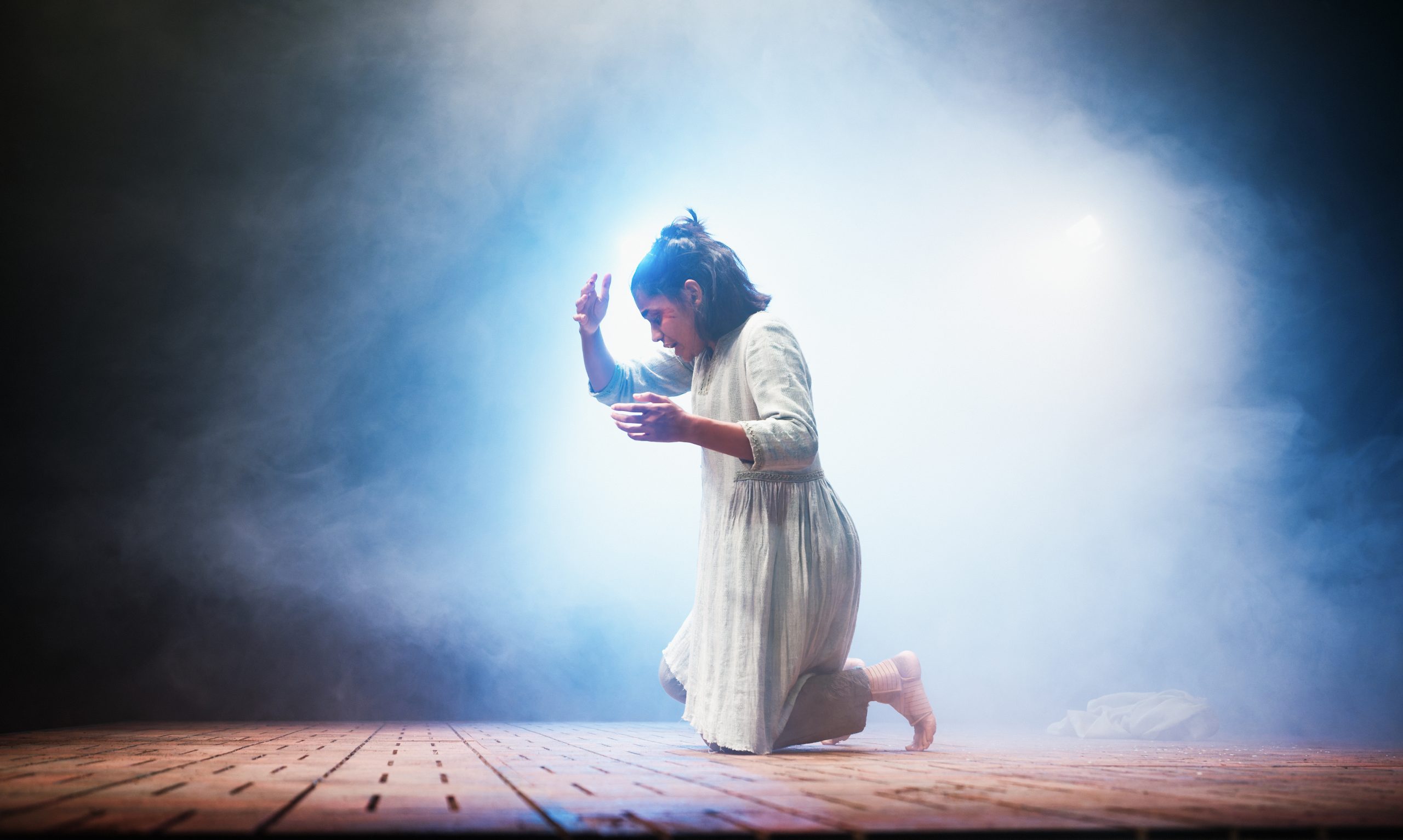
When I sit down with Linnea Berthelsen and director Matthew Xia, Linnea has just completed her first full run-through of Darkling. She is understandably exhausted. Xia is quick to put the scale of what she has achieved into perspective.
He tells me that Berthelsen has just delivered 47 pages of memorised text, played around 12 characters, and populated an entire town, all while carrying one girl’s story from the age of seven to eighteen. ‘What she’s doing up on that stage is truly incredible,’ Xia says.
At the story’s centre is the Bhopal disaster, widely regarded as the world’s worst industrial catastrophe. On the night of 2–3 December 1984, toxic gas escaped from a Union Carbide pesticide plant in the Indian city. More than half a million people were exposed, and Amnesty International estimates that over 22,000 have since died prematurely as a direct result.
Written by Titas Halder, Darkling follows a young Dalit girl growing up with her father and sister in a beautiful city of lakes. As she dreams of a bigger life, a vast new factory rises over her home with promises of jobs, progress, and opportunity. Then comes the night that tears everything apart.
Running at the Bush Theatre from 5 September to 24 October before touring to Birmingham, Oxford, and Manchester, the world premiere marks Berthelsen’s UK stage debut. It is an extraordinary undertaking for an actor best known internationally as Kali in Stranger Things, directed by Xia, the Olivier Award-winning Artistic Director of Actors Touring Company, whose recent work includes Tambo & Bones, The Harder They Come, Small Island, and Tender. Having previously interviewed them separately (Matthew here, Linnea here), bringing the two together feels like a particularly happy collision. Their affection and trust are immediately apparent, as they prepare to tell a story about lives allowed to disappear from collective memory.
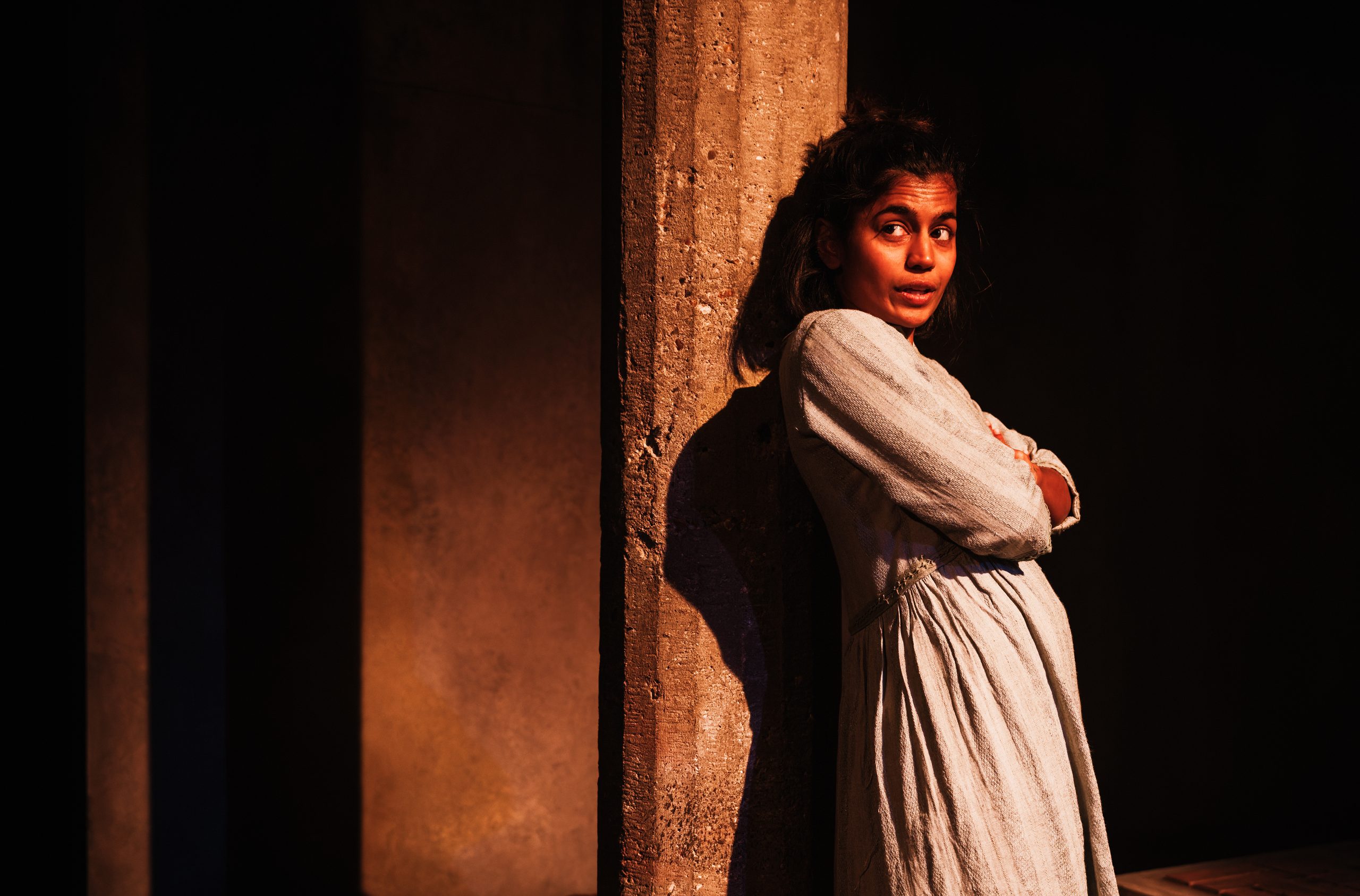
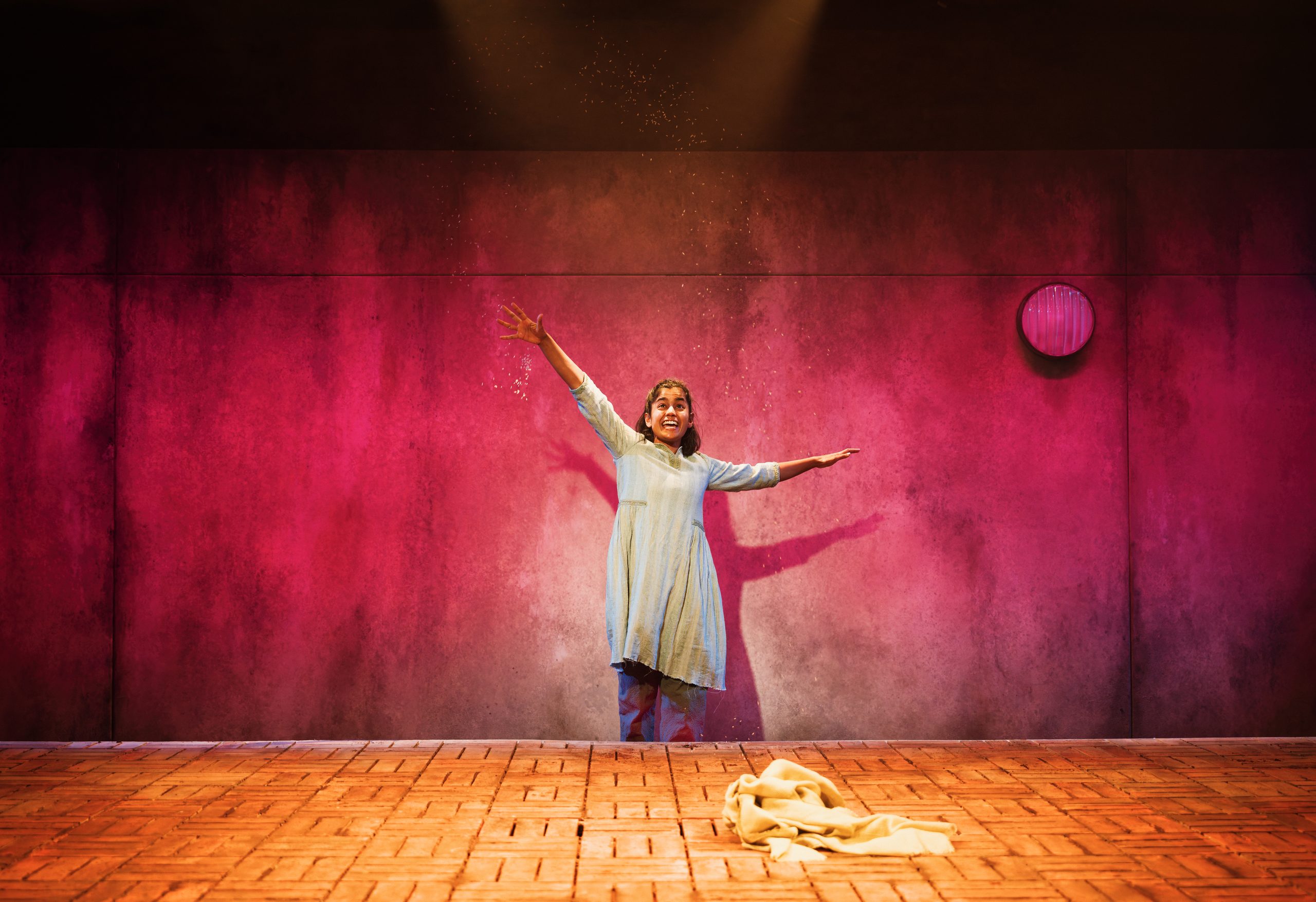
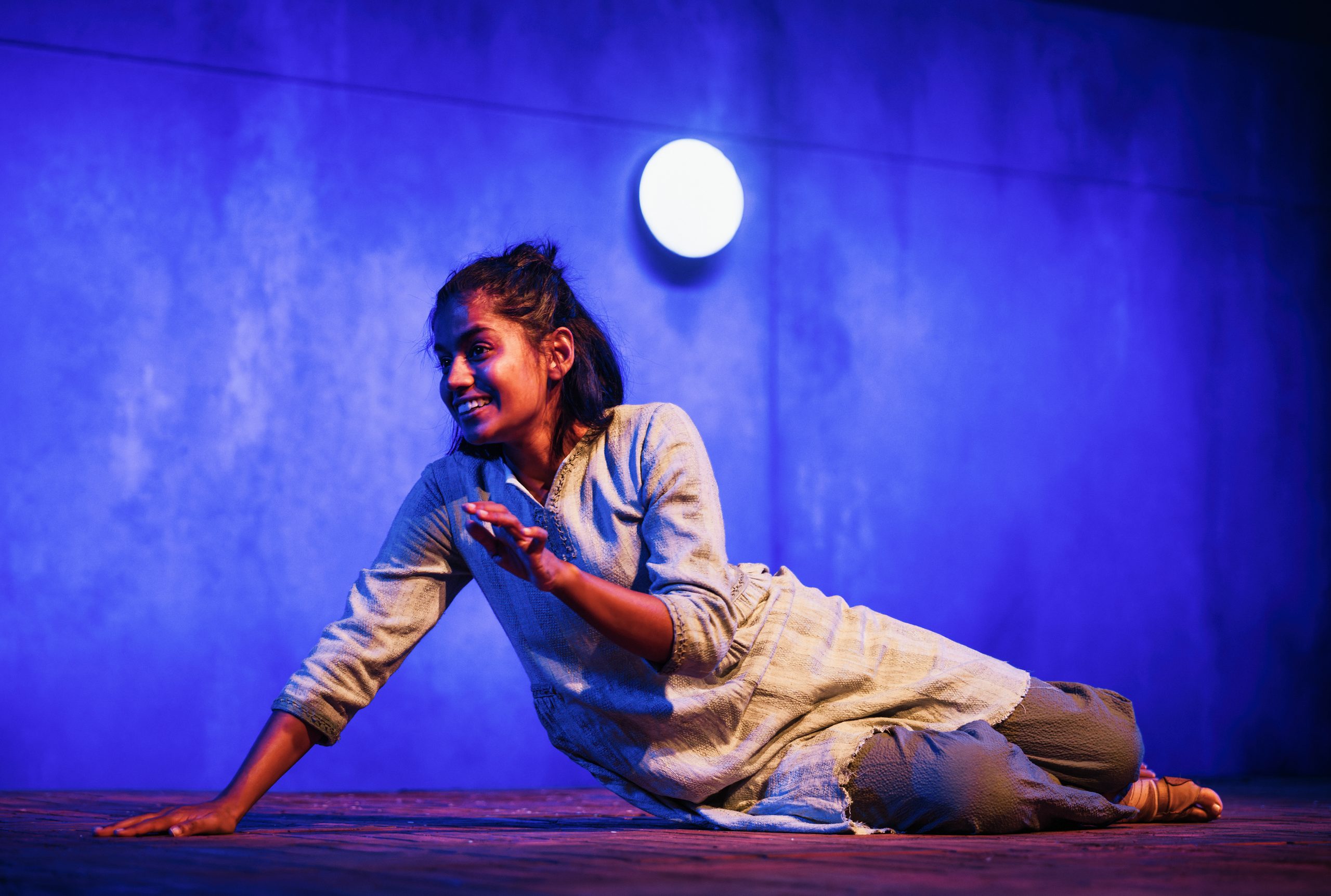
Linnea, you’ve said that Matthew is someone you’ve admired and hoped to work with for years. Where did that admiration begin, and how did the possibility of collaborating arise?
Linnea: When I was at drama school, I went to see every play I could. I saw Matthew’s Skeleton Crew at the Donmar Warehouse, and actor friends who had worked with him had been telling me for years that, if I got the opportunity, I had to do it.
Matthew: Here’s where it gets funny. Linnea had a friend who was getting rid of a sofa. We followed each other on Instagram but had never spoken, and I suddenly received a message from her in Danish.
Linnea: It was something like, ‘Goodbye to the pink one.’
Matthew: I translated it and replied, ‘Great, sure, but I don’t know what this means.’ It was intended for her friend, but it became an opening for us to talk. Later, I read this beautiful play by Titas. I cried my eyes out; it broke my heart. When we began discussing casting, I remembered that Linnea had seen Feeling Afraid as if Something Terrible Is Going to Happen, another one-person show I had directed, so she was clearly interested in the concept of the one-person play. I invited her to dinner, we had a massive conversation about the world, life, and art, and then I asked whether she might be interested in doing a one-person play herself.
Matthew, what convinced you that Linnea was the right actor to carry this story alone?
Matthew: The raw emotion and precision in the television work I had seen. But I had never seen her onstage, and this was a very different part, so I wanted to audition rather than make a straight offer.
When Linnea came in, I suddenly understood why people end up on television. You cannot take your eyes off her. Everything she does with a finger or an eyebrow gives you another clue. The most convincing thing, though, was how precisely she responded to every note. I thought, if we have four weeks in a room together, I know how brilliant that collaboration will be.
Linnea is all about the internal: what is happening inside the character, what does the father think, what does the sister feel? I am all about the external: how does it look, feel, and sound, and what is the audience receiving? We are looking after the same thing from two different perspectives.
Linnea: Matthew is also a really good actor. I have nobody else to play with, but he has come up every time and helped me work through scenes with another person. Not many directors would do that.
He gives me the eye line and helps me remember the physical details of the person I am speaking to. He will say, ‘I think she’s taller than you,’ or, ‘I think she turns away at this moment.’ It helps me to see the other character and understand what is happening between us, even though nobody else is physically there.
Titas’s play asks one performer to create an entire world. Why did it have to be told as a solo piece?
Matthew: Small Island travelled across land, time, and space with a cast of 18. I would argue that Darkling has the same scale, only Linnea plays all 18 characters.
I love work that knows it is theatrical and cannot exist in any other form. This must be a one-person play. It must talk to the audience and acknowledge them. I am becoming less interested in productions where the audience is excluded by the fourth wall. Linnea is probably bored to the back teeth of me saying, ‘Tell us, tell us, tell us.’
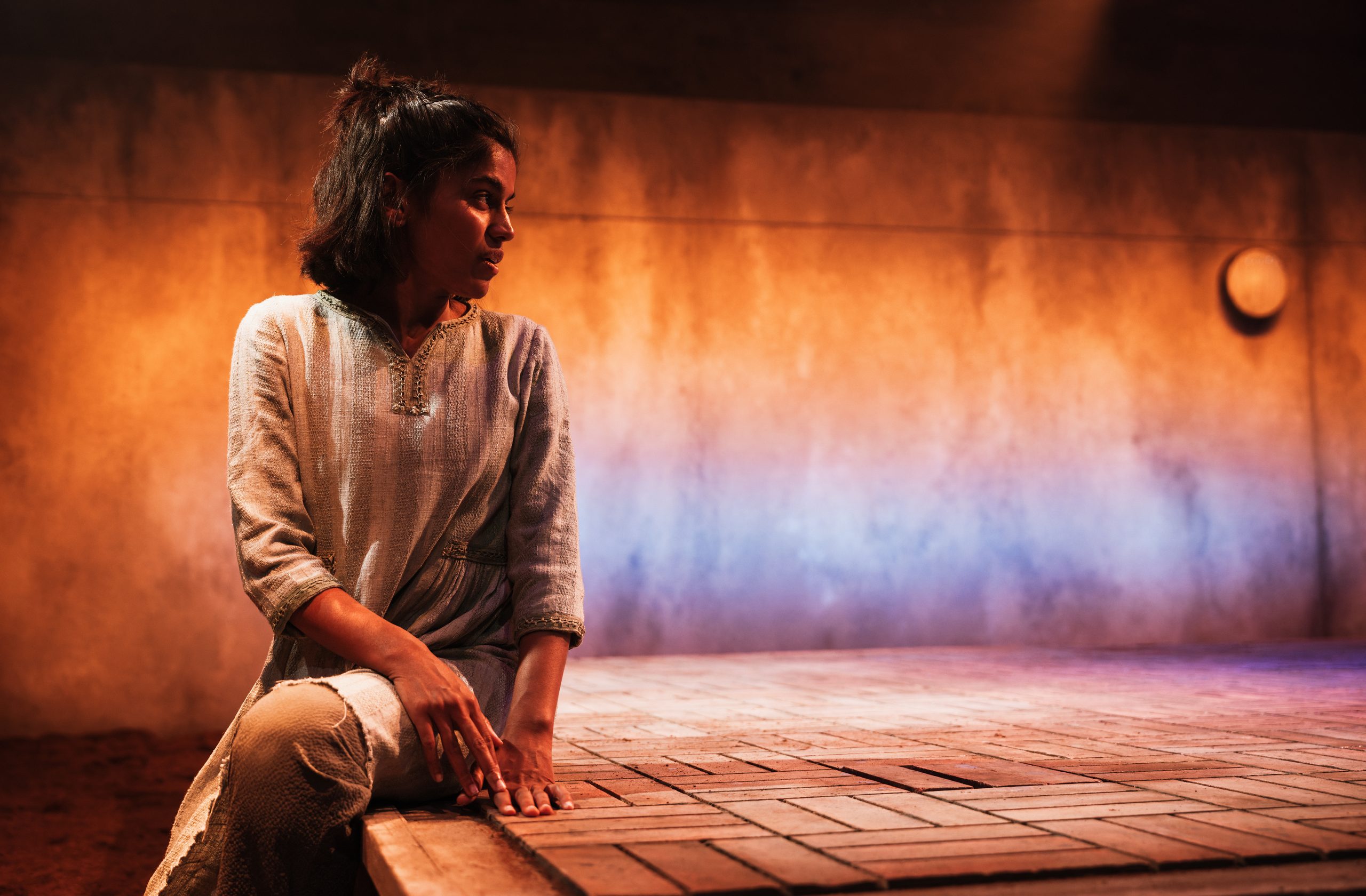
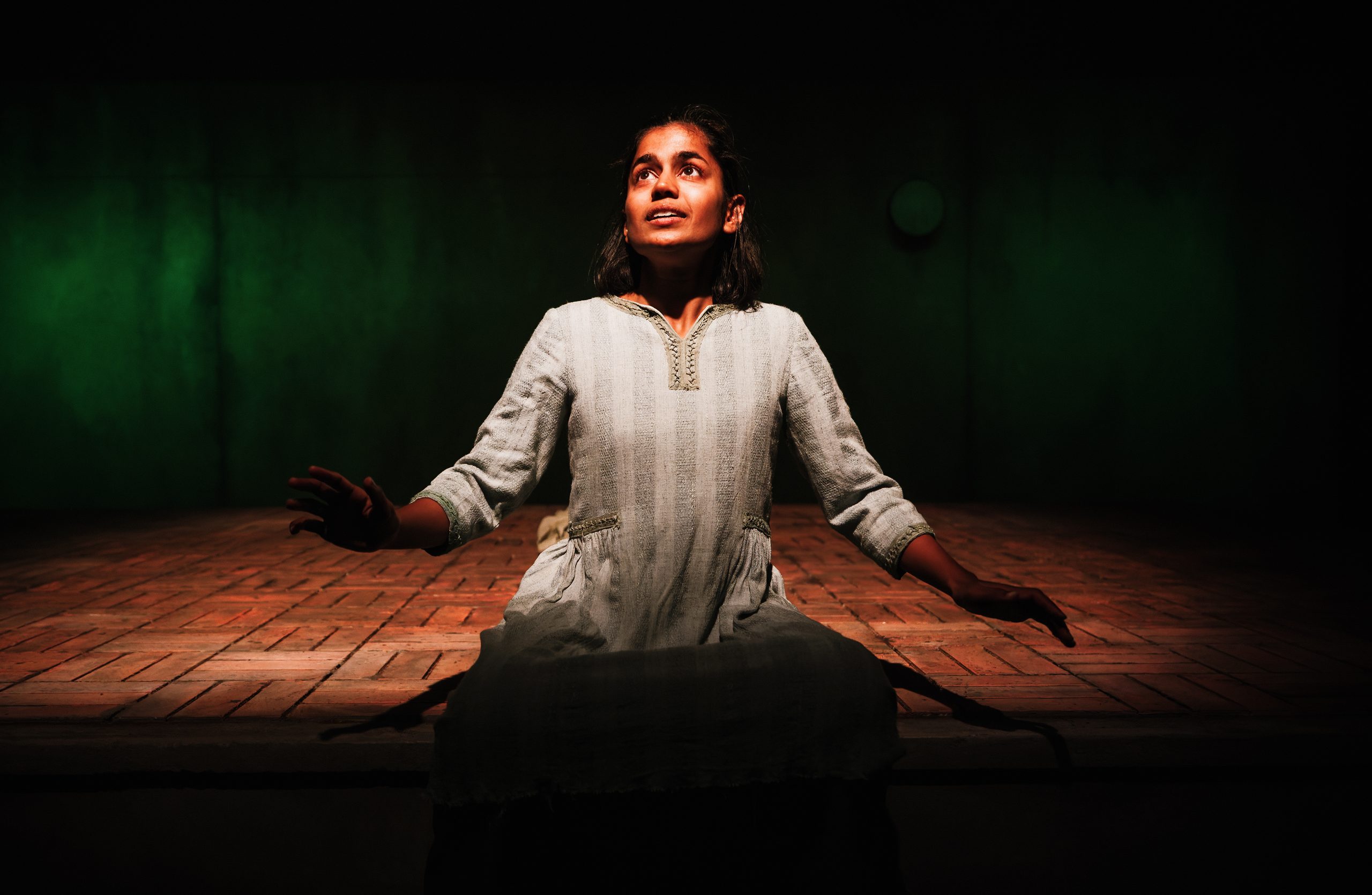
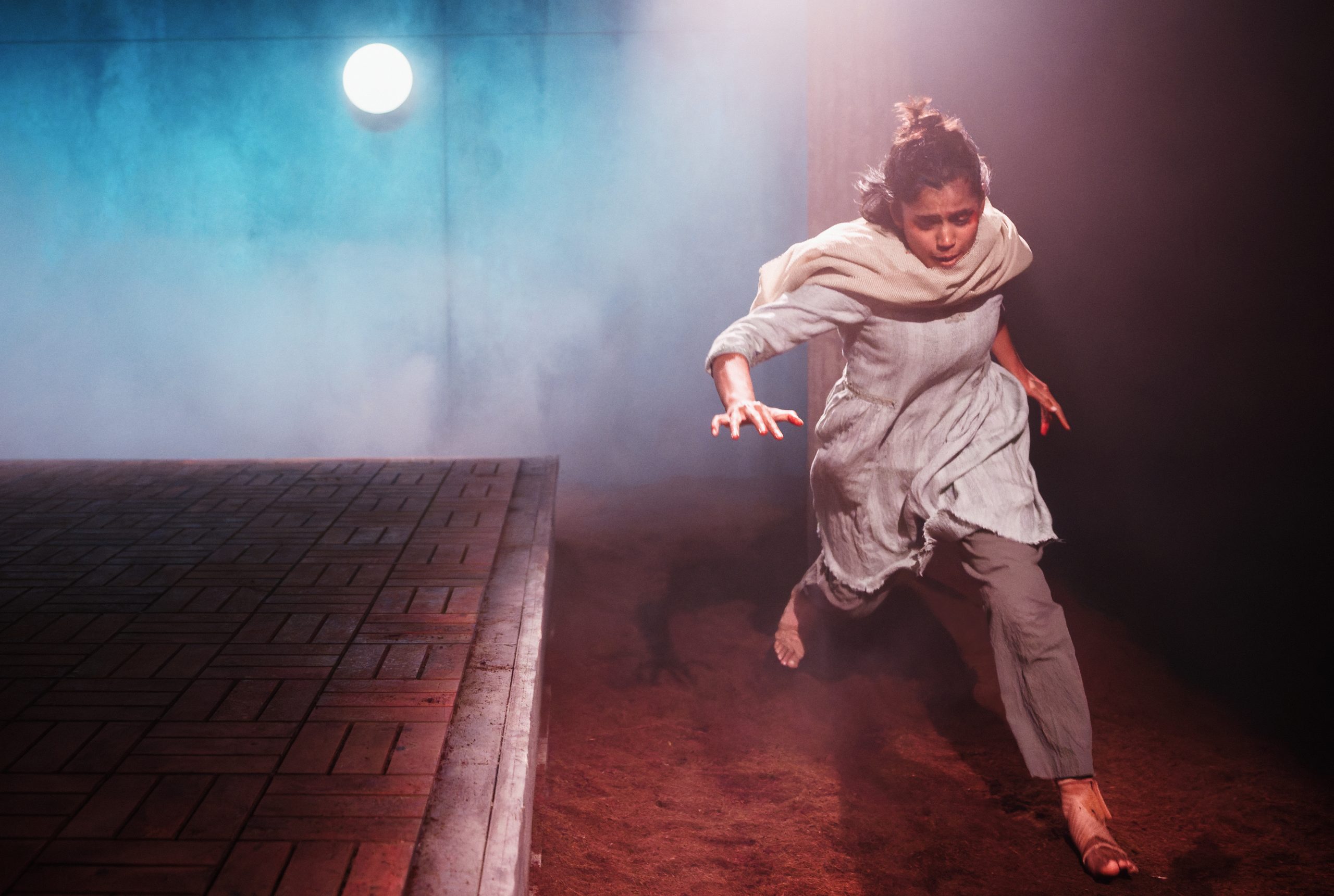
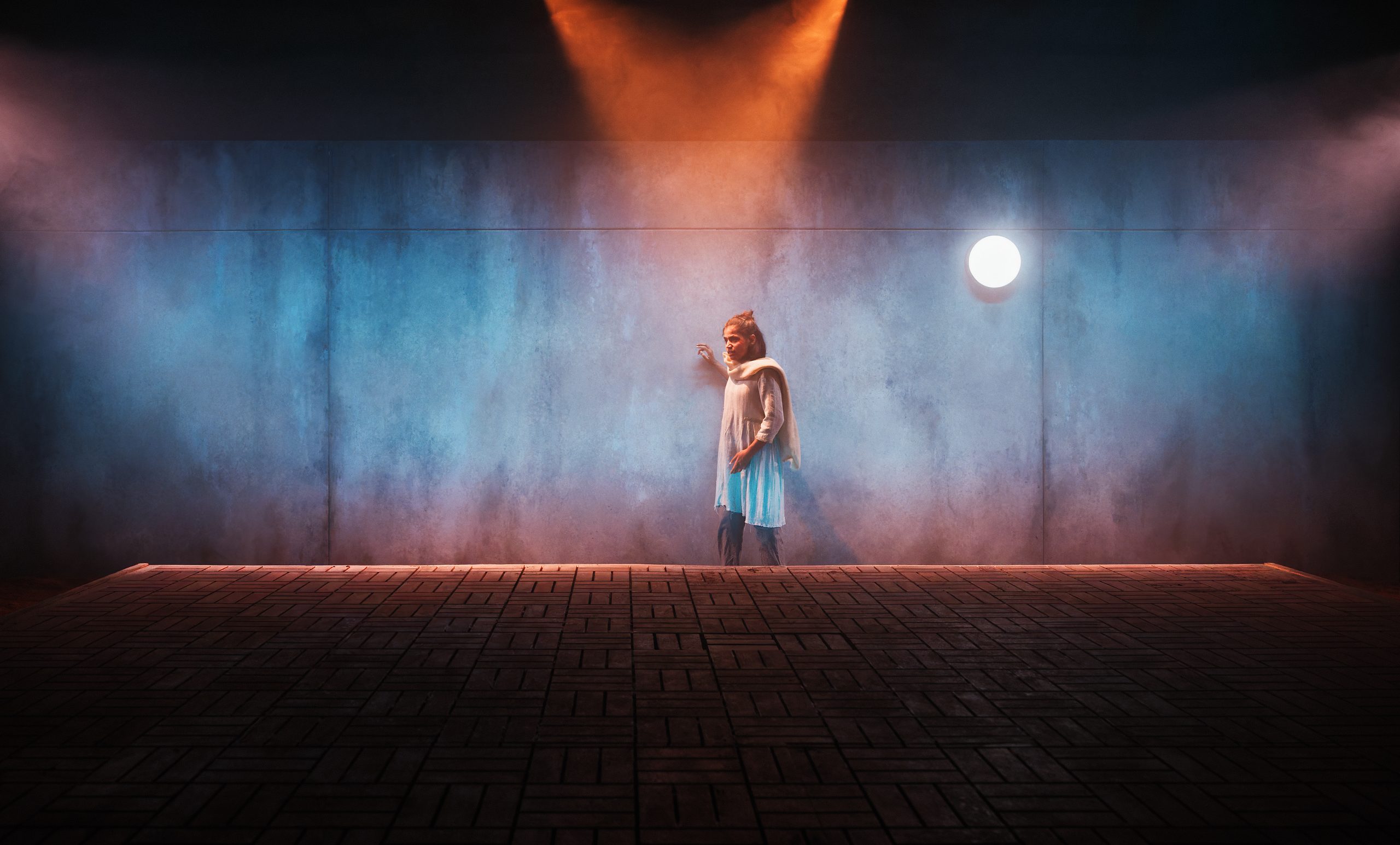
It is a proper storytelling play. The design draws upon an ancient Indian storytelling tradition taking place on a plinth with two candles. Linnea steps onto that plinth with almost the energy of ‘once upon a time, in a land far away’, and takes us from the age of seven to 18.
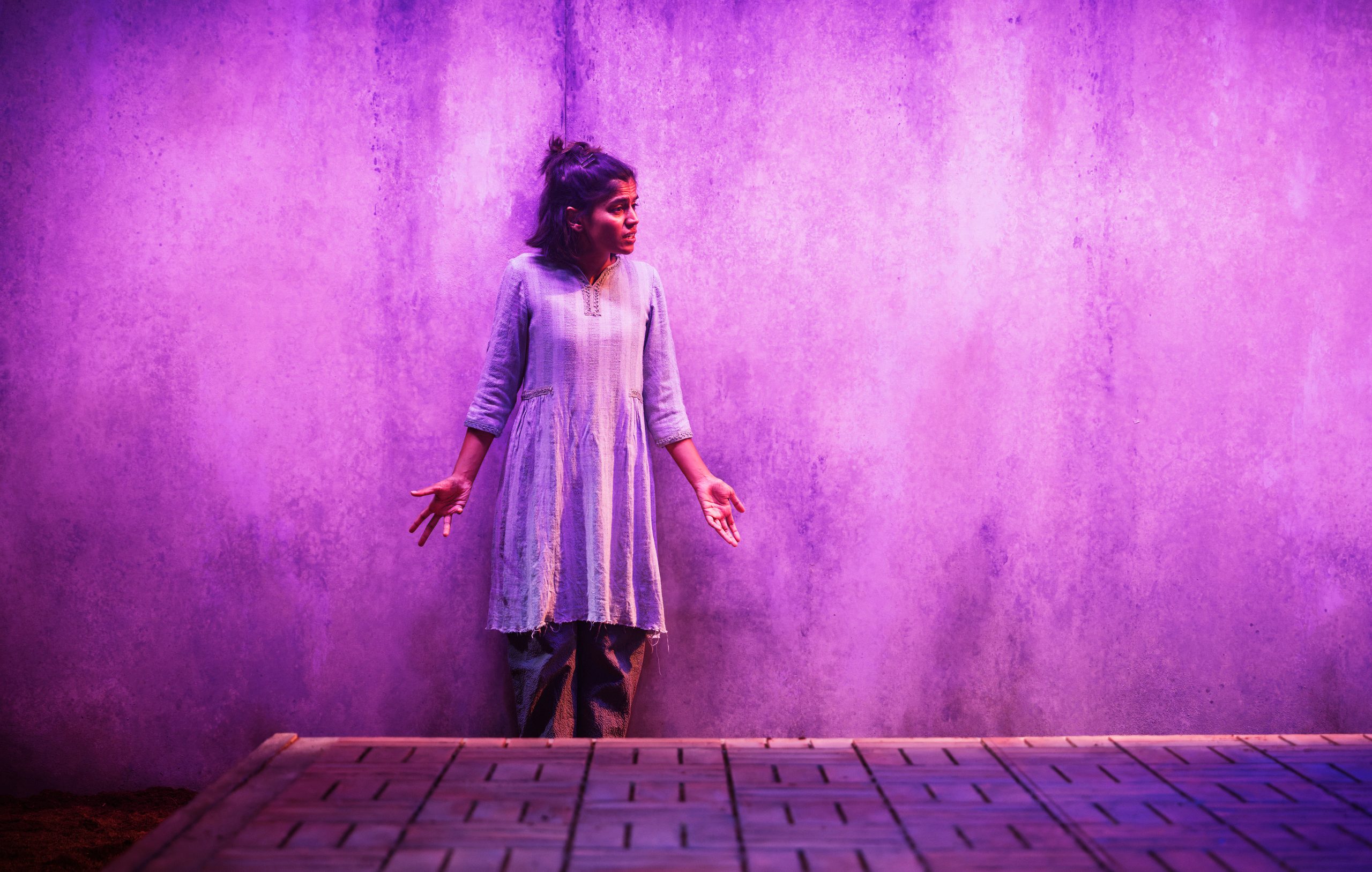
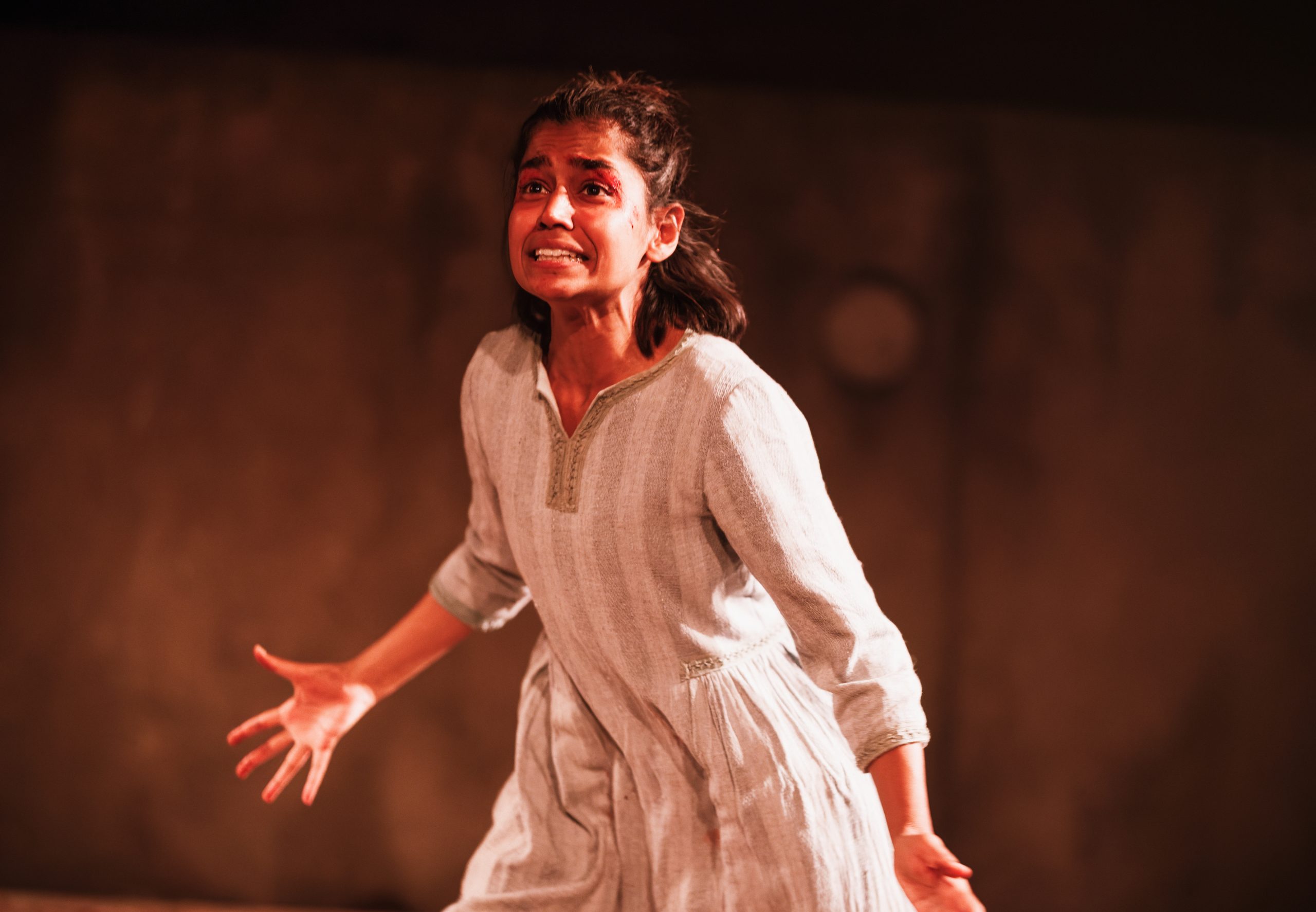
Linnea, what gave you the confidence to trust Titas’s writing with your UK stage debut?
Linnea: Seeing Foal helped me understand what his writing could look like onstage, particularly as another one-person show. There are similarities in the way he writes and in how those moments land once you take them off the page. It is very personal, but it never feels like too much.
That was important because Darkling is deeply emotional. The language is poetic and beautifully written, but it is also really difficult to perform. Having seen Foal, I could trust that there was a reason for everything he was doing.
Matthew: In both plays, Titas writes about people who feel trapped and want to escape the life into which they were born. In Darkling, this young Dalit girl has dreams, wishes, and ambitions far beyond the circumstances of her birth.
The central character is identified only as She. Is she based on a real survivor?
Matthew: She is entirely fictional and also drawn from real people, images, scrapbooks, news reports, testimonies, and relationships. Writers draw from everything around them and funnel it into an artistic expression. She is fictional, but there is so much truth within her.
The text was largely fixed before rehearsals. Titas did produce a final draft after Linnea had learned 47 pages, changing roughly one word in every 28 just to confuse her. The editing mainly removed phrases such as ‘she said’ and ‘my sister said’. You do not need those explanations if the actor can completely embody each character.
What has the title Darkling come to mean to each of you?
Linnea: For me, it is about people who disappear. It is not only this community in Bhopal; it is about all the people who are disregarded by society and lost from our shared narrative. That is what makes it universal. My character in Stranger Things was also an outcast, so I have spent a long time thinking about people who are pushed aside.
Matthew: When I first read it, I assumed the title referred to the colour of somebody’s skin, because the character is ostracised for having darker skin than her sister. Then Titas drew my attention to a line in King Lear: ‘So out went the candle, and we were left darkling.’
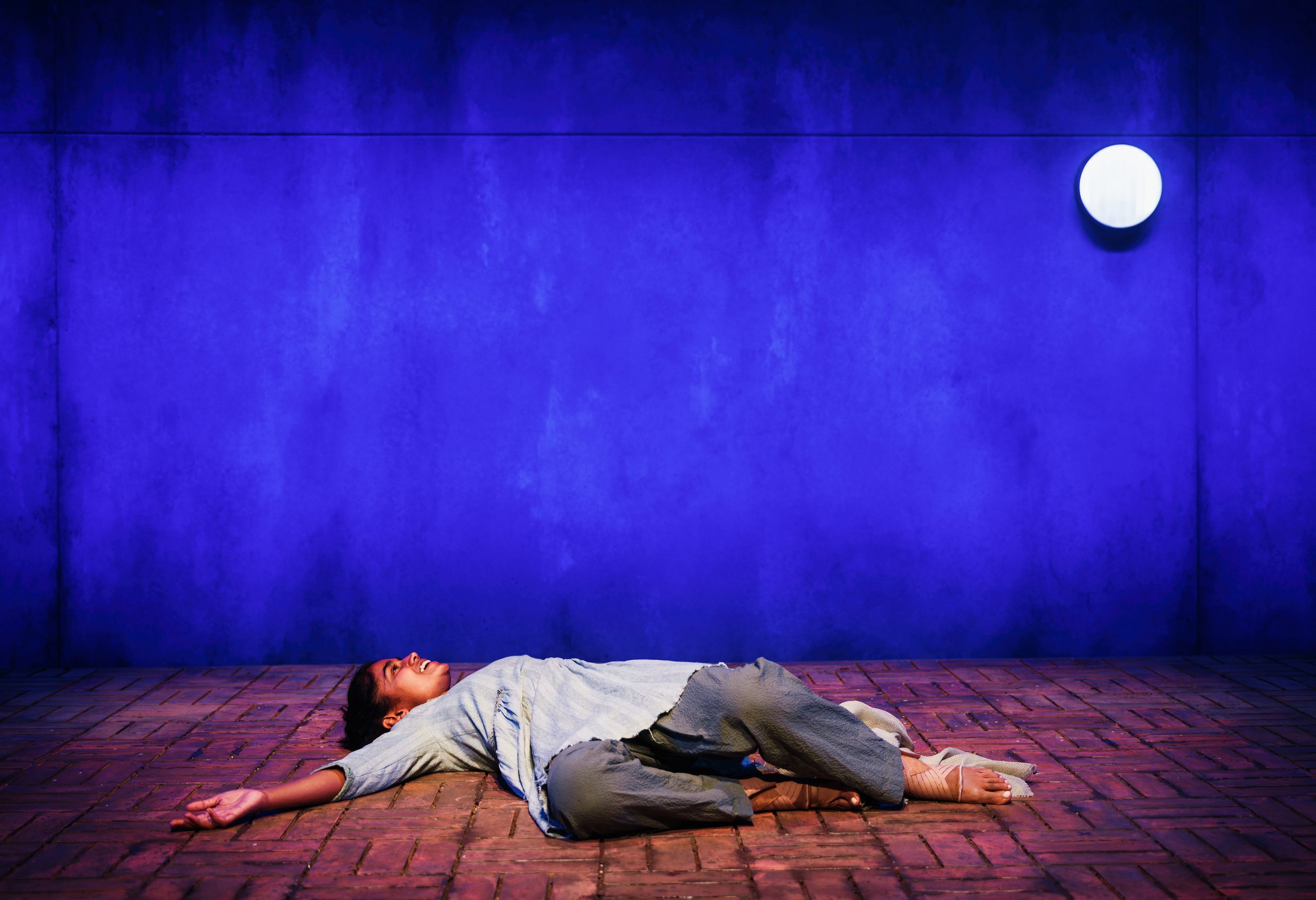
The whole play becomes a metaphor for a darkening sky. She begins by telling us that she was born under clear blue skies. By the end, she looks up and sees black. It is about what happens when a community is left in the dark, forgotten, and alone. If light is hope, it is about hope dwindling.
That is unlike me, because I do not want to put no hope into stories. But the hope lies in telling this one in the first place. It means we refuse to let these lives and experiences be forgotten. By witnessing the story, the audience is activated towards hope and towards doing something about the world in which we live.
Bhopal is often condensed into a date, a death toll, and the words ‘industrial disaster’. What did your research reveal that changed your understanding of it?
Matthew: I had never heard of Bhopal, let alone what happened there, until I read Titas’s play. The first discovery was its everyday beauty before the disaster: the lakes, the landscape, and the ambition of people told that they must not dream beyond their circumstances.
Then I learned how these disasters happen. It is called an accident, but it was a series of negligent decisions that led to a catastrophe. The flare designed to burn off escaping gas was not working. Alarms had sounded so often, without anybody explaining why, that people no longer panicked when they heard them. Again, they were kept in the dark.
Amnesty International estimates that more than 22,000 people have died prematurely because of the gas exposure, yet many people of our generation know almost nothing about Bhopal. By contrast, 9/11 and Chernobyl are embedded in Western cultural memory. Why was one tragedy allowed to disappear?
Matthew: We all know the answer. It is the same boring answer that dictates much of life on this planet: racism, and a globalised supremacist idea about which lives are important and which lives are less important.
Chernobyl is the example that always comes to my mind as it happened only a few years later. The whole world knows about Chernobyl. I was born in the 1980s, while these things were happening, and I knew nothing about Bhopal. What happens to poorer, darker-skinned people on this planet often pales in comparison with the stories of white, middle-class Europeans and their descendants.
Linnea: It is about racism, particularly structural racism. I encounter it through the scope of the characters I am allowed to play, but it can be difficult to find the words. To have these conversations, we need work that does not simply stand in judgement. There must be ground upon which people can meet.
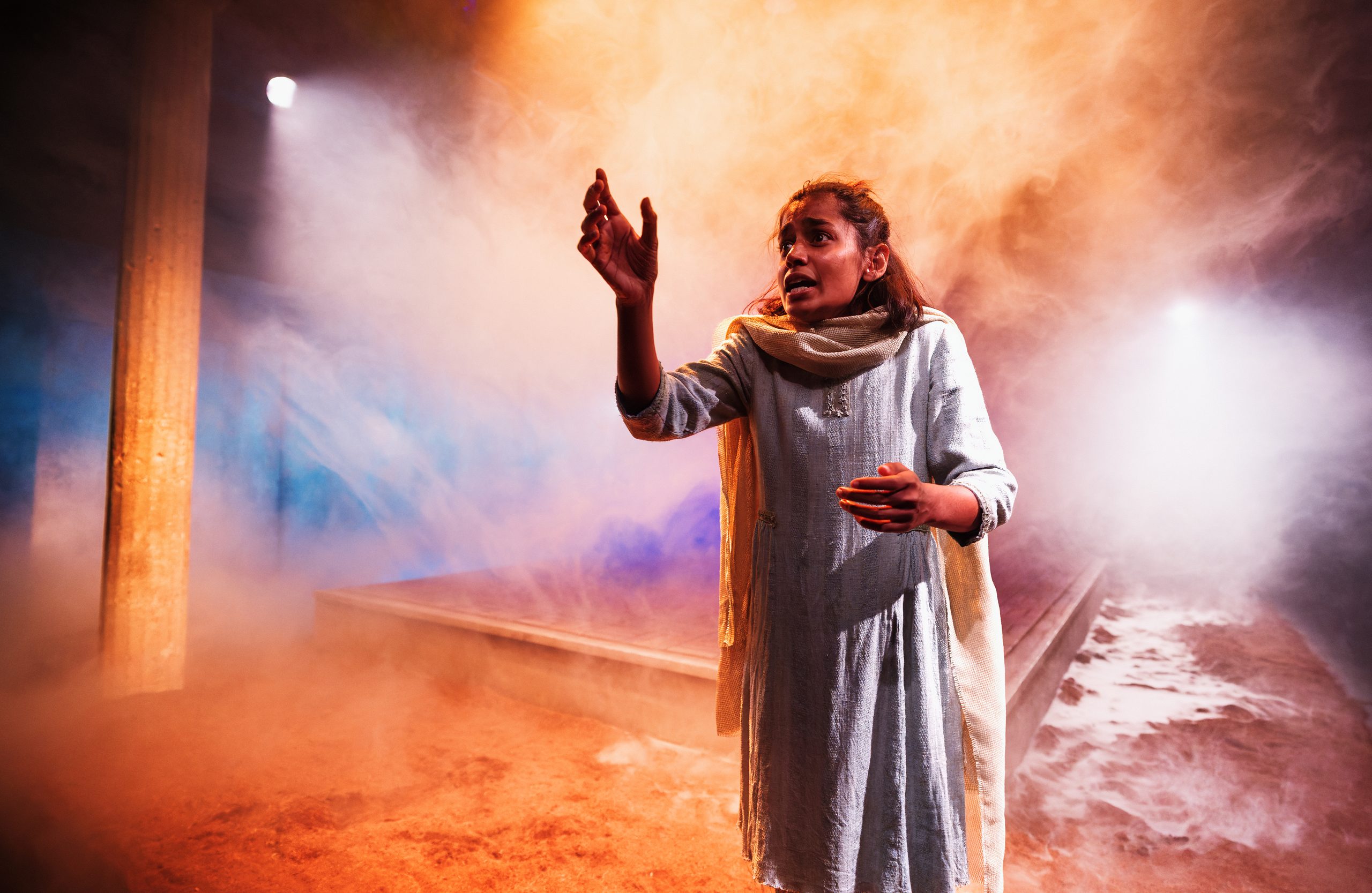
Is Bhopal’s erasure part of the same inequality that made the disaster possible? Can theatre help challenge it?
Matthew: Absolutely. That is why we are staging the story, so people can bear witness to one survivor of the Bhopal catastrophe, whether she is fictional or not. These things are still happening wherever companies use practices that would be banned in Europe because other lives are valued less.
There is a lawyer in Kenya, Kelvin Kubai, involved in a case challenging the use of pesticides that are being sold to Kenyan farmers despite being banned in Europe. That is happening now. It is another example of corporations being allowed to behave differently depending upon whose lives are at risk.
Linnea: This is not just something specific to Bhopal or distant countries. There are factories here, and we may discover years from now what they have done to our water.
We need to help people, especially young people, understand that injustice takes many forms and ask how we respond. It might be through art or peaceful demonstration, but we must keep talking about it.
As a British production telling a story rooted in an Indian community’s trauma, how have you approached questions of responsibility, authenticity, and who has the right to tell it?
Matthew: Whenever I make work, my question is: who is in the team? I am not Indian, but we have people in the room with cultural connections who enrich the conversation, including designer Simon Kenny, associate director Sara Aniqah Malik, movement director Anjali Mehra, and deputy stage manager Nikita Bala.
Earlier today, there was a moment when the character tells her father that she met a boy at the well, and he flies off the handle. Linnea’s instinct was that she could not understand why speaking to a boy would be a problem. Two women in the room explained that, culturally, she would understand that her father expected her to socialise with girls. That deeper knowledge helps us.
Linnea: But it works in both directions. The father is not a stereotype, and the women have reminded us how different he is. We have to protect that. Research and responsibility matter, but distance can offer another perspective too. I was born in India and raised in a very white community in Denmark, so I have both an inside and an outside lens, while recognising that I cannot claim this woman’s experience as my own.
Matthew: You need enough people in the room to create an enriched conversation around complex and sensitive moments.
Has the subject of the play affected the way the production itself has been designed and built?
Matthew: Actors Touring Company has made a commitment to the environment, and we have tried to ensure that this show does not leave behind materials that cannot be reused or returned to the earth. The set is made entirely from natural materials: canvas, wood, brick, and earth.
It was important that we did not make a play about an industrial catastrophe while filling the production with plastics and forever chemicals. Eventually, when the show no longer exists, those materials can return to the earth. The environmental responsibility is not separate from the storytelling; it is built into how we have chosen to tell it.
Given the traumatic material Linnea carries each night, what support is built into the production?
Matthew: Psychological support is available to anybody in the company who needs it, whether that is Linnea, me, the stage manager, or a designer. Anjali is also giving Linnea practical tools for de-roleing, helping her leave the character at the theatre rather than taking her home every night.
There are protective measures within the storytelling itself. I remind Linnea: you do not have to live through it again. See the memory and tell us about it. Do not live through the disaster; tell us the story. The body does not necessarily know acting is not real, but the play creates enough distance to offer a protective buffer.
Linnea: As an actor, I must ask whether I can work through this material and remain stable throughout the production. I need to pull from somewhere safe and know I can get myself back out. The room is full of the kindest people. If you have kind people around you, you can do whatever the work requires.
Your first UK stage production might have placed you within an ensemble. Instead, you are alone for the entire performance. How does that feel?
Linnea: When Matthew first approached me, I remember telling my agent, ‘He makes these amazing ensemble pieces, and they are quite funny.’
It has been lovely and I am so grateful for the trust people have placed in me. Sometimes an opportunity arrives at the right time, even when you think, I’m not ready; I do not have the skills. You have to trust the people who made that decision.
In an ensemble, you find energy from the other actors. Here, the audience becomes my teammate. Someone might disconnect, fall asleep, miss ten minutes, and then return. How do you continue telling the story and bring them back? That is the real skill.
Matthew: In rehearsal, we have stuck photographs of people around the room so Linnea has faces to address while the rest of us are looking down at laptops and making notes. At the moment, her audience includes Leonardo DiCaprio, Kate Winslet, and Ian McKellen.
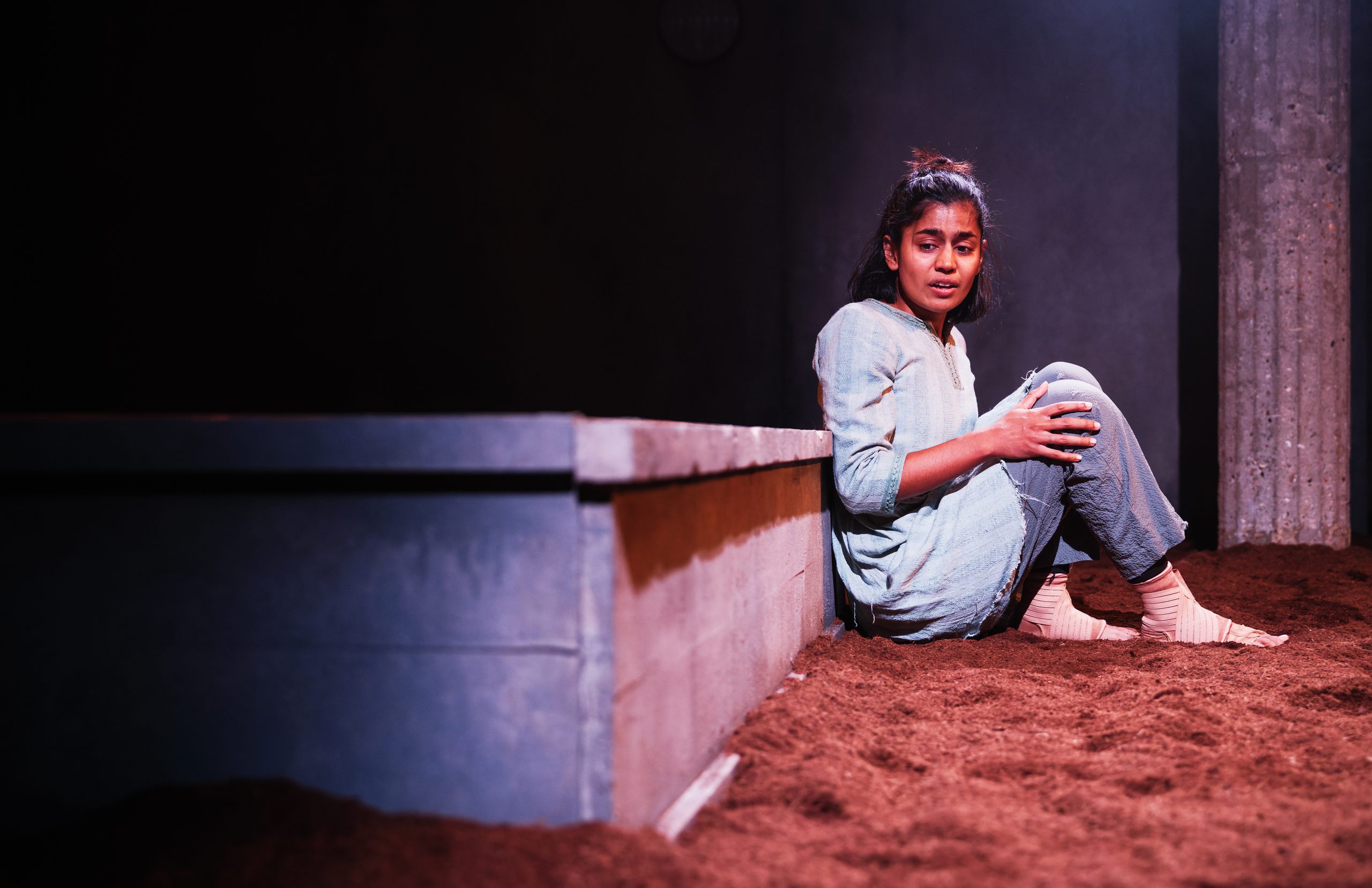
Linnea, what have you needed from Matthew as a director during such an exposed process?
Linnea: Freedom, patience, and knowing when to push. Matthew did not know me before this, so we had to learn when I needed support and when I could go further. In rehearsal, you show people everything you cannot do and all your flaws. You look like a fool for a good two weeks before anything works, and you have to trust everyone around you while that happens.
We have tried different things, and I have been able to say when I need help. At other times, I need to hear, ‘This is not important. This is what we’re going to do.’ It has been really difficult and really good.
Matthew: My work moves between intense choreography and complete freedom. Sometimes I will insist that Linnea turns on a particular word or uses her upstage hand because otherwise her face is obscured. In another moment, I do not care what she does physically as long as the audience receives the essential information. Then I am more interested in chasing the energy of the moment.
When audiences leave the theatre after Darkling, what do you hope they carry with them?
Linnea: Hope, and the sense of having shared a true connection with other people. We first see ‘She’ as a child, full of energy. When I read the play, I thought, ‘I want to be like her’. She is brave, resilient, and alive. She reminded me of what it felt like to be a child.
Perhaps people will recognise themselves in her and reflect upon how they have faced the obstacles in their own lives. We all come into the world wanting to live. We have dreams and hopes, and we go for them. Then something happens, and sometimes we overcome it, while sometimes we cannot. I hope people leave encouraged by her, knowing about this injustice, and thinking about how we talk about injustice.
Matthew: There are two kinds of theatre. There is theatre where you leave looking down at the floor because what you have experienced is overwhelmingly heavy. Then there is theatre where you step back onto the street and look upwards because there is hope.
What do we give people through the theatrical exchange? Do we give them an anchor that drags them to the floor, or a helium balloon that carries them upwards? I want them to float out of the theatre full of activism, knowing that they can change things. People power is real. I never want anybody to feel disempowered by a piece of art.
Do not let corporations, billionaires, or millionaires tell us that we are powerless. This seven-year-old girl, who becomes an 18-year-old woman, tells us that she carries power from the day she is born until the end of the story.
If I can do one thing for planet Earth, it is to leave it with a little hope.
Darkling is playing at the Bush Theatre, London, until 24 October 2026, before touring to Birmingham, Oxford, and Manchester.
For tickets and tour dates visit atctheatre.com
Words Nick Barr
Photography Alex Brenner