In 2028, in a corner of rural Portugal, there is a meadow with 73 cork oak trees. Under each of them is a dead fascist. As another tree is being planted, a fascist awaits his execution.
Written and directed by Tiago Rodrigues, the 2020 play Catarina and the Beauty of Killing Fascists has more than a faint tang of The Wicker Man directed by Wes Anderson. Every year for over seven decades, a family has gathered to catch up over food and drink. There are two peculiarities here: first, each member of the family (regardless of gender) is called Catarina and dresses in skirts, floral aprons, and shawls; second, a captured fascist will be shot and later buried in the nearby meadow.
This annual ritual to avenge the 1954 killing of Catarina Eufémia, a 26-year-old peasant woman murdered under the Salazar dictatorship, falls on this occasion to the second-youngest member of the family. She refuses to put the latest victim to death, a choice that triggers a series of heated discussions. In the end, the fascist makes a lengthy defence of his views directly to the audience.
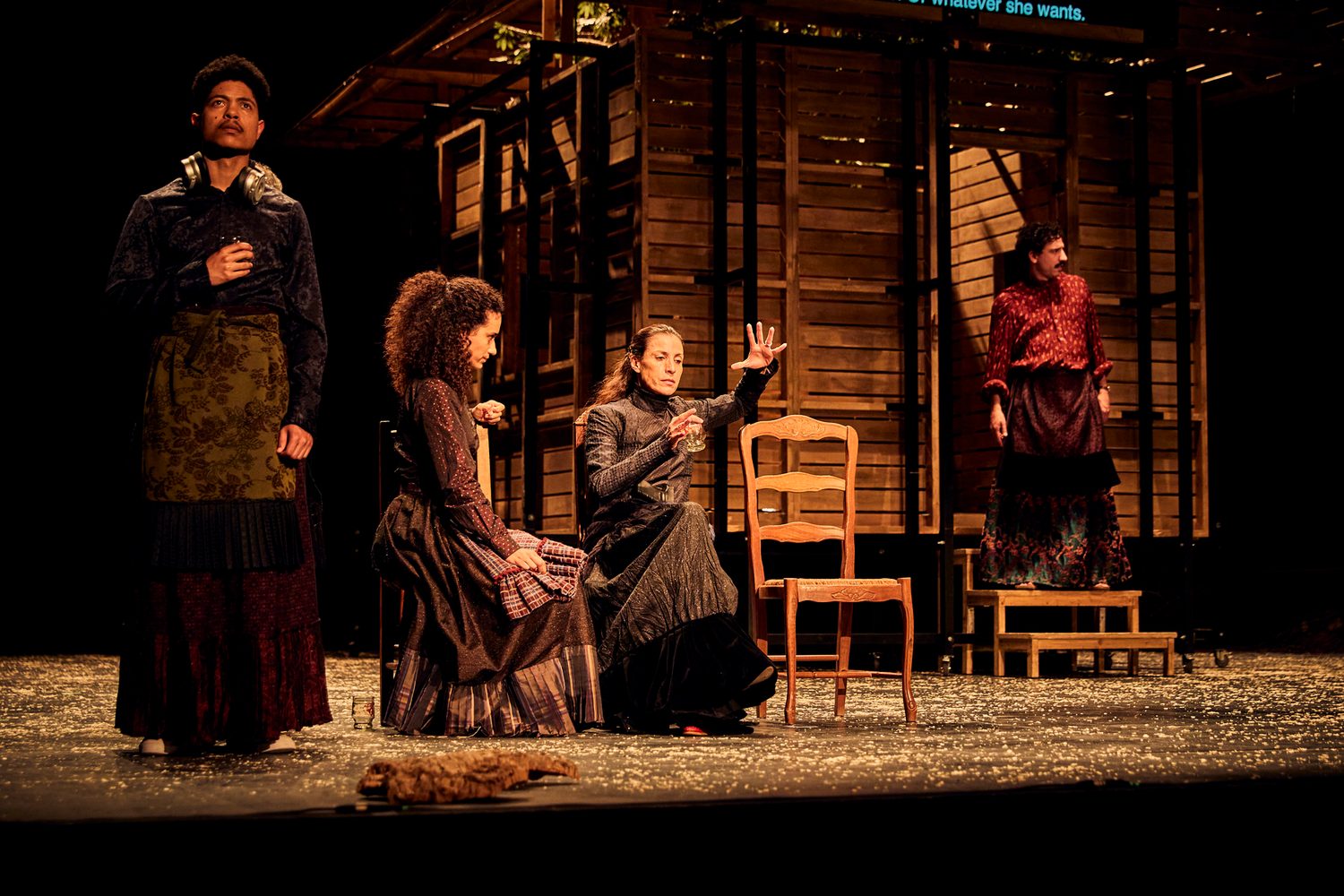
Rodrigues doesn’t make it easy for the woman fighting against the wishes of her gathered kin – or for those watching this. A baggy running time of 150 minutes is painful enough, but the auteur has done away with an interval; even those who have made it through entire cycles of Wagner’s Ring may find themselves twitching in their seats after the two-hour mark. The last half-hour is entirely given over to a disturbing screed that helps explain why Catarina comes with a hefty list of content warnings (not least hate speech, themes of racism, homophobia, and misogyny, and depictions of political extremism). Caveat emptor, and all that.
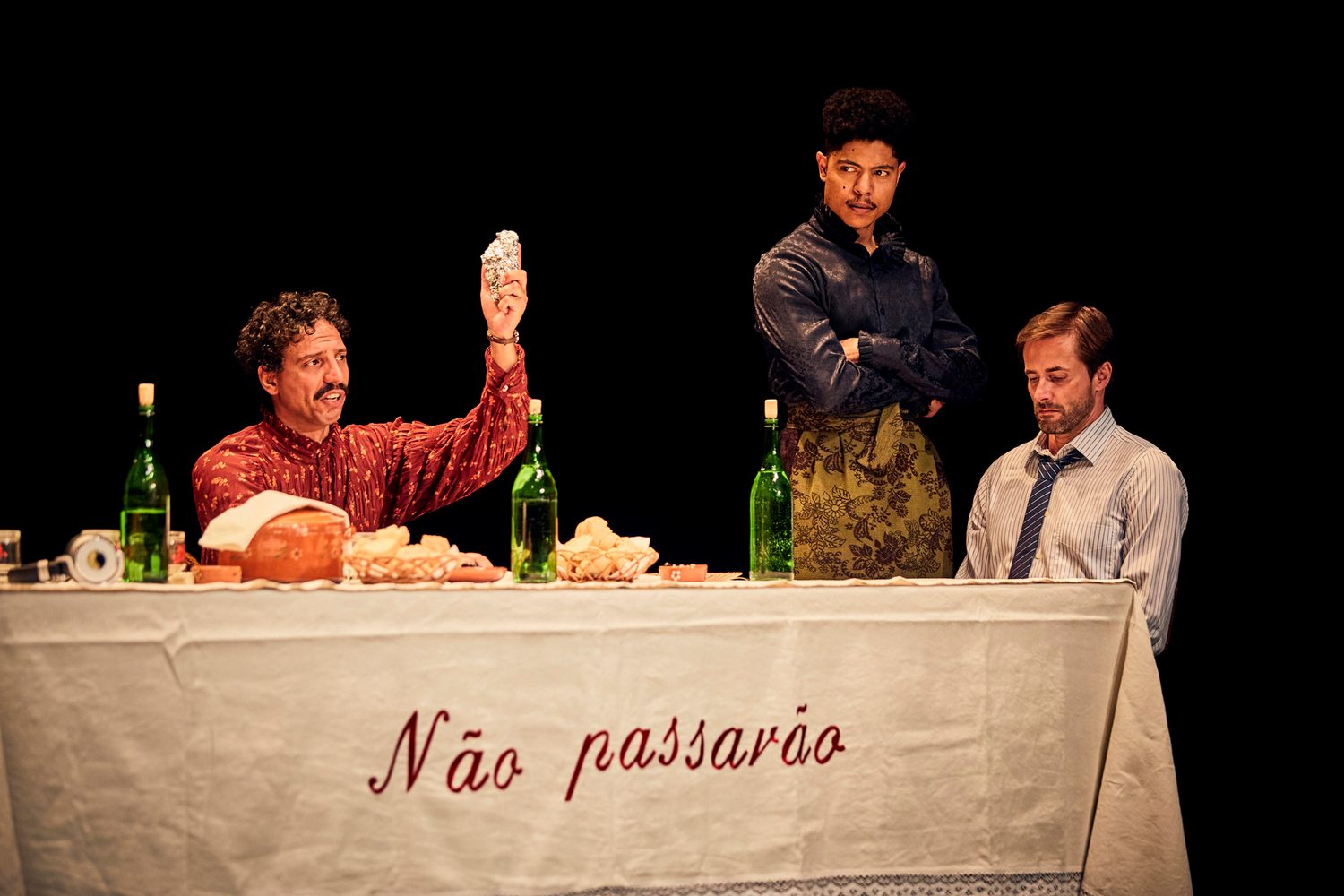
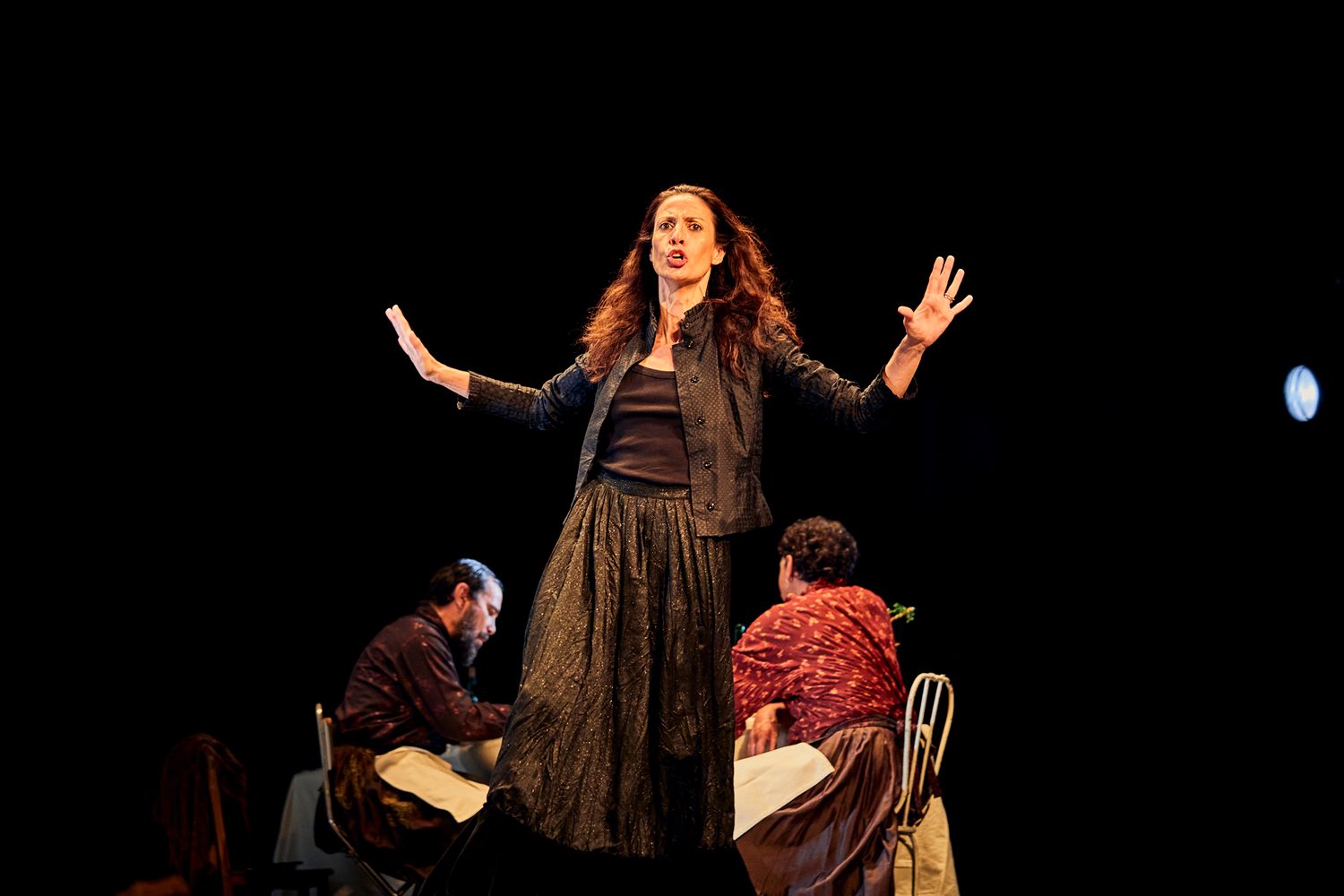
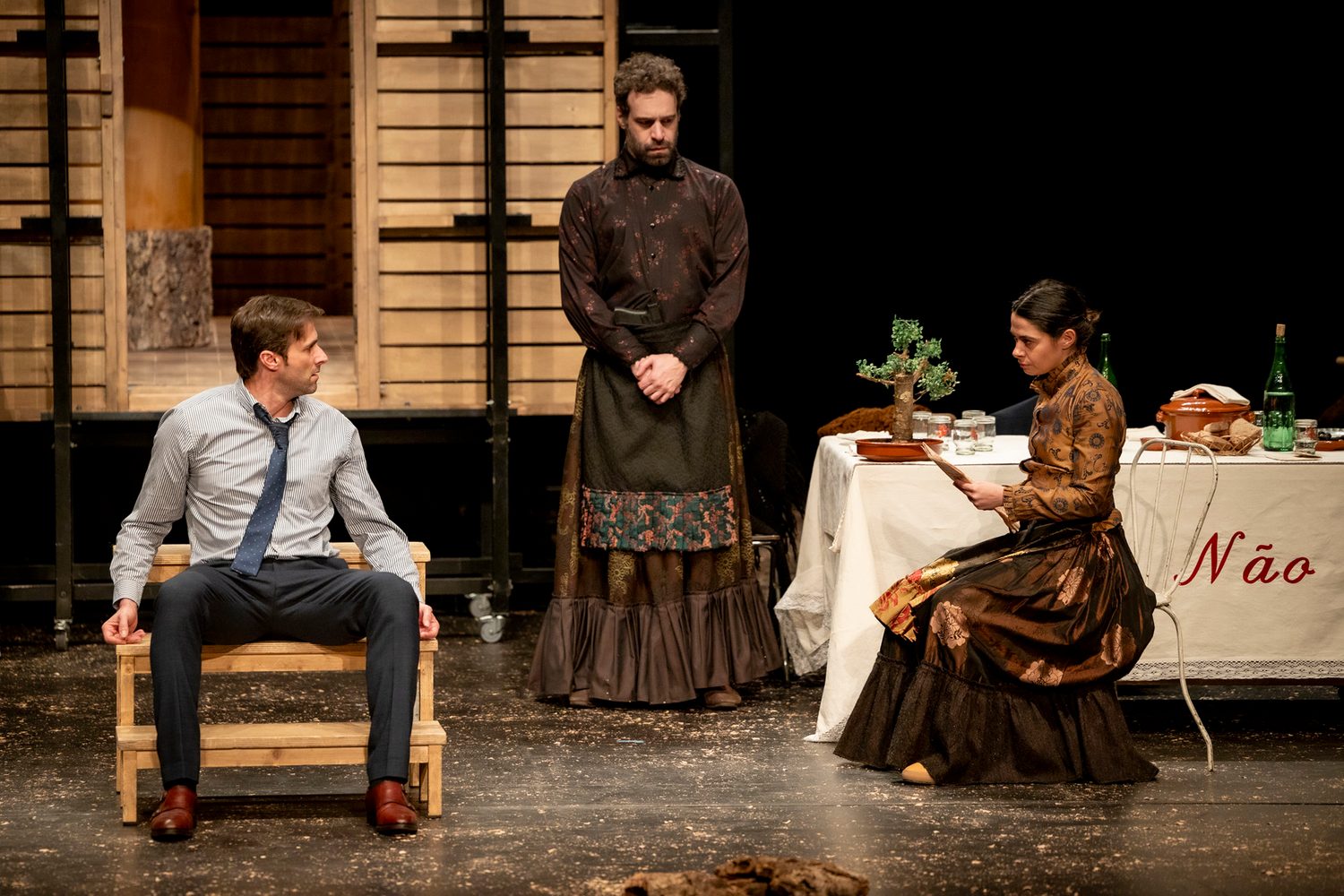
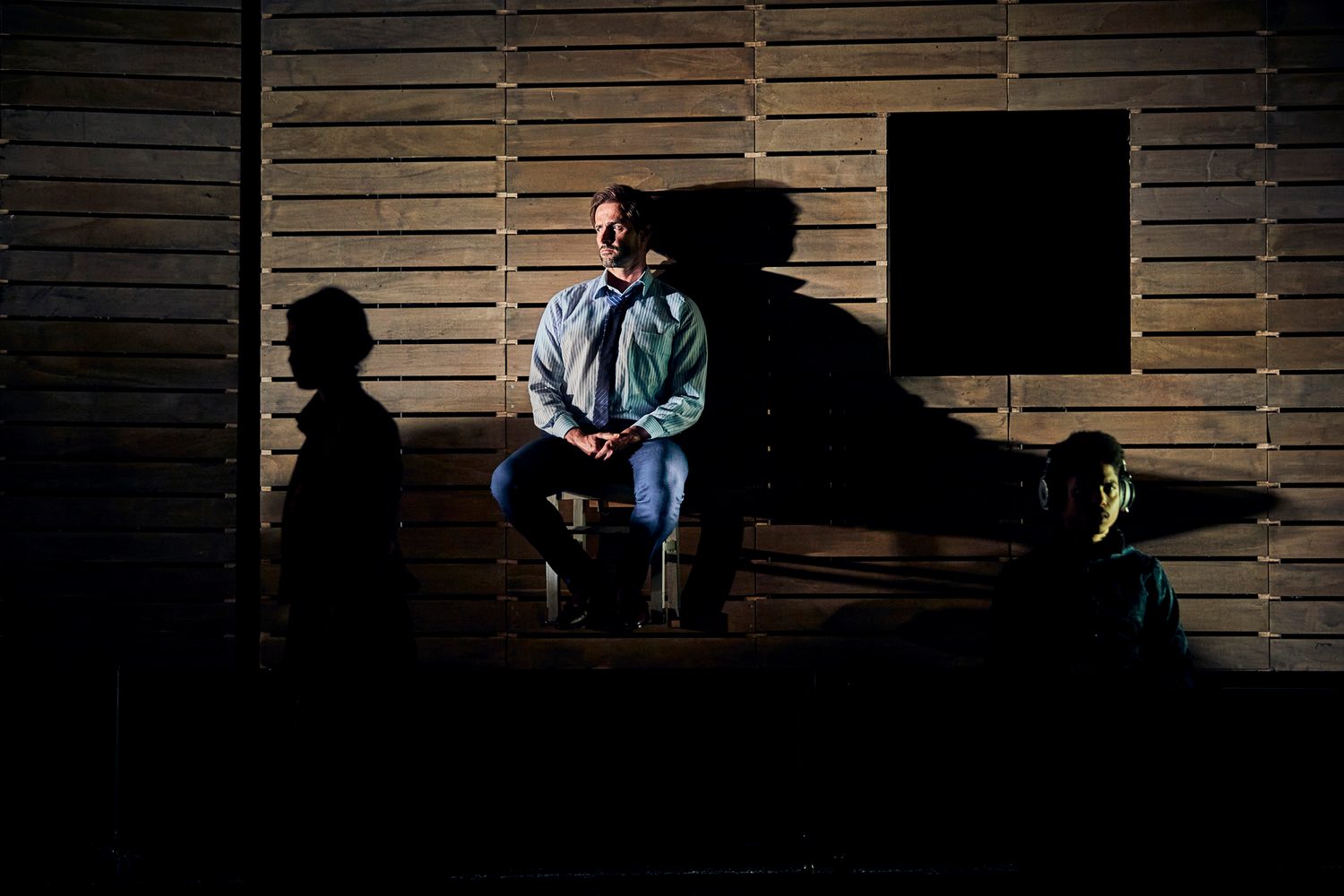
F. Ribeiro’s set is built around a trestle table draped in white linen, embroidered with red text reading Não passarão, a nationally recognised anti-fascist slogan literally translated as “they shall not pass”. Dragged all over the stage, the table becomes a defining physical feature of the gathering. José António Tenente’s sombre and varied costumes commit hard to Rodrigues’ vision: thanks to the outfits, this looks less like a regular knees-up and more like a suddenly arranged rural memorial. Nuno Meira’s lighting follows the progress of the day, with the brightness of the early scenes steadily darkening as night draws in, before returning as the fascist takes the stage. Pedro Costa’s sound design makes use of an eclectic all-female record collection that includes Polish pianist Hania Rani, 1970s composer Joanna Brouk, and American art-house musician Laurel Halo. Even Catalan superstar Rosalía turns up in the mix.
The use of surtitles has a triple distancing effect from Rodrigues’ script. Daniel Hahn is behind the literary translation of the original text into English; Patrícia Pimentel has chopped up Hahn’s words into the short, timed chunks that are projected; then these words appear on screens several metres above or to the side of the actors. For those unable to understand spoken Portuguese, these three factors combine to muffle the effect of the play’s humour and insights.
Rodrigues is a better writer than director, but not by much. Although he occasionally has his characters spout sentences that fall just the wrong side of pretentious waffle, his script delivers some fine satirical jabs at the near future. In one scene, the eldest member of the family is encouraged by his hospital to download an app to manage his palliative care; when he asks whether he can talk to a human doctor rather than an AI, he is told he needs to subscribe to a premium service.
More importantly, Rodrigues paints a dark Orwellian picture of life under an ideological authority that demonises immigrants and is keen to return to “traditional values”: same-sex marriage, abortion, and the constitution itself are under threat of abolition; the police and security services are extolled as heroes of the state, and domestic violence (a significant social issue in Portugal) is downplayed as something the cops should not get involved in. It is hard not to feel that somewhere out there Reform UK party members are busy taking notes.
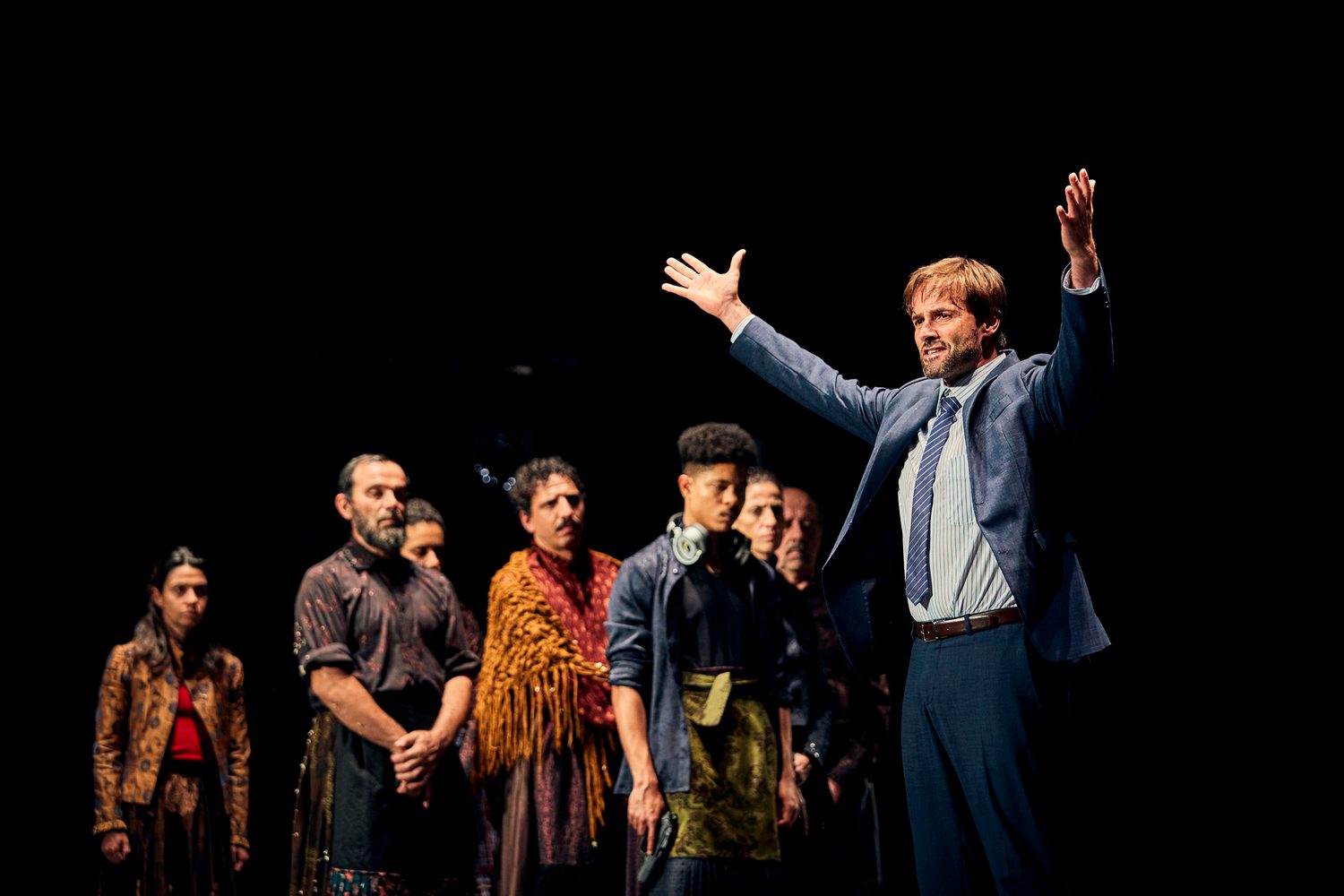
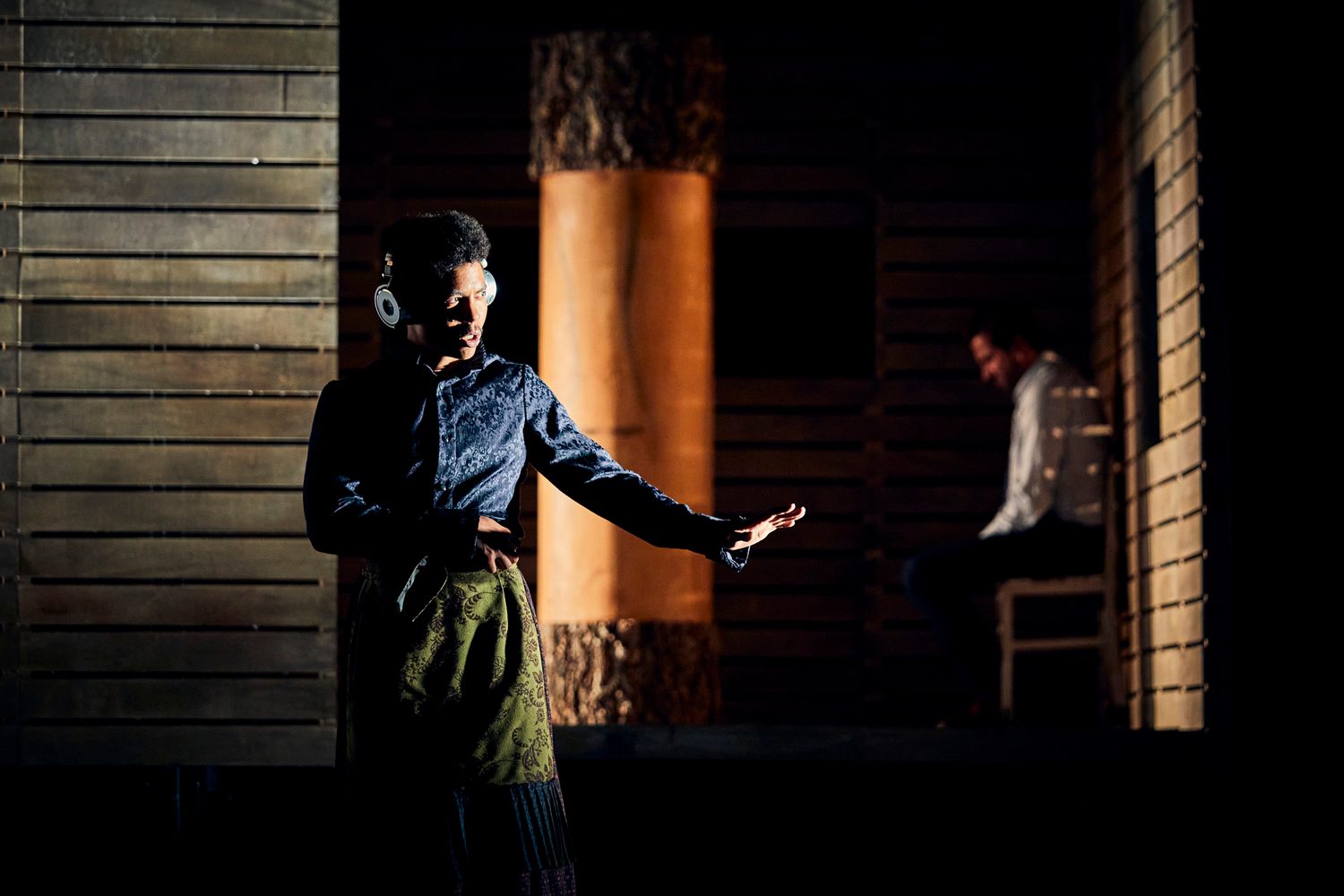
The shift from the family discussions over (for example) the nuances of vegan food and how the absent mother cooked pig trotters to more engaging and darker matter is handled via indecently long passages of static dialogue that add little to the plot. The talented cast of Isabel Abreu, Romeu Costa, António Fonseca, Beatriz Maia, Marco Mendonça, António Parra, Carolina Passos Sousa, and João Vicente do well with the material and, chiefly through their efforts, we become more invested in the individual Catarinas, but there’s no payoff for all this effort by the end. An independent director may have lopped a good half-hour off the running time without detriment to the play.
The National Theatre’s new artistic director Indhu Rubasingham is pulling on several different levers in her debut season, so it is no great surprise to see Catarina coming to the venue, even if it is being staged in the smallest theatre and for only a week. The NT rarely stages productions in a foreign language, preferring to leave such things to the likes of Notting Hill’s Coronet and the Voila! Festival, which returns this November. Opportunities to see intriguing works of this kind therefore need to be grabbed with both hands and maybe even a foot or two.
That is especially true of a play with this level of prescience. In Catarina’s fictional world, a far-right regime is in government, having begun its rise to power with just a single member of parliament. Meanwhile, in 2019 André Ventura became the first far-right MP elected since the Salazar dictatorship ended; Ventura’s Chega party is currently the second-largest in Portugal’s parliament, and he came second in this year’s presidential runoff. Rodrigues’ fantasy may yet become a terrifying reality.
Catarina and the Beauty of Killing Fascists plays at the National Theatre’s Dorfman Theatre until 26 September 2026.
Book tickets at nationaltheatre.org.uk
Words by Franco Milazzo
Photography by Joseph Banderet