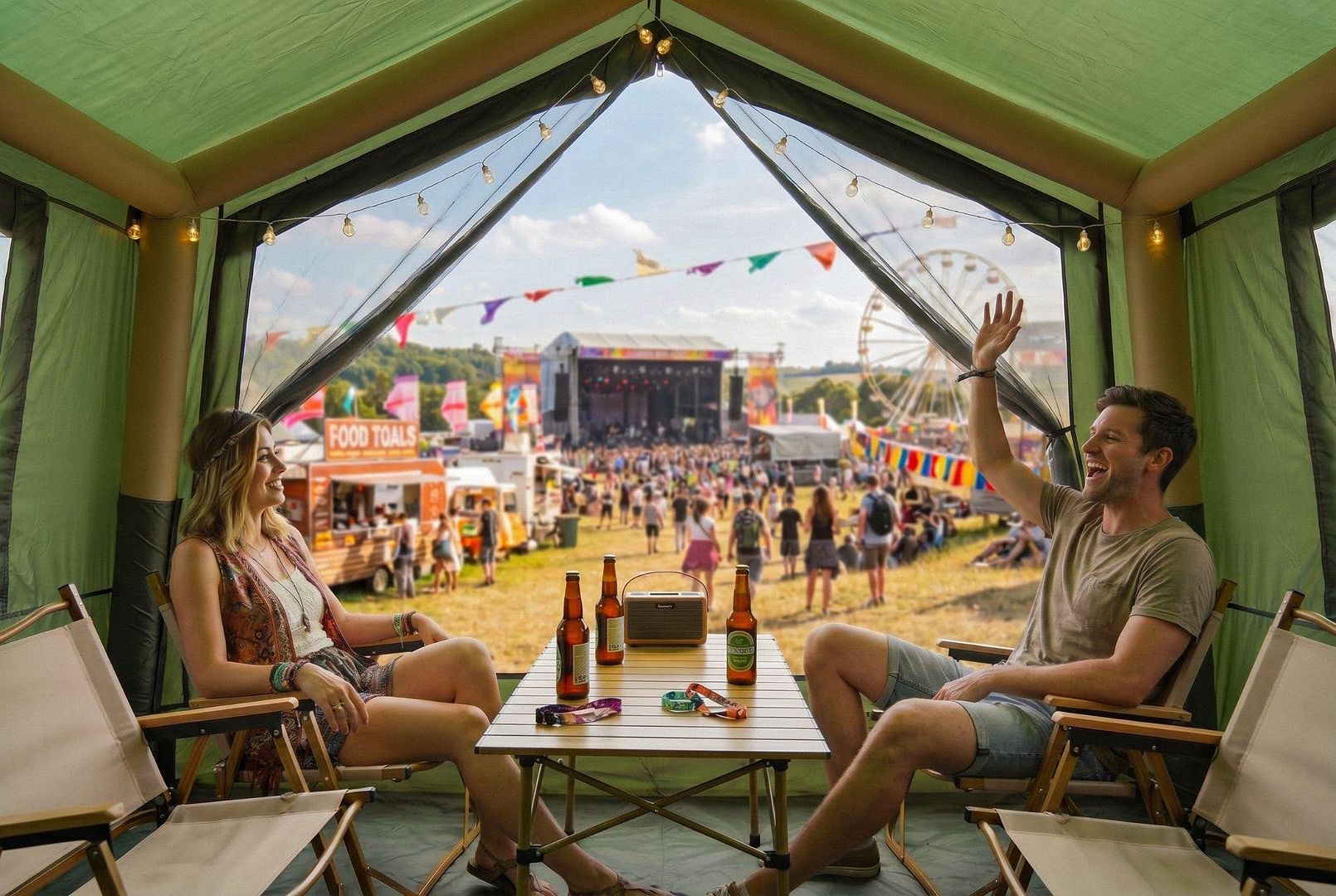
A festival day can stretch from midday well into the night. By the time the final set is over and you’re back at your campsite, all you want to do is change your clothes and lie down. But if your tent is cluttered with luggage and there’s barely room for a mattress, you’ll probably feel it the next day.
Choosing a festival tent means thinking beyond sleeping capacity. Campsite rules, how far you’ll need to carry your gear, the setup process and sleeping space all matter, especially when you’re staying for two or three nights.
Check the Festival’s Camping Rules Before Choosing a Tent
Camping rules vary between festivals. Some allow visitors to pitch their own tents, while others restrict tent sizes, canopies and additional structures. Before buying your ticket, check whether camping is included, how large your tent can be and whether vehicles are allowed into the camping area.
When checking dimensions, remember to allow room for tent pegs and guy lines without taking up shared walkways or neighbouring pitches. If you’re bringing an electric pump, check whether power is available on site. These details will help you work out what you can actually bring, rather than discovering a problem when you arrive.
From the Car Park to Your Pitch: Why Weight and Setup Matter
Festival car parks can be a long way from the camping area. When you’re carrying bags across grass, gravel and crowded paths, your tent’s weight and packed size suddenly become much more important. And if you arrive shortly before a performance, the last thing you want is to spend all your energy getting everything set up.
Take the ZONKOO Lyra, one of the small inflatable tents, for example. Weighing 29 lbs, it has a manufacturer-listed setup time of three minutes. Its inflatable support structure removes much of the assembly involved with traditional tent poles, making pitching more straightforward. Of course, you’ll still need to consider how far you have to carry it and secure it properly with pegs and guy lines once inflated.
If you’ve got a long walk ahead, pack your tent, bedding and clothes separately, and work out how you’ll carry the pump. That way, you can get your sleeping area ready before heading off to enjoy the performances you’ve been looking forward to.
How Much Tent Space Do You Need for Two or Three Nights?
Festival camping involves more than sleeping. You’ll need somewhere to change, sort through your bag before a show and leave your shoes, jacket and other belongings when you return. If you’re sharing a tent, a little extra room to get changed and plan the next day’s outfit can be far more comfortable than filling every available sleeping spot.
When comparing inflatable tents, look beyond the advertised capacity. Check the floor area, actual dimensions and entrance layout. Once your mattresses are in place, there should still be room for luggage and a clear way in and out. Smaller tents may be easier to carry, but a cramped sleeping area can become frustrating after several nights.
Start by setting up your sleeping area, then keep shoes and jackets near the entrance. Store clothes and personal belongings separately so you can get ready for the next show without searching through every bag.
How to Get a Better Night’s Sleep at a Festival
The noise doesn’t always stop when the final act leaves the stage. People may still be chatting nearby, while activity around the campsite can start early the next morning. If you’re a light sleeper, bring earplugs and try to find a pitch away from the main walkways. An eye mask can also help block out the early morning light.
Your mattress, bedding and ventilation matter just as much. A thin sleeping mat or not enough warmth at night can make it difficult to rest. In hot weather, direct sunlight can also raise the temperature inside your tent. Use the ventilation openings as conditions allow, and make sure any doors or windows that need closing are secured before you leave for a performance.
With so many people around, keep valuables with you or use secure storage provided by the festival. A tent zip offers little protection against theft. Keeping your sleeping area tidy and the entrance clear will make your stay more comfortable than filling the space with elaborate decorations.
Get Your Gear Ready for Next Year’s Festival Season
If you only attend one festival a year, think about whether you’ll use your tent for other camping trips before investing in one. Once you add a mattress, pump and lighting, the costs can mount up. For anyone planning several outdoor festivals, choosing gear you’ll use again is easier when you’re not shopping at the last minute.
If you already have plans for next year’s festival season, seasonal offers such as black friday deals can be a chance to pick up a tent, sleeping mat or other essentials in advance. Buying early isn’t just about the price. It also gives you time to practise pitching your tent, check how easy everything is to carry and compare its dimensions with any campsite rules that have already been published.
Before buying, find out whether essential accessories such as a pump are included, and check the warranty and returns policy. The gear worth investing in is what makes your stay more comfortable and will still be useful at your next festival or camping trip.
Make Room for a Good Night After the Music
A festival day can run from the first performance late into the night. When you finally get back to camp, you probably don’t want another activity. You just need somewhere to put your shoes, take off your jacket and lie down comfortably.
Your tent doesn’t need to be the star of the weekend. But the right one won’t leave you exhausted before your favourite band takes the stage the next day.