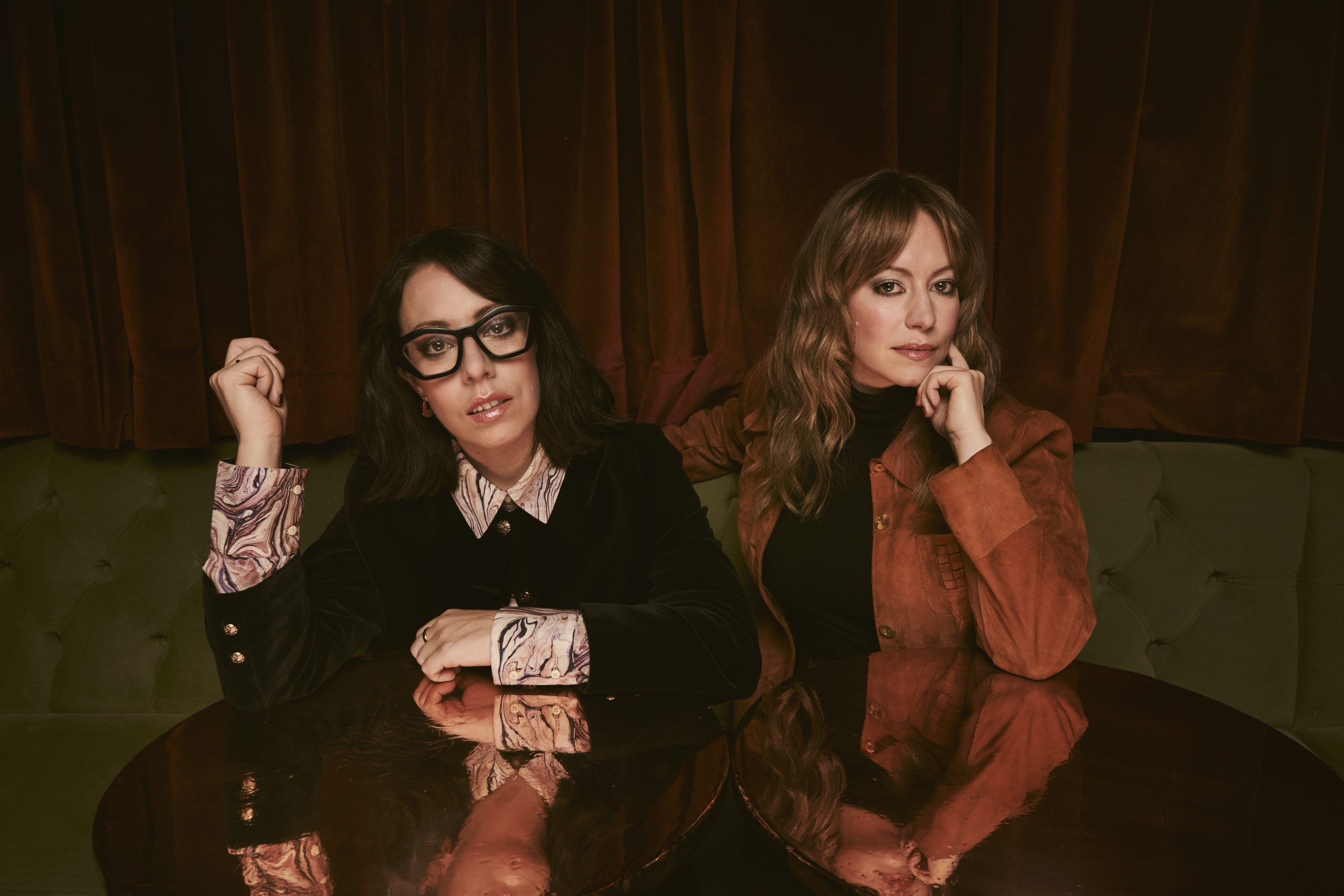
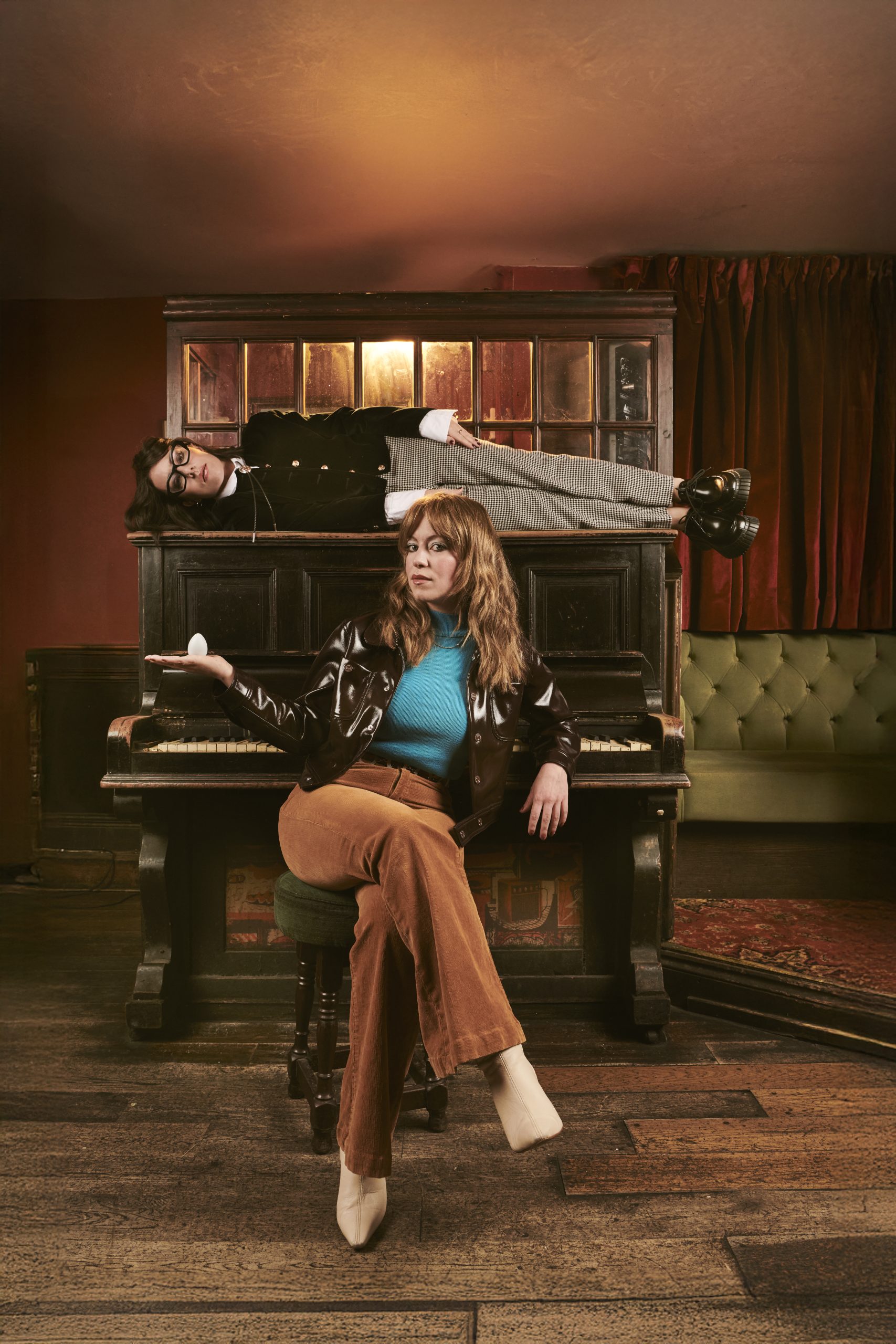
The first thing to know about Flo & Joan is that neither of them is Flo, and neither of them is Joan.
Musical-comedy sisters Nicola and Rosie Dempsey borrowed the names of their grandmother and great-aunt when they needed something, anything, to put on the bill for their first gig. Despite growing up in the same house and attending many of the same music classes, they barely chose to do anything together until they were adults. It took moving thousands of miles away to Toronto for them to discover that the ideal creative partner had been in the family all along.
Since then, they have turned tightly written songs, elaborate rhymes, and hilariously deadpan delivery into a formidable career. The 2016 Song became a viral sensation, their live shows have toured extensively, and they have appeared on Live at the Apollo and The Royal Variety Performance. More recently, they stepped beyond the traditional Flo & Joan format to create One Man Musical, their brilliantly ridiculous musical about Andrew Lloyd Webber. It is currently back at the Edinburgh Fringe with Edward Easton taking over the title role from SNL UK’s George Fouracres.
They will soon return to centre stage with With Feeling, their first full-length Flo & Joan show since Sweet Release. Built around the setlist of an unnamed ‘real band’, the new show begins a major UK and Ireland tour in September.
I first met Nicola and Rosie briefly at Shakespeare’s Globe, just long enough to tell them how much I loved One Man Musical and demonstrate that I’m always extremely cool around people whose work I admire. When we sat down properly, we talked about their separate childhoods, learning to fail in Toronto, the strange uselessness of viral fame, and why their ultimate ambition involves the Muppets.
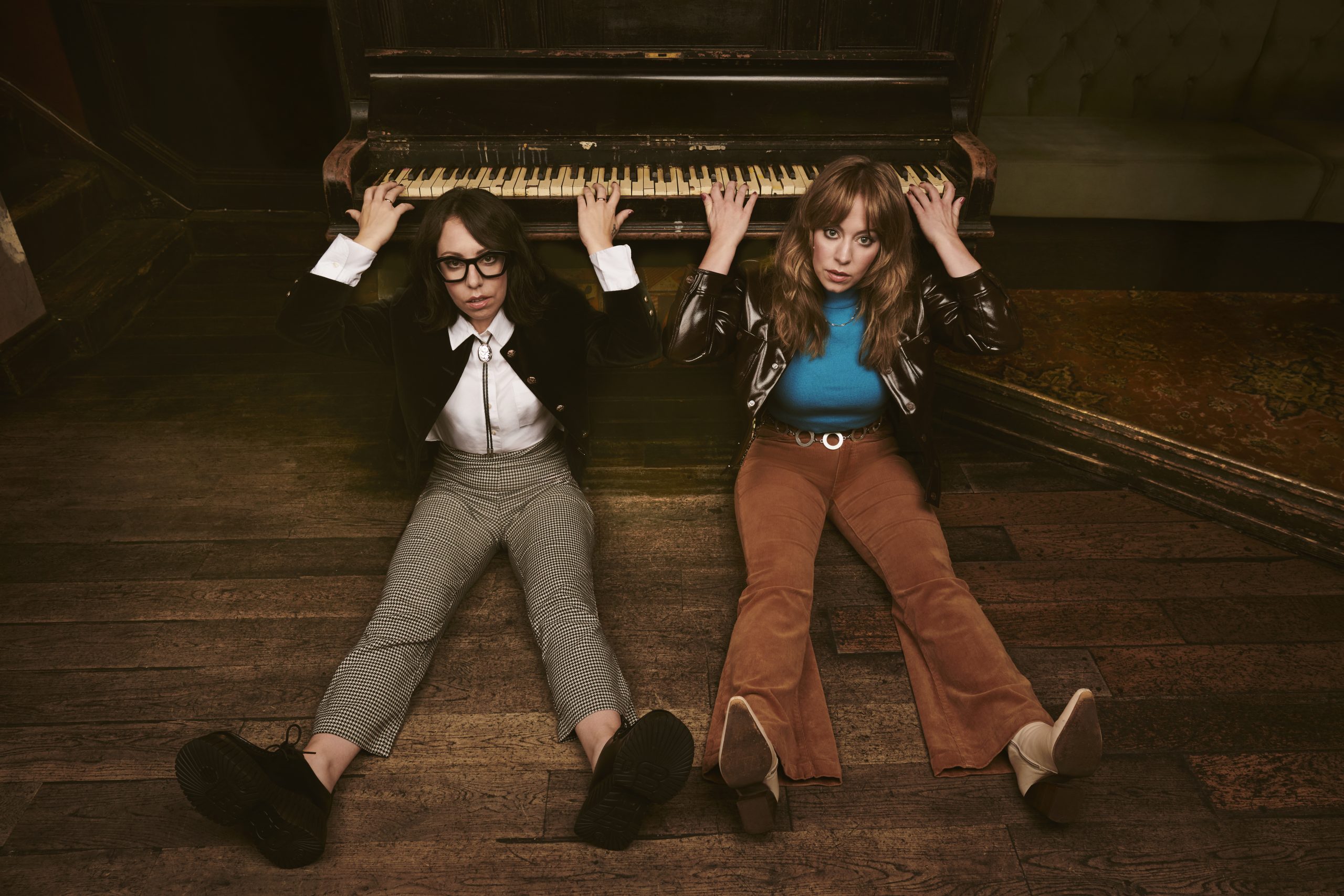
You were sisters long before you were Flo & Joan. What were you like together when you were little?
Rosie:
When we were very little, we probably played together. Our mum sent us to dancing classes, music classes, and little summer schools, but when I think about growing up, much of my childhood doesn’t involve Nicola. We went to the same dancing school, but we were different ages, had different friends, and did different classes. We were never that playful with each other.
Nicola:
At Christmas, we would sometimes put on little shows with our cousins, but it was never just the two of us. We played in the same school bands, but we weren’t choosing to be in the same band. Flo & Joan was the first time we intentionally decided to do something together.
Rosie:
Two years is a big age gap when you’re at school. It felt like different worlds.
Nicola:
We have become more similar as we have got older. We’re still very different now, but we just didn’t intersect very much as children.
When you needed a name for the act, you borrowed the names of your grandmother and her sister. Why Flo & Joan?
Nicola:
We had signed up to do our first show, and somebody asked what they should call us. Our nan Flo and her sister Joan would get the coach down from Liverpool to stay with us, so we were used to hearing their names together. We panicked, said, ‘Just call us Flo & Joan’, and it stuck.
Possibly to our detriment, because people think we’re old women, then come to see us and realise we’re still old women, just not as old as they expected.
Rosie:
Even comedians hear us introduce ourselves as Nicola and Rosie, then ask, ‘Oh, your names aren’t Flo and Joan?’
Why did it take moving thousands of miles from home to realise that your sister might be your ideal comedy partner?
Nicola:
By then, we were older and had lived separate lives. I moved to Chicago and then Toronto, and kept messaging Rosie to say that I thought she would really enjoy it because she was a very good actor and very funny.
When she moved to Toronto, we lived together for the first time since we were teenagers. We met other funny people we could potentially work with, but the reference points were not the same, or it took longer to reach an idea. With Rosie, I realised, ‘Oh, you get it.’ We had a shared language, history, and set of references.
Rosie:
We were also in our early twenties, when you’re in the perfect position to make bold choices because you don’t have a mortgage, children, or dogs. We could live in another country, try things, and fail.
How much failing was actually involved?
Nicola:
So much.
Rosie:
Our first show was actually good. Well, the sketch was bad, but the song and poem were good, so we knew that rhyming, lyrics, and songs were fun. There were only about 12 people in the audience.
Our second show was terrible. We had a lot of gumption after the first and thought, ‘The world has got to hear our thoughts.’ It was absolutely awful, but the first show had been good enough to make us think we could possibly do it.
Nicola:
Everybody at the comedy school was learning and failing at the same time. They were accustomed to watching people who didn’t nail it first time. That made it safe.
When The 2016 Song went viral, were you calmly getting on with your lives or obsessively refreshing the numbers?
Nicola:
We put it online, then went to rehearse with some friends. At the break, we looked at our phones and thought, ‘Oh, shit, there are a lot of views on this.’ Every time we refreshed it, the number went up by about 10,000. Until then, our videos had about 200 views. Suddenly, it had escaped.
Rosie:
Two days later, when it had millions of views, we performed to about six people in Toronto. We immediately learnt that views don’t necessarily mean anything. They didn’t make our pay cheque bigger or put people into the room. It was a useful lesson: this is just the internet. It’s nonsense.
Which of your older songs do you still love, and are there any that make you think, ‘Jaysus, we used to sing that in public’?
Nicola:
Lady in the Woods will always be my favourite. We wrote it in 2017, and we still perform it. It has won over some of the hardest audiences we have ever played.
Rosie:
I also love Rest of My Life. Those are probably the two songs I would give somebody who didn’t know us.
Nicola:
There are songs where I would no longer choose that subject, premise, execution, or point of view, but it’s useful to have them because they prove you’re moving forward. I try not to look at them with too much shame. We were new, and we didn’t know any better.
After performing Sweet Release 148 times, were you delighted to create a show in which somebody else did most of the moving and singing?
Rosie:
Yes. Over the moon. Next question.
We had always wanted to write theatre and were developing a much larger ensemble musical, but it was self-funded. We realised that big ensemble musicals are difficult to make happen, so we decided to use Edinburgh as a testing ground for something smaller. To make it affordable, it became a one-person musical.
We considered people like Elon Musk and Donald Trump, but we didn’t want to spend all that time researching them. The idea of writing a musical about the person most famous for writing musicals felt funny and very meta. We wrote it in three months.
Nicola:
We cast George at the end of June or beginning of July, then put it onstage at the beginning of August. It was the fastest thing we have ever made.
The show is savage about Andrew Lloyd Webber, but it also feels affectionate. Could you only write it that brutally because you genuinely love his work?
Nicola:
We knew we could write it because we respect him and his contribution to musical theatre. That doesn’t mean we love everything he has done, but we grew up listening to his music. He was our gateway into musical theatre.
People interpret it very differently. Some describe it as savage, while others think we’re too soft on him. Someone asked if it was a hit piece, and Rosie described it as an essay about a very complicated person with whom we have a complicated relationship.
Rosie:
You can’t spend 70 minutes bullying somebody. Every person has to have a heart. Because he is a powerful man, he can enter territory where he could simply be bullied. We had to be careful that we didn’t become horrible, smug little people prodding at him.
When I saw One Man Musical, George Fouracres’s microphone apparently failed, and he did an incredible five minutes of improv. Was that secretly part of the show?
Rosie:
Unfortunately, it was real. It became the most contentious thing that constantly happened.
Nicola:
I can’t tell you how many times we went in early to fix microphones. We shaved beards, attached it to different sides, used different microphones, and wired them differently. We were told it was a West End-grade microphone.
Rosie:
It happened during every run and about 50 per cent of the time at Underbelly. George understandably said, ‘I don’t want to perform an extra five minutes of material every night.’ It hasn’t happened with Ed.
Nicola:
We were lucky that George is a seasoned comedian who thrives when things go wrong. Ed is an amazing sketch comedian, too, so we know we’re in safe hands.
How does it feel to hear somebody else getting enormous laughs from your writing?
Rosie:
It’s the best feeling in the world. We’ve always wanted to write for other people. Flo & Joan was initially a way of saying, ‘We have some songs and can perform them for you. Hopefully, one day, you’ll hire us to write something else.’
Nicola:
I don’t think either of us would be described as a natural performer. We’re very lucky to do it, but when I see how comfortable other comedians look onstage, I don’t think anybody would say we look as though we belong there. We look in pain.
It’s lovely to watch performers such as George and Ed, who seem born to be the conduit for other people’s writing. We can give them something and think, ‘That is how I wanted it to sound, and I know I couldn’t have done that myself.’
When Edward Easton took over, what did you discover belonged specifically to George, and what had always been embedded in the writing?
Rosie:
What was reassuring was that both actors found the same rhythms when they picked up the script. That meant we had written a show with its rhythm embedded in it, rather than something entirely dependent on one performer. Then you give it to brilliant people, and they mould it around themselves.
Nicola:
Ed is much taller, so even visually, it feels different. George’s Andrew was a bit goblin-like, while Ed’s is more like Bambi, leaping around the stage. They’re both believable versions of an odd, posh person who doesn’t quite know what to do with his body.
George’s crowd work is a specific skill, so it has been fun to find different things for Ed to do. Some moments shaped around George didn’t work for Ed because of who his version of the character had become. We had to find different emotions and rhythms.
Is With Feeling your first full-length Flo & Joan show since Sweet Release? How has making One Man Musical changed the way you approached it?
Rosie:
It is. The new tour has a concept and a through line because we’re writing songs to another band’s setlist. With One Man Musical, we had to make sure all the ebbs, flows, peaks, and troughs were in the right places. This show is similar because the audience can see the setlist. We can’t simply shove a load of songs together anymore.
Nicola:
For Sweet Release and the shows before it, we would spend a year writing songs, assemble them in an order that felt pleasing, and try to link some of them. Then we wrote One Man Musical and discovered that we could tell a story. After doing something new and exciting, another collection of songs no longer felt ambitious enough.
We decided we wouldn’t tour another Flo & Joan show until we had something more substantial than, ‘Here are 12 new songs and five old ones.’ When we found this premise, we knew we had the show.
You have built With Feeling around the setlist from a ‘real band’s’ concert. What does that actually mean?
Rosie:
We have written completely new songs using the titles on that band’s setlist. That forms the first half of the show. The second half includes some of our older songs, reimagined.
Nicola:
Our previous shows must have felt like seeing your favourite band and hearing only the new album when you desperately want the two songs you know. We hope we’re building a catalogue where the newer songs eventually become the ones people want to hear. We don’t want audiences forever thinking, ‘Yes, I’ll listen to that song about shame, but can you do the one where you fart and die, please?’
Rosie:
We’re keeping the band a secret, but people will recognise them. If you’re a musical fan, you will know the band.
What have the work-in-progress performances revealed?
Rosie:
That we need to talk less. One preview ran for an hour and ten minutes. We cut a huge amount of flab, performed exactly the same songs, and it came in at 47 minutes.
Nicola:
We’re chronic overwriters and overthinkers. We know what all the songs have to be, so that’s the easy part. The talking in between is the problem child.
Rosie:
We’re also trying incredibly hard not to alter the original setlist. There is one point we know would improve immediately if we moved a song, but we’re being purists.
Flo & Joan has been a musical-comedy double act, a real-ish band, and a pair of theatre writers lurking at the back of another man’s musical. What would you most love to add next?
Nicola:
Official songwriter for the Muppets. That would be my dream.
Rosie:
What she said.
One Man Musical plays at Pleasance Courtyard as part of the Edinburgh Fringe until 30 August 2026.
Book tickets at onemanmusical.com.
With Feeling tours the UK and Ireland from 19 September.
Visit floandjoan.com for dates and tickets.
Words Nick Barr
Photography by Matt Crockett