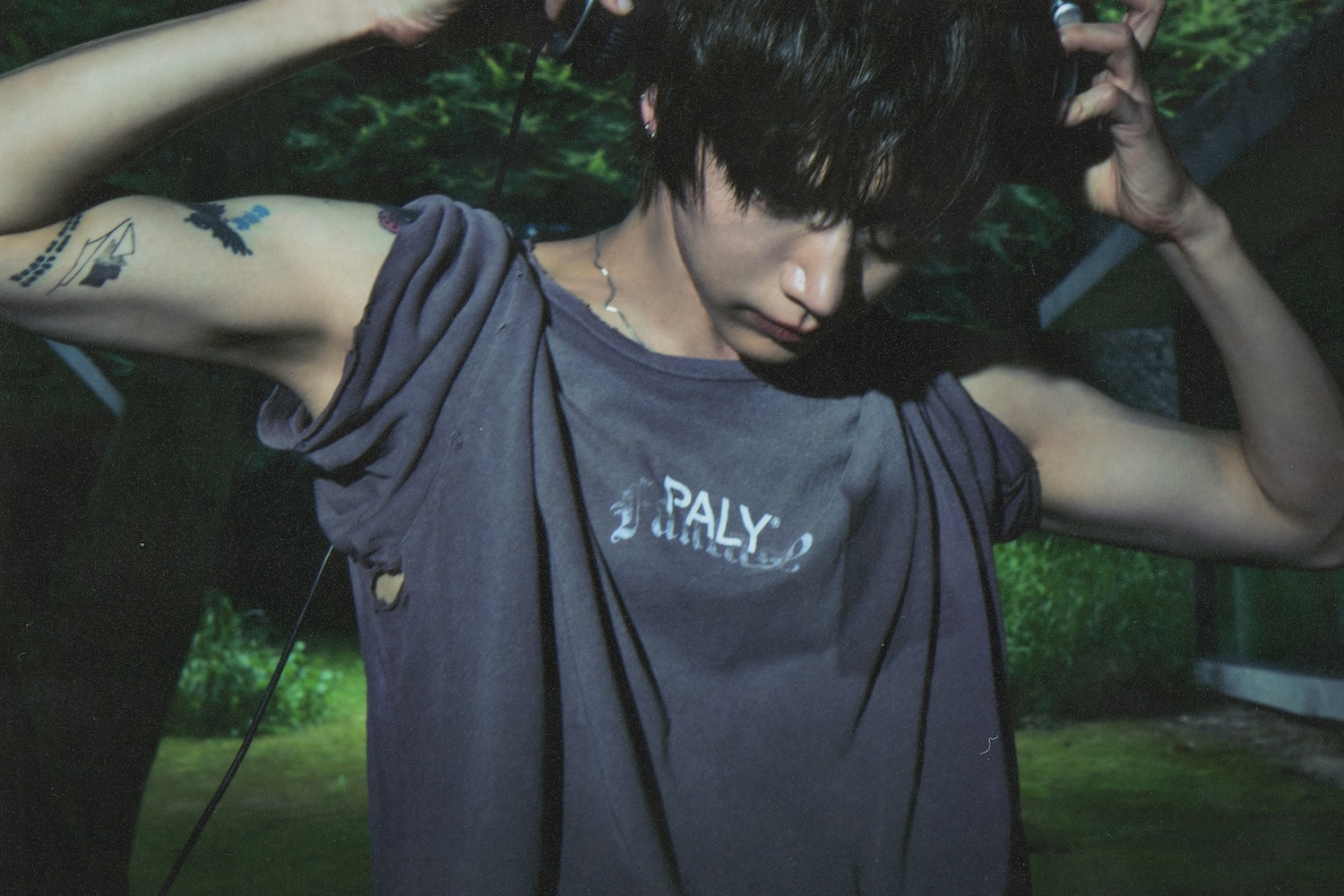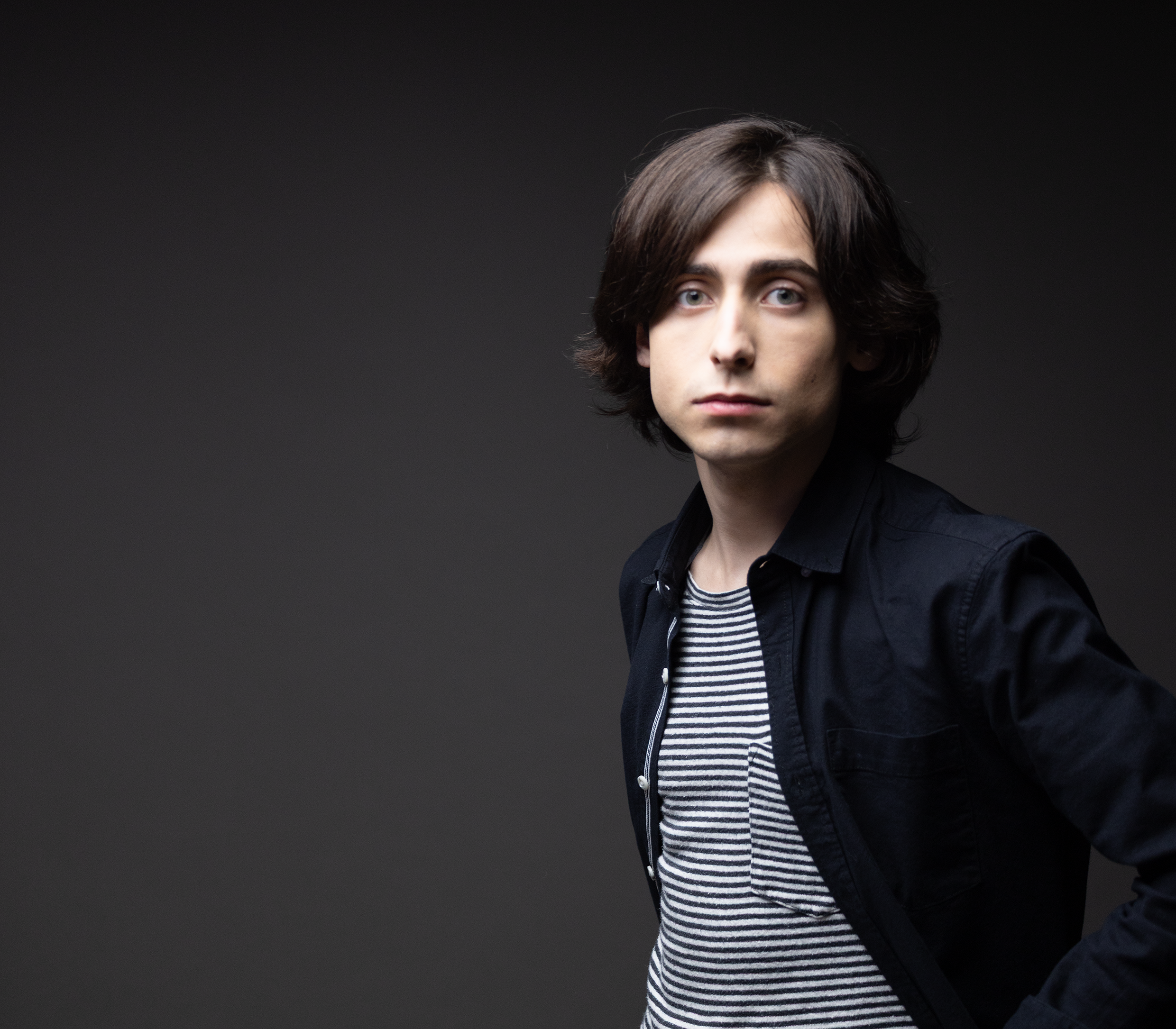
Aidan Gallagher is redefining himself.
You probably know him as Five, the time-leaping 58-year-old assassin trapped in the body of a 13-year-old boy, in The Umbrella Academy. Perhaps younger audiences remember him as one quarter of the Nickelodeon series Nicky, Ricky, Dicky & Dawn. But after years watching him on our screens, Gallagher now wants us to listen.
Expansion is Gallagher’s debut album, after drip-feeding singles such as ‘I Love You’ and ‘4th of July’ which he worked on while starring in series two of The Umbrella Academy. The project is moody and introspective, shifting between indie-pop and alt-rock with flashes of grunge. Its lyrics tend to gravitate toward the themes of longing, loneliness and unrequited love, though there seems to be an emotional restraint to Gallagher’s songwriting, favouring melodic storytelling over autobiography.
Speaking to Gallagher one evening over video call, it’s clear his approach is led by the overall sound and tone, with the narrative working around the intended aesthetic. Throughout our conversation it was easy to see why he was cast as the pragmatic and methodical character of Five: Gallagher approaches music with the same precision. His musical vocabulary is – for lack of a better word – expansive; his approach to creativity vigorously academic.
His answers to my questions are thoughtful and sometimes intense. I will caveat, however, that unlike Five, there’s no air of intellectual superiority or aloofness. He happily indulges my very British complaints about the summer heat and takes time to respond to things in depth. Despite starring in one of Netflix’s most popular TV series (indeed, one of the few not to be axed after a single season) and amassing millions of followers on social media, the 22-year-old hasn’t let fame get to his head.
In conversation with 1883, Gallagher discusses finding his identity as a musician, taking a break from acting to focus on his new career path, and why he’s a proud Dua Lipa fan.
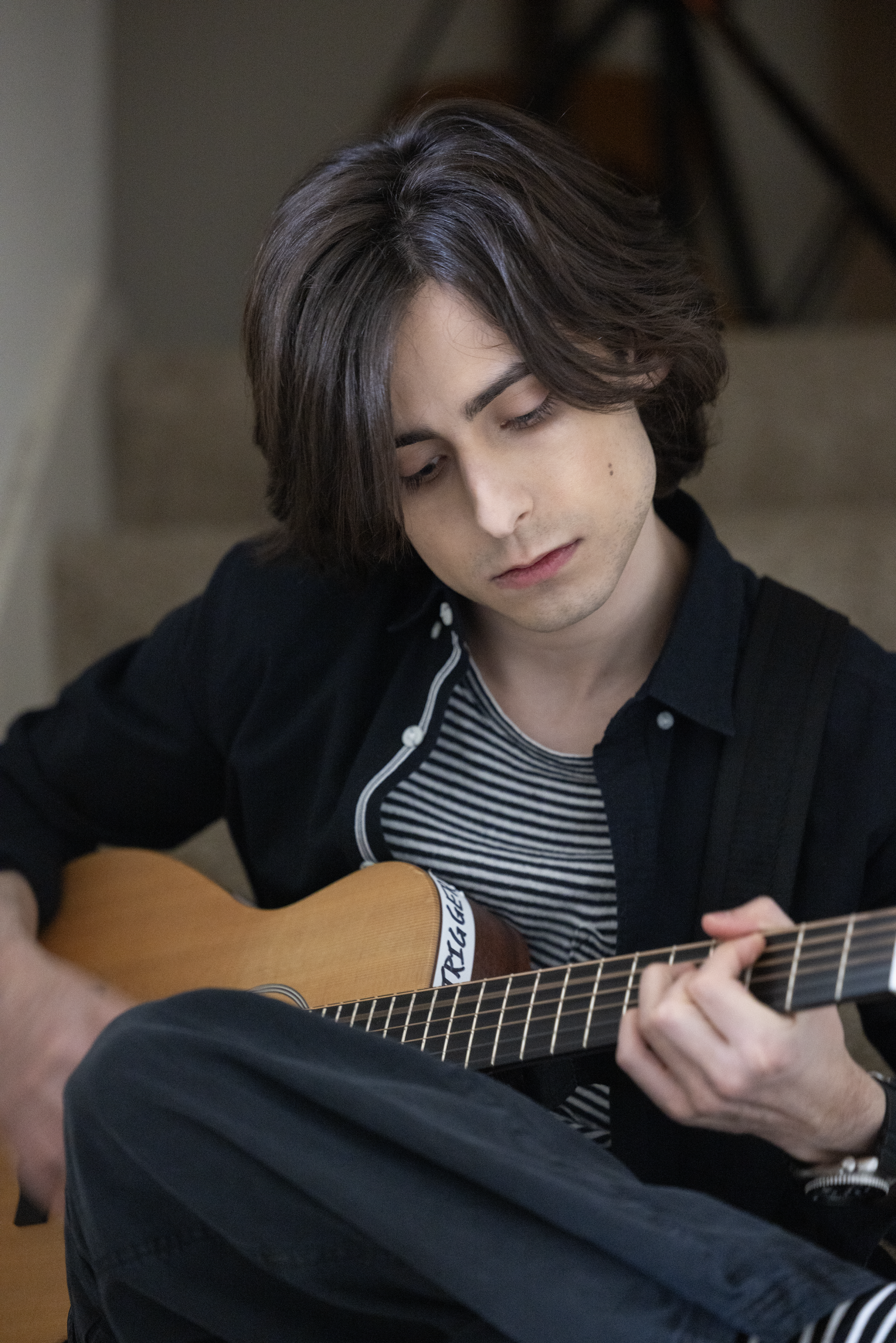
Hey Aidan, how are you?
Decent, thank you. Just waking up – I’m a bit of a night owl.
You’re in Seattle, right? Are you having a good summer?
Yeah, but it’s Seattle. Most of the time it’s really cold and rainy, and now it just feels like a regular summer. How’s London doing now?
Everyone is melting, the country can’t really cope in this heat. We panic when there’s sun, then we panic when there’s snow…
A friend in London said you don’t really have AC which is crazy. I feel for you guys.
Hopefully I won’t end up melting into a puddle before the end of this week so I can write up your interview! Speaking of, thank you for taking the time to talk about your new album. I was just listening to it; it’s quite a diversion from your previous music. Was there a concept or mood you had in mind before making it?
I’m still growing up, so [those previous releases were] much earlier on, and I wanted to have a record which felt a little more confident as I got older, something that would age with me a little bit better. In terms of a concept or a mood, the only thing I set out [to do was make] the sonics a little more textural, but everything else was a discovery process with each song.
When you talk about a discovery process, do you mean you discovered something about yourself or about your music tastes?
No, not necessarily. I mean, sometimes the abstract nature of certain lyrics will mean one thing at one point in time, and then later on in your life, it ends up meaning something else. My taste is so broad, and there’s so much music from all these different artists and genres and eras. Even on this record, there’s like there’s a blend of pop, industrial, rock; there’s a blend of a lot of different things. I was pretty much just doing whatever I felt was going to help the song and whatever was interesting enough to me.
I was intrigued as to why you’re releasing ‘Without You’ and ‘DREAM’ as the two singles to represent the album because they’re so different. ‘Without You’ is more pop, meanwhile ‘DREAM’ has a much darker, introspective tone.
Everyone talks about how do you know what’s gonna be a good single? I personally just like those two songs a lot, but the thought was ‘Without You’ being something that some of the fandom has heard before when I played it acoustically, but no one had heard the production version, so I thought it would be a good bridge between something they were familiar with and what the record was going to sound like.
‘Dream’ is just unexpected from beginning to end, and it also starts in an alt-pop category, and then blends in with rock. I think ‘Dream’ is a good example of a blending of aesthetics. So the album covers a lot of ground in terms of genre, and I like when things blend.
I think ‘DREAM’ was my favourite song in the album, it reminded me of My Chemical Romance’s ‘Sleep’. I’ve heard you’re a big fan of theirs.
I played that song for Gerard [Way] years ago, and he loves that one as well. He and I both go crazy about tones. There’s this idea of intensity being a useful tool for expression; this is why you get into pursuing a particular tone or why mixing is important. It’s because if someone whispers something, it’s incredibly different if they shout it. And that’s what tone is.
That’s what mixing can do. And with ‘Dream’, I was looking for something incredibly intense to create this sort of wall of sound. But that’s one of my favorites as well. I’m glad you like it.
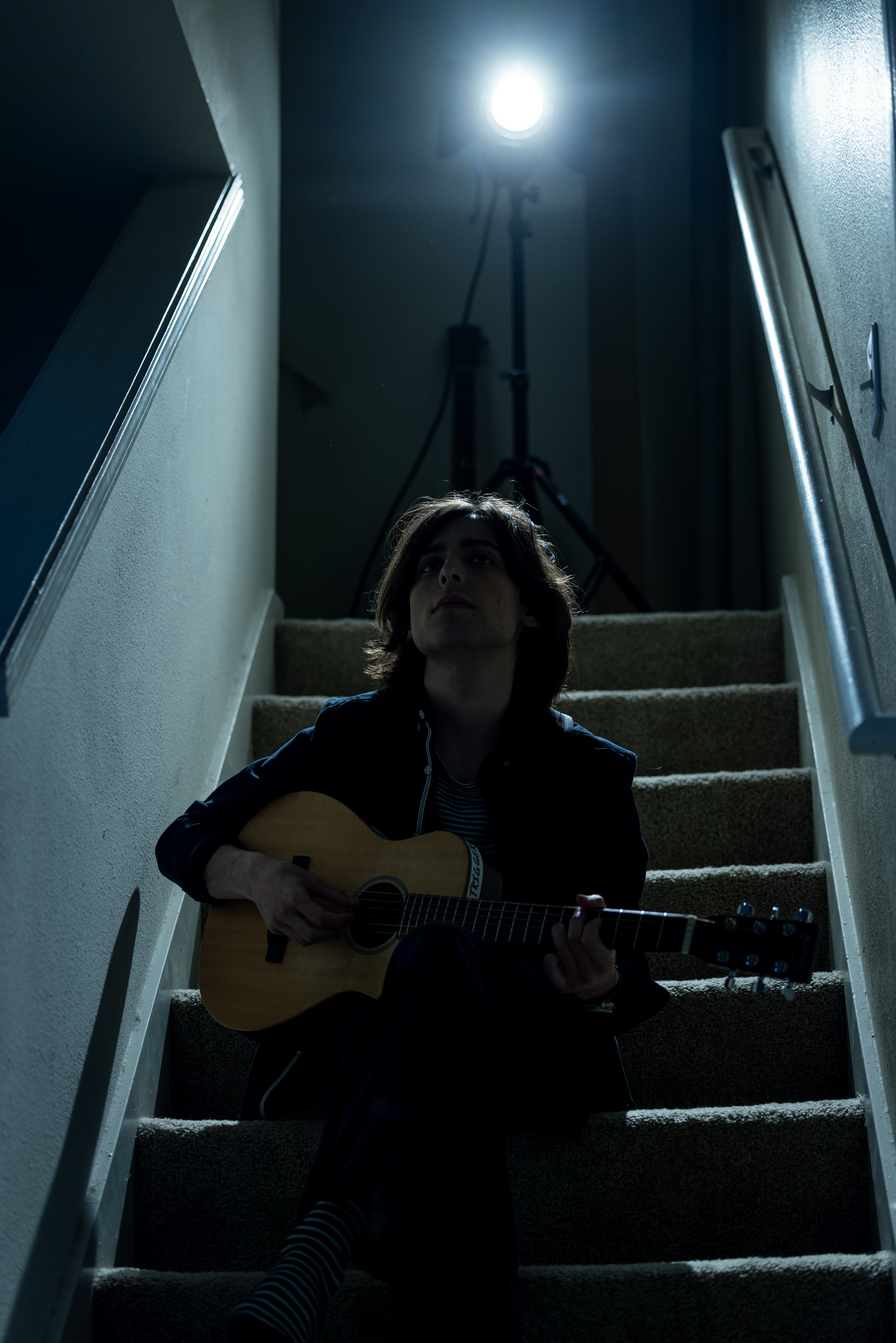
Was it based on any experiences in particular?
No, it really was based off of the chords. That’s just how I write. I don’t know how else to do it. You just have to listen to what the emotion of the song is, and then you find lyrics that you can connect with, and that hopefully don’t alienate other people or alienate your future self.
My favorite lyrics are abstract enough to where I know in that moment what they mean, and two years later they mean something entirely different to me. That’s my goal as a songwriter, but the most important thing above everything else is just serving the song, however you can.
Your lyrics tend to be more conceptual than literal. Why is that?
I just think it’s more interesting to have mystery. The important thing is the way that it feels. I engage more with other people’s music if I don’t think about the artist when I’m listening to it.
The first person I heard do this was Thom Yorke. This is where I clocked in and noticed, like, okay, it can feel incredibly personal, but I don’t know exactly what inspired this lyric or what the exact context is – it’s sort of like a close-up on a scar. You don’t understand the context of how it got there, or even who it is that has the injury. But you’re looking at this example of pain, and you can feel something. So that’s a strange metaphor, but I think art is meant to be interpreted, and my favorite art has a very strong emotional resonance, and is abstract enough to where it grows with me over time.
Are there any particular artists you take inspiration from?
I like a lot of different things, and there’s so many layers that go into a song that nobody will know about. It’s incredibly creative in all these different ways, and you have to pull your entire life experience into that, and so I couldn’t narrow it down to just a few people.
The way that I see originality is something that John Mayer said years ago, and it always has stayed with me. Where it’s this idea of: in failing to sound like your heroes, you learn how to sound like yourself. We’re more than just art in life, we’re walking through it as some combination of our hopes and our abilities, and I think that’s great, and I like that it’s going to change the art that I create in an unexpected way. That’s very interesting, and I think it’s unavoidable. I think that’ll always happen. It’s sort of like collaborating with the universe in a strange way.
Why did you pick the title Expansion?
I don’t know what makes a good album title, but that one felt right, and it means a lot of different things. The very first time that I locked on to that word was the way that I would describe the imagery that I would see when hearing certain chord progressions. When I listen to music, I’m seeing shapes and textures, and up until that point, everything looked a certain way. I started finding these chord progressions, which looked like it was breaking reality. And the only word that I could use to describe it was expansive.
When did you start your musical journey? Was it as a kid or after you started acting?
I’ve always loved music intensely – as far back as I can remember, I was listening to music that would be playing in the car and rocking out. I love music, and I’m always baffled when it’s a casual thing for other people, as opposed to this all-consuming, vivid expression. It’s probably my favorite form of art. So I’ve always felt very strongly about it and been very interested in it.
From a young age, I started to learn different instruments like piano or guitar, and eventually I learned recording and mixing. I’ve been pursuing [music] for a very long time, and I love doing it. It can be therapeutic, it can be performative or conceptual, it can be technical. There’s so much to it that you never get bored. It’s only gratifying and challenging, and yeah, it’s just added such depth and vividness in my life experience that it’s such a part of me. I can’t separate myself from it.
Do you have a favourite music memory?
Goodness, loads – can you be more specific?
I’ll give you two: the first band you saw live, and the first record you properly danced to?
I think the very first artist I ever saw live – and I don’t remember this terribly well – but I think it was Black Eyed Peas opening for U2. I remember Bono had a leather jacket, and there was probably dancing involved.
I’m trying to think of any other dancing records. I mean, I love Dua Lipa’s ‘Future Nostalgia’. I think that’s a brilliant record. It’s wonderfully done on so many levels of performance and production. [My Chemical Romance’s] ‘Planetary Go!’ is an incredible dance record, and that’s an example of a song that uses all these different emotions at once.
Obviously most people know you as Five from The Umbrella Academy. Why the pivot from acting to music?
Acting is a performance art that is one very small part of a giant collaboration between hundreds of people. You’re very much there to help someone else bring their dream to life, and in music, I can deal with the entire process from beginning to end. I can be the writer. I can be the director and the producer. You have an opportunity to be creative in all these different ways, and you can do it any time you like.
So it’s just incredibly fun. I love acting for what it is, and I’m always happy to do it. But you know, you’re there to help someone else make their thing, and if I think I can help, then you know, I’m I’m there, but I definitely will want to make this record. It’s a very quick way to bring emotion out of people. Within two minutes, you feel something. You get a sense of a story. Like you’re filling in the blanks with your own life experience. It can score your life. It’s a very vivid art form. I feel very lucky to be able to do it.
If Five had a favourite album, what would it be and why?
Well, I don’t really know, because he was stranded for 45 years with probably not a great stereo system, right? It’s probably a better question for Gerard about what Five would be listening to. It must be a pretty scattered mix of what records he could find. There’s probably a mix of classical and whatever, or something peaceful to balance out the upset that the character deals with their own psychosis and also with their surroundings. Yeah, I’d like to think it’s something peaceful, maybe a little hopeful.
Interesting. I feel like Five would pretend to be into classical, but really he’s jamming to a pop or country icon like Shania Twain.
[Laughs] I think there’s a mix in there. The way that I see that character is just like holding onto an anchor in this storm, and the storm is in their brain. It’s hard to know exactly. Everyone has such different musical tastes.
Finally, what’s next for you?
I’ve written an entire second album that is dealing more with symbolism and more conceptual. I found a way to keep it abstract and emotionally powerful, but still build out the world in a stronger way.
This first album has a narrative to it; it does have a concept, but it’s a lot looser and more open for interpretation. With the second album, the acoustic demos are a lot more visual. It’s a lot more vivid, and it’s a little closer to ‘Dream’ in terms of the complexity of the chords and the blending of textures. So that’s how I’m gonna fill my time until I find something that I feel I’m able to help with on the acting side. It’s really cool to be able to jump between acting and music as just different art forms.
Thank you so much for your time, Aidan, it’s been a pleasure chatting with you.
Likewise, thank you.
Aidan Gallagher’s new single ‘DREAM’ is out now. His new album is due to be released this fall.
Interview Anna Jane Begley
Photography Aaron Rash