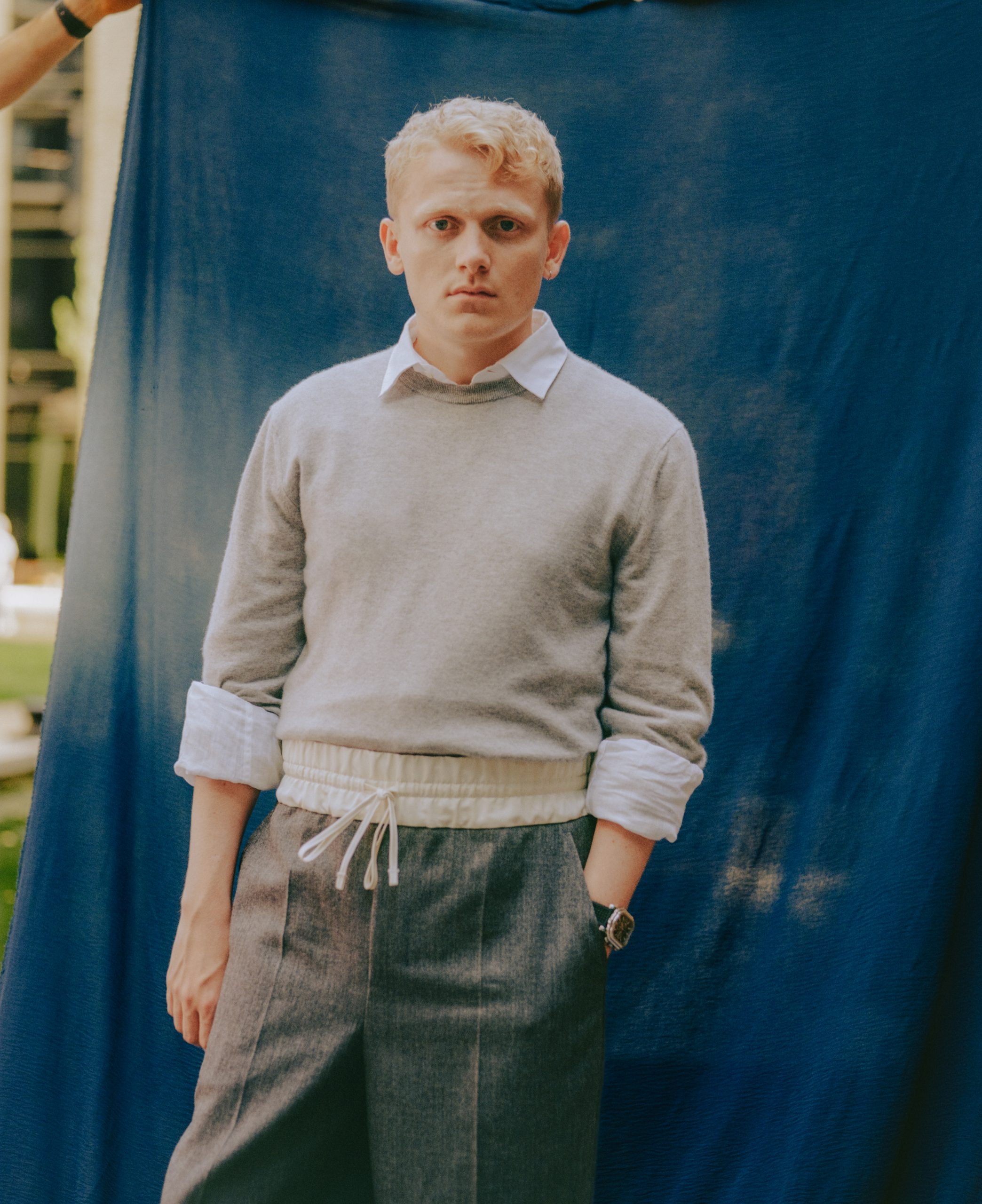
“Cancer is the least interesting thing about them.” It is a striking way to describe the characters at the centre of Sunny Dancer – British writer-director George Jaques’ second feature as a director – but it is also the idea that seems to unlock his entire approach to filmmaking. The film is about young cancer survivors, only it is not interested in making survival their defining characteristic. These are people who flirt, get drunk, fall in love, rebel, make questionable decisions and embarrass themselves. ‘They are figuring themselves out.’
And for Jaques, that distinction matters. Having worked closely with the Teenage Cancer Trust, he encountered young people whose lives contained far more than their diagnoses: first kisses, relationships, friendships, parties and all the ordinary rites of adolescence that illness can so easily interrupt. Sunny Dancer begins from that contradiction. What happens when young people who have already confronted something unimaginably adult are finally given the space to simply be young?
The answer is a film that refuses to choose between joy and grief. Bella Ramsey’s Ivy arrives at camp carrying the weight of what she has survived, but the world she enters gives her something she has been missing; people who don’t need an explanation. For a while, cancer recedes into the background, and they get to reclaim the ordinary chaos of being young. It is an especially fitting story for Jaques, who has spent much of his own young life refusing to wait for permission.
From starting his production company at 16, making his feature debut with Black Dog at 21, and has since worked across writing, directing, producing and acting. Now 26, he finds himself looking back at a decade of filmmaking while making a film about young people being given the chance to look forward.
1883 speaks with George Jaques about building the characters in Sunny Dancer, the visual language of the film, survivor’s guilt, the complicated relationship between compassion and pity, and why finding your tribe might be one of the most radical forms of hope.
First of all, congratulations on Sunny Dancer. How are you feeling now that it’s almost out?
Quite well. I’m a little bit hungover today because we had the premiere of the film last night. It was really fun. We had an immersive version of it, so as you walked into the cinema, it said, “Welcome to Camp Bitches,” with a check-in desk, James Blunt karaoke, tattoo and cocktail stations. Then you watched the movie, and afterwards you went outside and we had bucking broncos. It was just amazing. It was such an electric night, and Scissor Sisters turned up to support the film, which just blew my mind.
Sunny Dancer is so warm and funny, despite everything these characters are dealing with. When did you know you wanted the story to be driven by joy rather than illness?
I wanted to tell a story about the remission journey, about young people who have been really affected by cancer and then get another shot at having a normal life. I do a lot of work with Teenage Cancer Trust and I’m an ambassador for them. But you meet these young people in their units and they’ll tell you about their first snog, or when they snuck their boyfriend or girlfriend in. These are just young people where cancer is the least interesting thing about them. And I thought, I wanted to make a movie about that, and that’s really where it started.
If you’re going to do that, you have to focus on joy. And what I love about these characters in this movie, and the people this was based on, is that they’ve had such an extreme young life already. They’ve been forced to look down the barrel of things that no one should ever have to look down, especially not when you’re that age.
The opening sequence immediately puts us in Ivy’s world, particularly through that rotating camera movement. What conversations did you have with your cinematographer about establishing her perspective that way?
Yeah, most filmmakers’ opening shot would be a big establisher of a house on a street or something epic. And I was like, no, I want to lead you into this movie straight away. So one conscious decision I made was that, from the moment the first logo comes on screen, Olivia Dean kicks in. Because I was like, I don’t want to sit through company logos in silence, so instead I had the music the whole way through.
The beginning of a movie is always tough because the audience is settling in, so you have to really lean in. And what I wanted to do with that big corkscrew shot was basically have a shot where you’re like, where are we? But then you’re in a really familiar setting of a home and a child’s bedroom where she’s clearly outgrown that. There are posters, there’s things, there’s Olivia Dean, then the dad comes in, played by James Norton, and I wanted to make it feel really familiar, but through a fresh lens.
Ivy’s frustration often feels less like it’s about cancer and more like teenage angst—the feeling that no one really understands you. Was that something you consciously wanted to capture?
We’ve all felt that before. And that was a big thing for me. I wanted this film to be accessible, not just for the young cancer community, but also for anyone who has felt like they’ve walked into a room and not fitted in, or been scared to go on a school trip, because they’re queer, because they’re different, or because they think they’re different.
And then the cancer side, for Ivy, is a really niche thing. I haven’t had cancer. My mum had breast cancer for years, and it’s, I imagine, one of the loneliest, hardest things. And that’s why survivors’ guilt is such a big part of this movie. There’s a line in it, which is, “We were all part of a club that no one wants to be a part of.” And that’s really something that, when I was working with Teenage Cancer Trust and working with the young people, I really noticed. It was this survivor’s guilt of, “I survived and my friend on the ward didn’t, and that really sucks and isn’t fair.”
But I got to really sit alongside a lot of young people and my mum and have quite a unique lens into this world. But I still wasn’t in that club, so I will never understand it fully. But I guess that’s why I cast young survivors in the movie and worked with young people who had had cancer.
Ivy is awkward, stubborn, funny and messy – she’s allowed to simply be a teenager. Was it important to protect that ordinary adolescence despite her extraordinary circumstances?
No, I think I’m fascinated by writing characters who are normal people in quite extraordinary situations. But just because they’re in an extraordinary situation doesn’t mean that any of that other ordinary stuff disappears. What I love about Ivy and all those young characters is that they’re still horny, angry, wild, still want to go out and party, try drugs, drink and sneak out. But they’ve also gone through this whole experience of cancer, so they have so much more going on too.
Bella gives Ivy such a layered performance. What did the two of you discover about her during rehearsals or on set that wasn’t necessarily on the page?
Bella and I had never worked together before this, and they’re one of my closest collaborators now. What I was excited about was building this character and film with them. Bella works in a way where they want to know everything. They want the characters to feel like real people. We would spend hours going through what music they listen to, what A-Levels Ivy did, what GCSEs she got, what sports she used to like doing.
I gave that to the costume and production design departments, and we started to sort of put that softly into the film. So, in that room at the beginning, there’s stuff from Bella’s version of that character. Like the bag they packed for camp, there are little badges sewn onto towels and onto the bag itself.
Ivy’s parents are incredibly loving, but you can also feel how powerless they are. How did you approach those family dynamics without tipping into melodrama?
Family dynamics are so fun to write. What’s so cool about any family situation is that there are highs and lows. There are bits where you’re arguing, but then there are bits where you’re giggling a minute later. I think it was about letting those two things be true at once. For Ivy’s parents, Karen and Bob, when Ivy’s grumpy, they have to allow space for that because she’s gone through this awful thing. They have to be extra kind.
The film draws an interesting line between compassion and patronising someone. Why was that tension important for you to explore?
Yeah, I think there’s a big mistake at the moment where people pity and patronise young people who have gone through cancer. You can’t call kids brave. You don’t want to use these words. I was very aware of that, and I wanted that to be in the film.
But I think what people get wrong is that just because you’re not patronising or pitying them doesn’t mean they don’t want love, and that’s a really important thing. They still need support, and that can be done without being patronising too. It can look like, “Hey, do you want to come to this party tonight?” Even if they know they can’t go, it still means they’re invited. And I wanted to get that into the film.
The camp becomes a space where these young people can flirt, rebel, make mistakes and simply be teenagers. What interested you about creating that space?
In terms of creating a place where they can just be, what I find so exciting is that now that I’ve finished the film, I know camps like this exist in Australia for young survivors and there are some in Ireland, but I didn’t know about any in the UK. And then I was reached out to by a real-life version of this camp called Flynn’s Barn, who we’ve also done a partnership with on the film. These young people get to go to the Lake District and be part of a community that understands them in a really intimate way.
There’s that line later in the film where Bella’s character Ivy goes, “Here I’m just Ivy, not Ivy with cancer,” and I think that’s so wicked. These places are so important for young survivors, but the problem is they’re so underfunded because, of course, most of the funding goes into the treatment, and that’s really important too. What these camps do is bring in sex education classes because they’ve missed out on that at school, as well as hair workshops about how to give nutrients back to your hair and all these things. So I’m so proud that we got to shine a little light on these places that exist and need support.
The film moves between comedy and heartbreak so naturally that neither ever feels forced. How did you find that balance, both on the page and later in the edit?
I think for me it was about both things being really true to life. When you’re going through something like cancer as a family, there are such funny moments that shouldn’t be but are. I never wanted to not be sincere or show respect to the cancer side of it.
We wanted to dance between the cancer, the heavier stuff and the comedy, and flip between them, maybe even in the same scene. And then in the edit, it was about going, okay, when does that whiplash moment feel like too much? Because what you don’t want to do when you’re doing that is undercut the emotion and become too sentimental, cringey or melodramatic, as you said. So it’s a really fine balance. I was also really lucky to have Caitlin, my editor, with me because she had obviously been to these camps and had cancer.
Your cast comes from very different backgrounds and levels of experience. How did you create an environment where they could feel like one group?
That young cast is everything because you’ve got Jasmine Elcock, who plays Maisie, and it’s her first ever film. And then Bella Ramsey, who’s been doing it for 10 years, so you’ve got people at very different stages of their careers, but ultimately, in this movie, they’re one group. We rehearsed, lived and shared cars to work together. They basically got to go to summer camp for real and make this feel like the most fun job in the world because they all trusted me and trusted each other so explicitly.
And then, with the older roles, you know, James Norton, Jess Gunning, Shalom Brune-Franklin and Neil Patrick Harris, it was about making them part of that young group and finding performers who would just celebrate those young actors and not try to steal the limelight. It was very much always Ivy’s story and this group of young people’s story.
Without spoiling the ending, the film eventually brings us back to the realities beneath all that joy and freedom. Why was it important to bring that weight back into Ivy’s story?
When you go into a cancer movie, you expect someone’s going to die. And there’s a moment in this movie where you go, wow, all these kids have had the time of their lives, you know, and that’s really great. Cancer takes such a backseat and they’re joyous, having fun and going through all these things.
But then I also wanted to really show the impact of cancer, but also the long-term impact of cancer, that actually people do pass away later on because chemotherapy can make the heart weaker, or because of the side effects of that stuff.
I think I wanted people to leave dancing and feel so lucky to be here when they left the cinema, having just gone on a journey with this character. But it felt really important to me that the audience got to witness grief and go through a journey with Ivy because that is part of that club. What I didn’t want to do was just put something in there for shock factor. I was very aware that I didn’t want it to feel like a plot point or a gimmick, but rather a journey.
You’re only 26 and you’ve already worked as a writer, director, producer and actor. How have those different roles shaped the filmmaker you’ve become?
When I started my company, I was 16, and it turns 10 next year, and I feel so greatly proud of everything we’ve achieved over this last decade. I looked around at the party for the Sunny Dancer stuff this week and I was like, Kylie Minogue came to a fucking screening and Scissor Sisters were there, and all the coolest young actors in the UK were in the room. I was like, wow, if only little George, when he was 16, knew this was where we were going to be.
When I started writing, producing, directing and acting, that was with theatre. I made my first theatre play then and put it on in the Band Railway Arch, and it was really hard. I think because I do all four of those jobs, I feel it so deeply because I know how hard it is as a director to get a film made because of the producing, as a writer how hard it is to get your writing set up, and as an actor how hard it is.
The biggest thing that’s shaped me has been the lead roles I’ve done in The Third Day: Autmn, The Serpent Queen, A Time Called Malice, One Punch – It was the people I met along the way and getting to be on set, working with people like Jude Law and watching Samantha Morton act. Being around those people, seeing how they work and learning from them really shaped the director I am today, and I’m so grateful to have had those opportunities.
Black Dog introduced audiences to your voice as a filmmaker, while Sunny Dancer feels like an evolution of it. Did making your second feature change your confidence, or simply give you new things to worry about?
A little bit of both. When we got the finance and got it set up, I was like, wow, I’m a real director now; I get to do it again. I got nominated for awards and won awards for it, and that was amazing. I was a kid – 21 when I directed it – and I’m so proud of it.
But then, when you do work like that, people have more expectations, and then it’s scary because all of a sudden you’re like, how do I grow from Black Dog? And the step up from that to Sunny Dancer was really big. Not just the actors, but the scale, the size, the release, everything. Opening at Berlin Film Festival to casting Neil Patrick Harris, it was all huge.
But I think where I’ve really got to in a comfortable place in my career is realising that I don’t have to jump so high every time. Actually, I might pivot and go back to a small film, or I might want to go and do something massive. And, as you’ve said, I feel so lucky that I’ve just turned 26 and that I hopefully will be making movies into my 80s. My career will change, what’s important to me will change, and the stories I tell will change. And I think that’s really exciting.
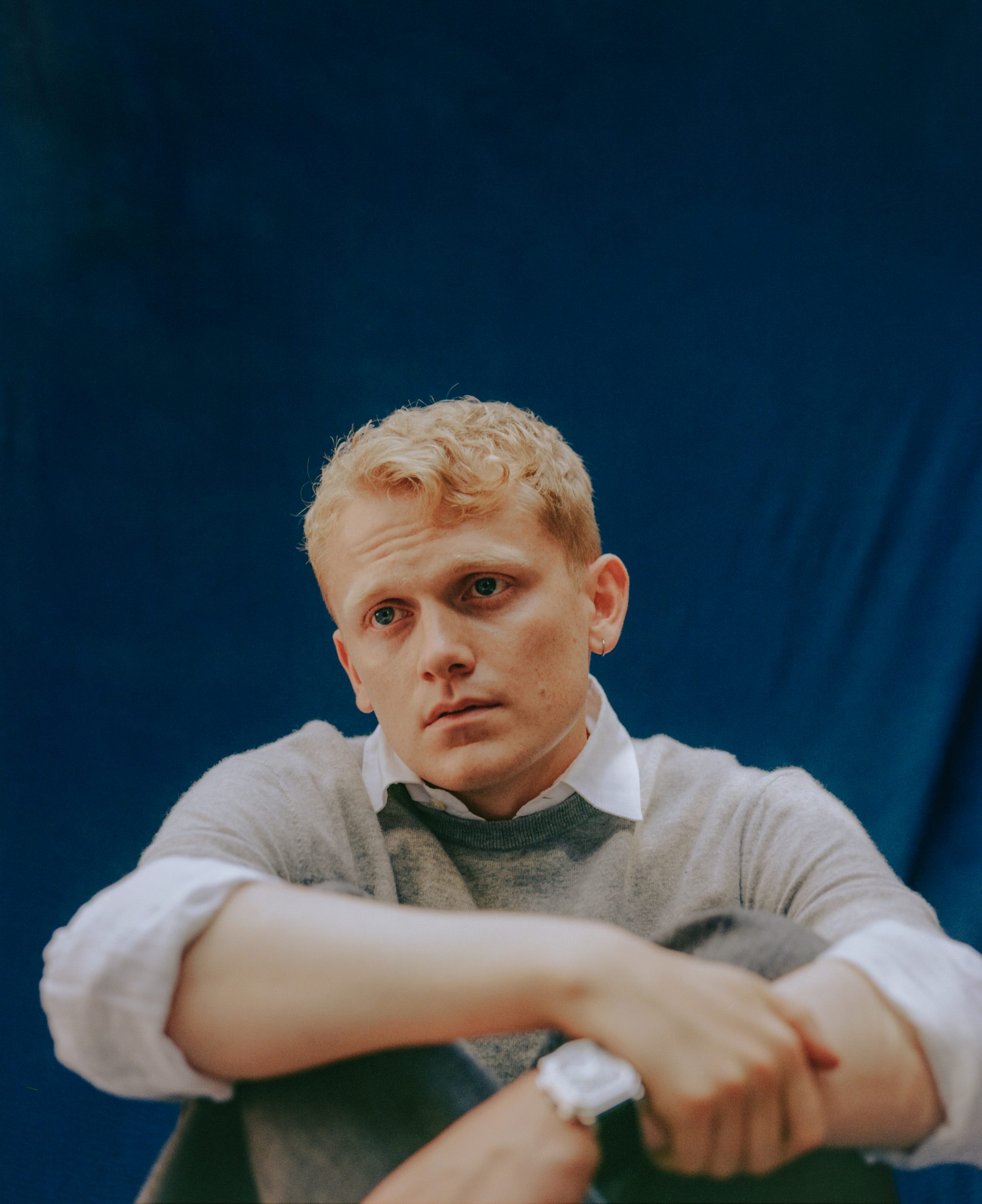
Hope runs quietly through Sunny Dancer, but it never feels naïve or forced. Has making this film changed your own understanding of what hope looks like?
TThis film’s changed my life in every way. Not just career-wise, it’s changed me as a person, really intrinsically. I feel so hopeful for the future. There was a time in my life that I didn’t enjoy, when I was at school, and hope was a big thing that I was trying to discover and find. What I found so inspiring throughout this process is not just the actors and collaborators on screen, but the young people who have gone through this, who I’ve got to meet along the way. They remind me of how fucking lucky I am to have my work, my life, my everything. And I feel so excited about what’s next.
I’m excited that I got to cast two young survivors in the film who now have agents and are smashing it. I mean, what’s been really cool about Sunny Dancer is that we’ve left a bit of a legacy. I think, for me, the hope and joy and pride is that I don’t know if I’ll ever do something in my career where I’m so proud of the work we did with Teenage Cancer Trust.
And I mean this with my heart: I’m proud that I got to tell the story of young survivors in a really authentic way that they’re proud of. I will always be proud of that. And I think, for a lot of people watching the movie at the moment, they leave feeling how lucky we are to have our health, but they also leave relating to it because we’ve all felt othered at some point in our lives. And I think this movie, like the great 90s ensemble movies such as The Breakfast Club and The Goonies, reminds you that you don’t need to change, that you will find your tribe. They’re out there, however weird, cool or everything in between they are.
I really hope audiences discover this and go and watch it in the cinema together, share laughs, share tears and just have a wild time.
Sunny Dancer is out now.
Interview Stanley Kilonzo
Photography Garry Jones
Styling Andrew Burling
Grooming Daisy Holubowics