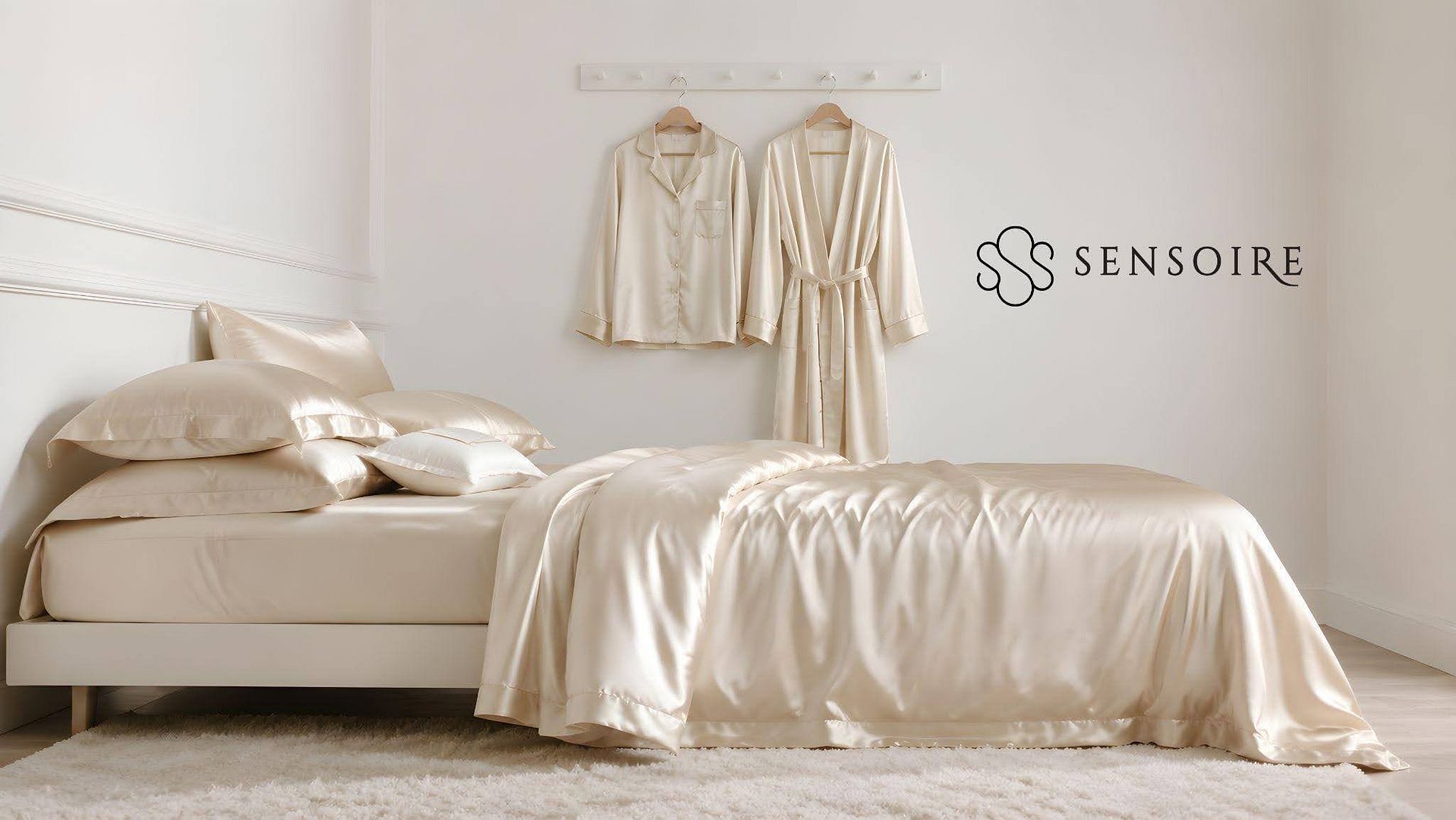
Ever noticed how the same sheets feel cool and crisp when you first slide in, then oddly warm by sunrise? That’s not your imagination playing tricks on you. It comes down to a mix of body temperature shifts, humidity changes, and the way your mind processes comfort at different points in the sleep cycle. Understanding what’s actually happening beneath the covers can help you choose bedding that stays comfortable no matter the hour, and it’s why more people are turning to mulberry silk bedding for a consistently better night’s sleep.
Why Temperature Regulation Changes Your Bedding Feel
Your body isn’t the same temperature at 11 PM as it is at 7 AM, and that shift plays a bigger role in sleep comfort than most people realize. Roughly two hours before you fall asleep, your core temperature begins to drop under circadian control, a process your body uses to signal that it’s time to rest. By the time you are deep in sleep, your core temperature can sit 1 to 2 degrees Fahrenheit lower than it was during the day.
This is where your bedding material matters. Mulberry silk bedding responds to these fluctuations rather than fighting them. Silk has a lower thermal conductivity than cotton, which means it transfers heat more slowly and creates a more stable microclimate against your skin. As your body cools into the night, silk helps retain just enough warmth to keep you comfortable. As morning approaches and your temperature starts climbing again, that same fiber structure allows heat to dissipate instead of trapping it against your skin.
The Impact of Humidity and Moisture on Bedding Comfort
Temperature isn’t the only variable working against your sheets overnight. Moisture levels around your body change too, and how your bedding handles that moisture determines whether you wake up feeling fresh or clammy.
Cotton is highly absorbent, capable of holding up to 27 times its weight in water, but that’s precisely the problem. Once cotton fibers become saturated with perspiration, they swell, cling to the skin, and lose their breathability. Silk behaves differently. It can absorb up to 30% of its own weight in moisture without feeling wet to the touch, wicking perspiration away through capillary action so it evaporates from the fabric’s surface rather than sitting against your body.
This matters most in the hours just before dawn, when humidity from the body tends to peak after a full night under the covers. Sheets that trap moisture start to feel heavier and stickier by morning, while those built from moisture-wicking natural fibers stay closer to how they felt when you first climbed into bed. It is also why silk keeps surfacing in conversations about hot sleeping. Sensoire’s own guidance on silk bedding for hot sleepers and night sweats makes the same point: waking drier matters as much as falling asleep cool.
The Psychology of Sleep and Comfort Perception
Physical properties only tell part of the story. Your perception of comfort is also shaped by how alert or drowsy you are. Research on thermal comfort suggests that mood state and mental alertness directly influence how the body interprets sensory input, including temperature and touch.
At 11 PM, when you are winding down, your senses are more attuned to subtle textures and temperature shifts, which is why a smooth, cool fabric can feel especially soothing as you settle in. By 7 AM, your nervous system is shifting back toward alertness, and the same sheets can feel entirely different simply because your body is processing sensation differently. This is part of why high-quality, consistent materials matter. When the fabric itself does not change, your experience of it becomes less dependent on that psychological shift.
How Quality Materials Make a Difference
Not all bedding responds to these physiological changes equally, which is why material choice has such an outsized effect on sleep comfort. Standard cotton sheets tend to feel their best right after washing, then gradually lose that crispness as the night progresses and moisture builds up. Lower thread counts can compound the issue, offering less structure to maintain airflow once the fabric starts absorbing sweat.
Mulberry silk bedding takes a different approach. Because of its smooth, triangular fiber structure, silk maintains a more open weave that supports consistent air exchange from the moment you get into bed until the moment you wake up. Grade 6A mulberry silk, in particular, is prized for combining this natural performance with a soft, substantial feel that holds up night after night, rather than becoming misshapen or limp after a few hours of use. Sensoire uses that same grade across its range, from 22 momme Grade 6A pillowcases to silk-filled duvets, so the feel of the bed stays consistent from one piece to the next.
Caring for Your Bedding to Maintain Comfort
Even the best materials need proper care to keep performing the way they should. Silk is a delicate protein fiber, and how you wash and store it directly affects how well it regulates temperature and moisture over time.
Always wash silk in cold water with a gentle detergent, and avoid bleach or harsh chemicals that can break down the fiber’s protein structure. Skip the high-heat dryer setting entirely. Air drying or a low-heat delicate cycle helps preserve the fine filaments responsible for silk’s breathability. When your bedding is not in use, store it somewhere cool and dry, away from direct sunlight, to prevent the fabric from becoming brittle or discolored over time.
Following these steps isn’t just about extending the lifespan of your sheets. It also protects the very properties- thermal regulation, moisture-wicking, and consistent softness- that make silk feel just as good at 7 AM as it did at 11 PM. Sensoire sets out the full routine in its guide to washing silk bedding and accessories.
Sleep Comfort Starts With the Right Materials
The way your bedding feels throughout the night isn’t random. It’s the product of shifting body temperature, changing humidity, and how your mind perceives comfort at different stages of sleep. Choosing materials designed to work with these natural changes, rather than against them, makes a measurable difference in how rested you feel each morning.
If you are ready to experience bedding that stays consistent from lights-out to sunrise, explore Sensoire‘s collection of Grade 6A mulberry silk bedding and find the pieces best suited to a quieter, more comfortable night’s sleep.