
Graphic design is going through a major shift in 2026. We’ve moved past the initial panic of AI replacing designers, altogether. Now, it’s all about bringing design back to something that feels real; design that is human-centric.
The industry knows that graphic design is turning away from flawless and slick design to imperfect design; something that feels a bit more human. According to a recent data report from Clutch, roughly 88% of businesses use AI design tools, but only 18% say it has reduced their need for professional designers.
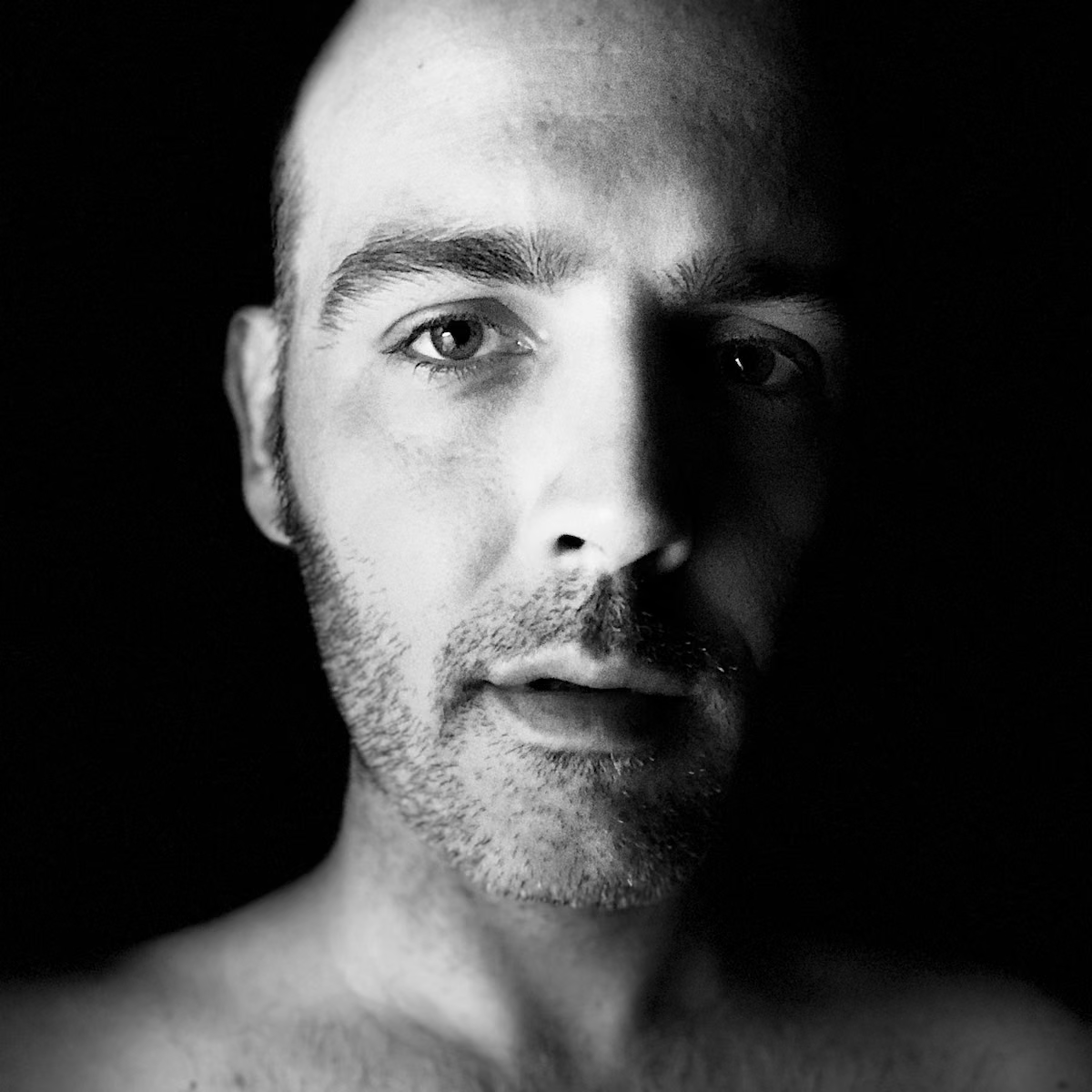
With this shift, designers wonder what is in store for them. For New York-based graphic designer, artist, and art director Macarena Iara, visual communication remains an unbreakably human pursuit.
Originally from Buenos Aires, Macarena has built an international career that spans continents and media formats, developing a hybrid profile that seamlessly fuses strict brand strategy with cinematic visual narratives. Today, she is a staff graphic designer with The New York Times, shaping internal culture and visual systems, and is familiar with creating high-impact, human-centric design.
Macarena, an alumna of the prestigious UBA—where she also served as a faculty member—has studied Film Directing at the Universidad del Cine de Buenos Aires (FUC). Her cross-border expertise includes designing in Prague and leading creative teams in Mexico City for highly respected regional media outlets like Gatopardo. When asked about her approach to navigating human-centric design, she brings a fresh perspective to corporate strategy. In other words, Macarena resists the corporate dogma that threatens to reduce human imagination to mere efficiency.
But how does one even define human-centered design? “There is a prevailing definition when it comes to Human-Centered Design—the kind you’re likely to find in an MBA program on Entrepreneurship & Innovation,” she explains. “Generally, this definition comes bundled with promises of success and efficiency: reducing costs, saving time, and increasing your final product’s quality. To be honest, it’s one of my least favorite definitions. I can clearly see the risk behind this dogma; as Ruha Benjamin points out, ‘it diminishes broader forms of human activity, erasing the genealogies from which they emerged in the first place, effacing tradition.’”
To Macarena, she believes design is inherently human-centered because the capacity to prefigure—to imagine a structure before it is built—is uniquely human. “And this imagination doesn’t happen in isolation; it unfolds in relationship to others,” she notes.
To be human-centric when creating high-impact visual systems, the approach is to be deeply involved in all stages, including the planning phase.
“I have learned to be more involved in the planning phase—the stage where the team charts the overall strategy,” said Macarena. “We know that we, as designers, are traditionally asked how something should be built rather than if it should be done at all. At The New York Times, as part of the team that Jessi Bratengeier, a creative director, spearheads, I am actively learning to bring a design perspective into that foundational conversation.”
To Macarena, art and design are interchangeable. “There has always been a dialogue between design and art; they are two disciplines that constantly feed into one another,” even though one is traditionally functional (design) and the other is traditionally aesthetic (art).
Since the early adoption of AI, artists have been resisting it. Designers too. Macarena cites writer Scott Waldyn, who says that “art is thinking, and thinking—in a world where so many social media platforms, news channels, AI tools, and apps fight to do that for us—is rebellion,” she notes, paraphrasing him.
It isn’t just artists, though. “I think the best way to rebel as a designer is precisely that: to refuse to underestimate our audience, in the exact same way that art refuses to do so,” she said.
A large part of the design community is actively questioning the use of artificial intelligence and the images these tools generate”. There are deep ethical concerns surrounding AI, and organizations like AIGA (American Institute of Graphic Arts) released official statements regarding how AI is reshaping the design profession. “This past March, I was in Chicago for the Under Construction: In-House / In-Focus conference, and the vast majority of attendees resisted the idea of a visual landscape developed entirely by AI,” said Macarena. “As Tomás Maldonado once noted when referring to the designer as ‘the technical intellectual,’ the designer, ‘while practicing the stoic and realist art of design compromise, is never a neutral manager, indifferent to the thing, the theme, the substance.’”
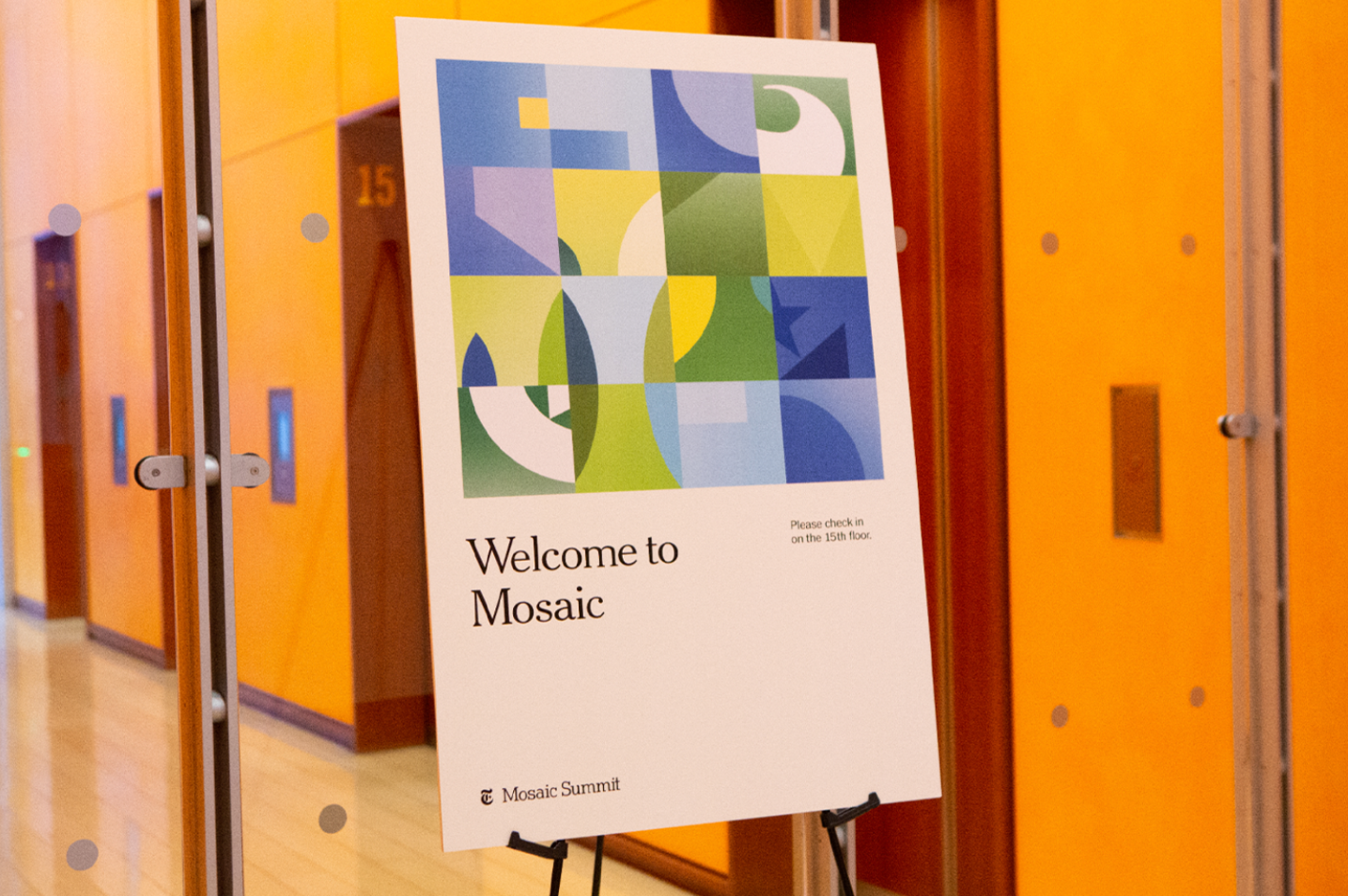
One human-centric design project that Macarena worked on was a comprehensive brand identity for the Mosaic Summit back in 2024. This ties into The New York Times has fostered internal Employee Resource Groups (ERGs) that represent various communities within the company—such as the Latino Network, Asian Network, and Black at NYT, among others. The Mosaic Summit is a two-day event designed for the leaders of these communities to connect and address their common challenges; therefore, the identity had to be a visual representation of bringing members from our employee communities together in a shared space to collaborate and redefine themselves. “The question was: How can we create something newly inspired with the logos of our employee communities?” she asks. “More importantly, how could we do it with the exact same dedication and commitment that each of these leaders has for the groups they guide?”
Driven by this vision, Macarena, designed a dynamic and distinct visual mosaic by breaking apart the ERG logos and the iconic NYT “T” mark, reorganizing them into a cohesive whole. “This represented the notion of breaking down silos and reimagining how we think about a collective community identity, ensuring it didn’t “hero” any single community over another,” she said. “It was an identity developed from a deep place of meaning—influencing everything from the forms to the colors. I wanted to bring a sense of texture and tactility to the system, so the final mosaics were actually built through a process of being hand-scanned.”
Her design philosophy lies in storytelling and narrative empathy, much more than just plugging in digital tools. “For me, designing is narrating,” said Macarena. “Because of this, when presenting to stakeholders, I find it very hard to confine myself to a single slide of bullet points. I am drawn to everything that happens between the problem and the solution—the messy middle that is almost impossible to describe unless it’s through a narrative.”
She prefers to find solutions by digging deep into human stories, rather than through prompts fed into a machine. “Who are we speaking to? From what background, with what needs and lacks?” Macarena asks herself throughout the design process. “All of the answers to these questions outline narratives. “In the sheer depth of a story, there is something uncategorizable because it is complex and human; you just can’t put a label on it,” she said. “This logic escapes the machine. Fortunately.”
Digital tools are wonderful for summarizing, which is a soft skill you must work on if you are a subject operating within this market, where there is no time to elaborate on stories. However, it is impossible to empathize with a slide of bullet points, and that goes without saying.
When it comes to the core creative work, Macarena doesn’t use AI that much. “I mostly rely on it for stakeholder communication and for brainstorming ways to structure presentations; I use it as an interlocutor for ideas, which amounts to talking out loud and listening to yourself—something I used to do a few years ago when studying for an exam, but if I did it in the office, it would be strange,” she said. “Sometimes, I use it to create quick mockups that don’t require much preparation.”
Her advice to young graphic design graduates is to keep it real, despite the climate of AI. “Design strikes me as a powerful discipline, especially in today’s world,” said Macarena. “As a graphic designer, knowing how to create images gives one a big advantage over other disciplines. My advice to young graphic design graduates would be not to forget your power, but also to embrace the responsibility that comes with it. Build community, however you can.”
Her recommended reading list includes ‘Essays on Design and Disillusion’ by Silvio Lorusso, and Alberto Romero’s Substack ‘The Algorithmic Bridge.’ “There are people who are problematizing the use of AI, and that reminds us that we are not alone, which is the most important thing,” she said.
Visit Macarena Iara’s website at macarenaiara.com.
Words Nadja Sayej
Images courtesy of Macarena Iara