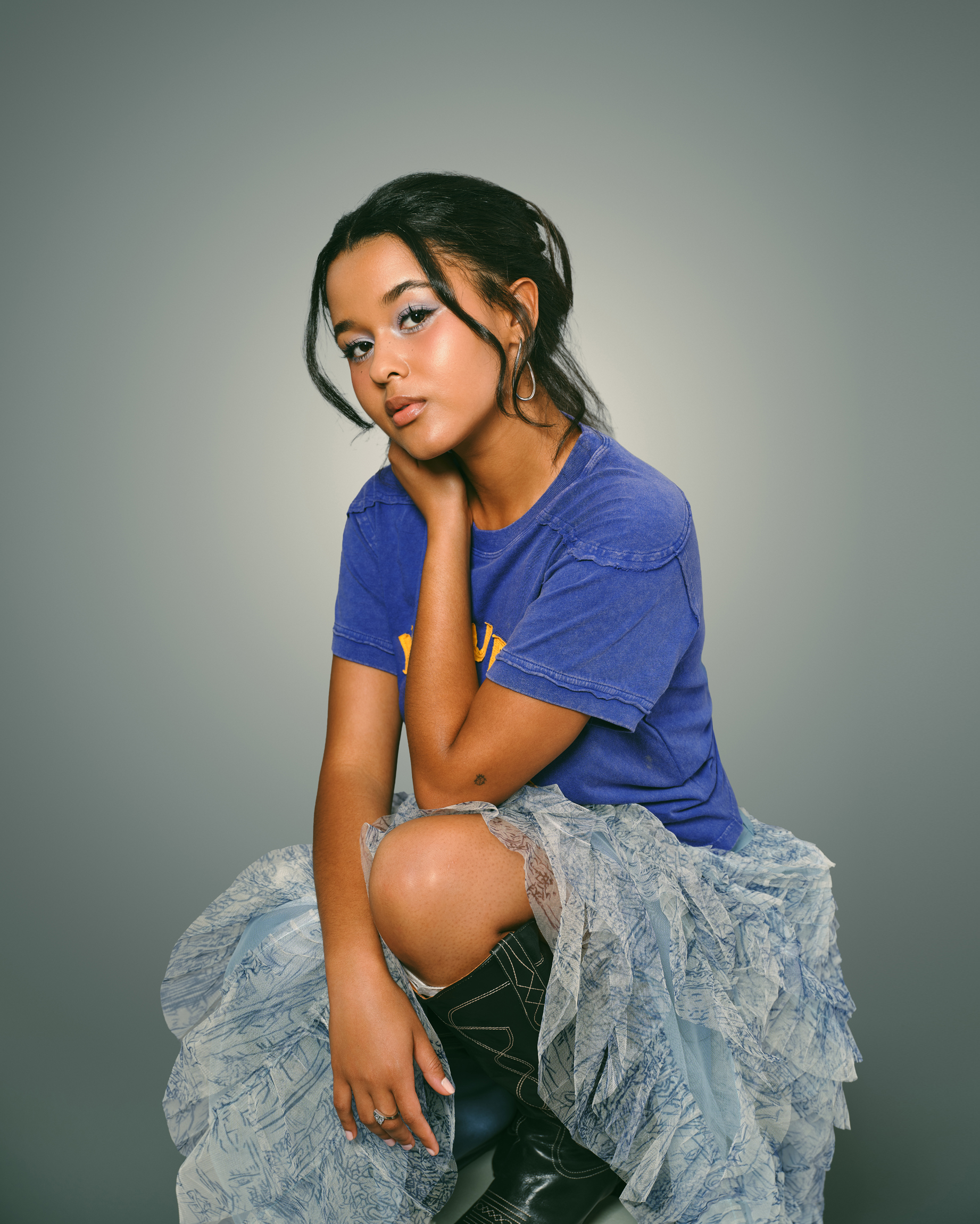
The name Jordan Alexa Davis might not be instantly recognisable to most just yet, but that is bound to change. With The End of Oak Street, she has stepped into her first-ever blockbuster, sharing a screen with Anne Hathaway and Ewan McGregor, under director David Robert Mitchell, known for his gift of making the ordinary feel entirely unrecognisable.
It’s a striking way to make a film debut, but Jordan has been building toward this for years, moving between a limited series alongside Chris Evans and Michelle Dockery and voice work, long before this studio thriller ever came calling.
Talk to her now, though, and she seems entirely at ease with it. She’s just as candid discussing her character, a soft-spoken girl who turns out to be far tougher than she first appears, as she is discussing the two years she spent unable to tell anyone about the role at all. Film school comes next, less an exit from acting than a way of understanding it from the other side, though it’s hard to imagine she’ll be off-screen for long.
1883 Magazine sat down with Jordan Alexa Davis to talk about her whirlwind path to The End of Oak Street, coming up in the industry as a teenager, and why she’s drawn to characters who are a little bit broken.
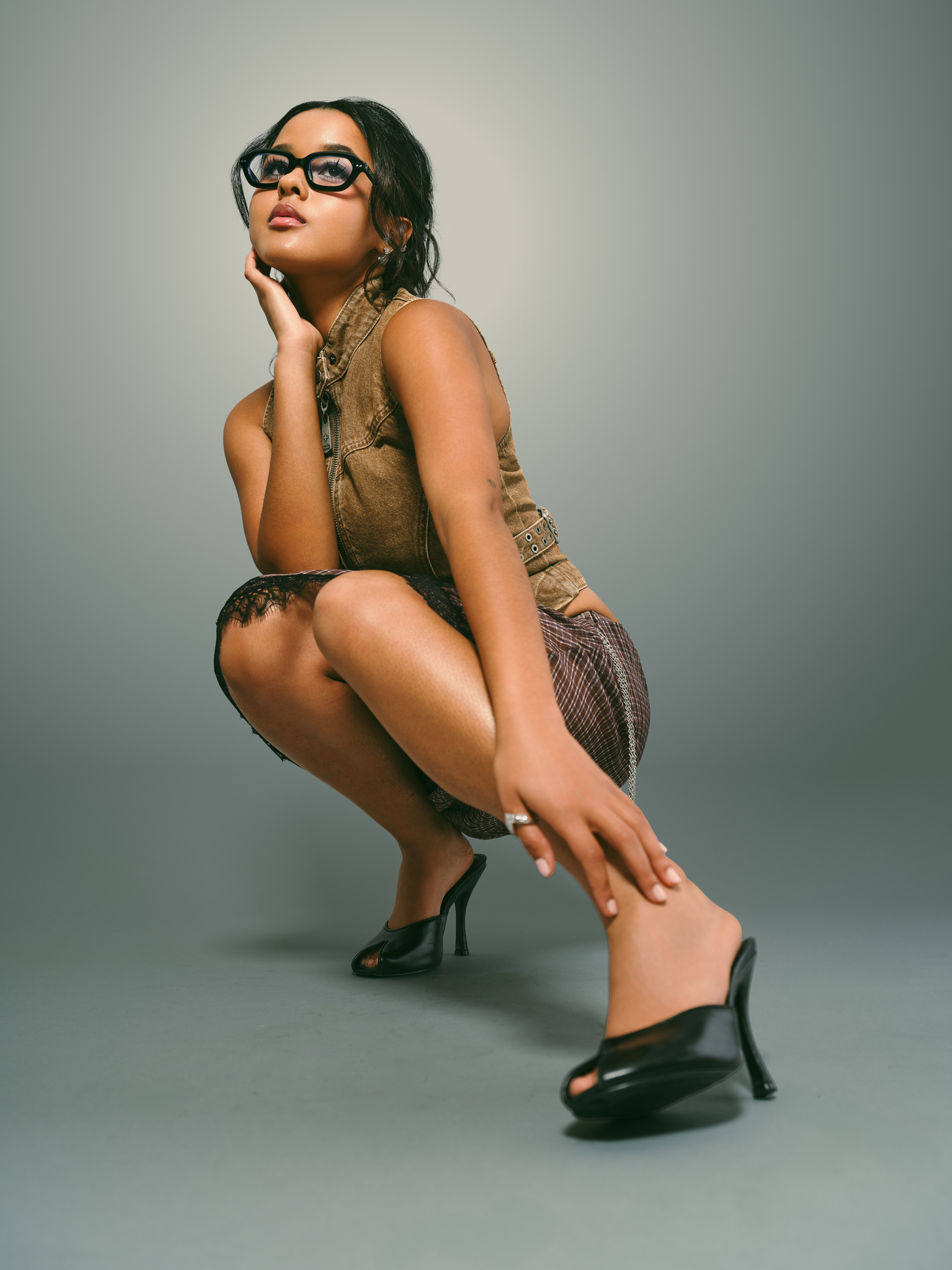
Jordan, The End of Oak Street has been out in cinemas for a couple of weeks now. How are you doing, now that it’s actually out in the world rather than something you were quietly carrying around?
It’s really felt like this long process in the making, having to hold on to all the information about a project that I care so much about and that I think is so amazing. It’s so rewarding, finally being able to see people’s reactions. I went to the theatre to see it with my family, and just sitting in a theatre with people and watching it with them for the first time was so incredible and amazing, yeah.
You’re now coming back to the project having spent a lot of time away from it. How does it feel for you to revisit it now and live in it again?
I don’t love watching myself, but with this I really didn’t have any problem, just because it’s been two years since I’ve worked on it and I’ve grown so much since. I almost feel like a different person now. So it was a treat getting to revisit it, because I’m able to see it from a much different perspective, since I am no longer as wrapped up in it.
I’d imagine even more time passed between being cast and shooting. How was that entire process, from your original audition to eventually getting to shoot it?
The whole process was surprisingly quick. I got the self-tape in my inbox like any other self-tape, I just submitted it without really thinking much of it, and then a week later I heard back for a callback, and then a week or two after that callback I had booked it.
How much did you know about the project at that point?
I got the script after I had booked the movie. The original audition wasn’t even a scene from the film, it was something else, but the callback was a little snippet from the actual movie, so I got to learn more about my character and the world they’re in.
I knew it involved something otherworldly but I didn’t know what it was, and then I booked it, and then got the script and I was like, “You’re joking, this is insane.” So that was really cool, yeah.
Before I ask anything else, could you give me a quick pitch of the movie for anyone who hasn’t seen it yet?
It’s definitely a big adventure, be prepared to be taken on a crazy, wild ride. Along with the action-thriller elements, there’s still this foundation of family, and it raises the question of what you would do for the people that you love, and I think that’s a really beautiful, underlying theme in the film.
David Robert Mitchell has such a reputation for tipping ordinary life into something quite unrecognisable, while there’s still, as you said, a thread of familiarity running through it. Was that something you were keen on exploring?
Yes, he has a gift for making things feel very personal and nostalgic but also new. The first time reading the script I was like, “This is so interesting, it feels familiar but it feels like something I’ve never seen before,” and that’s definitely something that drew me to it.
Can you tell me a little bit about your character, Jeannette? I get the sense there’s a bigger story there we’ve yet to see.
Of course, Jeannette is a really soft-spoken character, you don’t really hear her speak much, but her presence is there. She’s very brave and very strong, which is something audiences won’t necessarily expect when they first meet her. She’s kind of the girl-next-door, classic trope, but she turns out to be so much more than that, she’s a warrior.
Jeannette is introduced already carrying so much that’s happened off-camera. Without giving anything away, how did you go about building a person whose history the audience never fully sees?
That was a challenge for sure. I saw a lot of myself in her and I related to being more of a quiet person in the group, so it wasn’t really that hard for me to tap into it, but more difficult when I was playing her, because I was having to build her internal dialogue and internal world and all of that.
Since this was your first film, I imagine the scale of it revealed itself slowly. When did you find out who you’d be sharing the screen with, and what was that like?
I grew up watching Anne and Ewan on screen, so that was so thrilling. And this was my first film ever, so that was a kind of crazy experience, just jumping into this whole thing, especially with a movie on such a large scale, production-wise. It was very intimidating, but in the best way, I feel like I learned so much because of how insane an experience it was to have for my first movie.
This is a big studio thriller with a huge amount riding on it. Does a project of this scale change the way you prepare, versus something smaller and quieter?
Definitely. I haven’t really been on many indie film sets, and that’s something I’m curious to step into, because I feel like with a larger production, sometimes you do have to sacrifice your creative integrity to make these profitable movies, but that’s what was so amazing about working with David, because he’s still so creative, he still has such a strong vision and is very artistic, making it for the sake of the art and you can really tell that.
You’d previously worked with Chris Evans and Michelle Dockery on Defending Jacob. Do you find certain sets or collaborators teach you things that stay with you long after the project ends?
That’s a really good question. I feel like every set you step onto is going to be different. I’m learning that, and it’s really interesting, it’s different not only because the sets themselves are different, but you’re also a different person when you step onto a set at a certain time in your life. So it’s kind of a beautiful thing, because everyone’s at a different place, learning different things based on where they’re at, and you take the lessons that you need, based on what you need at the time, in your life.
I was 15 when I shot Defending Jacob, so I was just learning so many different things in different ways at that age, and Chris and Michelle were so lovely to work with, I learned so much from them. But then stepping onto the Oak Street set, it was my first time on a set as an adult, by myself, without needing to do schooling or have my parent there, and moving across the country to film it. So it was a bunch of learning, creatively, on set with the craft, but also just personally, I feel like you learn so much on every set you go to, for different reasons.
How did that feel? You mentioned previously having parents on set and probably not being able to work extended hours. What was it like comparing that to suddenly doing this as an adult?
It’s very different. Everything sort of shifts, because when you’re younger it’s more just for fun, and you get to only focus on the work part. But when you’re older, there’s so many other things that come into play, but there’s also more freedom in that, because you’re not having to do school or whatever, and you can just focus on that, so that was really nice.
I don’t think I’d clocked that you were only 15 when you did Defending Jacob. On top of acting in it, you also had an original song on the soundtrack, if I’m not mistaken. So there are two big elements to your creativity — have songwriting and acting always gone side by side?
Yeah, sort of. It was a John Prine song we did, “Everything Is Cool,” for Defending Jacob, and I got to go to a studio and record it, and that was super cool. But I’ve always made music, growing up, kind of just in my bedroom for myself. So I look at that creative outlet as something that’s more for me.
Whereas acting, it’s for me, but it’s also, you’re making things for other people, and the intention is to always have other people see it, to reach other people. Same goes for music, for professional musicians, but for me, music is more just a hobby that I do for myself. But sometimes they’re intertwined, I use music a lot when I’m working, just to get into the character’s headspace, to go somewhere else entirely.
You share videos of yourself playing music quite a bit on your Instagram. How big a part does music play in your character-building process, and how much do you use it as a tool?
I use it so much, I have a playlist for Jeannette, a bunch of indie songs, and I always have my headphones in, and that can set the overall tone. But if there’s a more specific scene that’s kind of gritty or whatever, and you need to get somewhere dark, I feel like music helps too. But it also helps on the other end, it would help me pull myself out of a really long shoot day where I’m screaming and crying and running, and then I’d just listen to Ariana Grande to feel better.
What are your top three songs that you’d listen to on the Oak Street set?
I’d listen to a lot of David Bowie, like “Heroes,” Talking Heads, Kate Bush, classic. I was trying to put myself into a teenage girl’s shoes in the ’80s.
Music has such a transformative aspect to it, and I love hearing that as part of your process. But I do want to go even further back in your career, because you did voice work before you went into acting. How different is it to build a character when there’s no physical body or world attached?
Both of them use a lot of your imagination, but for voiceover, it’s on another level, because the whole entire world lives inside your head. Whereas with on-screen acting, you have a world that lives inside your head, but then you get to step onto a set and be transported to where you are in the scene. With voiceover, everything just has to be entirely in your mind.
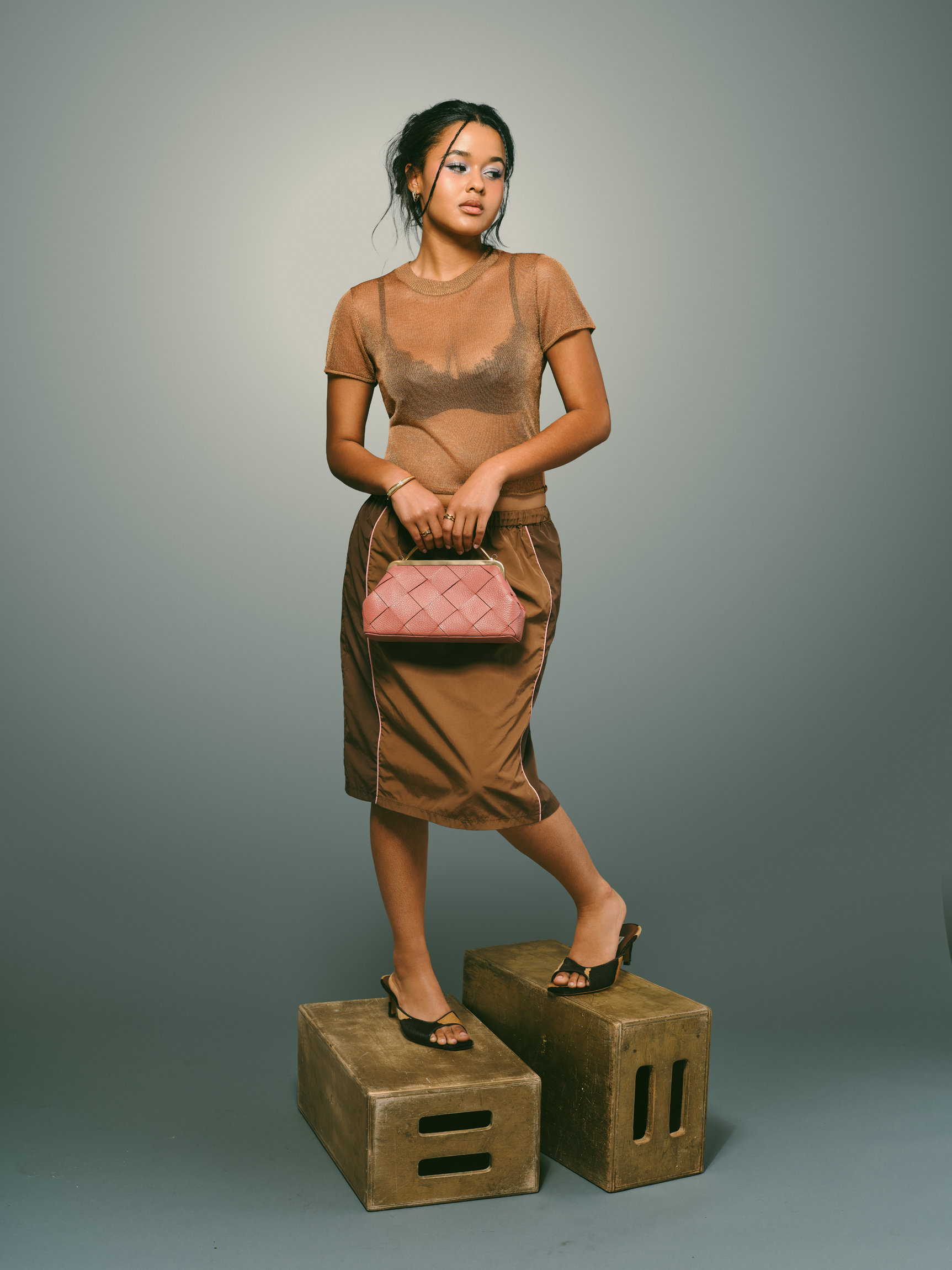
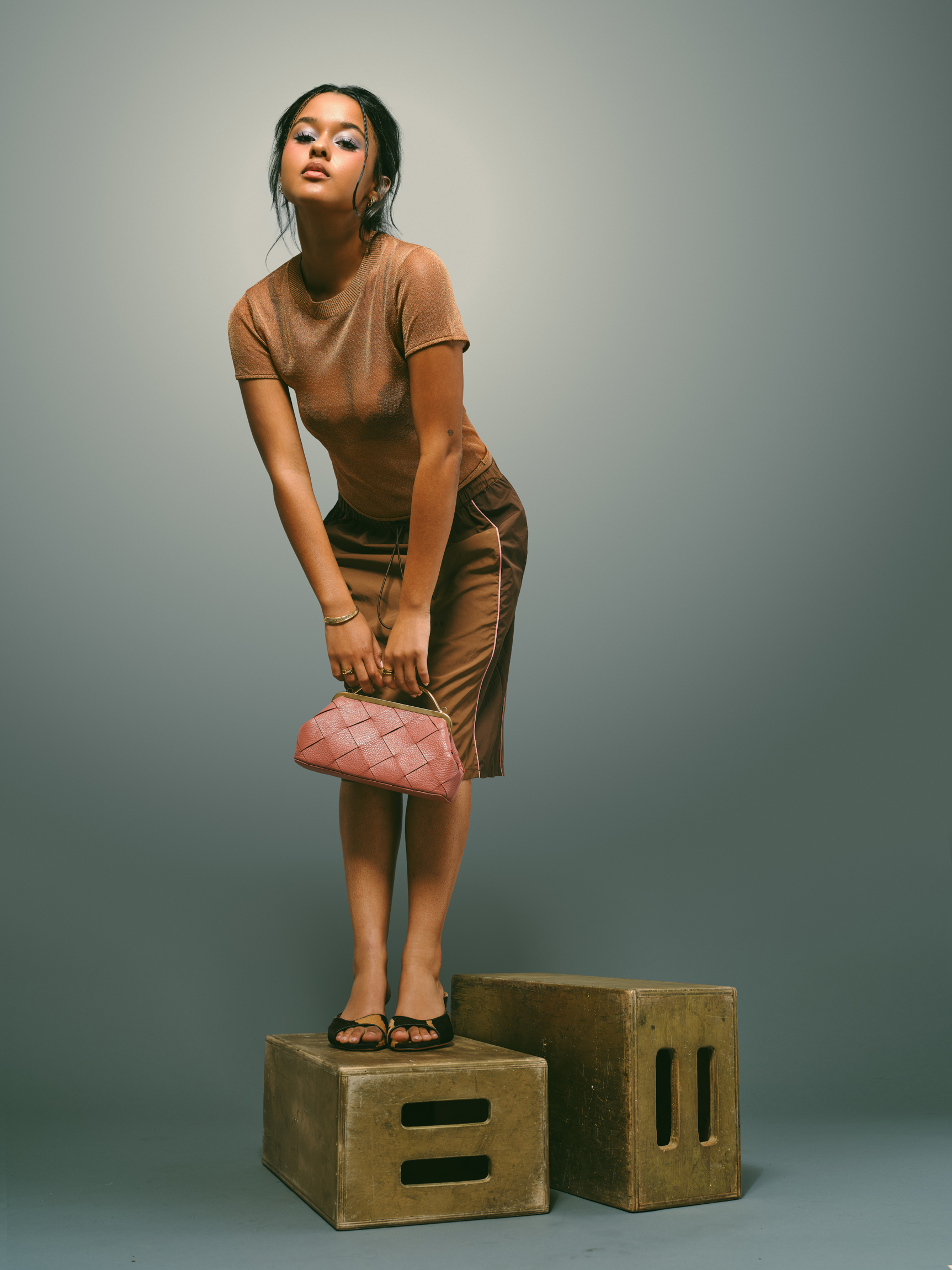
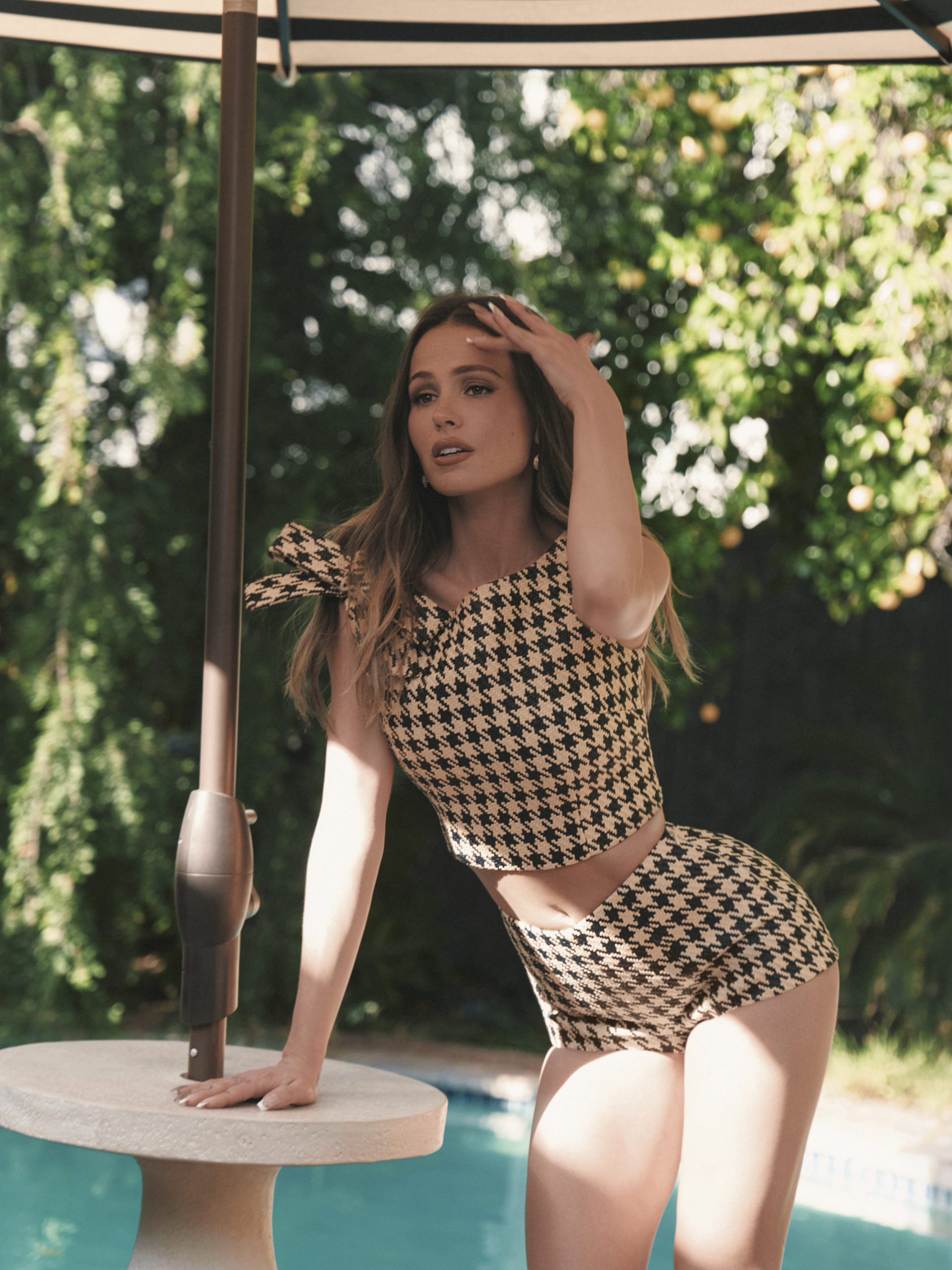
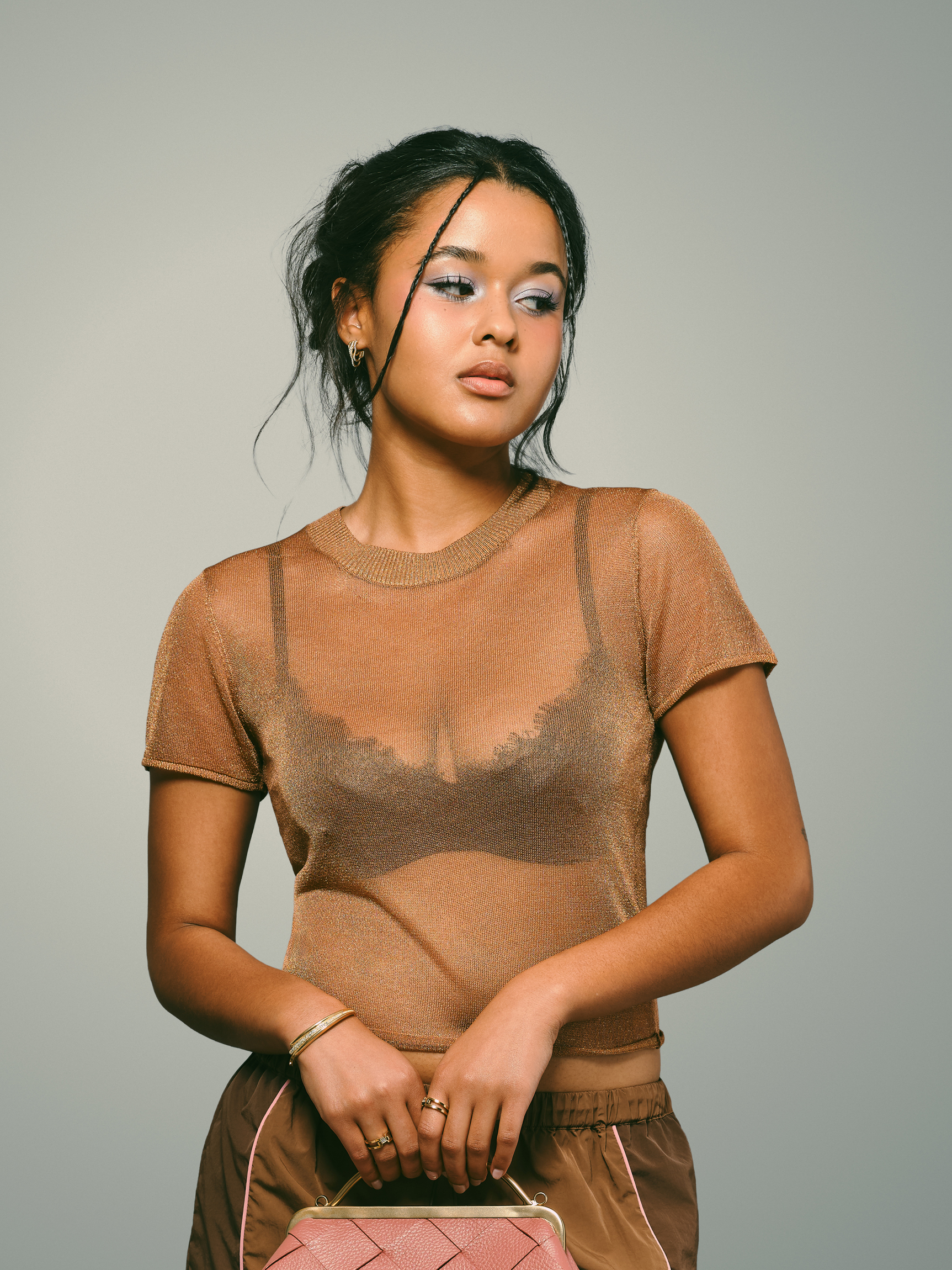
Bra Kat the Label Shirt + Skirt Bec + Bridge Shoes Anonymous Copenhagen Earrings K Salamoon Purse Qoffah
Do you think that idea of having to build a world in your head is still present in how you prepare for a role now, and how you step onto a set?
Oh, yeah, definitely. But more with just emotion work and character work, because once you’re there, you have amazing production designers and all of that, so you’re transported to the place physically, even if it’s on a soundstage. You see everything around you, and it’s tangible, but with voiceovers, it’s all entirely in your head.
That must be really fulfilling, building both characters and worlds in your head as a creative. Obviously you had a script and an idea of Jeannette to start from, but how much do you build around that yourself?
I try to go to the space where they are emotionally and meet them there. Especially with Jeannette, it was interesting, because when she comes in, she’s been through a lot of struggle and trauma off-camera. That part specifically was interesting to try to map out, to create for myself what she had been through, because we aren’t necessarily told, as an audience, what happened. I think it’s just very clear that there has been trauma in her life so far.
Is that something you have conversations about with the team, to figure out if you’re going in the right direction with it? Or is it just you building something for the character?
A little bit of both. I brought my own idea to it, and then when we were shooting scenes, David would throw things at me to play around with. He’d be like, “Okay, she’s scared, but now she’s traumatised, do it more from a state of utter shock – like you’re not even crying, because you can’t.” Or maybe one where I’m just an emotional wreck, crying a lot, and that’s how I’m handling it. So we just played around with that sort of emotion.
That sounds intense, carrying that much emotional weight through the day. You mentioned music earlier, but how do you generally shake that off? Is it just a lot of Ariana Grande, or were there other things that helped?
Yeah, I mean, it was tricky. It was a skill I had to learn throughout the shoot, because it can be rough bringing yourself to that state. And I feel like your body doesn’t know, sometimes, that you’re just pretending, because you have heavy breathing and you’ll work yourself up into a state of anxiety.
So I had to learn how to separate the two, and just, as they say, leave it at the door when I was going home, take a hot bath, listen to good music. I watched a lot of cartoons and stuff like that. Anything that could tell your body it was fine, that there was nothing to actually worry about.
You said earlier you’d love to be on different sets. You’ve done quite a lot of different things already, but is there anything you haven’t done yet that you’d love to do, or what would you love to see yourself do next?
I’m really open to genre, I’m not very set on anything in that way. I just really like good stories, interesting stories, interesting characters. I would love to do an indie set, just because all the things I’ve done so far have been very big productions, big budgets. I feel like it would be super cool to do something more indie, where everyone’s there for the work and the love of it.
Are there any characters you’re specifically drawn to?
I like when characters are troubled, kind of, and have some issues, a little bit flawed. I feel like that’s more interesting to work with than just surface-level stuff, because it’s what makes them feel more human. Getting to explore someone who isn’t making the best decisions, that’s really interesting to me.
You’ve talked in the past about wanting to see leading roles, especially for actors of colour, that aren’t necessarily stereotypes. Is that something you think we’re getting better at as an industry? I’m always curious, because I do think there are waves where everybody’s like, “Oh, it’s going really well, there’s lots of diversity, lots of great stories being told,” and then it kind of plateaus again. How do you feel about the opportunities out there at the moment?
Yeah, that’s a really good question. It’s something I’m very passionate about too. I’m going to film school right now, to learn how to make movies and write my own stuff, because it’s hard for people of colour, and I want to be a voice for people of colour. Especially, like you said, there are limited roles for people of colour to be in a leading role, or a character that has complexity, something that’s not about their identity or their race.
We’re at an interesting time right now, politically, in the world, and that’s kind of affecting what we’re seeing on screen, and the casting, but everything kind of comes and goes in waves, it gets better, and then it goes down. That’s just how it works, unfortunately, but it’s obviously gotten a lot better over the years in terms of representation. I just want to push that, be part of making that a larger thing that we see on our screens.
I love that you’ve decided to go to film school! Is that partly about wanting more control over the stories you get to tell?
Yes, I’ve always been interested in telling stories and I would love to make my own stuff, and even just for acting, I feel like it helps both sides. Acting helps you direct and understand it better, but learning how to direct and be behind the camera also helps acting. I just wanted to have a more well-rounded training.
I was going to ask whether there’s a story you’re quietly hoping someone will write for you, but I think the better question now is whether there’s something you’re hoping to write yourself, rather than have somebody write for you.
I really like the coming-of-age genre. I’m very interested in that, especially what you can do with it outside of just high-school age. As humans, we’re always coming of age, so I’m drawn to stories like that.
On the note of what may come next, now that the movie’s out in the world, what are your plans? It sounds like school will be part of it, but are you going straight into something else, or giving yourself a minute to take it all in?
I love working, I would love to jump into something else, but I am waiting to see what’s right. School starts this week, my first week, so it’s definitely super busy with that. But yeah, they’re all very exciting things right now.
The End of Oak Street is in cinemas now, follow via @jordanalexadavis
Interview Jule Scott
Photography Matt Doheny
Creative Direction Alek and Steph
Styling Megan Zina
Hair Habin Lee
Makeup Suzie K
Public Relations Platform PR
Location Maison Privée LA
Production Bello Media Group
Top image credits
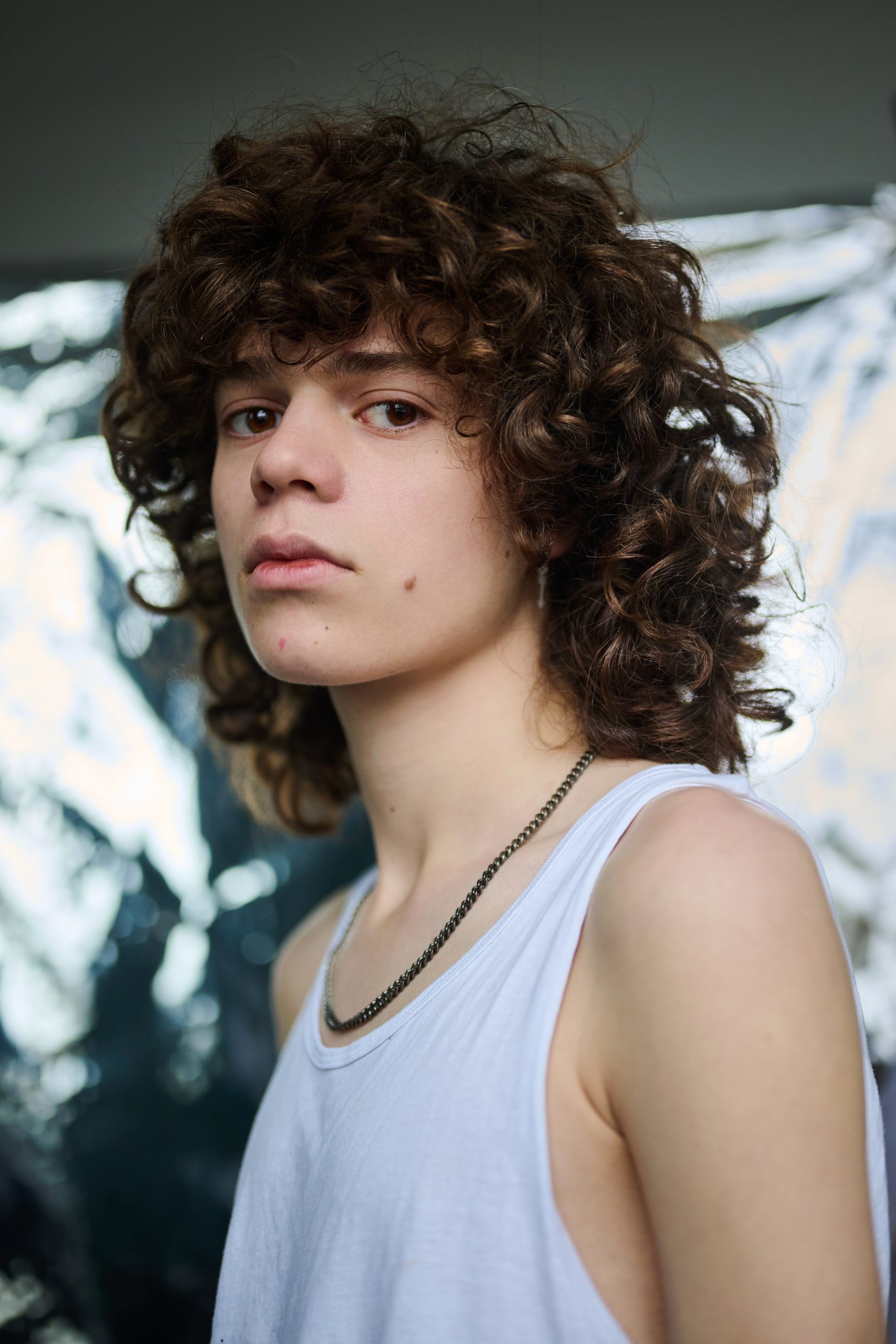
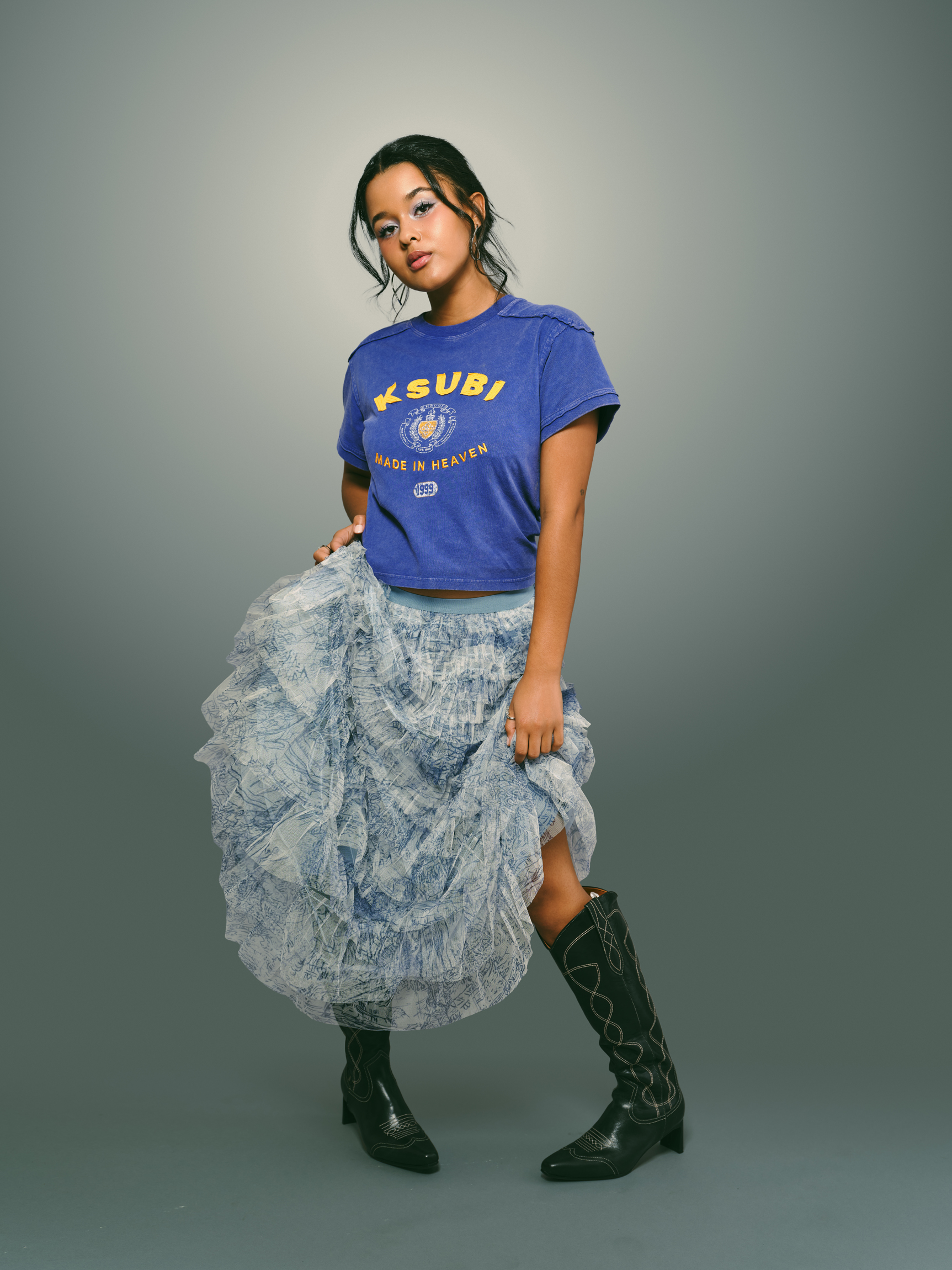
Shirt Ksubi Skirt Betsey Johnson Boots Bared Rings K Salamoon Earrings Astrid & Agnes