Words. Angelie Pacamalan
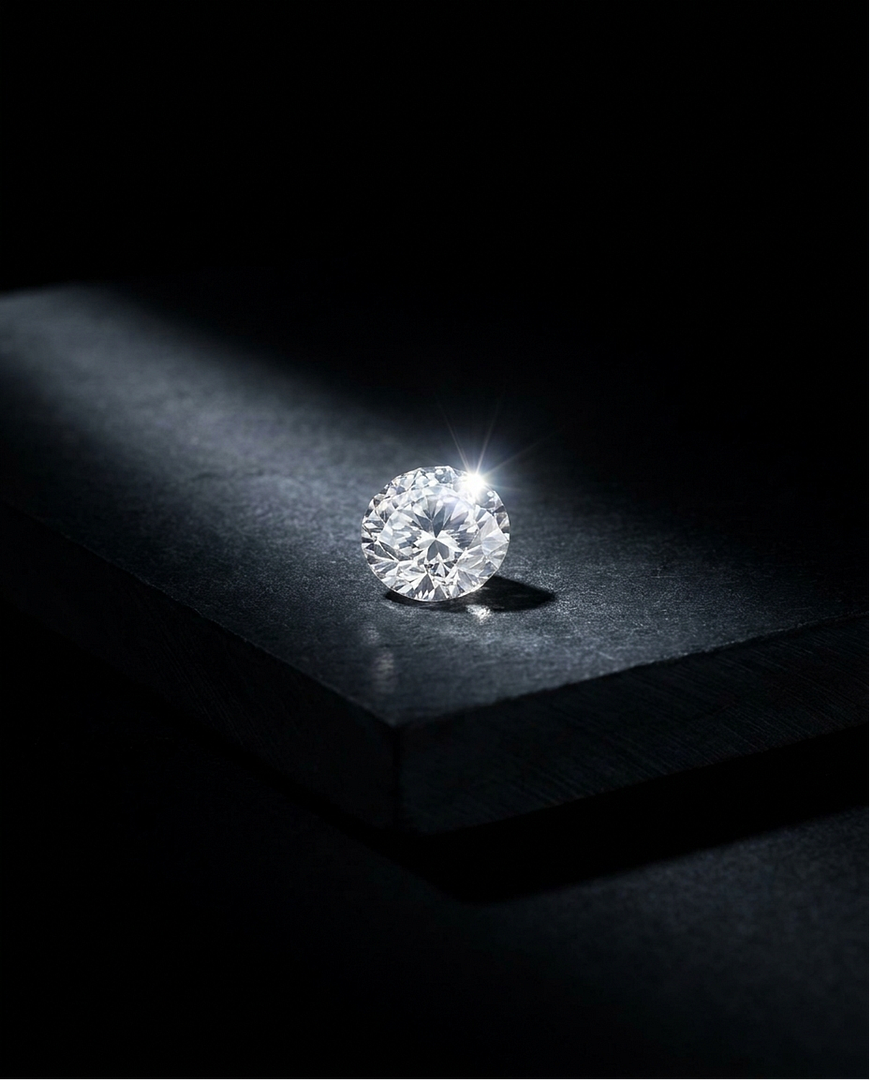
For most of the last century, the value of a gemstone rested on a simple, seductive idea: scarcity. A stone was precious because it was rare, because it had been wrenched from the earth at cost, because there wasn’t much of it to go around. That story sold a great many engagement rings. It is also, increasingly, a story a younger generation of buyers no longer finds convincing.
Walk through the way fine jewellery is talked about now — on social feeds, in boutiques, among the stylists who dress the people the rest of us end up copying — and a different vocabulary has taken hold. Traceability. Transparency. Engineered brilliance. The mined stone, once the unquestioned summit of luxury, now shares the stage with something made in a laboratory, and for a growing cohort the lab-grown option isn’t a compromise at all. It’s the point.
The most familiar version of this shift is the lab-grown diamond, now a fixture on the high street and priced accordingly. But the more interesting movement is happening a little further from the mainstream, among created stones that were never trying to imitate anything in the first place. Chief among them is silicon carbide — a lab-grown gem material with an unusually high refractive index and a dispersion, the property responsible for a stone’s flashes of colour, well above most traditional colourless gems. In plain terms: it is very bright, and it throws a great deal of fire. Grown under controlled conditions and cut like any fine stone, it arrives with something a mined gem can rarely offer — a fully known origin.
A small number of specialist brands have begun to treat this material not as a substitute but as a category of its own. Zeverra is one of them: rather than making finished jewellery, it grows and cuts silicon carbide as a proprietary gemstone, supplying stones to the jewellers and designers who set them. It is a quietly radical inversion of how the trade has always worked. For centuries the jeweller’s name was everything and the stone was anonymous — graded, traded and set without any identity of its own. Here the stone carries the brand, and the piece it ends up in is almost incidental.
That a stone can be a brand at all is itself a sign of how much has changed. Mined gems vary too much — source to source, stone to stone — to underwrite a consistent promise. Created stones don’t. Their quality can be controlled tightly enough to guarantee that the next one will be as good as the last, which is precisely the condition a brand needs in order to exist. What can look like a marketing flourish is really a consequence of the technology.
It is not hard to see why this resonates now. Fashion has spent several seasons in the grip of “quiet luxury,” a mood that prizes restraint, material quality and the knowing understatement of someone who no longer needs to prove anything. A single luminous, impeccably made stone in a spare setting speaks that language fluently. So does the ethical arithmetic: a lab-grown gem sidesteps the extractive supply chains and murky provenance that shadow parts of the mined trade, and it does so without asking the wearer to give up any beauty. For a generation that researches before it buys and treats transparency as a baseline rather than a virtue, “made, not mined” reads less like a concession than an upgrade.
Not everyone is convinced, and the scepticism deserves a hearing. A gemstone has always traded on more than its optics; part of what a mined stone sells is the romance of rarity — the idea that you are holding something the earth took the better part of a billion years to make. Strip that away, the argument runs, and you are left with a very beautiful, very well-made object that anyone can have as many of as they like. Does a stone still mean something once it can be manufactured to order? There is a fair caution about the branding, too: naming a commodity and charging a premium for the name is an old trick, and buyers would do well to ask whether they are paying for a materially better stone or simply a better story.
Both objections have force. But they may also be quarrelling with a definition of value that is already slipping. For a great many people, meaning no longer lives in scarcity; it lives in knowing exactly what a thing is and where it came from. By that measure the engineered gemstone doesn’t lose the romance so much as relocate it — from the mine to the making.
What’s clear is that the question has shifted. Increasingly, the interesting thing about a piece of jewellery is not only who made the ring, but what stone sits in it — and, for the first time, that stone may have a name worth knowing. Whether the engineered gem becomes the default or remains a knowing alternative, it has already done something quietly significant: it has made us ask what, exactly, we mean by precious.