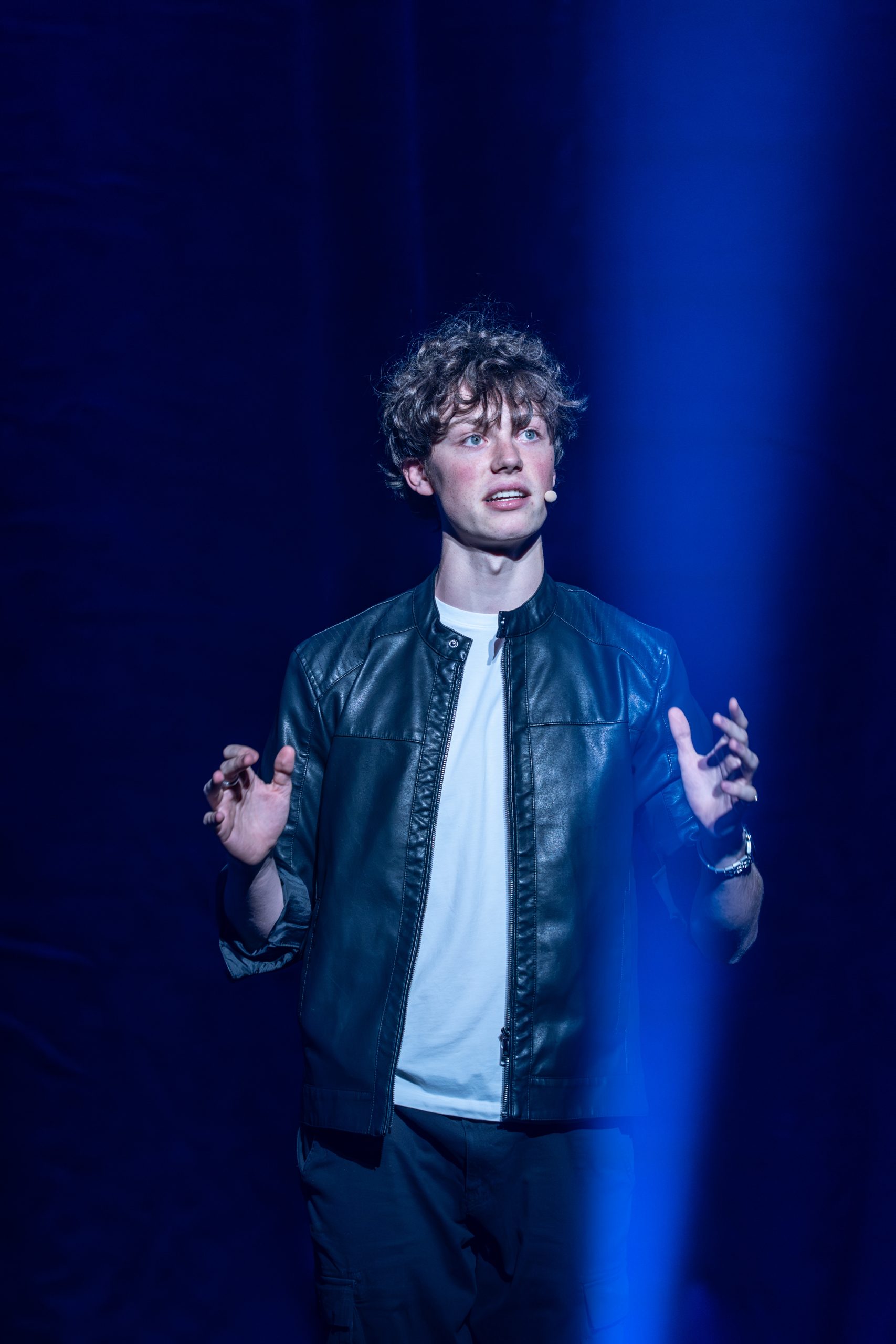
A year ago, Rafferty Coope was waiting outside the London Coliseum’s stage door after seeing The Great Gatsby, hoping to meet its cast. Fast-forward 365 days, and he is performing inside that same theatre and emerging afterwards to find people waiting for his autograph. At just 17, it is the kind of full-circle transformation that sounds like one of his own illusions.
His rise may have been remarkably fast, but it was far from an overnight success. Rafferty first picked up magic at four or five, spent lockdown practising card techniques off camera during online lessons, and gradually found his own distinctive way of combining illusion with live music. After a fleeting appearance on Britain’s Got Talent as a child, he returned to the show this year with an act entirely his own. KSI’s Golden Buzzer took him straight to the semi-finals, the public voted him into the final, and he ultimately finished fifth.
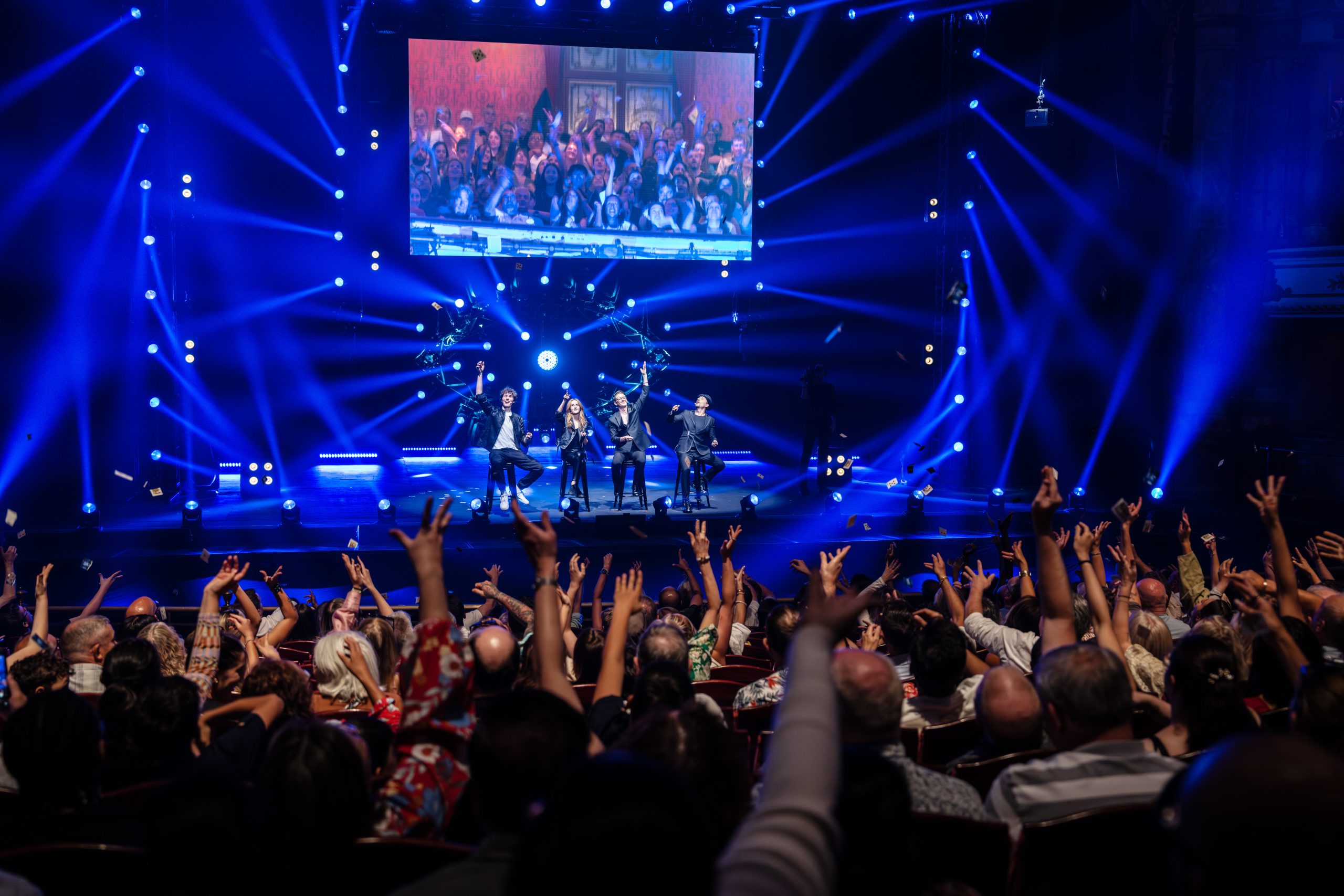
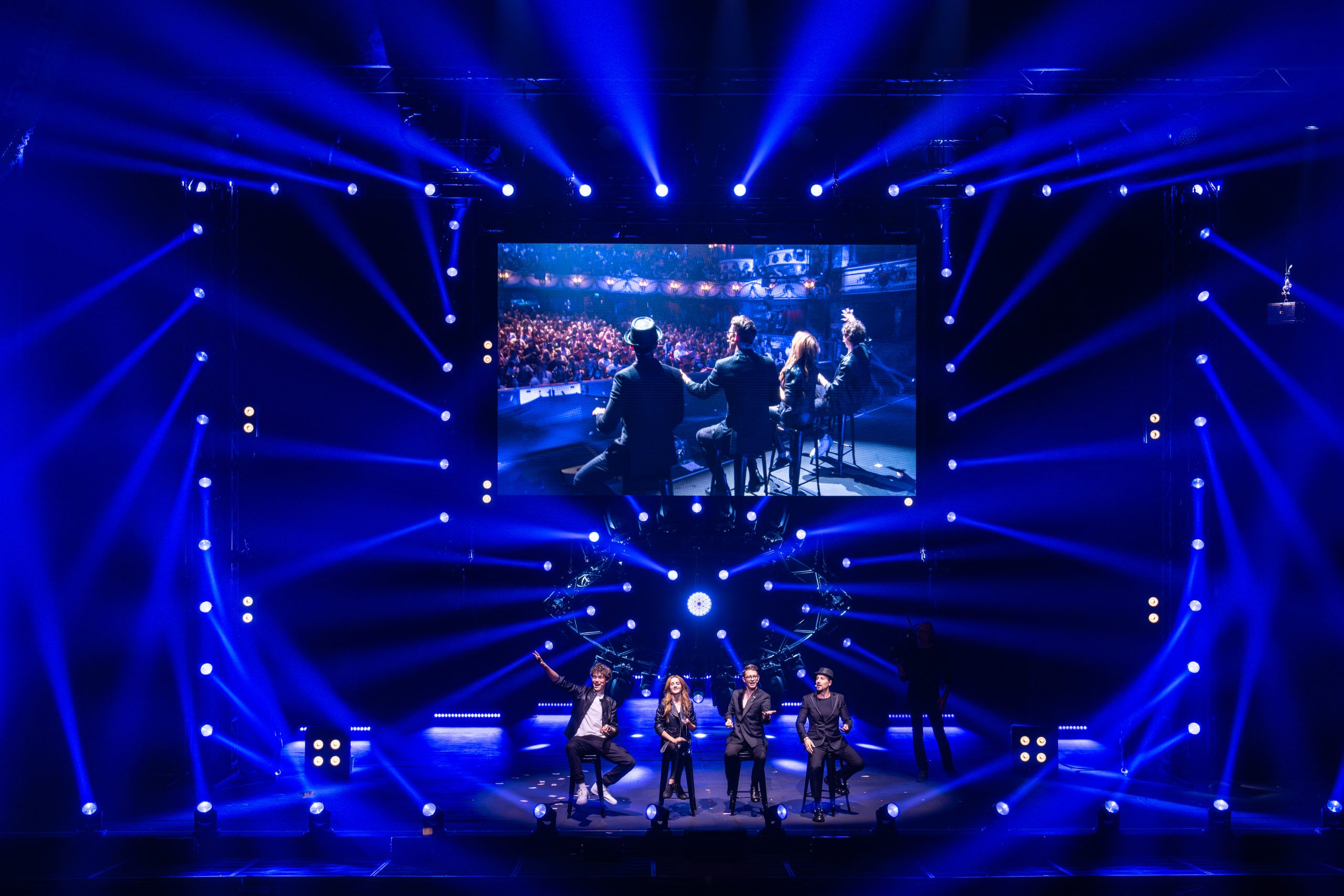
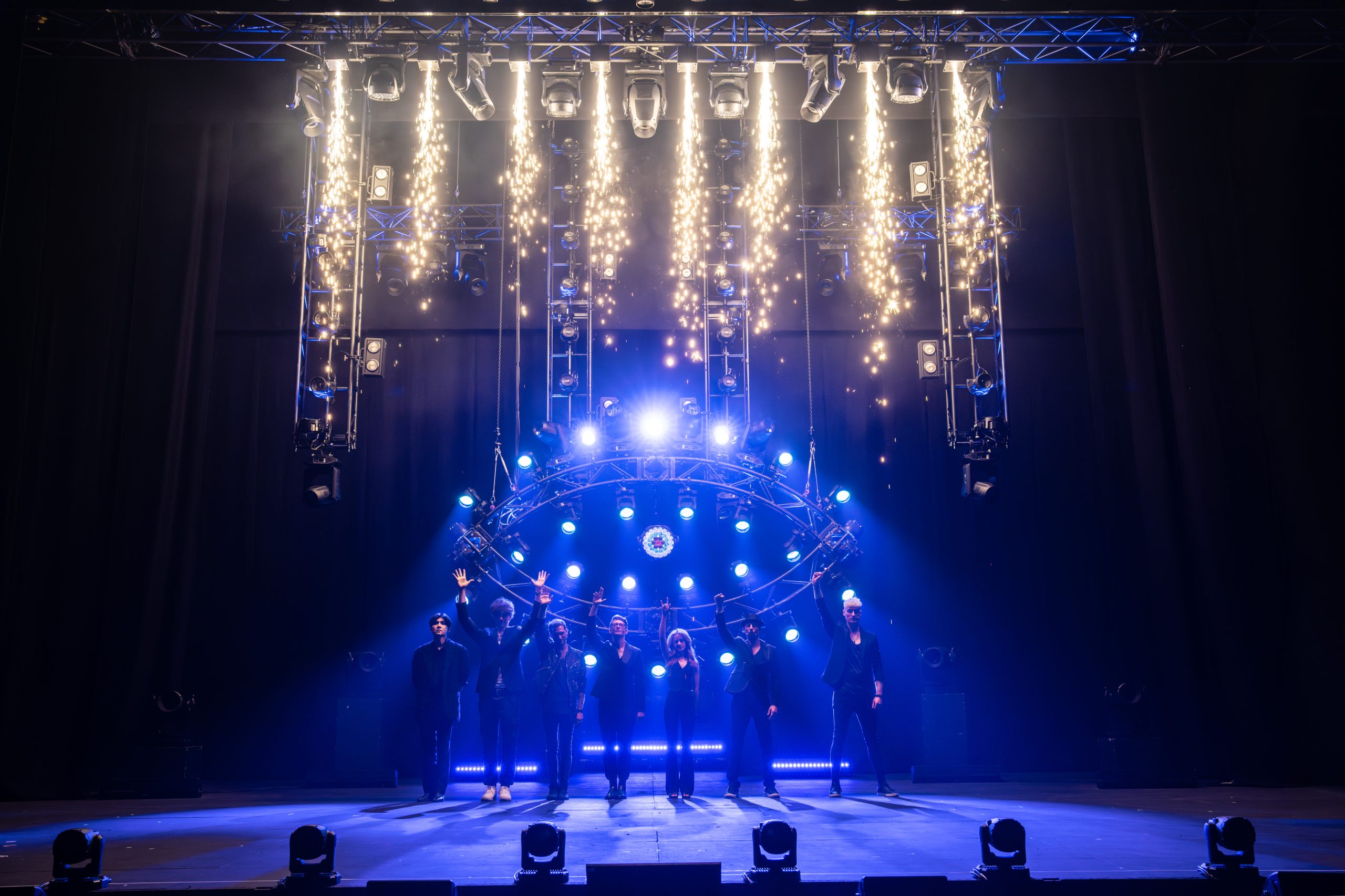
Within weeks, another childhood dream came calling. Rafferty is now opening Now You See Me Live, the West End spectacle inspired by the blockbuster films that helped fuel his love of magic, as it plays a five-week season at his favourite theatre.
When I sit down to chat with him, he is around 25 performances into the run and still visibly thrilled by every part of it. That infectious enthusiasm proves to be more than a television persona, and speaking with him is an utter delight. From the pressures of creating three increasingly ambitious BGT routines to the microphone failure that greeted his West End debut, Rafferty reflects on an extraordinary year, the value of unapologetic positivity, and ambitions that already stretch from his own stage show to an EGOT.

You started practising magic when you were only four or five. What was it that first captured your imagination?
It wasn’t one magic set or one performer. I saw a magician on Britain’s Got Talent and remember thinking, ‘Wow.’ He gave me a feeling I had never experienced before. From that day on, I knew I wanted to give that feeling to as many people as possible.
Then I found my brother’s old magic set. Like most kids, he had picked it up for a few days, put it back in the cupboard, and never touched it again. The interesting thing is that I never read the instructions. I took the props and tried to invent my own tricks with them, so I began developing that creative process quite early.
I practised and practised, then lockdown hit. It was a strange time, but pretty great for my magic because, on a Zoom lesson, the camera cuts off half your body. Underneath the screen, I would be playing with a deck of cards for about eight hours a day. I came out of lockdown a far better magician than I went into it. I used my time well when it came to magic. Schoolwork, maybe not!
You had already made a brief appearance on Britain’s Got Talent before returning with your own act. What did getting onto that stage mean to you?
It represented everything. The first time, a young magician needed several other young magicians to hold Rubik’s Cubes and place them in a box. That was it, about five seconds of stage time and five seconds of screen time, but it was the best five seconds of my life up to that point. I got to see the scale of the show very briefly and was completely hooked.
I had been bugging my parents from about eight years old to let me apply on my own. Quite rightly, they kept saying, ‘It’s your GCSEs this year. Maybe next year.’ I’m thankful they did because I don’t think it would have been possible with the amount of time it takes. Once I had finished my GCSEs, we decided there was no better time.
Social media helped too. My first video received around a million views overnight, and I went from about 500 followers, who were basically all my friends, to 50,000 in two days. When we approached the BGT producers, they had already seen some of my work online.
Walking onto that stage alone was a full-circle moment. Whatever happened, I felt I had made it. My younger self would never have believed it. Then KSI climbed onto the desk to press the Golden Buzzer. I still think about that every day. It’s absolutely crazy.
When did magic go from something you loved doing to something you thought could become your career?
It didn’t really cross my mind until recently, and I still can’t believe I’m getting to start my career at 17. I seem to have already ticked off some of the things I would love to do.
For me, it isn’t just magic. It’s performance in general. I played Jean Valjean in Les Misérables recently for Footlights Youth Theatre, I play as many instruments as I can, and I write and produce my own music. I would love to work in film and theatre too. Whichever path I go down, there will be roots of magic, music, and performance because they all tie together. Anywhere there is an audience enjoying something I’m doing, that is where I want to be.
When did you realise that music and magic could become one act rather than two separate things you loved?
I have loved both from a very young age. Piano is my main instrument, and I remember seeing somebody combine magic and juggling and thinking it was clever to bring two art forms into one experience. That made me wonder how I could blend magic and music.
Growing up, I went to lots of magic conventions and discovered that many of the magicians I admired were musicians too. They require a similar work ethic. You need dedication, practice, timing, finger dexterity, and the ability to perform.
My early competition pieces were silent magic acts. I would build my own track, then perform the magic to it, almost like a dance. That used music, but I realised the connection could be more direct. I began thinking about how to link the piano to a trick. A span of 13 piano keys covers an octave, and there are 13 cards in a suit. Suddenly it was like, ‘Bingo.’ From there, I spent night after night asking what else I could do with that idea.
I had been developing it long before the audition, and I’m incredibly proud of the act I eventually performed. The only problem was that, after receiving the Golden Buzzer, I suddenly realised I had to create another one. Then, if I reached the final, I would have to top it again.

For the final, you brought in singers and musicians from National Youth Music Theatre. How did that come together?
I’ve been part of National Youth Music Theatre for a long time, and they have always been incredibly supportive. Early on, I had this idea of making a choir and orchestra appear, then thought, ‘Hang on, let’s be realistic.’ When I reached the final, it became, ‘Screw realism. Let’s do it.’
It was special to share that experience with my friends from NYMT, but we only had a week to plan the final act, compared with about a year spent developing my audition. On BGT, you want to stagger your performances as good, better, then best, but you never know whether you will reach the next stage. You are constantly asking what to hold back and what to throw at it.
For me, there were so many layers. There was the magic and the live music, and I had written the underscore for my semi-final. I had never spent so long refining every word and musical hit to make something as tight as it could be. Doing that again in progressively less time was tricky.
You won your semi-final through the public vote. What did that feel like?
Words can’t describe it. Something that originated in my bedroom, practising beneath the screen during lockdown, had resonated with so many people. They had not only enjoyed it, but actually gone out of their way to vote for me. I’m not normally somebody who votes in those shows myself, apart from Eurovision, obviously, so I’m incredibly grateful to everyone who did.
There was a Golden Buzzer in the semi-final, which meant I had to win the public vote to go through. As the results narrowed down, I kept telling my brain, ‘No, no, no. Don’t think about it.’ Then it came down to me and one other act, and I thought, ‘Maybe this could happen.’ When they announced my name, I launched about six feet into the air. I don’t think I have come back down yet.
The following three days were a whirlwind of press, rehearsals, and creating the final. I made that performance more emotional, and I’m proud that all three acts link together, with little Easter eggs running through them. Once I finished, my BGT journey was suddenly over. Whatever position I came in, everything hit the brakes. Thankfully, it has really only been the beginning.
You spent a lot of time with the judges. Is Simon Cowell secretly a big, lovely softie?
They all are! I thought they might be famous and distant, but Simon was lovely and one of the most fun people to be around. He said he would call after the results came through. I’m still waiting, so every time my phone rings, I check whether it’s Simon. So far it has just been Mum.
How soon after Britain’s Got Talent did Now You See Me Live come along?
My parents were fantastic throughout BGT. They dealt with management, PR, and everything behind the scenes, which meant I could focus on performing. Apparently, Now You See Me Live became interested after my semi-final, but I knew nothing about it while my parents checked everything out.
About three weeks after BGT, my mum came upstairs while I was in bed and told me they might be offering me a place in the show. The funny thing was that, a day or two earlier, I had told her we needed to book tickets before it sold out. I had followed the production through Australia and Singapore, as well as the magicians involved, and I love the original films.
Then I was hearing ‘London Coliseum’, ‘West End’, ‘five-week run’, and ‘part of the show’. I said, ‘Let me think about it,’ then freaked out for about an hour. I’m the biggest theatre fan you could meet, and the Coliseum is my favourite theatre in the world.
Exactly a year before, I had seen The Great Gatsby there. I queued at the stage door to get autographs and photographs with the cast. Fast-forward 365 days and I was coming out of that same stage door, signing autographs and taking selfies with people who had watched me. It’s crazy.
You open Now You See Me Live. How has it felt performing at the Coliseum every day?
I’m loving it. It’s the most fun I have ever had, and I have learnt far more than I expected. I thought I would come in, perform my section, and repeat it each night. Instead, I’m surrounded by some of the best magicians in the world. Backstage, they teach me techniques and give me tiny notes, such as holding a beat half a second longer. I try it in the next show and suddenly the reaction is ten times bigger.
It is a privilege to perform an act this many times because I can keep honing it. I’m completely comfortable with it now, but it still feels fresh, and I have as much fun as the audience. After my section, I don’t go back to my dressing room and look at my phone. I sit in the wings and watch every act because this is my dream.
Sometimes I have to stop and process that this is my job. A few days ago, I tapped my pass at the stage door without even thinking. Then I stopped and went, ‘Hang on. You have just entered the London Coliseum, and you are about to perform, you can’t ever take this for granted.’
Did your first West End performance go smoothly?
The music started, I ran out thinking, ‘This is it. This is my West End debut,’ and my microphone didn’t work. Great start! Thankfully, it was a preview. When I came back out, the microphone was working and the audience were completely behind me.
Every performance has been unique. I expected the shows might start blending into one, but the audience are as much a part of a magic show as we are. Their energy changes it every time.
Has being part of this production made you imagine your own full-length show?
Absolutely. I would love to have my own show one day. Being part of this has taught me how a magic show should be structured, when each trick should come, and where the patter fits. I have watched countless magic shows and thought that perhaps I could create one, but working on this production has opened my eyes to how much happens behind the scenes.
That is true of any professional production, not only magic. I’m learning what the different cues mean and seeing how many people it takes to create what the audience experiences.
You are still studying Music and Acting. What will it feel like returning to college after this summer?
The show ends on 6 September, so I only miss about a week. Going back will be a little mad, but I’m looking forward to seeing everybody and sharing the stories. It has been the best summer I could ever have hoped for, and I’ll be gutted when the London run ends. I’m about 25 shows in with another 50 to go, and I genuinely don’t think I will be sick of it by the end.
Your enthusiasm is a huge part of your appeal. In an age when people can be cynical about open positivity, have you ever felt pressure to tone that down?
No. I don’t see the point. Let’s all be a little happier. It doesn’t hurt to be positive, give somebody a compliment, or show enthusiasm. It makes you feel better and can make everybody around you feel better too.
There is a darker side of social media where being cool can mean acting as though you don’t care or not being particularly nice. I don’t think that is the right way to look at things. I’m not going to change who I am because of somebody else’s idea of what cool should be. I hope I’m proving that expectation wrong. You don’t have to behave like that to be pretty cool.
Magic is a way of spreading that feeling. Five minutes of my time can give somebody an experience that stays with them for the rest of their life. I might perform a card trick without thinking much about it because it is what I do, then meet somebody years later who still has that signed card attached to their fridge.
That is also the beauty of Now You See Me Live. For two hours, people can put their phones away, suspend their disbelief, and be carried away by the magic of theatre and the magic of magic. We welcome the sceptics too. We say, ‘Go on, try to work it out,’ then hit them with something they never saw coming.
When you imagine your career five or ten years from now, what is the ambition that feels almost impossibly big today?
I would love to perform for as many people around the world as possible. Whether it is live, on screen, or in a theatre doesn’t matter. If people are watching and getting joy or entertainment from what I do, that is the goal.
The ultimate ambition might be to win a Grammy or an Oscar. An EGOT, why not? There is also FISM, which is like the Olympics for magicians. The things people do there are insane, but perhaps I’ll enter one day.
Awards aren’t what define a performer, though. It is the connections you build. I’ve got a lot of work to do before any of that, and I’ve had a lot of help along the way, but who knows what the future holds?
Now You See Me Live plays at the London Coliseum until 6 September 2026.
Book your tickets at nowyouseemelive.com
Words by Nick Barr
Photography by Johan Persson