Written by: Sherry Lee
Zihang Zheng, an industrial designer by trade, is redefining the world of classic car modification, specifically through the demanding practice of the “resto-mod.” His work, exemplified by the SMG Werk’s 1970 Porsche 911 project, is a masterclass in balancing art and engineering, historical reverence and modern performance. For Zheng, a vehicle is far more than a mode of transport; it is “art on wheels. “The Philosophy of a Resto-Mod
Zheng’s unique background as an industrial designer is the foundation of his approach. He positions himself between pure aesthetics and pure function, ensuring every design choice is both intentional and performs at the highest possible level—the principle of form following function. This balance is crucial in a resto-mod, where the final product must achieve visual impact, usability, longevity, and coherence.
For Zheng, the key to blending past and present is to preserve the timeless allure of the original silhouette while upgrading every system that affects modern usability and performance. The goal is to create a car, like the 1970 Porsche 911, that remains externally recognizable from its era but drives confidently as a modern vehicle. Art on Wheels
Zheng’s personal definition of “art on wheels” is rooted in compelling beauty achieved through necessity and movement. The iconic shape of the Porsche 911 is, for him, a perfect example: the low front is necessitated by the rear engine, the fastback silhouette houses the engine, and the fender shape cradles the headlights. Nothing on the form is arbitrary.
What truly elevates the car to “art on wheels” is its interaction with the world in motion. Unlike static art, the 911 reflects light across its surfaces as it drives, emphasizing its curvature and proportions. This element of movement enhances its inherent beauty. The SMG Werks 1970 Porsche 911 Project
The initial vision for this specific 1970 Porsche 911 was to create a sharp contrast: a car that is visually classic and restrained, yet feels thoroughly modern in its mechanics and experience. The exterior pays homage to its roots with thoughtful Color, Material, and Finish (CMF) choices, while the interior, drivetrain, and driving experience were completely rethought for modern expectations.
The project was deeply rooted in the history of SMG Werks in Pasadena. This shop has been part of the city’s automotive culture for decades and was previously run by the legendary Roger Bursch. The collaboration with SMG Werks, whose owner, Jack, has worked on Porsches for over forty years, was seen as a tribute to that lineage. Zheng’s role was to elevate the car’s look and feel to match the high standard of its mechanical performance. Technical and Design Achievements
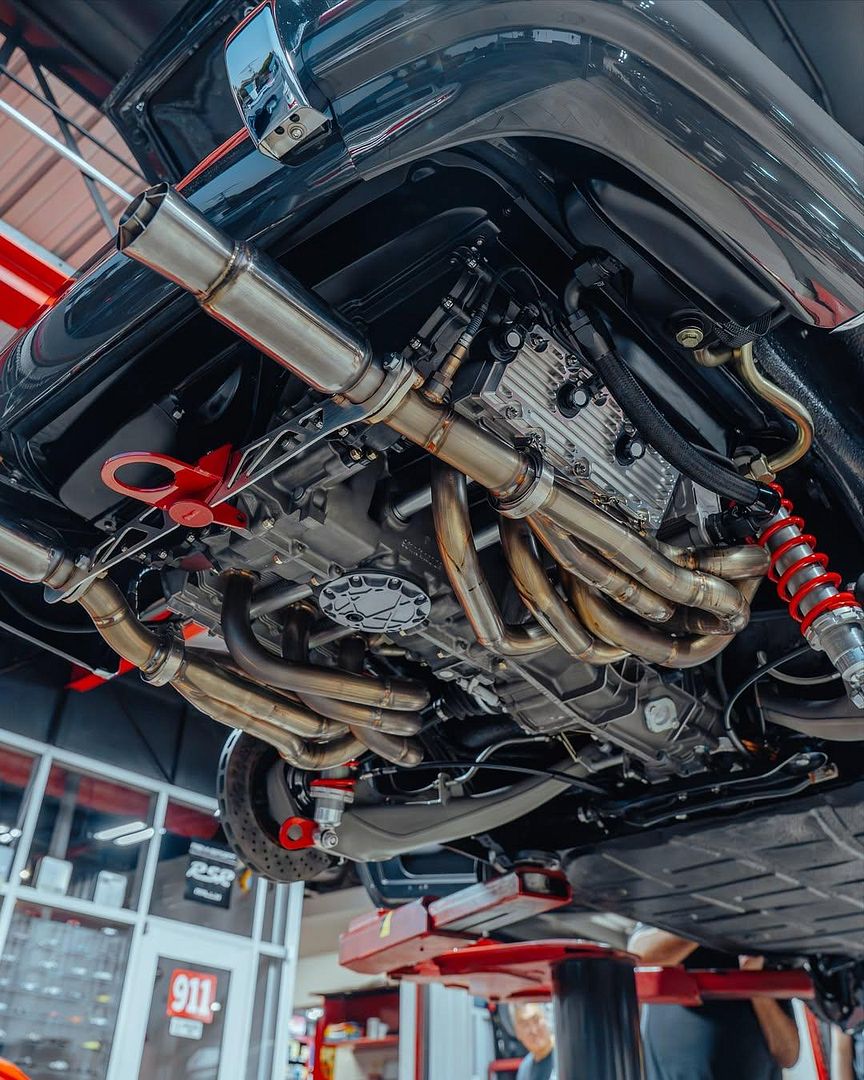
Virtually every functional component underneath the car has been modernized. Although the engine remains a 2.2-liter flat-six, it has been rebuilt with modern fuel injection and supporting systems. Suspension, chassis components, and mounting hardware were all upgraded, applying 2025-level engineering to a 1970 platform.
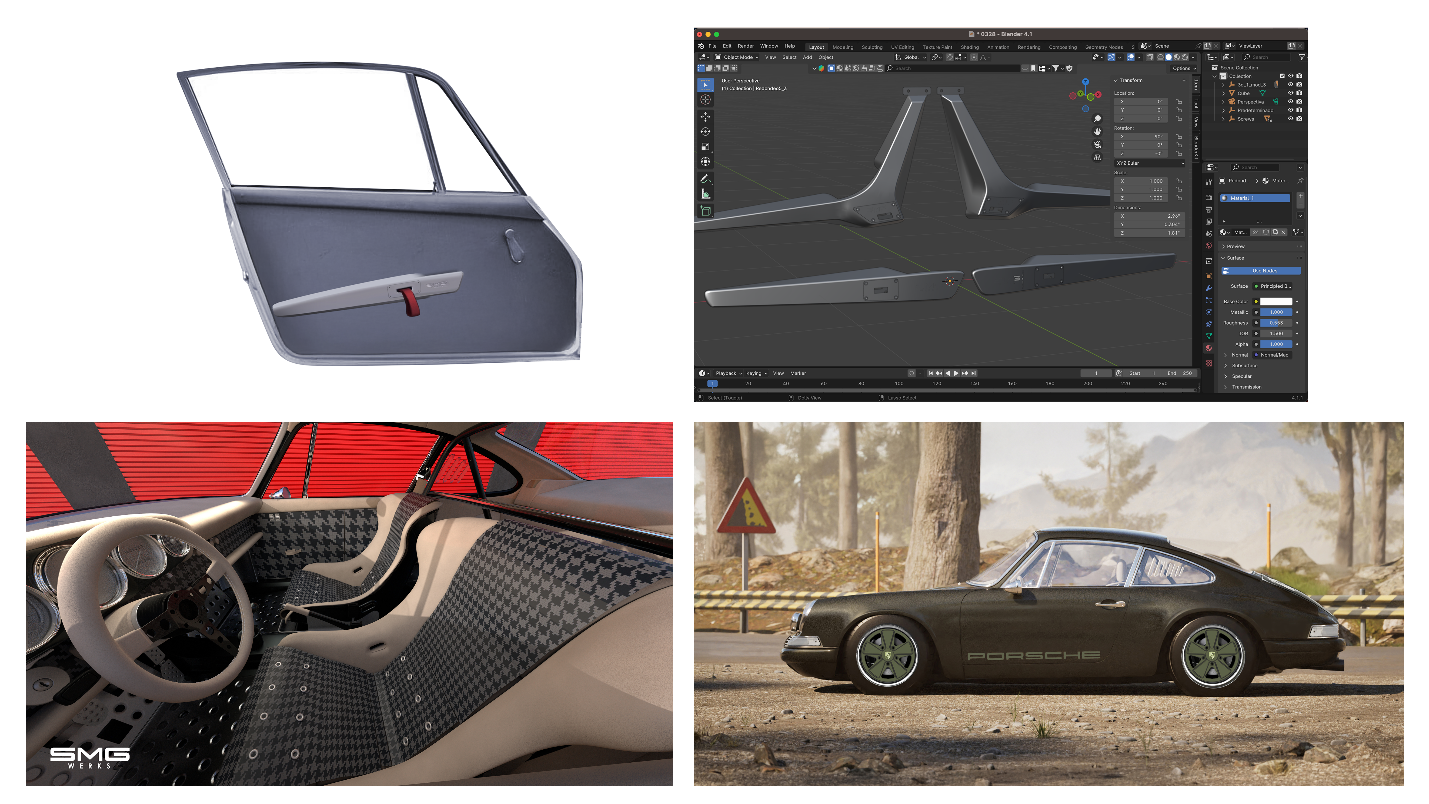
The biggest challenge in the project was building a one-off vehicle and introducing completely custom solutions that required designing, testing, and fabricating components from scratch. This was overcome by using modern tools such as digital design, rapid prototyping, and 3D printing to validate and refine ideas efficiently.
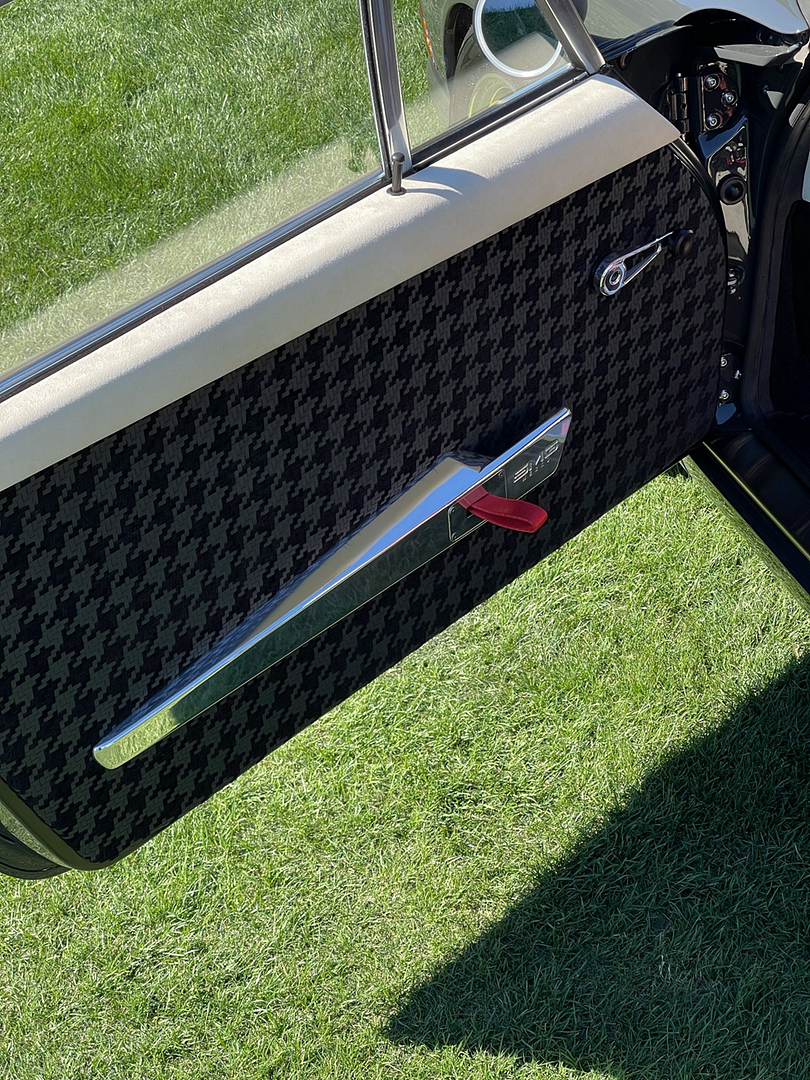
Zheng’s proudest custom-designed part is the door handles. These small, often-overlooked touchpoints simplify the door’s visual appearance while significantly improving tactility, showcasing the attention to detail in the industrial design process.
When modernizing a classic, Zheng maintains strict boundaries, specifically avoiding exaggerated exterior modifications such as aggressive vents, wide bodies, or unnecessary visual noise. The exterior must remain respectful and restrained, celebrating the original design, while the interior offers greater design freedom. A crucial design cue preserved was the narrow-body form of the 1970 911, which, in the age of wide-bodied cars, feels honest and elegant. Color, Material, and Finish (CMF)
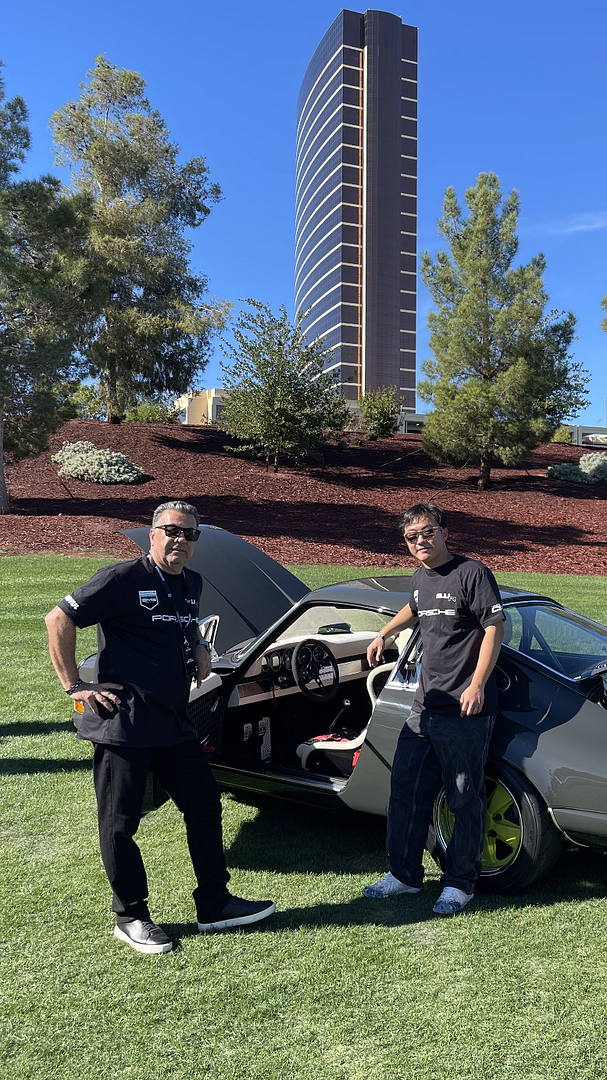
The core CMF (Color, Material, and Finish) strategy for the 911 was heavily inspired by the 1970s. The exterior is finished in Slate Gray with a subtle green hue, which is a period-correct Porsche tone that beautifully highlights the car’s curvature. This exterior is balanced by a warm cream interior, creating an intentional contrast.
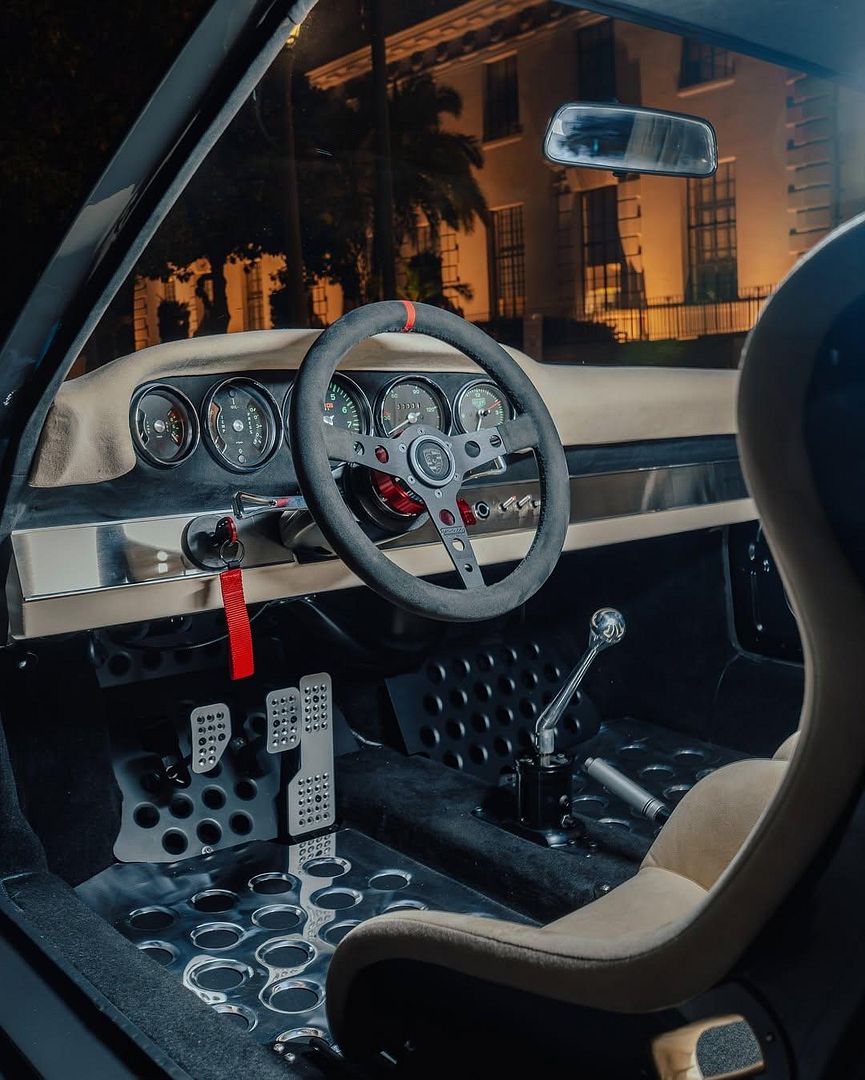
A key interior material choice was the reinterpretation of the iconic Pepita (houndstooth) pattern. Instead of a direct copy, the pattern’s scale was increased to appear more modern, and a basket-weave construction (rather than a simple thread weave) was used to add depth, tactility, and a premium feel.
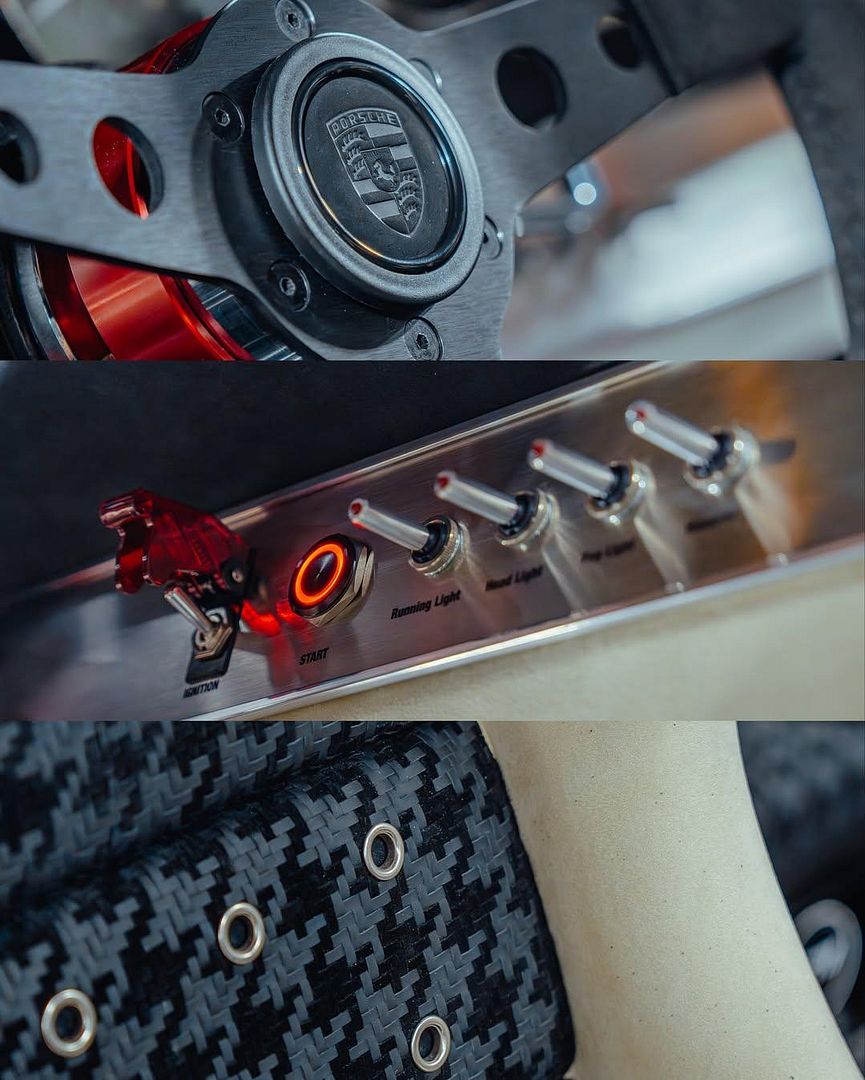
The principle of complementary contrast guided the custom hardware and finishes. Inside, polished metal surfaces—used on the door handles, floor hardware, and other small details—replace traditional chrome. These elements act like jewelry, catching the light and elevating the entire driving experience. Impact and Future Work
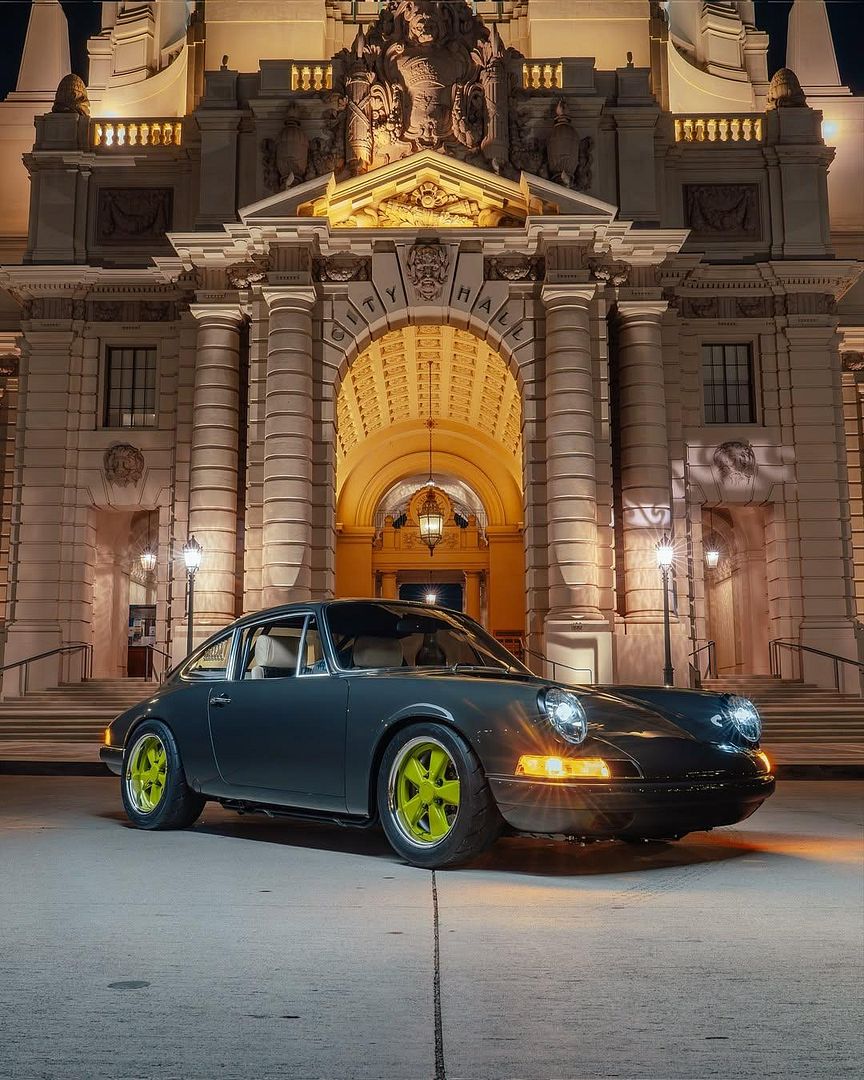
The restrained elegance of the modified 911 allowed it to comfortably hold its own at prestigious events like the Concours at the Wynn, where it was shown alongside multi-million-dollar hypercars. The car’s timeless aura and subtlety garnered significant appreciation.
At SEMA, the car was praised by designers and fabricators for being built to be driven, not just displayed. The philosophy of “silent improvement”—subtle upgrades like those provided by CSF Radiators that dramatically boost performance without visual distraction—resonated strongly with the industry.
Crucially, the car was also well received by the Porsche community at UNSTOCK, which maintains high standards for modifications. This approval validated the design approach, demonstrating that the build respectfully and tastefully honored the car’s heritage.
Looking forward, Zihang Zheng, in his role as Head of Design at West Coast Customs, is excited to continue shaping the art of the automobile by exploring the full spectrum of custom projects—from the wild to the timeless—and dedicating genuine passion to every creation.