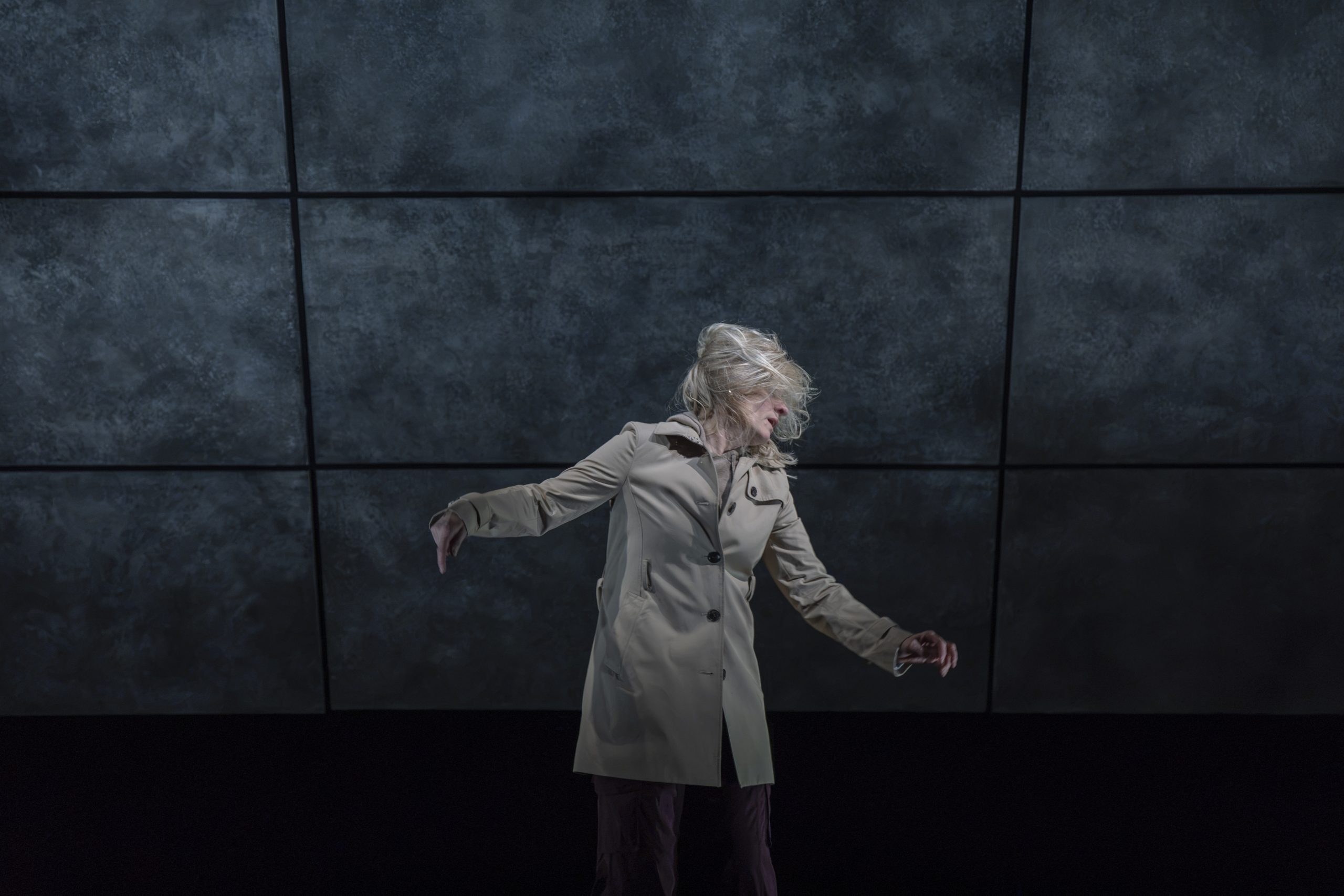
I grew up in London, lucky enough to have a mum who loved theatre and often took us to musicals for birthdays etc. On my 17th birthday, she took me to see Rent at the Shaftesbury Theatre, and I fell in love with it instantly. Here were a group of mostly queer characters who felt real, living stories full of love, sex, friendship, fear, art, and passion. As a teenager already very aware of my bisexuality, and of not feeling quite like everybody else, I connected deeply with these outsiders building lives for themselves in New York.
And then there was the music. The music, the music, the music! I bought the cast recording and devoured it. To this day, Rent is probably the only musical I could sing from beginning to end without getting a word wrong. Afterwards, I learnt the tragic part of Jonathan Larson’s story: he died suddenly at 35 after a tear developed in his aorta, the body’s main artery, just before the first public performance of the work that would make his name. Rent ran for 12 years on Broadway. Larson never saw any of it.
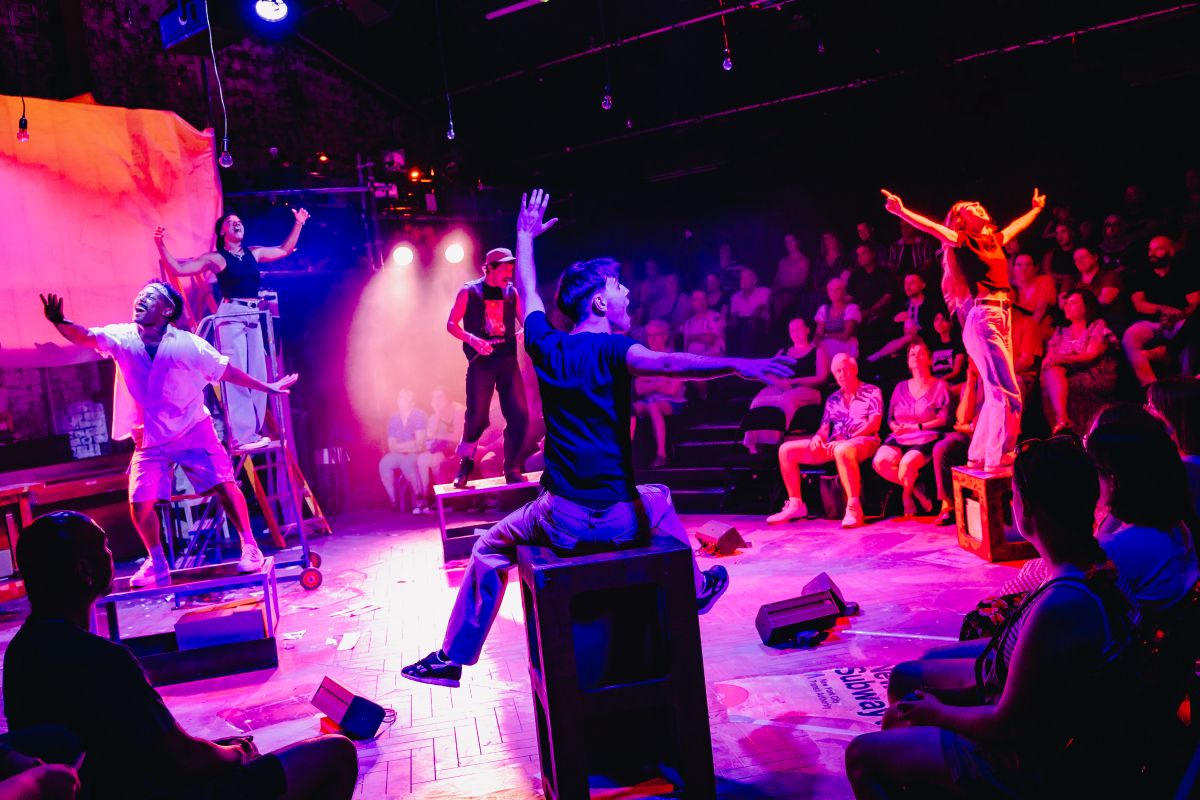
That history inevitably hangs over The Jonathan Larson Project, a collection of 18 songs assembled from Larson’s archives by theatre historian Jennifer Ashley Tepper. First presented as a concert in 2018 and staged Off-Broadway in 2025, it now receives its UK premiere at Southwark Playhouse Borough, directed by John Simpkins. The material stretches from standalone theatre and pop songs to numbers cut from Superbia, tick, tick… BOOM! and even early drafts of Rent. This is not a new Larson musical stitched together from abandoned parts. It is a celebration of the artist he was becoming.
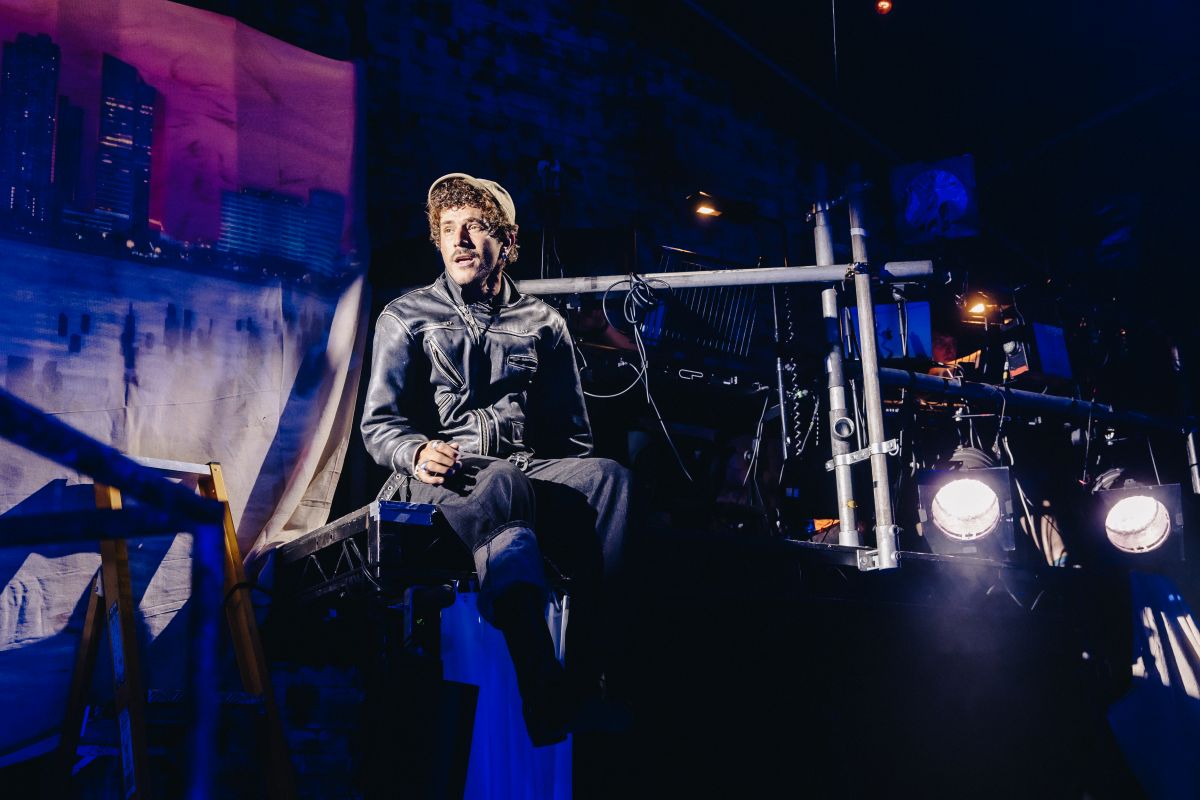
Nate Bertone’s set immediately gives Rent vibes. A scaffold rises above the performance space with Livi van Warmelo’s band perched on top, while a piano, crates, a workshop table and a sheet used for projections create a makeshift artists’ loft below. The audience wraps around three sides and members of the company wander among us as we enter, chatting and welcoming people in. It never feels like an attempt to recreate Rent, but it draws on the same idea of young people making art from whatever they can find.
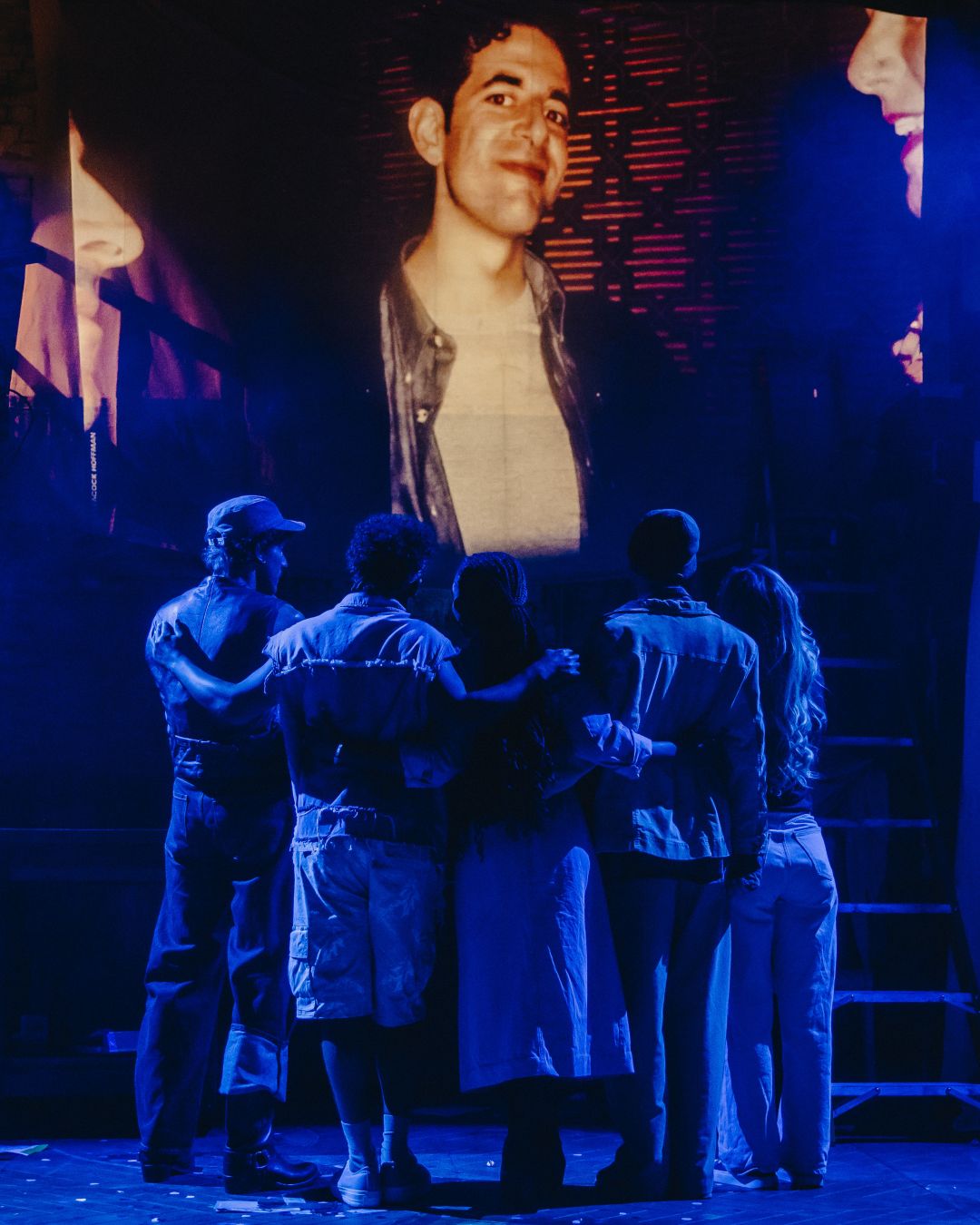
A multilingual montage of Seasons of Love reminds us how far Larson’s work travelled before archive footage hands the evening to the man himself at a piano. He begins Greene Street, written when he was 23, and the live band and company take it from him. It is joyful, bright and immediately recognisable as Larson. It could almost be the theme tune to a very earnest 1990s television drama called Greene Street, and I mean that in the best way. Around me, shoulders start moving and feet start tapping, mine especially.
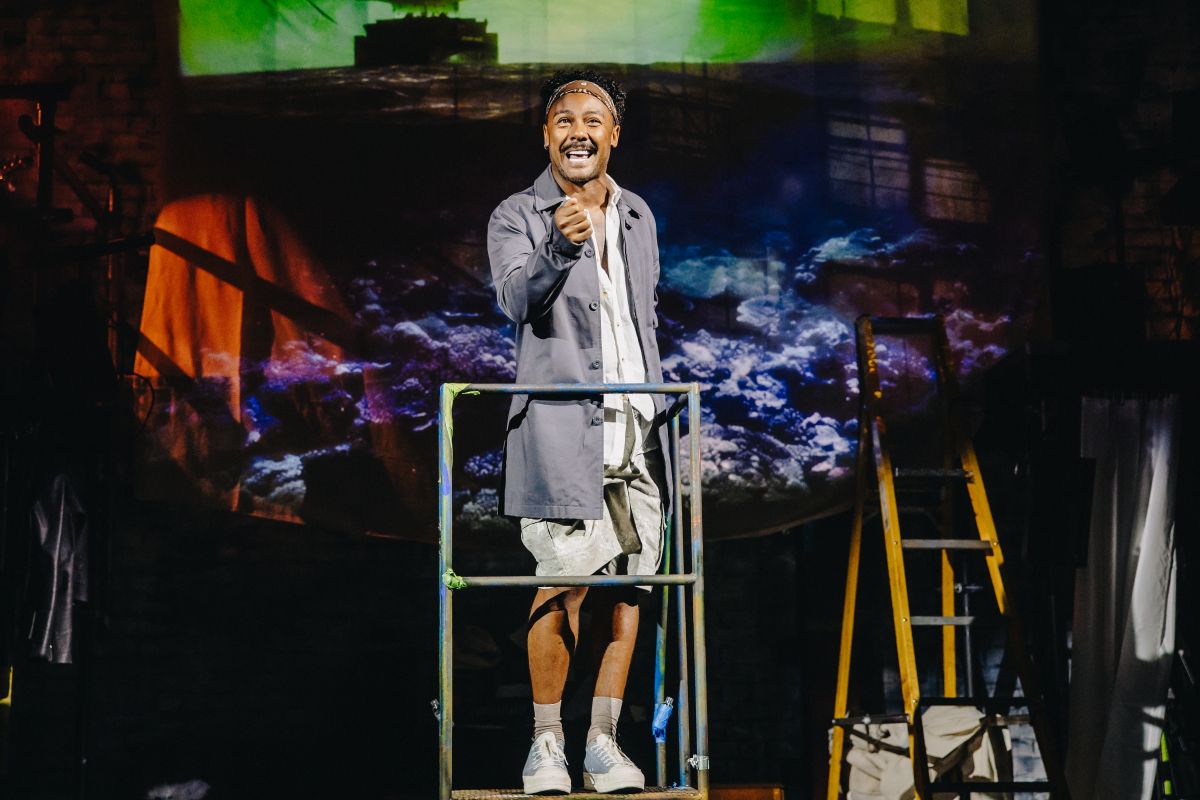
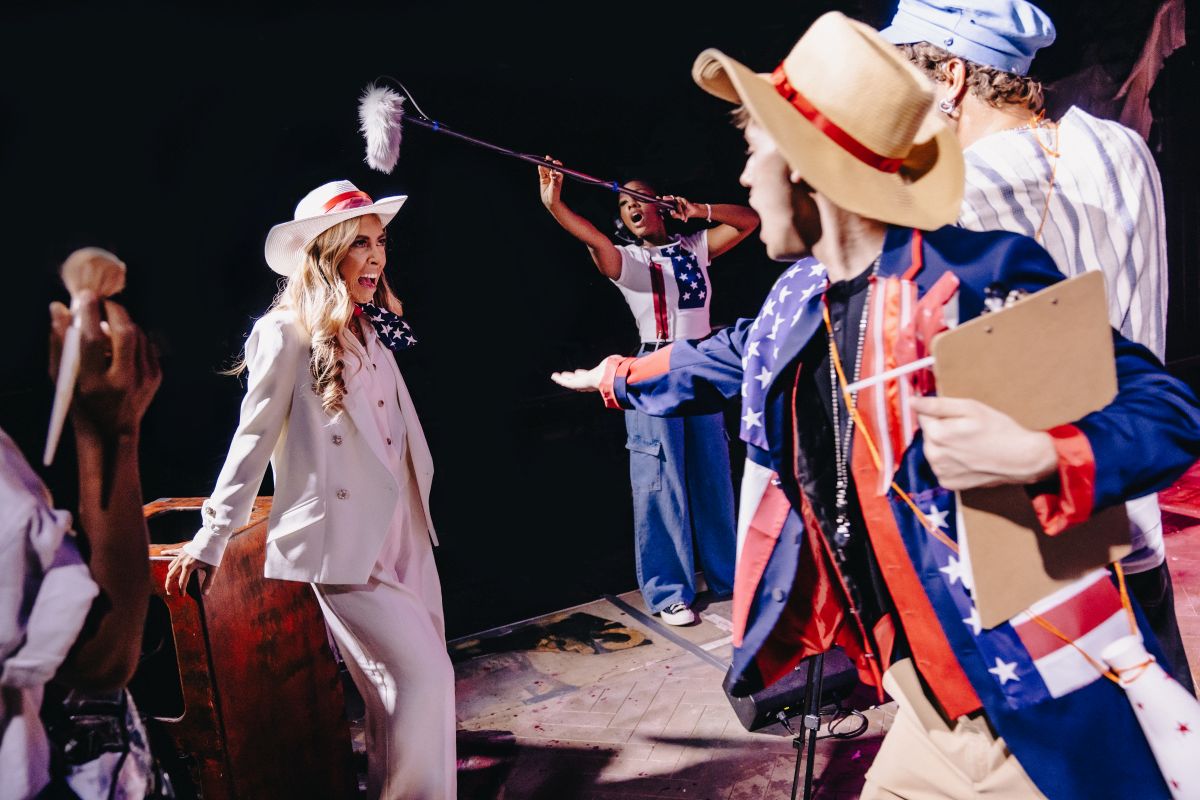
There is no attempt to force a continuous story onto the songs. Instead, Simpkins, movement director Taylor Walker, lighting designer Sam Biondolillo and the cast give almost every number its own identity. Break Out the Booze, led magnificently by Imelda Warren-Green, transforms the room into a pink-lit Prohibition nightclub. Warren-Green has a huge, rich voice and attacks it with delicious abandon. Later, Natalie Kassanga brings glossy pop energy to Out of My Dreams, her soulful voice filling the room with apparent ease.
Marcus Collins leads the gloriously silly Casual Sex, Pizza, and Beer, with the cast joining its increasingly rowdy celebration. They try to bring the audience along too. A few of us manage the title, but asking a room to sing an unfamiliar chorus is optimistic crowd work, and the enthusiasm onstage is not quite matched by those of us wondering what comes next.
The evening darkens with Valentine’s Day, an account of coercion and abuse performed by Michael Mather. Mather gives it intense physical commitment, although I found myself observing the emotion rather than fully sharing it. Max Harwood’s Falling Apart, by contrast, gradually pulls me towards him as his personal crisis collides with a world that seems to be breaking apart. Harwood earns the emotion rather than presenting it fully formed.
The evening’s comic high point belongs to Warren-Green. I loved her in Kathy and Stella Solve a Murder! and thought her criminally underused in Clueless, but Hosing the Furniture gives her exactly the sort of material she excels at. Playing a housewife being crushed by the pressure to maintain the perfect home, she races around with a hose while her life and mind unravel. Warren-Green does frantic and unhinged beautifully. It is ridiculously funny, increasingly dark and, judging by every conversation I had afterwards, the number everyone enjoyed the most.
Larson’s interests extended far beyond romance and struggling artists. Marcus Collins brings passion and real storytelling to Iron Mike, written in response to the Exxon Valdez oil spill. Alex Basco Koch’s video design places footage of the disaster behind Collins, allowing the history to become part of the song. I did wonder how much the references would mean to audience members too young to remember the event, but the anger and environmental devastation need little translation.


Warren-Green and Kassanga tear into White Male World, a deliberately abrasive attack on the racist, homophobic, and misogynistic systems that keep power in the same hands. The Vision Thing turns the whole company into the team behind a manufactured presidential candidate, played by Warren-Green, where make-up, camera angles, balloons and corporate sponsors matter more than policy. A reference to Trump Industries feels like a joke written for the present day, except Larson wrote it in 1989.
Then comes The Truth Is a Lie, and this is the one that really felt written for today. Its targets include political propaganda, homelessness, AIDS, Holocaust denial, guns, bigotry, and inequality, with reality itself treated as something the public must be persuaded not to look at. These songs were written more than three decades ago, yet too much of their anger remains horribly current. Larson wrote like a man who believed music could punch upwards, call out cruelty and stand beside people being failed by those in power.
That context matters, which makes the production’s principal weakness especially frustrating. From my seat on stage right, the scaffold repeatedly cut across the screen. A sizeable section of the audience had to duck and weave to read the titles and background information. During Mather’s beautiful S.O.S., I completely missed that the song came from Larson’s attempted adaptation of George Orwell’s 1984. I enjoyed it, but I would have felt it differently with the information the production intended me to have. Yes, there is a free sheet, but an audience should not have to read along to compensate for a blocked screen.
Kassanga’s Love Heals provides the emotional release the evening needs. One beautiful voice gradually widens into the full company gathered in something that feels like a group embrace. It captures the production at its best. The five performers have the chemistry of close friends meeting to sing the songs of somebody they loved, even though most could never have known him.

Not every recovered song is a lost masterpiece, and not every number held me equally. Even Jonathan Larson could not write a perfect song every time. Yet the variety is part of the fascination: the romantic, the comedian, the environmentalist, the political activist and the young man desperate to make a meaningful difference are all here.
At one point, listening to these songs, I found myself overwhelmed by the sadness of how much more Larson might have created. We do not get that version of history. What we have is the work he left behind, and The Jonathan Larson Project does something so valuable by allowing more of it to live in a room full of people. I did not love every song, but I loved the evening, and I think Jonathan would be delighted with it. It is not another Rent. It is a chance to meet the restless, funny, angry, romantic, and profoundly hopeful artist who was still finding his way towards it.
The Jonathan Larson Project plays at Southwark Playhouse Borough until 22 August 2026.
Book tickets now at southwarkplayhouse.co.uk
Words by Nick Barr
Photography by Danny Kaan