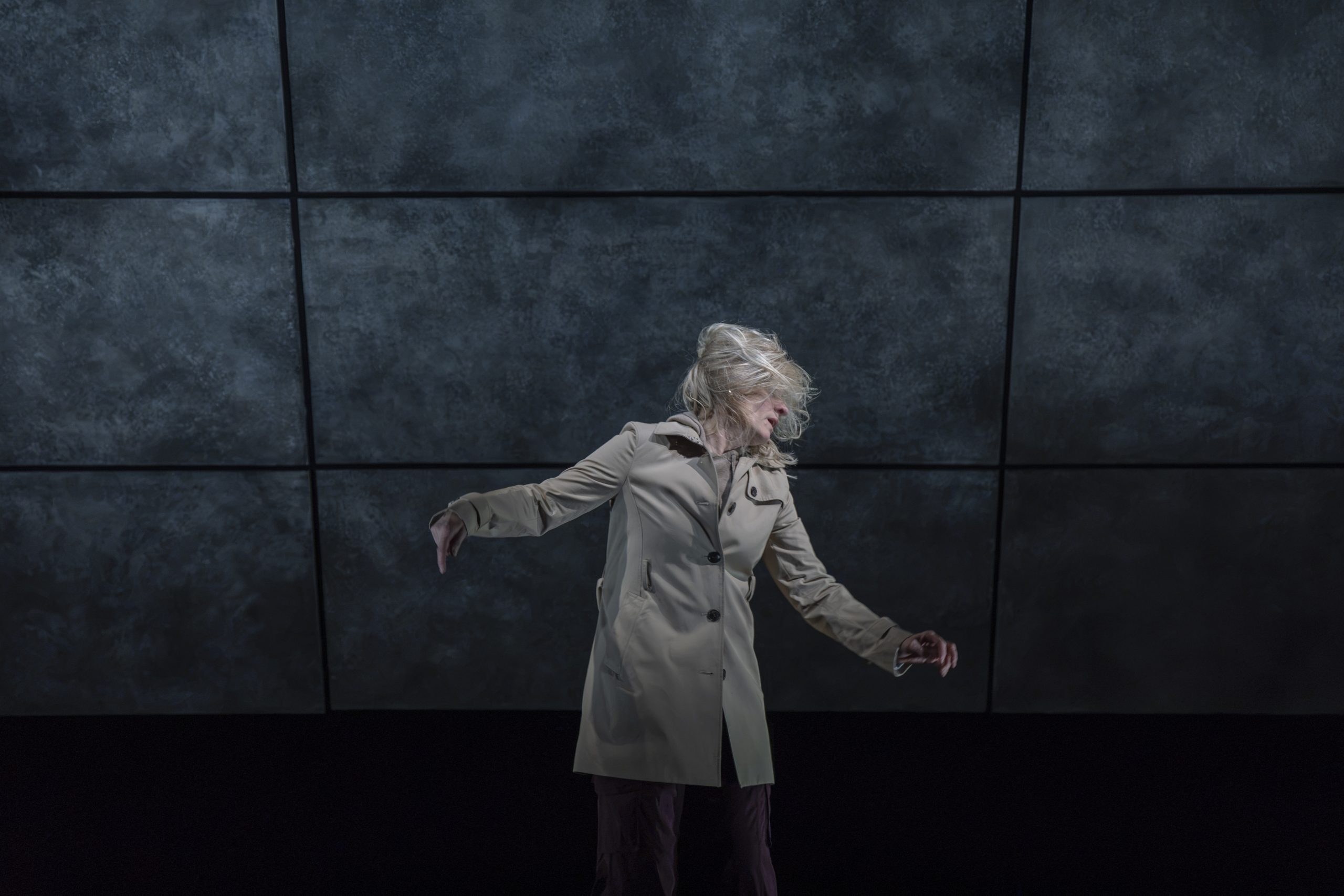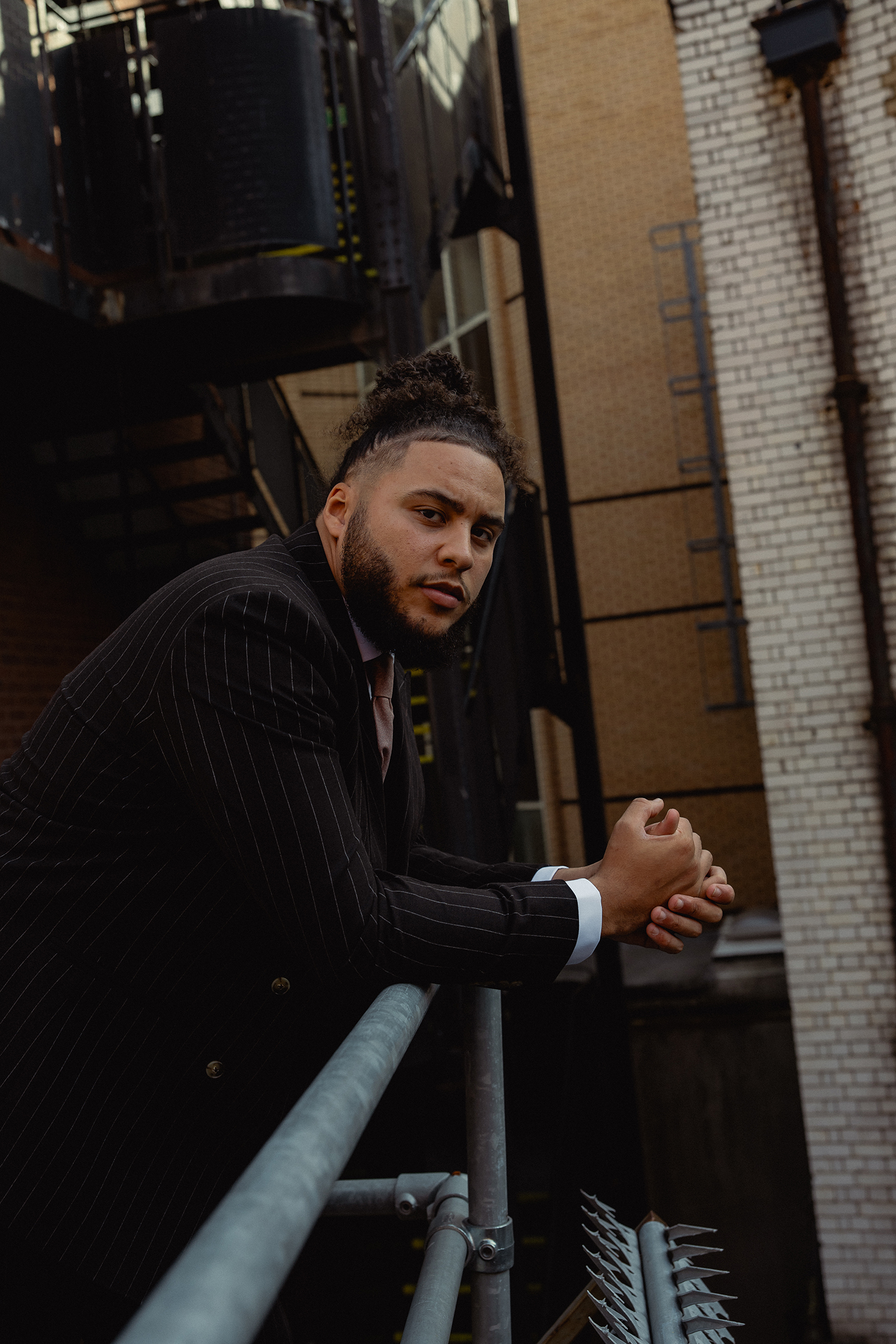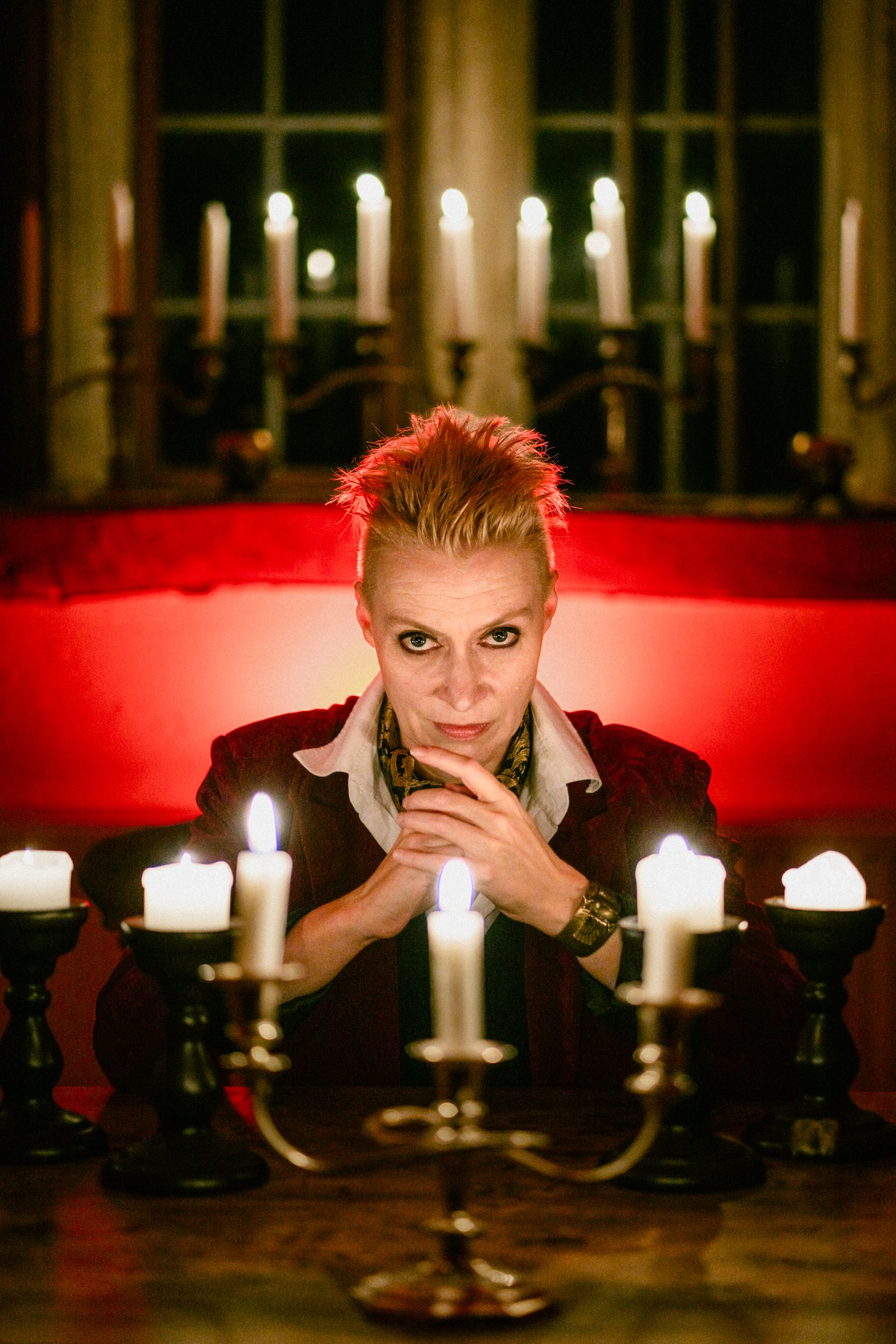
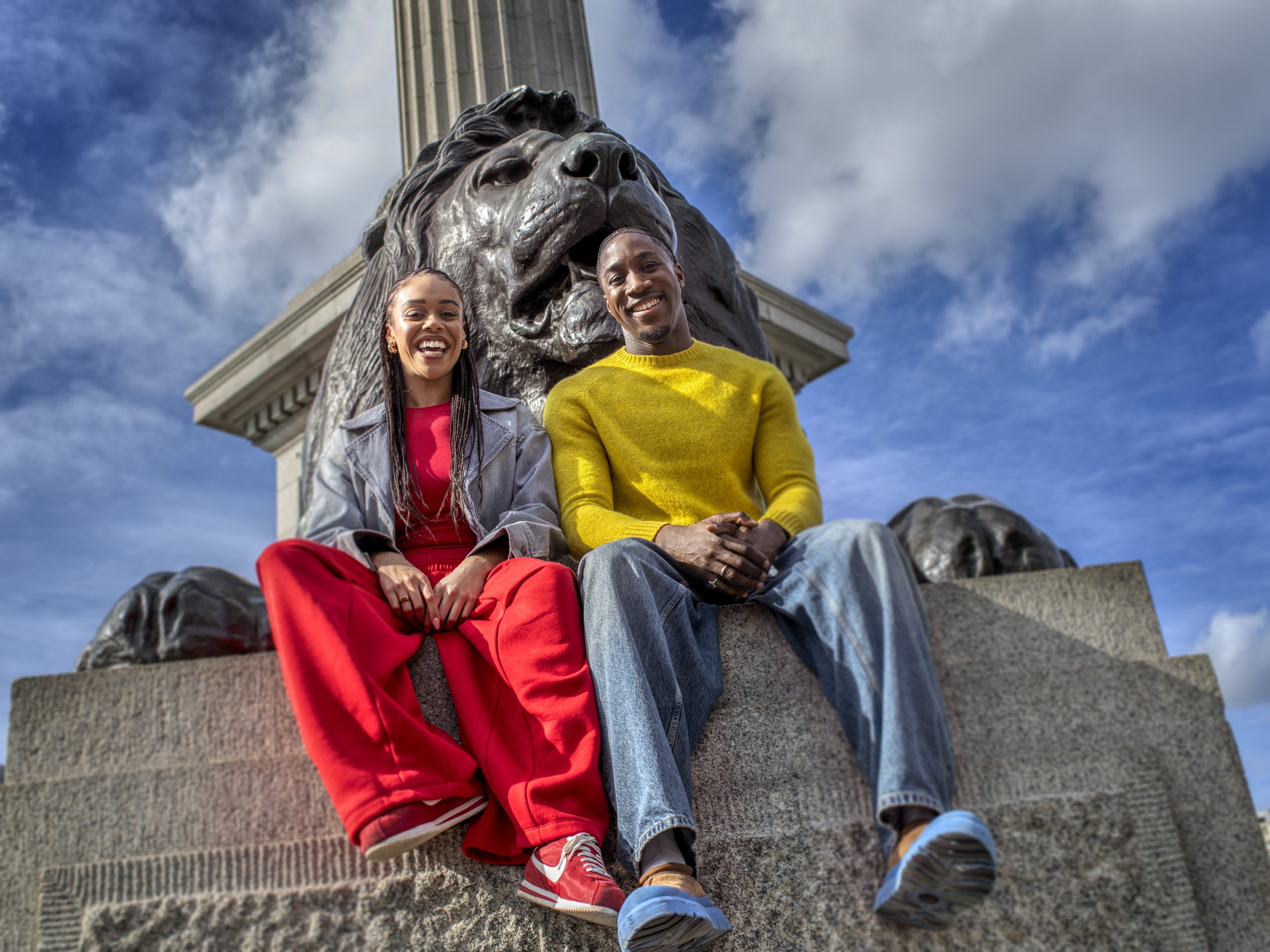
Fresh from the darkness of American Psycho, Posi Morakinyo and Asha Parker-Wallace are bringing friendship, instinct, and new energy to Simba and Nala.
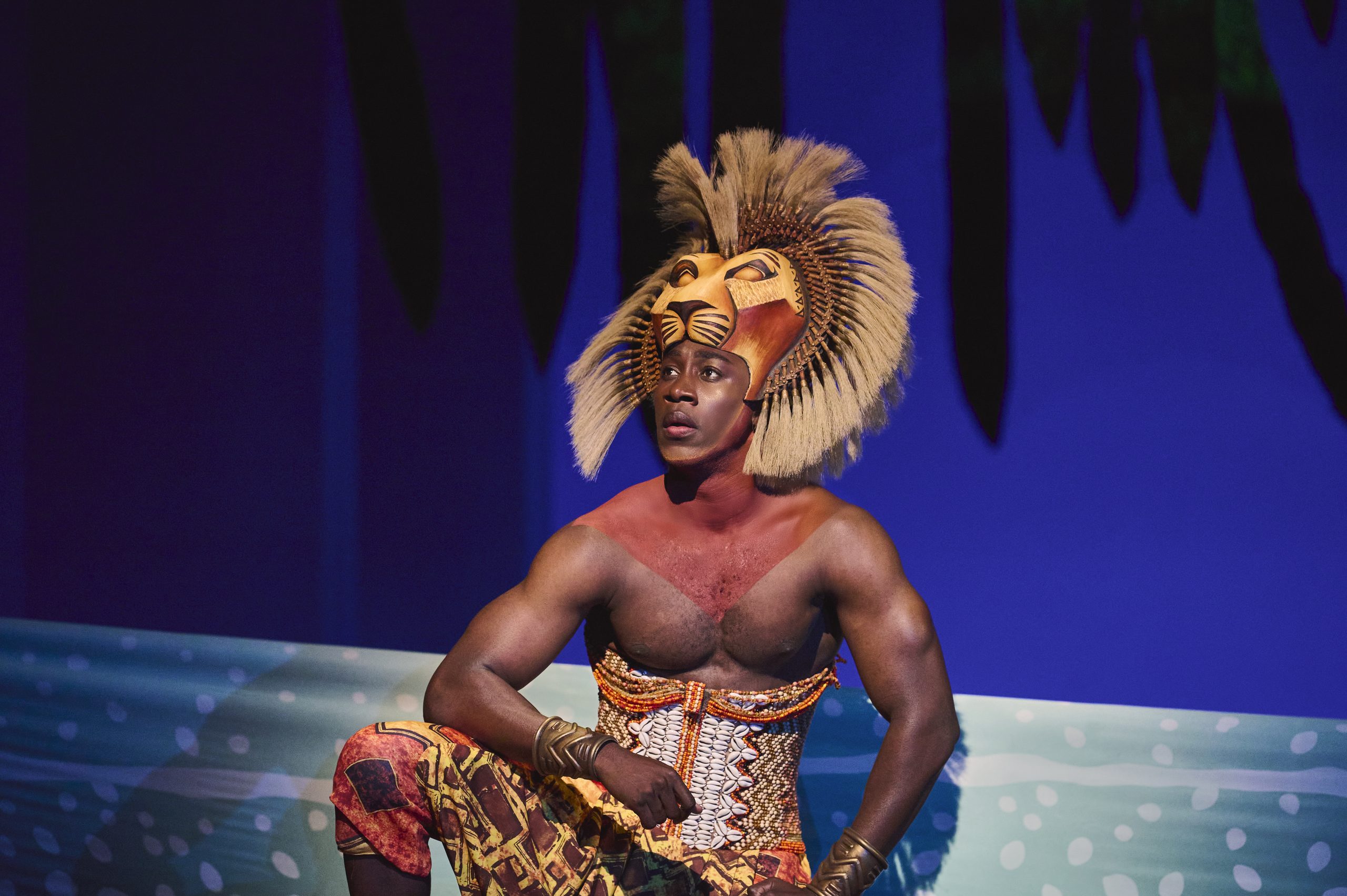
By the time I spoke to Posi Morakinyo and Asha Parker-Wallace in July, they had been playing Simba and Nala in The Lion King for two months. The pair joined Julie Taymor’s landmark production at London’s Lyceum Theatre in May, taking on two characters audiences already know and love.
Shortly before joining the show, both had inhabited the blood-soaked world of American Psycho at the Almeida Theatre. Moving from Patrick Bateman’s merciless Manhattan to Disney’s celebration of life would be a dramatic transition for any performers. Doing it together made theirs particularly unusual.
For Parker-Wallace, Nala caps a remarkable first year since graduating from ArtsEd, following Burlesque the Musical and Starter for Ten. Morakinyo’s route has taken in For Black Boys Who Have Considered Suicide When the Hue Gets Too Heavy, Tina: The Tina Turner Musical, and The Fear of 13. He also came tantalisingly close to joining The Lion King seven years ago.
When we spoke, what came through most strongly was the genuine friendship beneath their onstage chemistry. We talked about learning from ten-year-olds, surviving the show’s physical demands, the responsibility of being seen, and the curious importance of overcooked eggs.
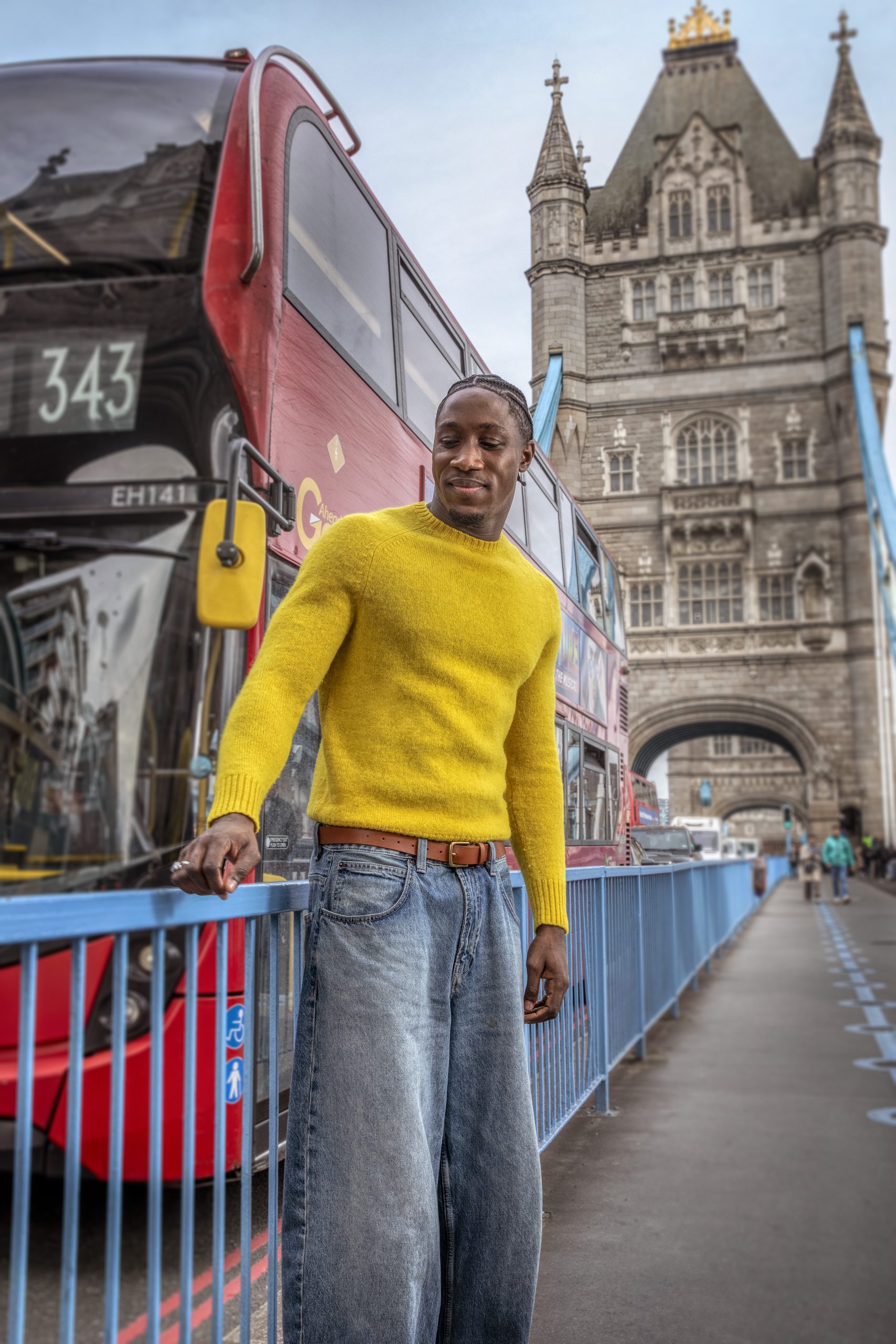

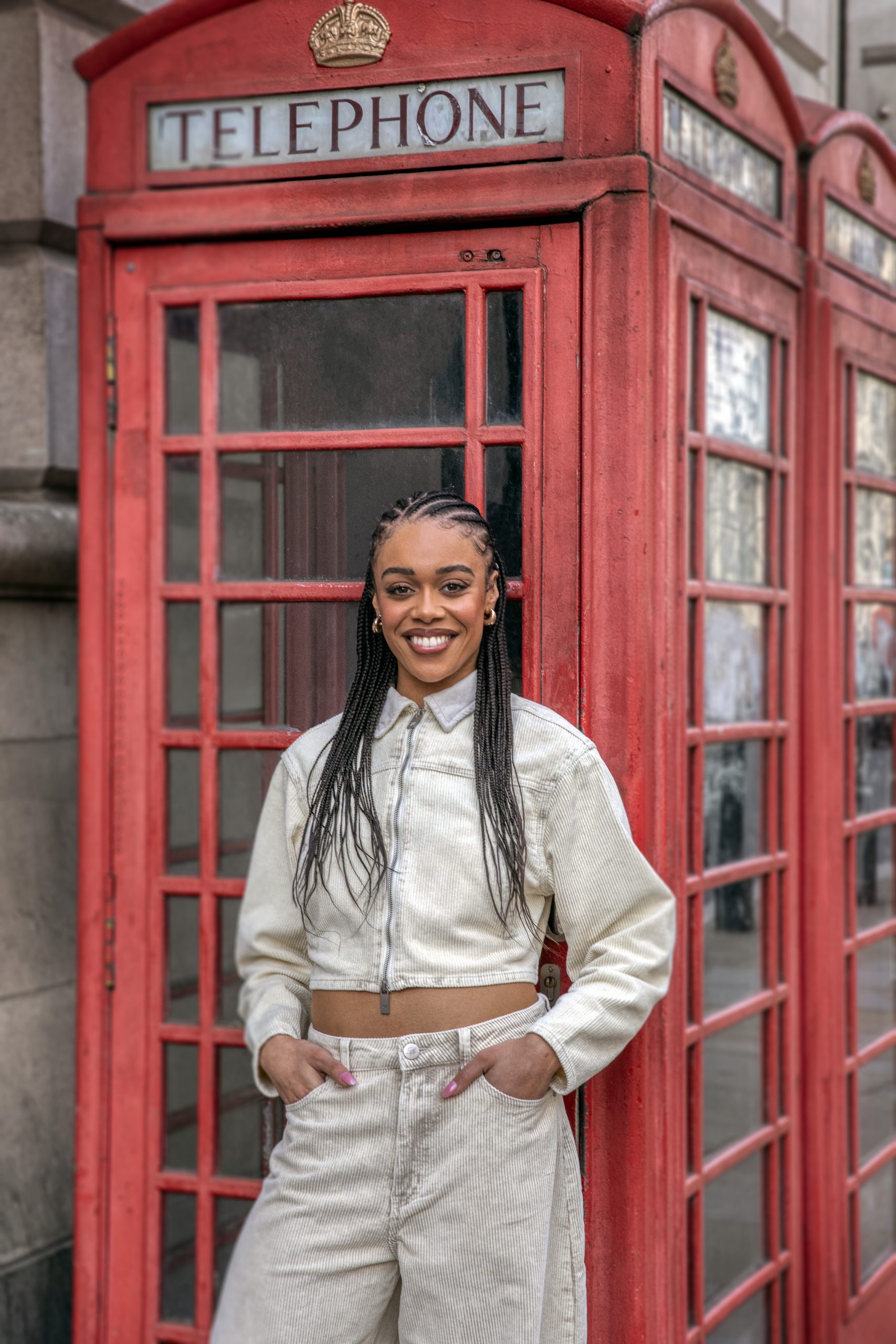
A few months ago, you were immersed together in the dark, satirical world of American Psycho. Now you are in Pride Rock. Has that transition been as surreal as it sounds?
Asha: The juxtaposition of the two shows is crazy. We went from something so dark to something that is a beautiful celebration of life. As artists, you always want to find new challenges, and going from one path to the other was really interesting and exciting. When we found out we were doing it together, we were like, ‘This is so exciting.’
Posi: The two worlds are so polarised that, for a period of time, I didn’t know which way was up or down. You’re preparing for something so life-affirming while currently experiencing so much death. It was world-spinning. The joy of coming into The Lion King is that it’s more than just work. They know exactly what they’re doing. They’ve hit all the right points, and the team and company were incredibly welcoming. It was a very smooth transition into a holistically sound space, which is cool.
Asha, this has been an extraordinary first year in the industry. What has it felt like to go from drama school to leading a West End show so quickly?
Asha: It has been a whirlwind. I had to finish drama school a little early to start my first West End job, Burlesque. I remember going back and saying, ‘Guys, I have to leave to be in the West End.’ I was also rehearsing for Starter for Ten, so everything I had ever wanted seemed to be happening immediately. Now, playing Nala feels like everything I have been striving for. I have worked hard to reach this position, but it is still surreal. I am proud, happy, and very grateful.
Simba and Nala are characters everyone thinks they know. How do you make them your own while respecting what audiences already love?
Posi: First, you honour what has been done before you. You trust the text, songs, blocking, and staging, but you bring yourself to it. If we both said the same sentence, the words would be identical, but they would sound different. It is unique because it is Asha and Posi playing Nala and Simba. Their arcs contain happiness, fear, anger, and frustration, so you can bring in your own life. If I overcooked my eggs and had a rubbish morning, when I get angry because Nala has told me to go home, I can think about those eggs. The audience won’t know that, but I do. I was mad. I wanted a runny yolk. It wasn’t runny.
Asha: It is also interesting that other actors begin our characters’ stories. The children playing young Simba and Nala experience all the emotions that lead to where we enter the stage. The little things they do can influence our performances, which keeps the show fresh every night. It is a privilege to have young actors shaping your work because they are the next generation, and they are already doing so brilliantly.
Posi: To give you an example of how good they are, during one warm-up the resident choreographer told me I wasn’t fully committing to a particular movement. I was like, ‘Yo, I’m doing it.’ But she explained that it wasn’t just a dance move. Young Simba and Nala perform it on their way to the Elephant Graveyard, and it represents home for them. Jace Grant was playing young Simba that day and singing I Just Can’t Wait to Be King, so she called him over to show me. I was thinking, ‘I’m being schooled by a ten-year-old. This is great. I should be teaching you, and you’re out here showing me what the move should actually look like, and you’re ten.’ They’re phenomenal.
Did either of you have a moment when you suddenly thought, ‘I have found my Simba’ or ‘I have found my Nala’?
Asha: For me, it happened after we opened. Rehearsal is constant trial and error, and you are learning about the material, the movement, the character, and yourself. We had four weeks of rehearsal and two weeks of technical rehearsals, which is not a long time to find that depth. Once we were onstage and every element was working in tandem, there was a moment when I thought, ‘This is how I want to present Nala.’
Posi: You need the whole machine to run a couple of times before you understand the cycle. I was fighting for my life in rehearsals. The stamina is no joke, but everyone makes it look effortless. You see people flying, carrying gazelles, doing triple pirouettes, and wearing detachable lioness heads, and think, ‘That’s really nice.’ Then they tell you that you’ll be swinging on a vine, cartwheeling, jumping, and singing at the top of your lungs eight times a week. I was like, ‘How in the high heavens am I going to do this?’ It is mental. Once you stand beside the people who inspired you and step onstage together, the machine supports you. During He Lives in You, I can see more than 30 people singing behind me, then face 2,200 people. In rehearsal, you’re looking at a brick wall. Onstage, you see mums crying, kids beaming, and people holding their loved ones a bit tighter. In the moments where you don’t feel up to it, it’s like ‘Nah, nah, nah, we’ve got you.’ I don’t need a perfect performance. If I’m present and give what I’ve got, it feels amazing. Has it fully clicked yet? I’m not sure. Give me some more time to cook and I’ll get back to you, but right now we’re working it out.
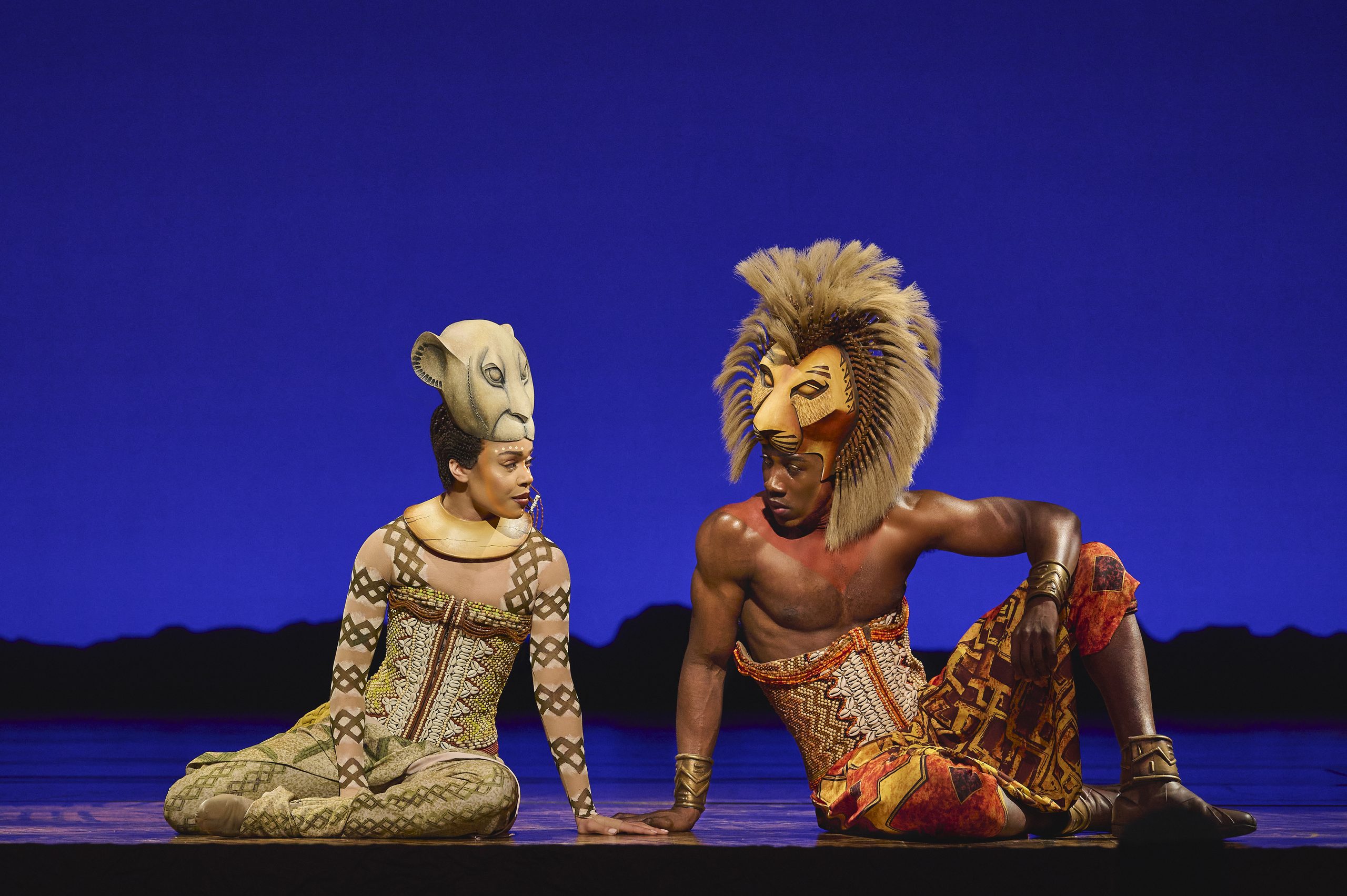
You are playing lions, but the audience also has to recognise themselves in these characters. How do you reconcile the animal and the human?
Asha: The initial challenge is playing a lioness through the movement and how I carry my body. Emotionally, I am a woman onstage. In Can You Feel the Love Tonight, I am feeling a woman fall in love with a man. Love, happiness, anger, fear, and the fight for more are feelings I understand. Animals experience those emotions too. I marry the two together and try to be authentic as both a lioness and a human woman.
Posi: I had to step back and realise that humans are animals too. We’re instinctive creatures, but we’ve learnt to rationalise. A lion doesn’t think, ‘If I were hungry, what would I do?’ It hunts. Our director told me, ‘Posi, you seem calculated here. The thought-to-action time is zero. You feel, then you do.’ As humans, we don’t normally crash out so often. We can be frustrated, but we’ve learnt not to show people that we’re upset or angry. As a lion, there’s no need to present. You just do, which is sick.
Asha, The Lion King was the first musical you ever saw. What is it like to look out now and see children who could be having the same experience you did?
Asha: It feels insane. I was six when I saw it, and I remember thinking, ‘I would love to do this one day.’ Now, I can see children’s faces and know that some feel the same. It is an intergenerational show, with grandparents, parents, children, couples on dates, and people who might even be proposing afterwards. There are 2,200 people in the audience, each having individual thoughts. I feel lucky to be doing for somebody else what that performer did for six-year-old me.
Posi, you came close to joining The Lion King seven years ago, but could not make the final chemistry reading because you were working in Kuala Lumpur. Does finally getting here make it even sweeter?
Posi: You don’t really get second chances, to be completely honest. Only one person can play a role at a time. The circumstances were outside my control, so there were all these ‘what ifs’. It could have worked or not, but I would never know. Afterwards, the opportunity felt impossible. The way things have panned out seven years later is wild. To be here now, see what an incredible production this is, and be part of it is a huge blessing.
Simba and Nala only work if the audience believes they have known each other all their lives. How did you build that trust?
Asha: We had already spent months seeing each other every day on American Psycho. You do not usually see a new friend every day for that long, but this industry means you can form strong connections quickly. We got on well as people and established a real friendship. Usually, you enter a rehearsal room and meet your co-star for the first time. We arrived on day one with all those previous experiences and that trust already in place.
Posi: You rarely work with someone you actually admire. During American Psycho, we workshopped a lot, and I watched Asha create things in front of me. I was like, ‘Bro, she’s dope.’ I was already a fan of her work, then we started talking and I thought, ‘And your vibe? Amazing.’ She got The Lion King, told me Simba was being cast, and read opposite me in a final audition. What are the chances that we meet on a job, become friends, then she books the co-starring role to the job I end up getting? It’s mental. When people say we look as though we know each other, we do. We know what it means to argue, make up, walk around London, shop, and talk about life. It isn’t fabricated.
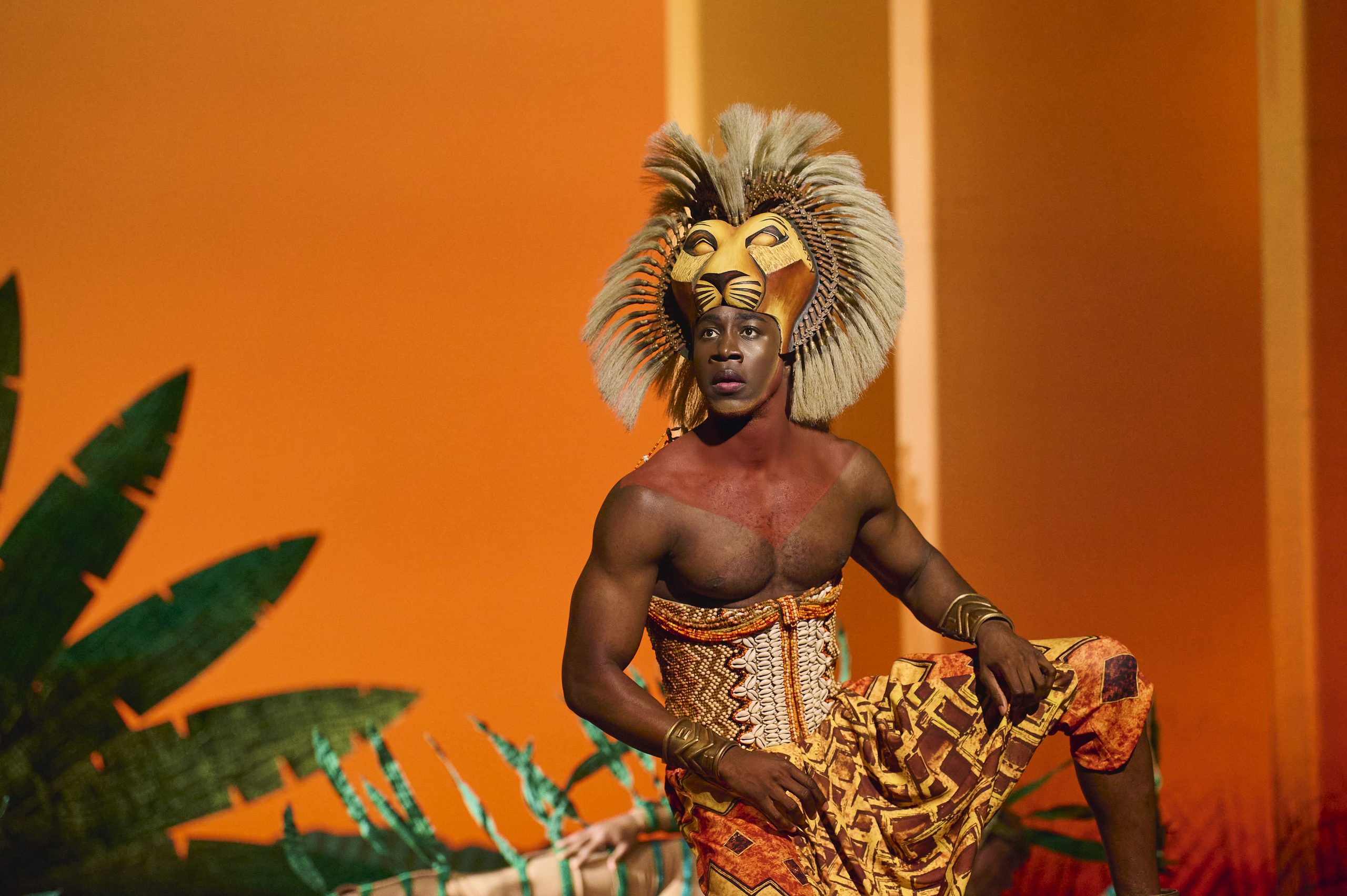
Without embarrassing each other too much, what does your co-star bring that makes your own performance better?
Asha: Posi has a very strong, open energy. I feel as though I can understand what is happening in his head, and that matters because your co-star’s thoughts influence the choices you make. I can read his energy, and when it changes, we work with it. That allows the performance to remain authentic and fresh each day.
Posi: One of Asha’s strengths is how grounded she is. Every night, I listen as she sings Shadowland into a black abyss, singing her lungs off, and she never flaps, falters, or wavers. That is wild. I’m energetic. If my head could detach from my body, I might lose it. I can flap a lot. Standing next to someone so present stops me from being anywhere else. She centres me and brings me back to the moment. That is a lifeline. Nah, that’s a gift. She makes me want to be better because she’s so good. When Shadowland comes over the tannoy, Shaun Escoffery, who plays Mufasa, and I turn it up because we know a tasty vocal is coming. Sometimes the audience applauds before the song has ended. To me, that is testament to Asha.
Do you have any pre-show rituals that snap you into character?
Asha: Before I put on my corset, I do five frog jumps on the stairs because Nala’s movement is springy. Then I sing along to the song before my entrance. Once I have jumped and sung, I am ready. It is silly, but it works. If I forgot, I would be convinced I was going to have a bad show.
Posi: Before I enter, the lionesses come offstage in a line. The final one waddles backwards until she can see me, then gives me a double high five. That sends me into the show. I also take an M&S hot shot, go down the stairwell, sing the beginning of Hakuna Matata, and disturb everyone. Later, during Shadowland, I sing the end of my first song so my mind has completed what I have done and my voice is in the right place. The stairwell echoes, so not only am I going to hear it, you’re all going to hear it. We do it until it sounds cute.
Asha: I take an M&S ginger shot too. We did not know that about each other until now!
The Lion King has long been one of the West End’s most visible productions for Black performers. What does it mean to carry two of its most iconic roles?
Posi: I think of Simba and Nala like the Olympic torch. You carry it around your city, showing people that this can happen. Simba, in my body, is a little flame that says, ‘You can do this too.’ That flame ran past me when I was younger because I saw a Black man playing such a pivotal West End role. Now I’m bearing that torch. When I pass it on, I hope a little Black boy runs his own race and shows his town that they can do it too.
Asha: It is very important to me that young people of colour feel they have a place in this industry because it can seem out of reach. There were points when I thought, ‘This is not for me,’ and that is a hard feeling. I want people to see what this company has achieved and think, ‘She has done this. I can do it too.’
Posi: Recently, my old secondary school brought its Year 7 to Year 9 music students to the show. After the show I went to meet them, and I met this one kid clutching a programme, a water bottle, a teddy, and some Skittles. He said, ‘You are my inspiration. You are on the wall at school next to Matt Smith. I see you every day, and now I have seen you on that stage.’ I remember thinking, ‘Bro, that’s mental.’ To be more than a picture and let children from your school see you doing it in the flesh is an honour. I can’t express how life-giving it is to pass on something that was given to you. It feels like an heirloom.
Theatre has become much more diverse over the past decade. Is there still a danger that progress in the West End becomes concentrated in productions such as The Lion King, Hamilton, and MJ, rather than across theatre as a whole, or do you feel things are genuinely improving for people of colour in British theatre?
Posi: There is progress. A lot of the time, the conversation becomes very black and white: either we’re represented and have opportunities, or we’re not represented enough. There will never be a point where improvement is finished. Do we continuously need representation? Absolutely. But Les Mis ten years ago is very different to what Les Mis is now. As a Black performer, are there opportunities? Absolutely. Are there enough? No. Do I want more? Yeah, but so does everyone. The idea that we’re not being seen isn’t true. We are being seen, but of course you want more for your people, your family, and your life. Les Mis is such a sick example. Asher saw Sam Oladeinde as Javert a couple of days ago. He had been playing Aaron Burr on tour, and now he’s leading a West End show as a dark-skinned man, and he’s killing it. It’s like, wow. That would have been unthinkable 25 years ago.
After seeing The Lion King, what do you hope stays with people long after they leave the theatre?
Asha: One of my drama-school teachers said ‘Theatre is important if it makes you think’. The Lion King is a spectacle, but it also makes you consider your life, goals, and journey. You might wonder what shift Simba needed before he returned, then ask, ‘What shift do I need in my own life?’ It presents real emotions and situations. The puppets, set, and everything else are an extraordinary bonus to a thoughtful story.
Posi: I want people to leave feeling connected. Life can feel singular, but any journey is made interesting by how and with whom you travel. Simba leaves his pride when he is lost, finds another kind of pride with unlikely characters, then returns with his new family. If you arrive feeling lost or untethered, not knowing what’s up, down, left, or right, I hope you leave knowing you can return with everything you thought was lost, and that it may become a beautiful addition to where you were meant to be. It is always going to work out, even when it doesn’t feel like it. I hope you feel the love tonight, and that love stays with you.
The Lion King is playing at the Lyceum Theatre, London.
Tickets are available at thelionking.co.uk
Interview by Nick Barr
Portrait photography by Perou
Production photography by Matt Crockett