Over the past few years, sew-in weft hair extensions have quietly made a comeback in professional salons. While the technique itself has existed for decades, the way stylists install wefts has evolved dramatically.
Advances in installation methods, weft construction, and ultra-thin designs now allow extensions to sit closer to the scalp and blend more naturally with the client’s hair. As a result, sew-in wefts are once again becoming one of the most requested options for adding long-lasting length and volume.
Today, many stylists combine modern installation techniques with lightweight wefts—such as the Sew-In Weft and Genius Weft from GOO GOO Hair—to achieve results that look and feel far more natural than traditional sew-ins.
How Sew-In Wefts Are Installed
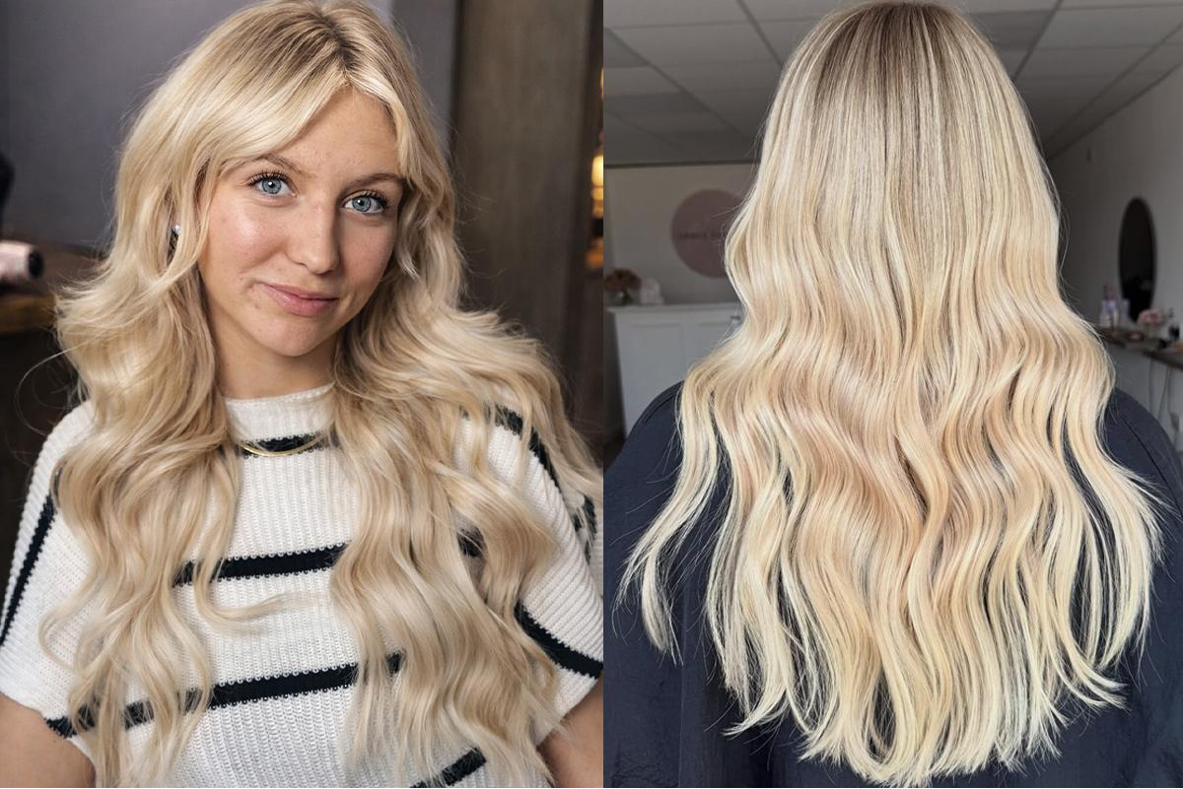
Sew-in wefts are typically installed by creating a foundation along the scalp and then stitching the weft onto that base using a curved needle and thread. The exact technique varies depending on the stylist’s training and the client’s hair type.
Unlike temporary extensions such as clip-ins or halo hair, sew-in wefts are designed to stay in place for several weeks, making them a popular choice for clients who want consistent volume and length without daily installation.
Several installation approaches are commonly used in modern salons.
One of the most widely used techniques today is the beaded row method. In this approach, small silicone-lined beads are threaded onto sections of the natural hair to create a stable row. The weft is then sewn onto this row, forming a secure base that distributes weight more evenly across the scalp.
Stylists often prefer this method because it:
- Allows the weft to sit closer to the scalp
- Reduces tension compared to traditional braid foundations
- Makes maintenance and repositioning easier during salon visits
This technique works particularly well with modern Sew-In Wefts,which provide structured volume and durability.
Swan Method: A Seamless Stitching Technique
A technique gaining attention among professional stylists is the Swan Method, which focuses on creating a more seamless stitching pattern when securing the weft to the foundation row.
Rather than relying on multiple visible stitches, the Swan Method uses a fluid stitching motion that minimizes exposed thread and bulky seams. The goal is to allow the weft to lie flatter against the scalp and remain less noticeable when the hair moves.
When combined with ultra-thin wefts—such as Genius Wefts from GOO GOO Hair—this approach can create an especially smooth and natural finish, even for clients with finer hair.
Luna Method: Balancing Weight and Tension
Another modern system used in salons is the Luna Method, which focuses on balancing tension and distributing the weight of the extensions more evenly across the natural hair.
Instead of relying on a few anchor points to support the extensions, this approach spreads the weight along the entire row. The goal is to reduce stress on individual strands and create a more comfortable wearing experience.
Key principles of the Luna Method include:
- Even weight distribution along the extension row
- Reduced tension on natural hair
- A flatter installation that moves naturally with the hair
Because of this balanced structure, the method is often paired with lightweight wefts, which help maintain both comfort and flexibility.
Installation techniques are only part of the equation. The design of the weft itself also plays a major role in how natural the final result looks.
Traditional machine wefts are durable and provide substantial volume, making them a good choice for clients with thicker hair.
Newer weft designs, such as Genius Wefts from GOO GOO Hair, are engineered with ultra-thin seams and flexible construction, allowing them to sit flatter against the scalp and blend more easily with natural hair.
These modern wefts are also designed to be cut and customized during installation, giving stylists more control over placement and density.
Because sew-in wefts are typically made from Remy human hair, they can be styled with heat tools just like natural hair. Curling irons, straighteners, and blow dryers can all be used to create different looks, from soft waves to sleek styles.
With proper care and professional installation, sew-in wefts can remain in place for several weeks before needing adjustment, making them one of the most long-lasting extension options available in salons.
The renewed popularity of sew-in wefts reflects how much the technique has evolved. By combining improved installation systems—such as beaded rows, the Swan Method, and the Luna Method—with modern weft designs, stylists can achieve results that are more comfortable, natural-looking, and customizable than ever before.
For clients looking to add fullness, length, and long-term styling flexibility, today’s sew-in wefts offer a professional solution that continues to evolve with new techniques and materials.