Two days is a short shelf life for a Pulitzer. Janet Cooke handed hers back in 1981 once it emerged that her front-page Washington Post story about an eight-year-old heroin addict called Jimmy was a work of fiction. Inspired by this event, Tracey Scott Wilson’s 2003 rocket of a play fizzes then fizzles out at the Olivier.
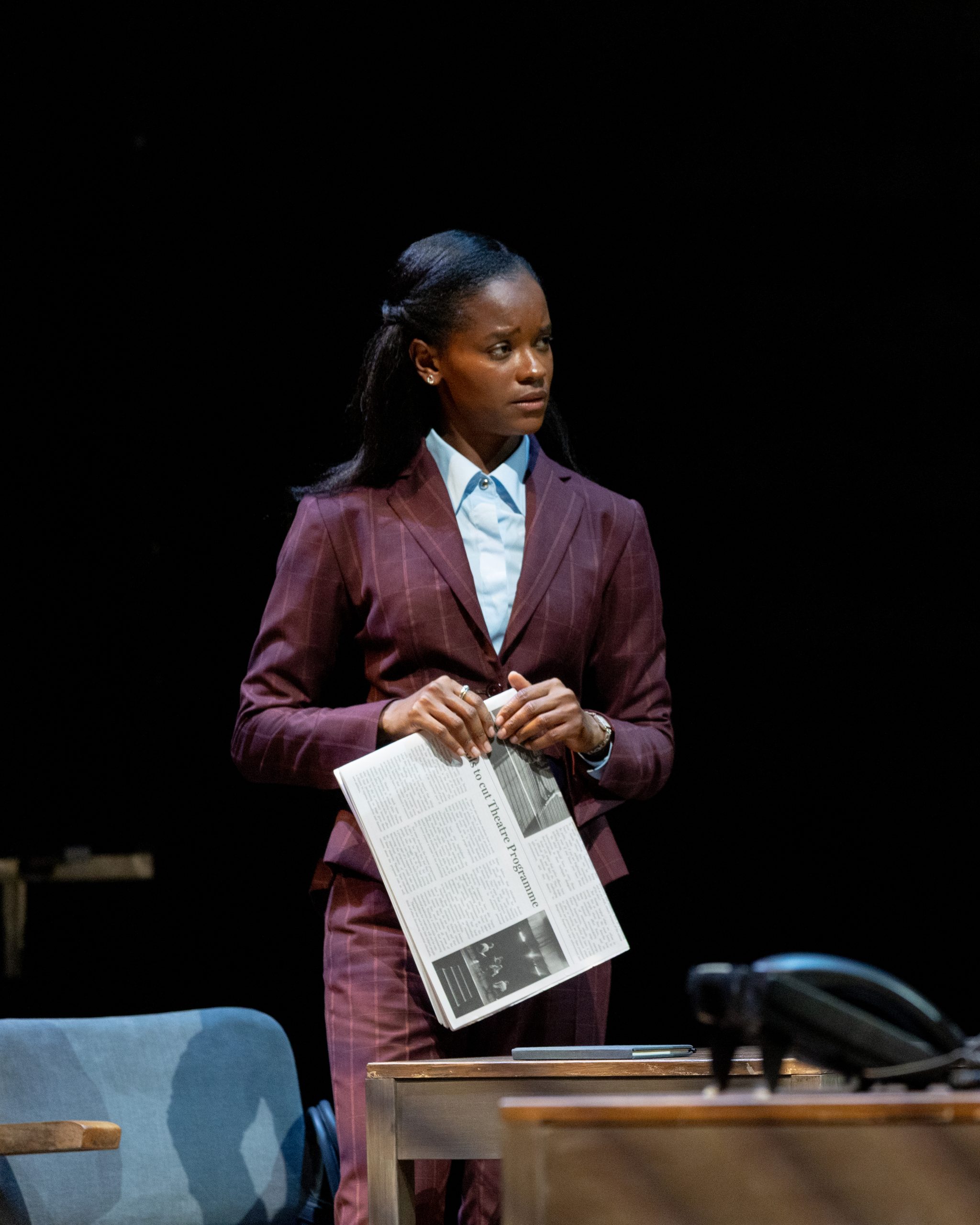
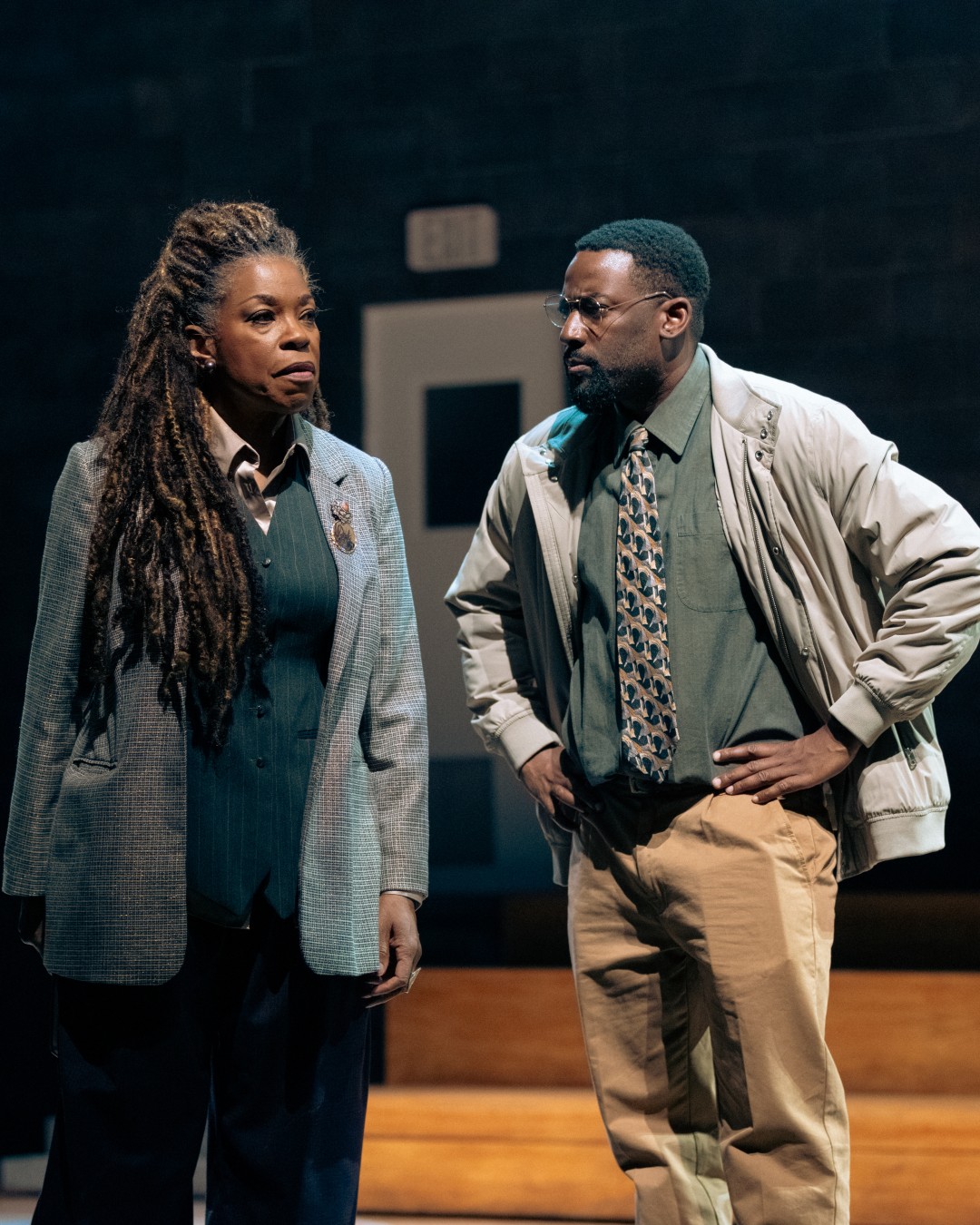
Her central character closely follows Cooke’s own history, albeit with changed names. Striding into her new job like she owns the building and everything in it, young journalist Yvonne (Letitia Wright) arrives with a sparkly CV boasting studies at Harvard and the Sorbonne plus an ability to converse in four languages. She has landed a coveted role at the ground-breaking Vanguard, a city paper offshoot that covers stories with an “urban” flavour. She dreams of moving to the main paper’s newsroom. First, though, she has to play nice with her female Black editor Pat (Lorraine Toussaint) who came up the hard way and could outstare concrete, should she wish. It’s not long before Yvonne uncovers a tantalising story that makes waves around the city.
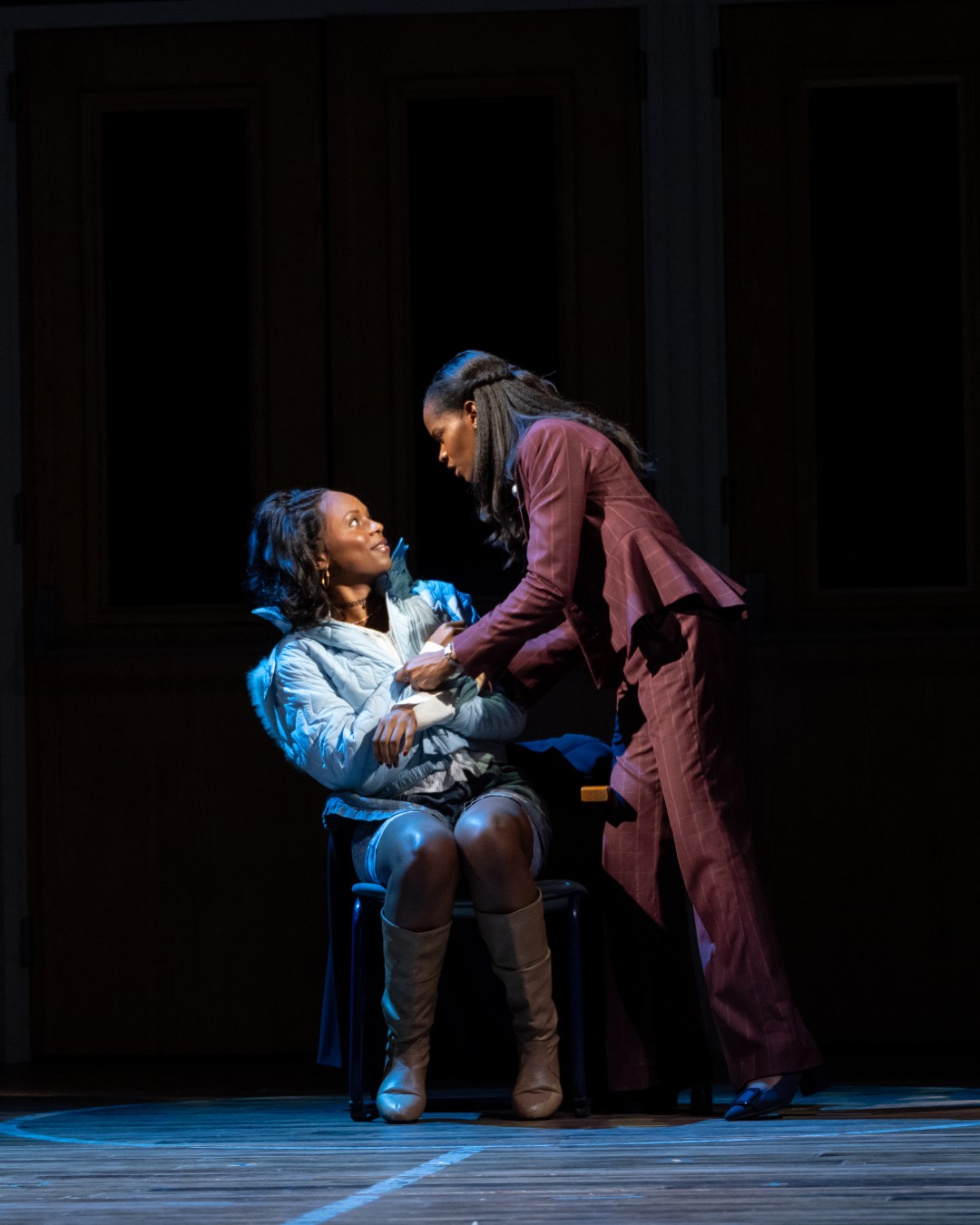
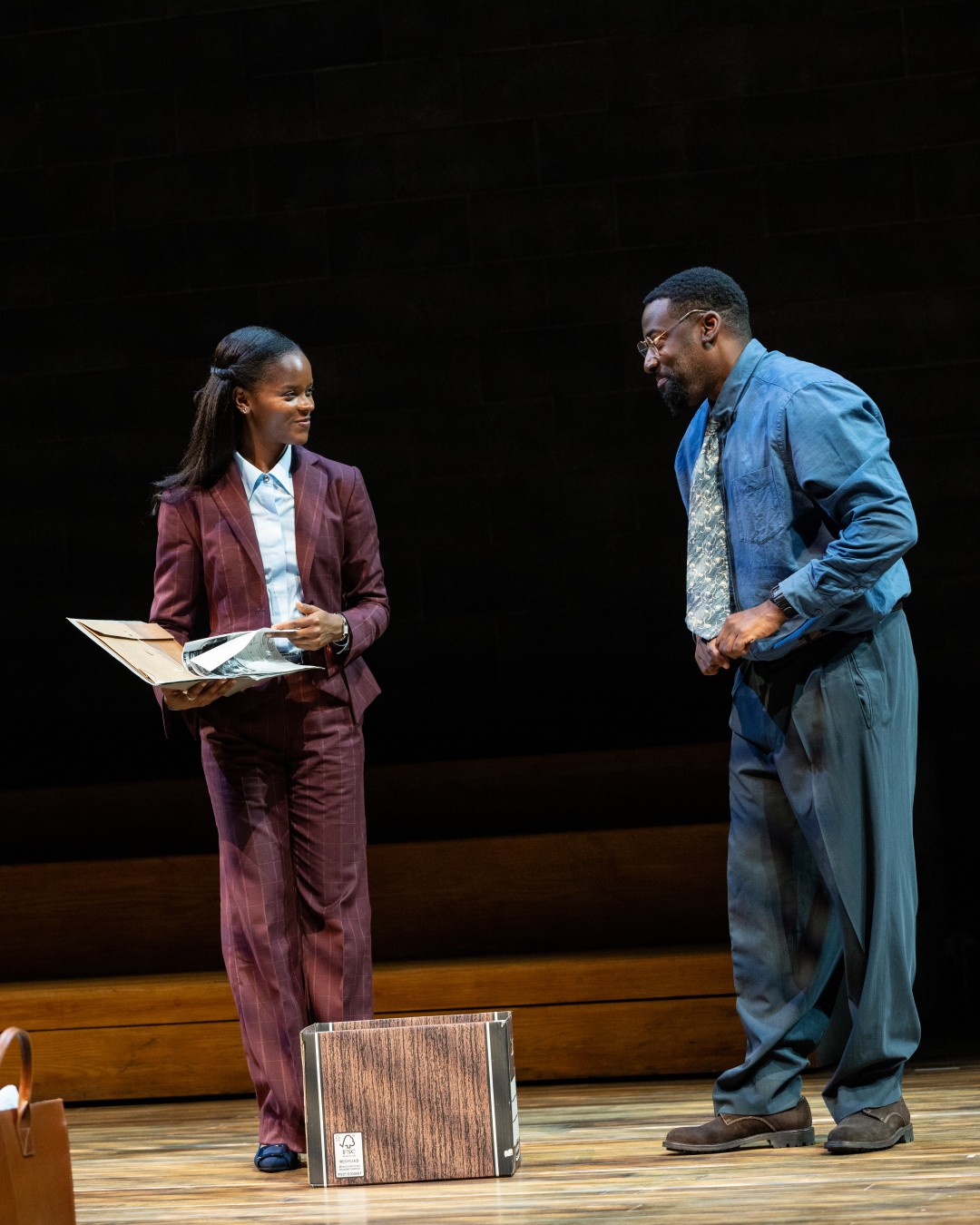
Wilson grafts that real-life narrative onto a fictional one. Driving along late at night, a white married couple are lost and take a wrong turn in the wrong part of town. Their detour and a single panicked moment act as the spark for an explosive confrontation and a media circus fuelled by race politics, rancid ambition and blinding egos. The subsequent city-wide firestorm pulls in the press, the law and innocents alike. Few involved escape unscathed.
If all that sounds familiar, it should. The central aspect of The Story is haunted by the ghost of Tom Wolfe’s epic tale The Bonfire of the Vanities – a book described as “the quintessential novel of the 80s”, even if it did get turned into a less-than-quintessential film that did absolutely nothing for the careers of Melanie Griffiths, Tom Hanks and Bruce Willis. Wolfe understood that in a sufficiently combustible city, one bad night can become everybody’s business: the press gets its story, the public gets its villains and (sometimes) the police get the actual culprits behind it all. Wilson takes Wolfe’s setup and injects new life into it even if the conclusions are similarly depressing.
Wright plays the sharp, awkward and hungry reporter with incisive movements, a real vigour and a borrowed accent. In Toussaint’s skilled hands, Pat is a Civil Rights veteran with her own sad story to tell and the nifty ability to effortlessly steal every scene she appears in. The pair are the dramatic fulcrum of the entire play, their changing dynamic reflecting their respective downfalls; in contrast, the central male characters are largely there for comic relief and exposition when not shouting loudly for one reason or another.
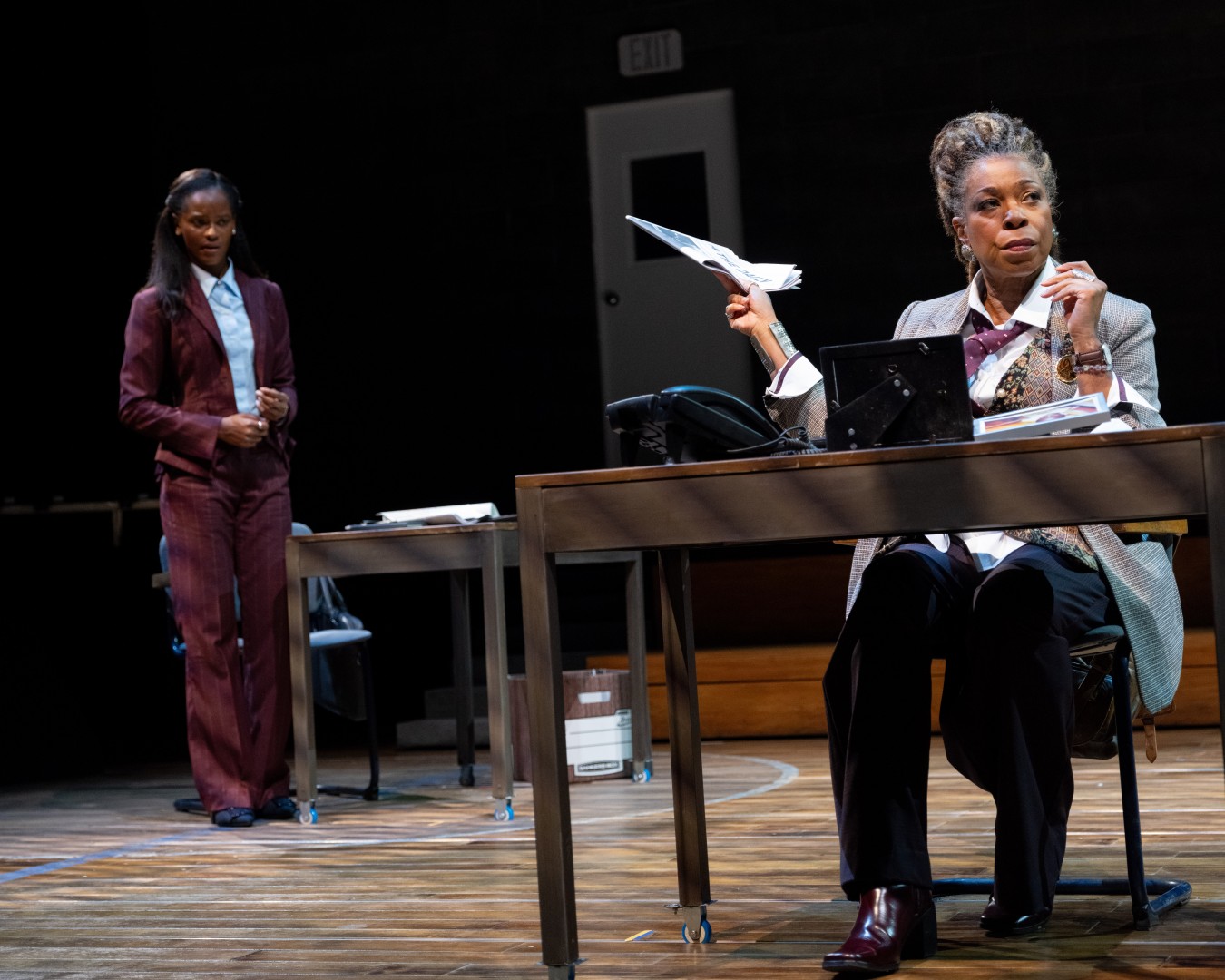
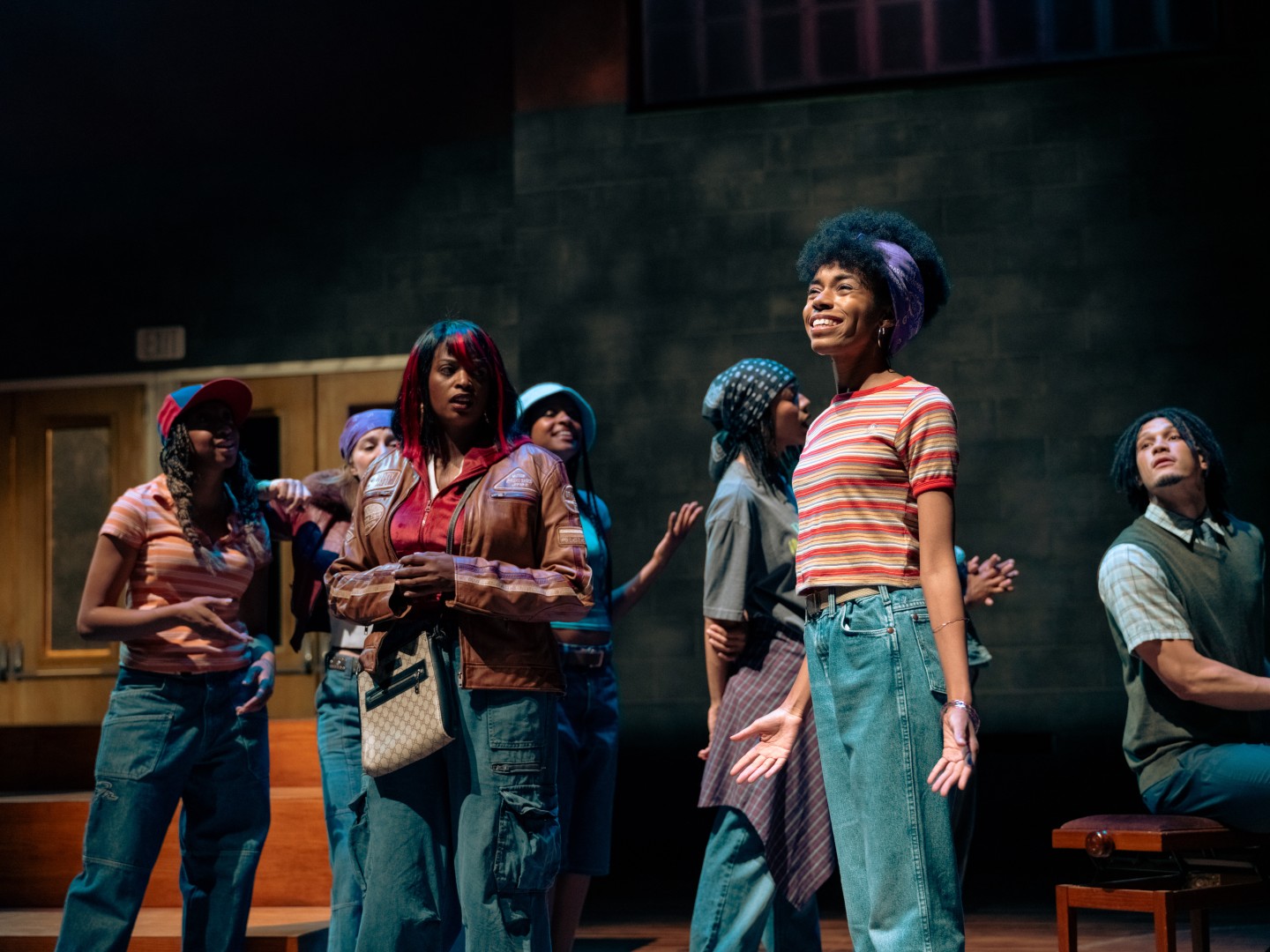
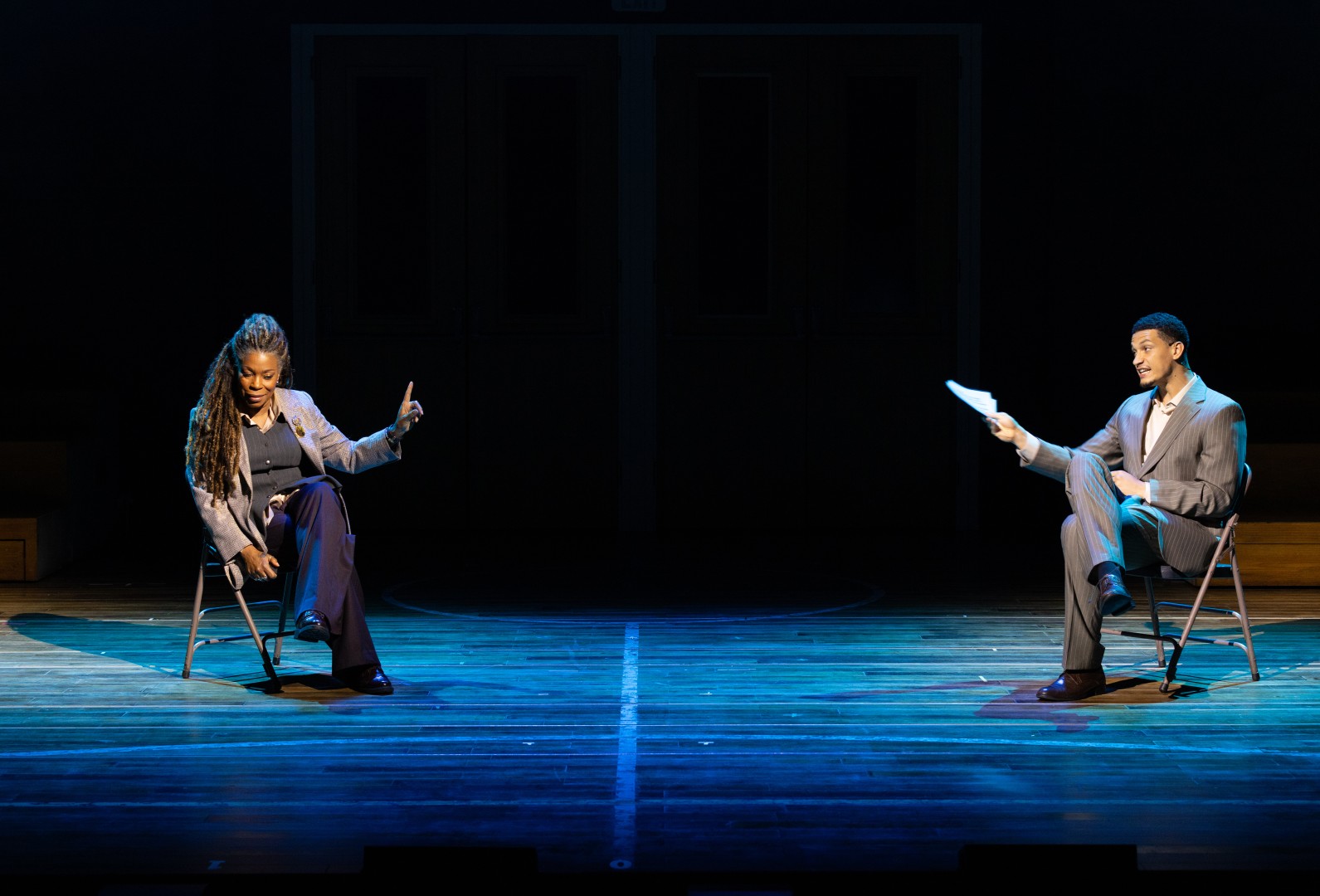
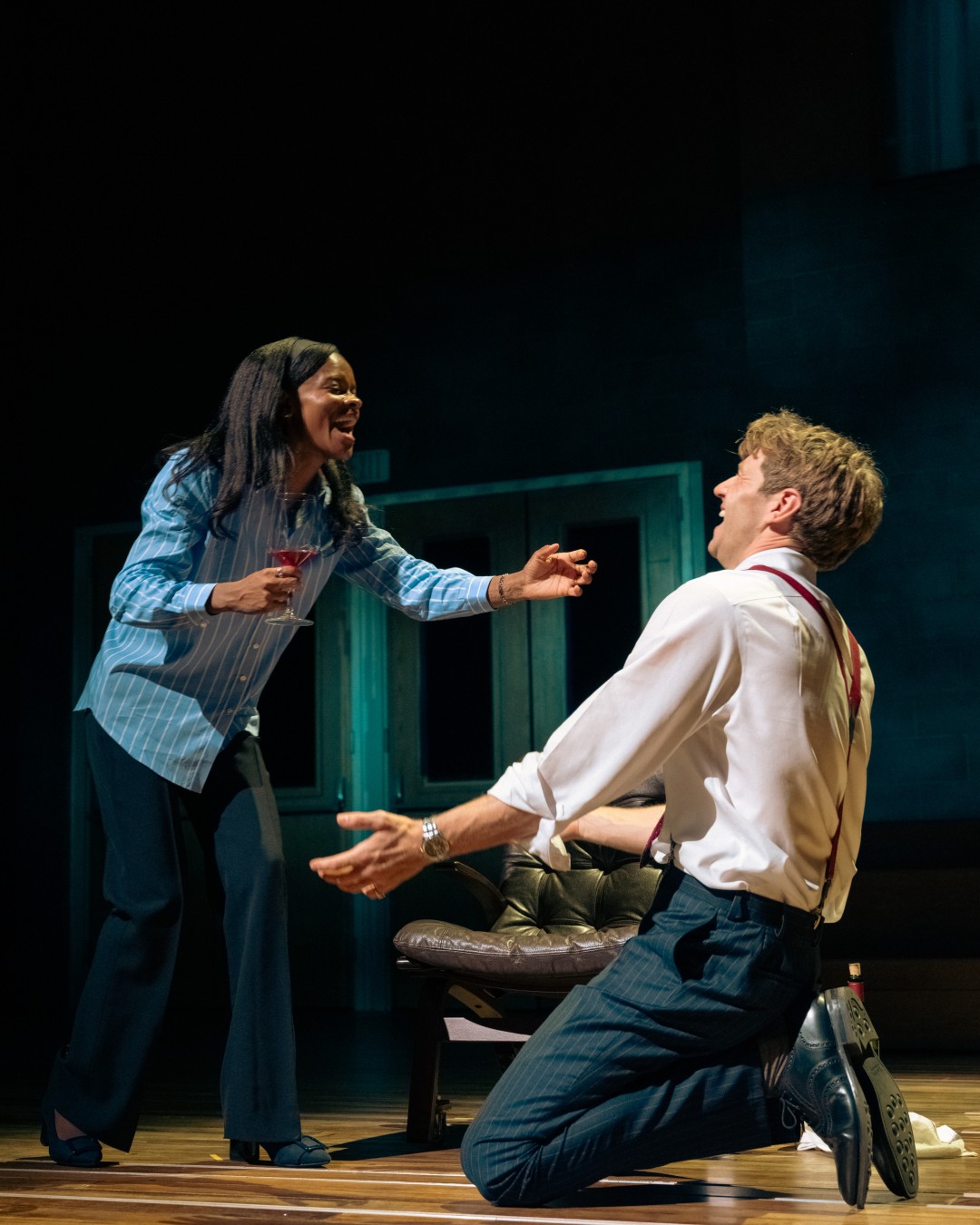
Wilf Scolding is convincing as Jeff, the white nepo-baby editor-in-chief who is both Yvonne’s lover and Pat’s boss; even though this living, breathing mascot of the Peter Principle “can’t name a member of the Jackson Five” and “thought bell hooks was a pornstar”, Scolding laces his character with an endearing masculine goofiness. Ashley Thomas’ Vanguard reporter Neil is given some of the meatier speeches. In one, he defines Yvonne as the kind of “uncertain sister” who is unsure of her place in Black society and invariably rejects his romantic advances; in his eyes, the two are not wholly disconnected.
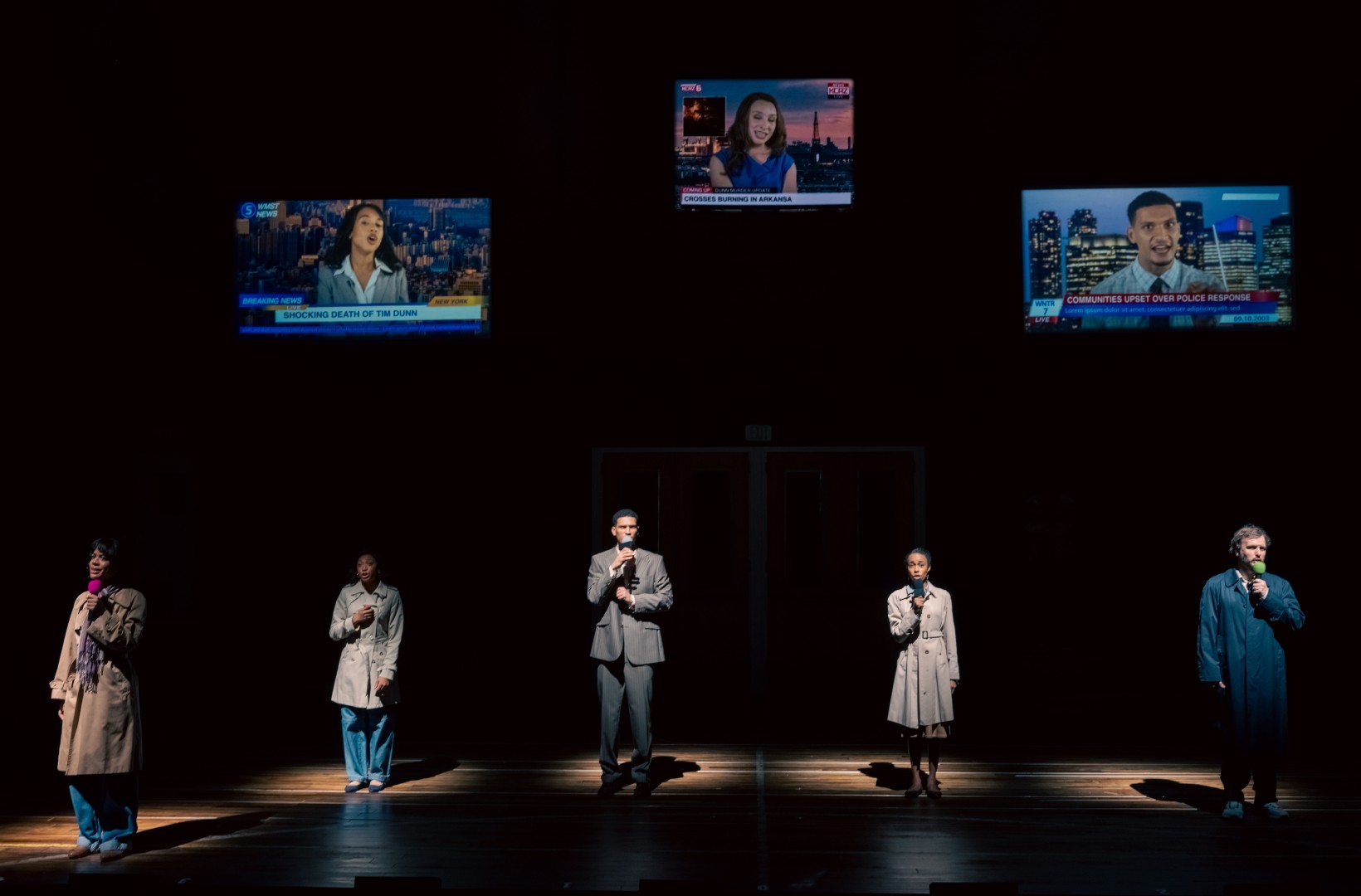
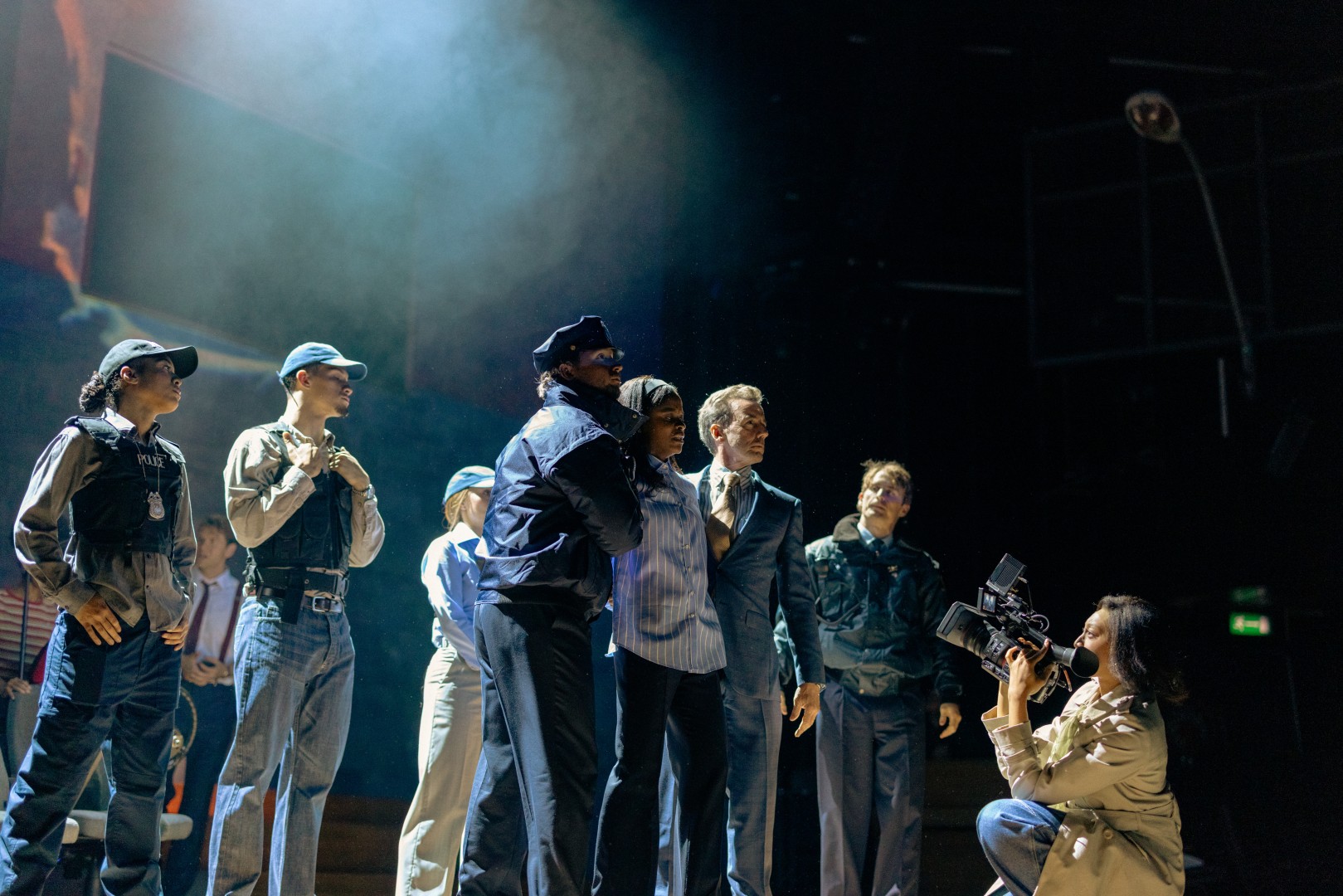
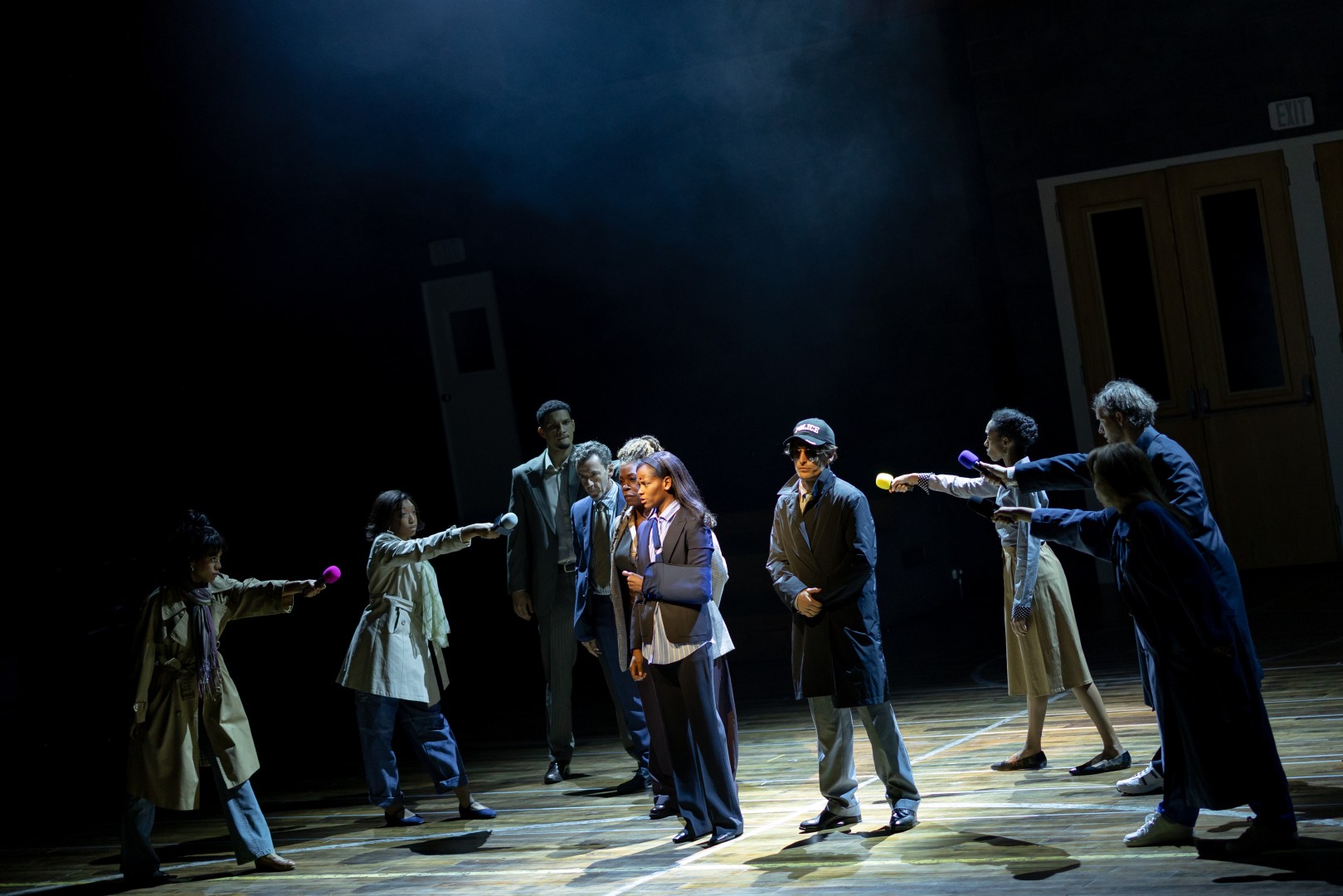
Clint Dyer’s energetic direction pumps up the fast-cut, parallel and overlapping dialogue that mimics the rat-a-tat-tat nature of a real newsroom in the early 2000s. A pacy first half never lacks for momentum but it is undercut by a second half which steadily sinks deeper and deeper into soapy melodrama. The many, many twists are executed smartly though the ending leaves something to be desired. Namely, a real ending. Less of a conclusion, more of a Season 1 cliffhanger, Wilson leaves us with an apocalyptic fiery vision of a city on the point of destruction and the fate of Yvonne, Pat, Jeff and Neil (and presumably everyone else in this unnamed metropolis) up in the air.
Anna Fleischle’s set is a curious thing: the hoops and floor markings make it out to be a basketball court but the only jumps seen are in the timeline. With the temporary addition of bleachers, desks or sofas, it becomes a schoolroom, the Vanguard office and Jeff’s apartment. Seeing this set in the immense Olivier doesn’t help a work that was clearly designed for a smaller stage: instead of the furniture being moved swiftly on and off over a short distance, chairs and tables shoot out into view like IKEA missiles before being spookily dragged back out of the spotlights when the scene ends.
Dyer’s chief failing here is how he misses the open-goal opportunity to make this story relevant to those in the pews. Even if Cooke isn’t familiar to British audiences, there are plenty of other recent examples closer to home that highlight journalistic forgery and its consequences. In 2004, the Daily Mirror published faked photographs of a British Army unit’s war atrocities. That led editor Piers Morgan to be fired soon after the unit’s former commanding officer suggested that “it’s time that the ego of one editor is measured against the life of the soldier” (a line which resonates heavily with The Story’s themes).
Then there’s Johann Hari. After winning awards for his work from Amnesty International and Stonewall, he handed back his Orwell Prize in 2011 (echoing Cooke’s return of her Pulitzer) after it was discovered that he had plagiarised and embellished parts of interviews he had carried out for The Independent. Meanwhile, The Sun’s Mazher Mahmood – the undercover “Fake Sheikh” who claimed his work had led to up to 250 convictions – went to jail himself in 2016 after being found guilty of conspiracy to pervert the course of justice.
As a kicker, these examples highlight a glaring disparity in consequences. Morgan went from national editor to global television star. Hari was given a slap on the wrist (journalism training and four months’ unpaid leave) instead of the P45 one may have expected in such circumstances; he never went back to the paper and is now a bestselling author. By way of contrast, Mahmood was handed a 15-month sentence and sent to the high-security prison HMP Belmarsh while Cooke ended up working in a department store for $6 per hour. Despite the stark difference in outcomes, Dyer (director and co-writer of the Death Of England trilogy that starkly illuminated the racial faultlines in modern Britain) never joins these dots in a meaningful way.
The Story is playing at the National Theatre’s Olivier Theatre until 24 October 2026.
Tickets from nationaltheatre.org.uk
Words Franco Milazzo
Photography Feruza Afewerki