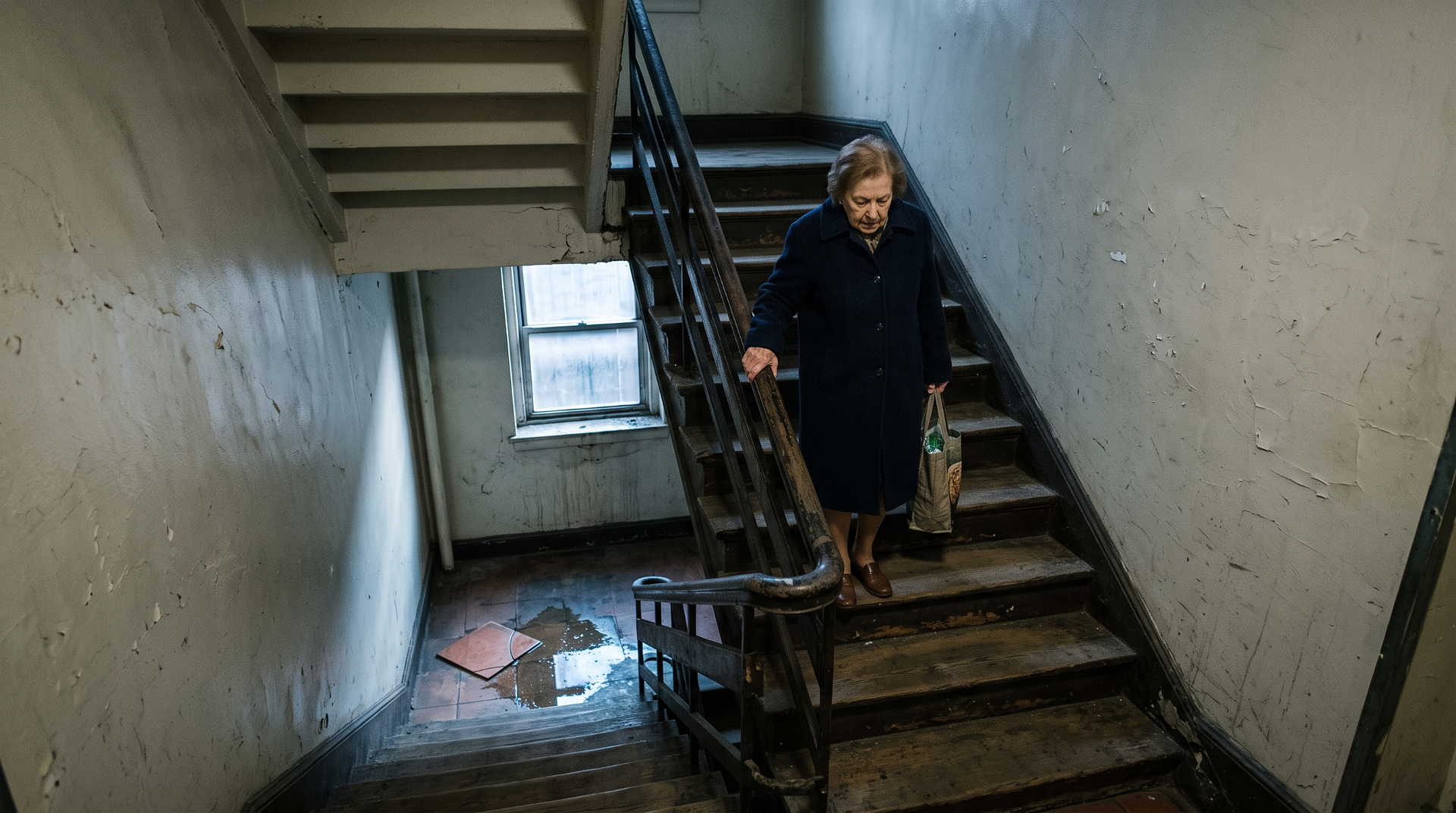
The stairwell in your building is one of the few places you move through every day without looking at it. You know where the turn is, you know which step is worn, and you stop noticing the bulb that went out three weeks ago.
That familiarity is exactly why falls inside residential buildings tend to happen to residents rather than visitors, and why the aftermath is more complicated than a fall on a street corner. The person responsible is frequently your landlord, and you still have to live there.
The Building Owner Carries the Repair Obligation
New York does not leave this to negotiation. For buildings covered by the Multiple Dwelling Law, which includes most Bronx apartment buildings, the duty is stated directly.
Every multiple dwelling and every part of it shall be kept in good repair, and the owner is responsible for compliance. A tenant can also be liable where a violation is caused by their own willful act or negligence, or that of a household member or guest, but the baseline obligation sits with ownership.
Lighting is its own requirement
Hallway and stair lighting is separately regulated rather than treated as an amenity. The statute governing artificial hall lighting sets requirements for public halls and stairs, and a dark stairwell is a code issue rather than a minor inconvenience.
This matters because most interior falls involve a condition that was visible if anyone had looked. A worn tread, a loose handrail, a raised threshold or a chronically dark landing are all conditions that existed for weeks.
Notice Is Still the Battleground
Ownership of the duty does not automatically mean liability for the fall. The question remains whether the landlord knew, or should have known, about the specific condition in time to fix it.
That is why complaint history matters more than almost anything else. A building with a documented record of reported problems is in a very different position from one where nobody ever put anything in writing.
The complaint you never made
Tenants tend to report problems verbally to a super, in passing, and assume it registered. It often does not, and months later there is no record that anyone ever raised it.
A written complaint, sent by text or email so it timestamps itself, converts a conversation into evidence. The city’s housing quality and safety framework exists alongside a formal complaint system, and violations recorded against a building become part of the history a case is built on.
Reporting a hazard also occasionally results in it being fixed, which is the better outcome.
Who the Defendant Is Depends on the Building
This varies more than people expect, and it changes the deadlines involved.
A privately owned building is a straightforward negligence claim against the owner or managing agent. A building owned by a public housing authority is a claim against a public entity, which brings short notice requirements measured in months rather than years. A co-op or condominium adds a board and possibly a management company.
Find out which category your building falls into early, because the answer determines what has to be filed and when.
Rent, retaliation and the fear of speaking up
The worry behind most of the delay is that raising a problem invites trouble with the tenancy. New York does restrict retaliatory conduct by landlords against tenants who report conditions in good faith, and a documented complaint made before any injury is the strongest possible footing.
The practical point is that the complaint helps you twice. It creates the notice record a claim depends on, and it is the step most likely to get the hazard fixed before anyone else falls on it.
What Makes These Cases Harder for Tenants
Two dynamics come up repeatedly and neither is really legal.
The first is that people delay because they do not want conflict with a landlord they depend on. That instinct is understandable and it costs evidence, because the condition gets repaired and the record of how it looked disappears.
The second is that the repair itself is often read as an admission when it is not. A landlord who fixes a stair after a fall has done the right thing. What matters legally is how long the condition existed beforehand, not how fast it was addressed afterward.
Photograph before anything changes
The single highest-value action is taking pictures the same day, before the bulb is replaced or the tread is patched.
Capture the condition, the lighting as it actually was, and something that fixes the location in the building. Include a wider frame so the context is visible rather than only a close-up that could be anywhere.
Video walking the approach is better still, because it records what a person could actually see coming down the stairs, which is the question a photograph never quite answers.
Where to Start After a Fall at Home
Get medical attention and describe how the fall happened accurately, because the first medical record becomes the anchor for everything that follows.
Report it in writing to the landlord or managing agent and keep a copy. Ask whether an incident report was made, and note who you spoke to.
Collect names from neighbors who know the condition existed. A neighbor who complained about the same dark landing two months ago is worth more than any photograph.
And find out who owns the building, as distinct from who manages it, since that determines the deadline you are working against. Bronx slip and fall lawyers usually begin with the ownership and complaint history rather than the fall itself, because that record is what establishes whether anyone should have acted sooner.