Outdoor events rarely allow time to fix a poor setup later. If the tent is too small, the space feels crowded. If the graphics are hard to read, people walk past without understanding the brand. The best canopy fits the event, supports your team, protects visitors, and makes the brand easy to recognize.
Start With the Job the Tent Must Do
Before comparing frames or printing options, decide what will happen under the canopy. A sampling station needs open counters and visitor flow. A registration point needs signage and organized storage. A vendor booth may need walls, lighting, and room for staff.
Ask yourself:
- How many people will work inside?
- What furniture must fit?
- Will visitors enter or stand outside?
- Do you need privacy or storage?
Once these questions are answered, the size becomes easier to identify.
Choose the Size Around Visitor Flow
A compact canopy works well for focused activities, but too many counters and displays can make it uncomfortable. Larger tents provide flexibility for demonstrations and promotions, although they require more transport space and a larger installation area.
A useful tip for you: mark the footprint with tape before buying. Place your tables inside the outline, then walk through it as a visitor and staff member. This test reveals whether the space is practical.
Compare Frames Based on Real Usage
A frame should be realistic for your team to handle. Strength has limited value if setup becomes difficult at every event. Do not choose a frame by price alone. Think about how often the tent will be used, who will assemble it, and what conditions you expect. A lighter frame may suit occasional indoor activations or teams that value portability. A heavier frame may make more sense for repeated outdoor use.
Check:
- Leg and truss construction
- Connection and locking points
- Replacement-part availability
- Packed size and weight
- Warranty terms
Plan the Printed Graphics Strategically
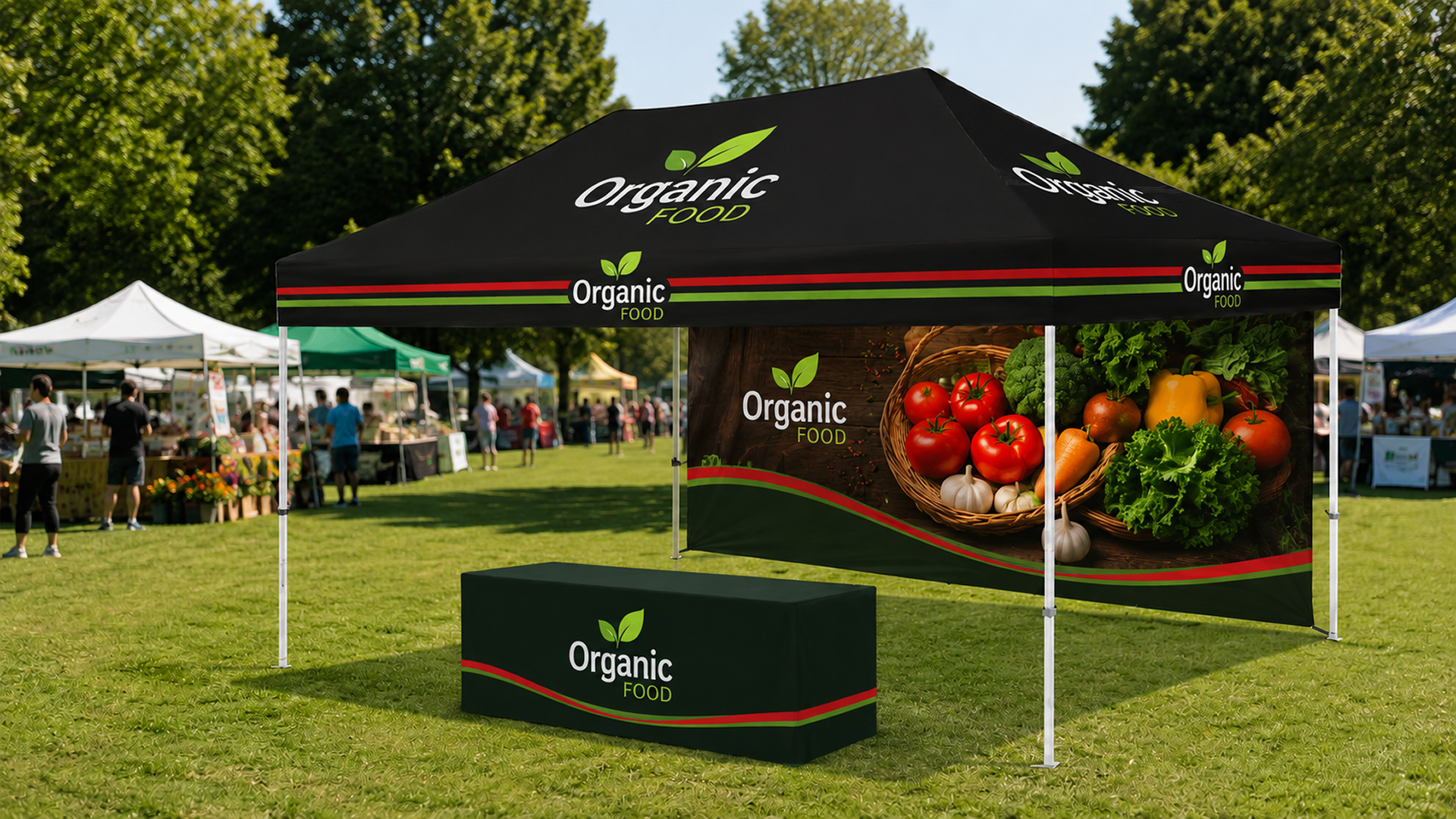
Good canopy artwork must work from a distance. Visitors should identify the brand before reaching the booth. Use a large logo, strong contrast, and short message that explains what you offer. Avoid covering every panel with text.
Treat the roof, valances, and walls as separate viewing zones. The roof builds visibility from farther away, while valances communicate at eye level. Side and back walls can carry product images, offers, or information.
Well-designed custom canopy tents can be paired with counters, flags, or banners. Keep the colors and message consistent so the space feels planned rather than assembled from unrelated pieces.
Use Walls Only Where They Help
Walls can add privacy, direct visitor flow, create storage, and block low-angle sun. However, enclosing every side can make the booth feel unwelcoming. For many events, one back wall and one partial side wall provide useful coverage without blocking access.
Consider:
- A back wall for the main graphic
- A half wall for a counter
- A side wall for weather coverage
- An open front for easy entry
The best arrangement depends on wind direction, neighboring booths, and how visitors approach.
Extend the Experience Beyond the Tent
A canopy should anchor the main activity, but it does not need to carry the entire setup. For hospitality areas, outdoor dining, or conversations, custom printed patio umbrellas can extend shade and branding into seating zones. This gives guests somewhere to pause without crowding the booth.
Make Safety Part of the Decision
Plan anchoring before the event. The correct method depends on the surface, venue rules, canopy size, and forecast. Stakes may suit grass, while weighted solutions are often needed on hard surfaces. Never assume a tent is secure because the weather appears calm during setup.
Before opening:
- Lock all frame connections
- Check canopy tension
- Secure every leg
- Keep walkways clear
- Monitor the weather
Choose for More Than One Event
The smartest choice is a canopy you and your team can rely on event after event. Look for replaceable graphics, practical storage, dependable hardware, and a layout that can adapt as your campaigns change. The right tent should make setup easier, keep your visitors comfortable, and help your brand look professional wherever your next event takes you.