
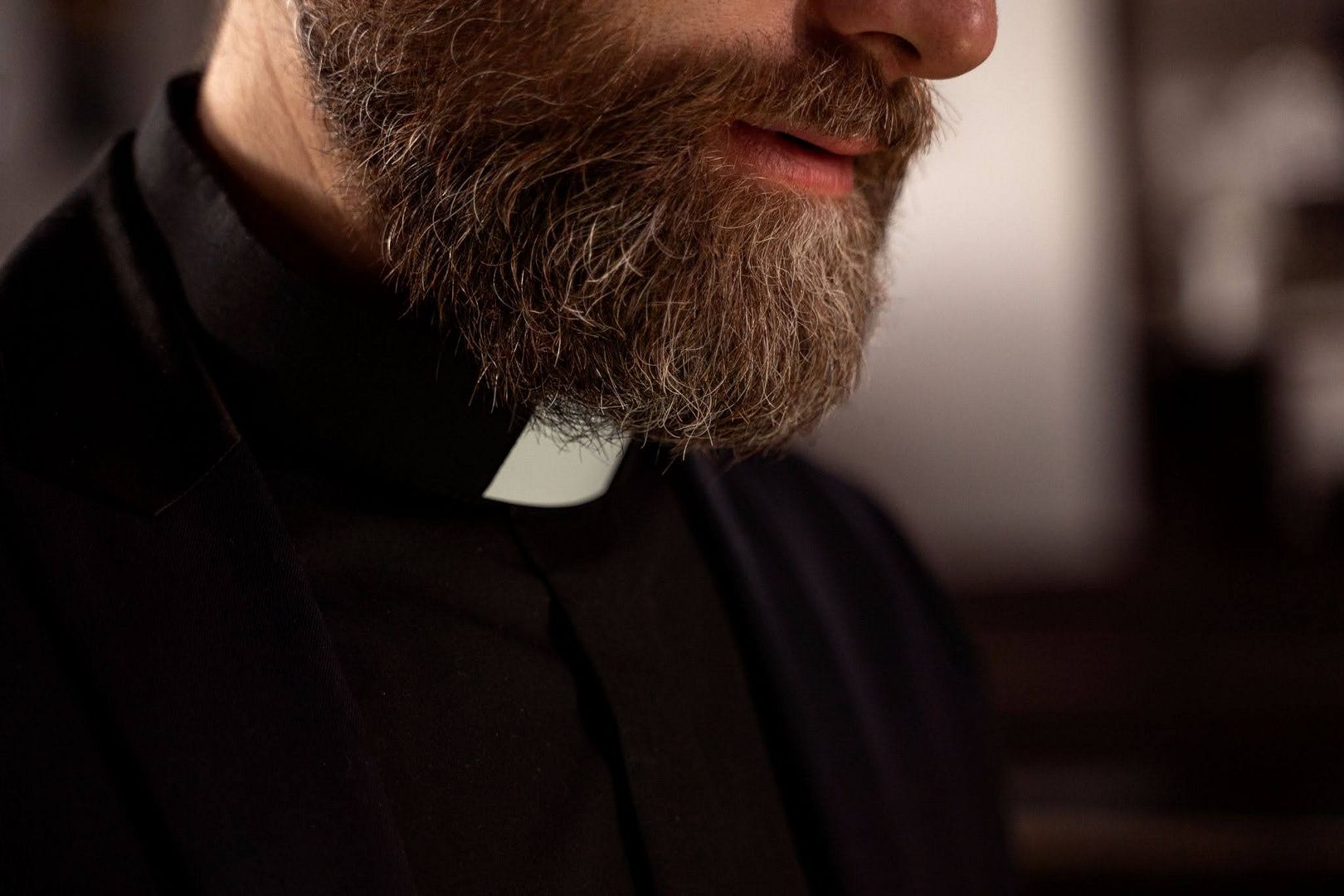
Fashion has always been a magpie, and few silhouettes have been lifted as often as the clerical one. A high black band, a slim white tab at the throat, everything else stripped back to nothing. It is austere, instantly legible and it photographs beautifully, which is why it keeps turning up on runways, in editorials and on screen.
The clergy shirt has quietly become a designer reference point and a costume department staple, borrowed by an industry that loves the look and has never had to wear it for a full working day.
Worth asking, then, what the collar communicates, and why it refuses to stay in the vestry.
A Silhouette Built for the Camera
Strip a garment of colour, pattern, print, lapel and pocket, and what remains is proportion. That is essentially the clerical shirt. Black from shoulder to hem with a single white interruption at the neck, so the eye travels straight to the face and stays there. Portrait photographers understood this a century ago. Casting directors caught up later.
Minimalism in menswear has been circling the same idea for years now. Every season brings another collection of high-buttoned black, band collars, tunic necklines and jackets with the revere removed. Nobody labels it ecclesiastical, but the reference sits right there, a couple of centimetres below the jaw.
Fashion Keeps Borrowing From the Church
The borrowing is neither subtle nor new.
The Heavenly Bodies Moment
Nothing crystallised it quite like the Met’s 2018 show. Heavenly Bodies: Fashion and the Catholic Imagination paired designer pieces with garments and objects loaned from the Sistine Chapel sacristy, and the accompanying gala turned the red carpet into a procession of mitres, crosses, gilt and papal drapery. It became the most-visited exhibition in the museum’s history. Half the fashion press called it reverent, half called it a dressing-up box, and both readings had a point.
Ecclesiastical Tailoring on the Runway
The vocabulary was established long before that. Cassock-length coats. Soutane buttons running the full length of a jacket. Roman-collared shirts under sharp black tailoring. Italian houses in particular have returned to the imagery repeatedly, drawing on a visual tradition embedded in the culture rather than treating it as novelty. Once the shapes are familiar, spotting them becomes a reflex.
The Priest as Screen Archetype
Television did what television does. A clerical collar on the right actor turned into shorthand for restraint and inner conflict, and the look had a genuine cultural moment off the back of it. Style pages covered it. Costume shops noticed. A garment designed to signal service somehow became one of the most talked-about things a leading man could wear.
The Part Fashion Skips: It Is Also a Uniform
Every one of those references treats the collar as image. Silhouette, symbol, mood. What almost nobody examines is the thing as clothing, and there the story turns less glamorous.
The standard clergy shirt has barely moved since the middle of the last century. Unlined polycotton, cut generously through the body, no stretch anywhere and a construction that traps heat rather than moving it. The neckband sits high and close by design, precisely where the body is trying to shed warmth. Creasing starts early. By mid-afternoon the fabric has usually given up.
Consider the working day it has to survive. A funeral in the morning, hospital visits after lunch, a school assembly, a church hall meeting, then a bereaved family at the door at nine. Twelve to fourteen hours on the move, in something engineered entirely around appearance. High street menswear solved breathability and stretch two decades ago. Clerical outfitting largely did not.
Runway pieces get worn for minutes. Editorial shoots take an afternoon. Neither has to still look composed at eight in the evening.
The Category Nobody Was Watching
Which brings us to a shift happening well outside fashion week.
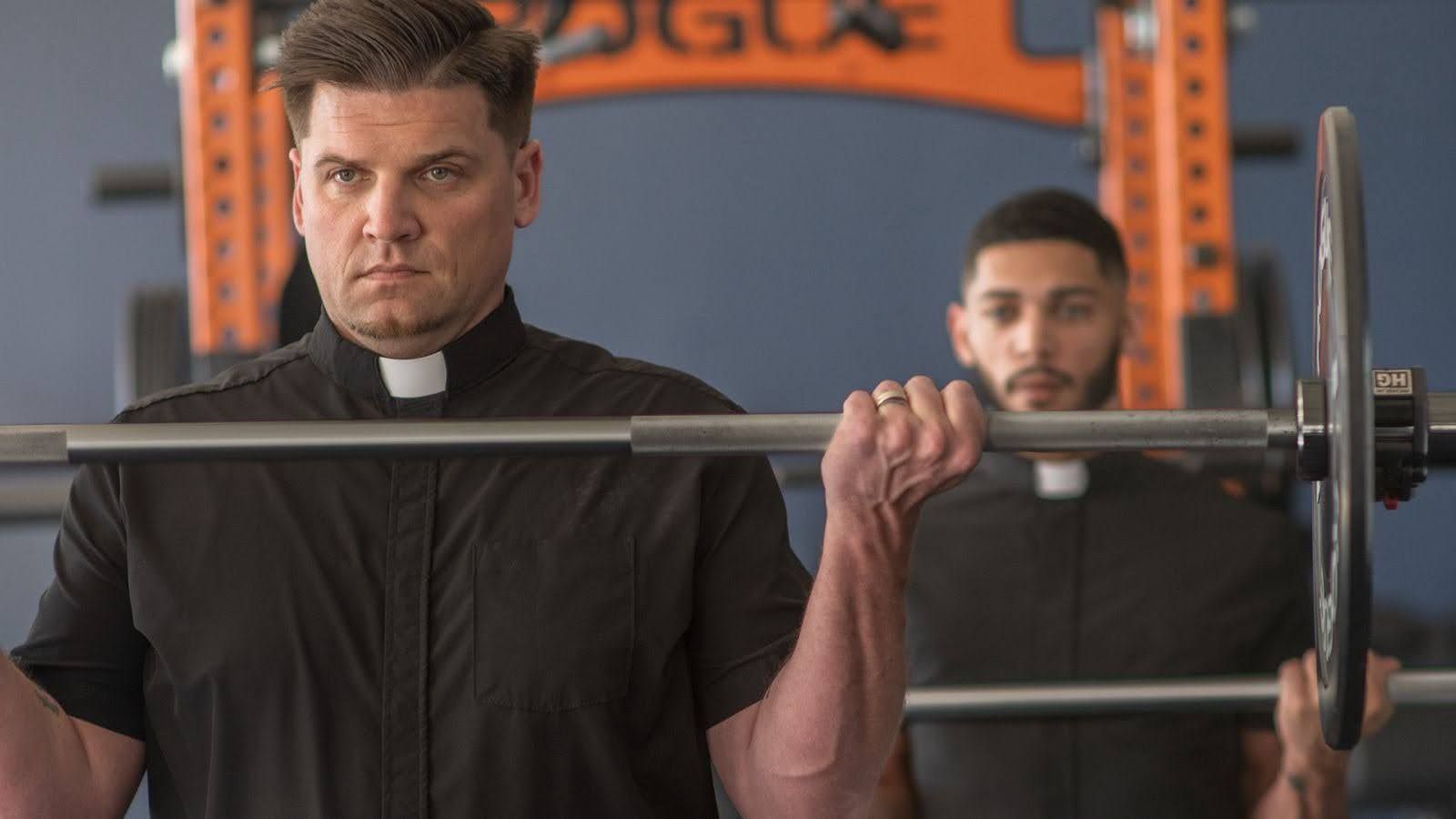
Performance fabric has started reaching clerical wear, from a small group of makers approaching it as a workwear problem rather than a devotional one. Wicking Vicar is among them, and the thinking is much the same across the field: leave the silhouette alone, because the black, the collar and the proportions are the entire visual language, then rebuild everything underneath in fabric that moves and breathes. Traditional from across a room, modern against the skin.
There is something neat in that. Fashion spent years mining the collar for its imagery while the garment itself stayed frozen in 1955. The people who wear it daily are the ones finally moving it on, for reasons no stylist would ever put on a call sheet.
Why the Collar Keeps Coming Back
Because it works. Distilled, symbolic and cut to a shape that has outlasted most of the trends that borrowed it, the clerical silhouette is good design in the way a trench coat or a naval peacoat is good design. Functional origins, accidental elegance, a long afterlife.
The difference is that the trench got lighter and more technical as the decades passed. The clergy shirt did not, at least not until recently. Fashion took the picture and left the garment where it found it. Turns out the garment was worth updating too.



