Setting up a home gym does not require a massive budget or a dedicated room. Start by understanding how you train, what space you have, and which equipment offers the most value per square foot.
Retailers like Fitness Avenue make home fitness equipment more accessible than ever; getting started is simpler than most people expect. Whether you prefer strength training, cardio, or a mix of both, a well-planned home gym eliminates commute time, removes scheduling friction, and puts consistency within arm’s reach.
Here is how to build one that fits how you actually live.
Assess Your Available Space
Before buying anything, measure the area you plan to use. A spare bedroom, garage corner, or even a section of your living room can work — as long as you account for movement.
- Measure floor dimensions and ceiling height. Overhead presses and pull-up bars need vertical clearance. A standard eight-foot ceiling limits some movements.
- Plan for movement radius. A barbell requires about seven feet of length. Bodyweight exercises like burpees need roughly six feet by four feet of open floor.
- Consider flooring. Rubber mats or interlocking tiles protect both your equipment and your floor. They also reduce noise if you live in an apartment.
A small footprint does not mean limited training options. It means choosing equipment that earns its space.
Identify Your Training Style
The equipment you need depends entirely on how you prefer to train. There is no universal setup.
- Strength-focused training: These four pieces of equipment—a power rack, barbell, weight plates, and flat bench—form the foundation for performing key strength-building exercises.
- Bodyweight and mobility work: A pull-up bar, resistance bands, gymnastic rings, and a yoga mat handle a full range of movements without taking up much room.
- Cardio-oriented training: A jump rope, rowing machine, or stationary bike provides effective conditioning. A rower folds upright for storage, making it practical for tight spaces.
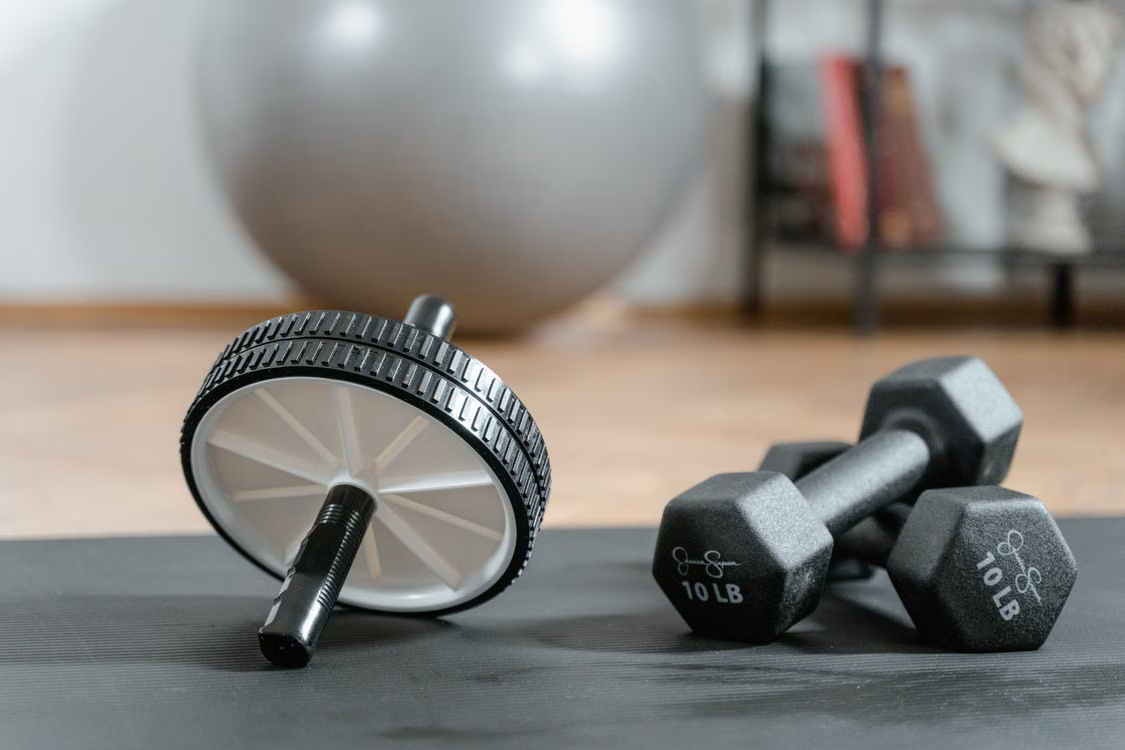
- Mixed approach: Adjustable dumbbells, a kettlebell or two, and a pull-up bar give you enough variety to run both strength and conditioning sessions.
Start with the equipment that supports your primary training goal. Add from there as your routine evolves.
Set a Realistic Budget
Home gym costs range from under $100 to several thousand. Focus on items that match how often and how hard you train.
- Entry-level (100–300): A basic setup of resistance bands, a pull-up bar, a jump rope, and adjustable dumbbells is sufficient for most general fitness goals.
- Mid-range (500–1,500): Add a barbell, weight plates, a squat stand, and a bench. This setup handles serious strength programming.
- Full build ($2,000+): A power rack with safeties, a cable machine or pulley system, specialty bars, and cardio equipment. This rivals most commercial gym setups.
Buy used when possible. Barbells, plates, and racks last decades and often appear on resale platforms for a fraction of the retail price.
Prioritize Versatile Equipment
Choose equipment you can use for a variety of exercises and training goals. Single-use machines take up space and limit programming options.
- Adjustable dumbbells replace an entire dumbbell rack and handle dozens of exercises.
- A flat bench supports pressing, rowing, step-ups, and core work.
- Resistance bands add accommodating resistance to barbell lifts, help with pull-ups, and support rehabilitation movements.
- A kettlebell covers swings, goblet squats, Turkish get-ups, and carries — all in one compact tool.
Prioritize items that give you the widest exercise selection for the space they take up.
Organize for Consistency
A cluttered gym discourages use. Keep the space functional and accessible.
- Use wall hooks or pegs to store bands, jump ropes, and belts while saving valuable floor space.
- Use vertical storage for plates and bars when floor space is limited.
- Keep the area clear of non-gym items so it stays ready for training at any time.
The easier it is to walk in and start a session, the more likely you are to train regularly.
On A Final Note
You do not need to buy everything at once. Start with three or four foundational pieces, train with them for a few months, and identify gaps in your programming. Add equipment based on what your workouts actually demand—not what looks appealing in a product listing. A home gym built gradually around your habits will always outperform one assembled on impulse.