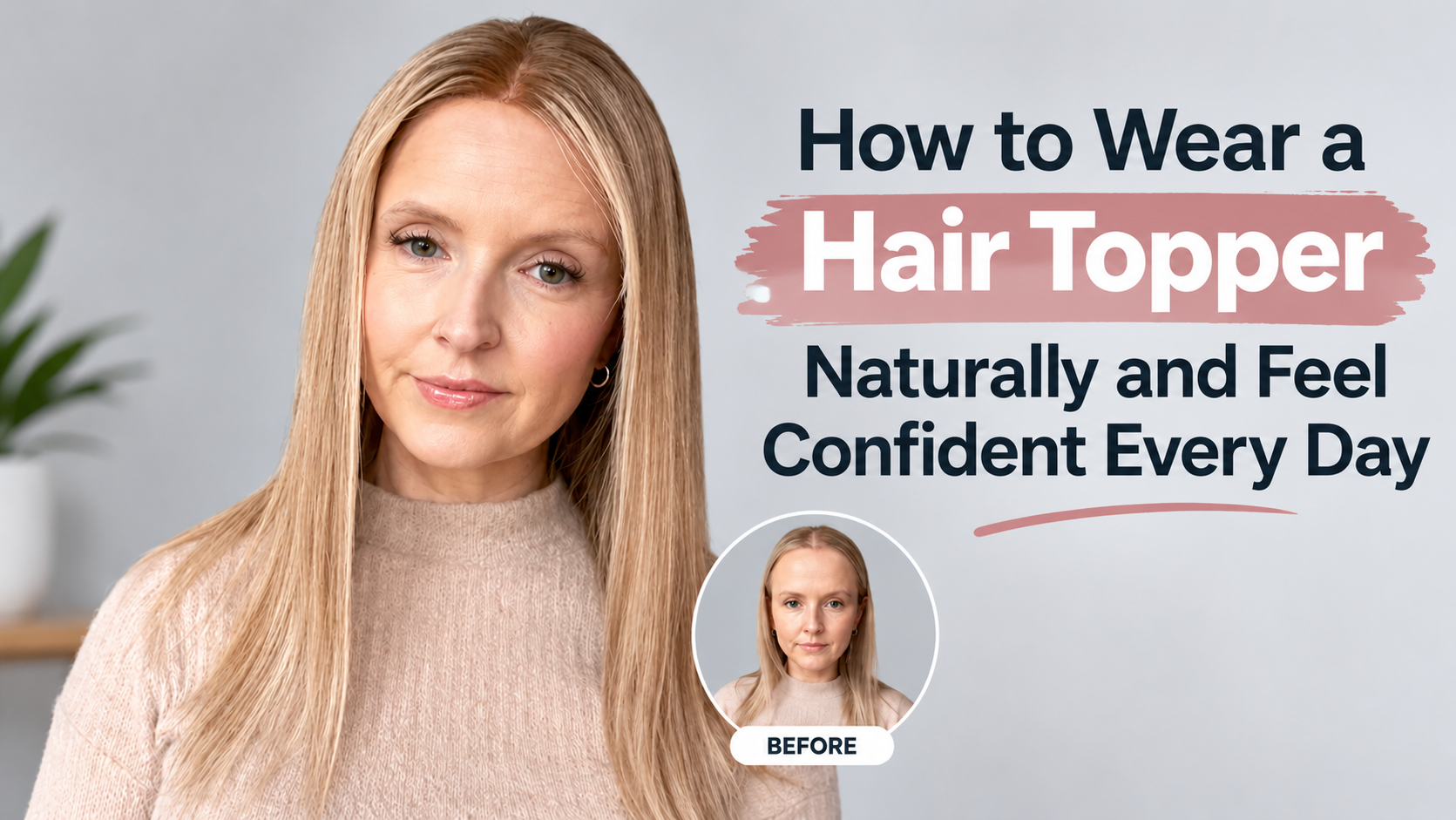
Whether you’re heading to the office, attending classes, or meeting friends, you probably want your hair to look natural without having to think about it all day. If you wear a hair topper, you may wonder whether others will notice it, whether it will stay in place, or whether it will remain comfortable after several hours.
These worries are understandable, especially when you’re new to wearing alternative hair. Fortunately, choosing a suitable hair topper and learning a few simple styling techniques can make a real difference. With the right fit, color, and blending methods, you can create a look that feels natural and works for your daily routine.
Will Your Hair Topper Look Natural to Others?
Modern hair toppers come in a variety of designs, colors, and base constructions. When you choose one that suits your hair and wear it correctly, it can blend naturally with your existing hair in many everyday situations.
Instead of worrying about whether someone might notice your topper, focus on the factors you can control. A suitable color match, a comfortable base, and careful styling can all contribute to a more natural appearance.
It’s also worth remembering that everyone’s hair looks different. Your goal doesn’t have to be perfection. Finding a style that feels right for you is a much better starting point.
Tips for Choosing a Suitable Hair Topper
1. Find a Color That Blends With Your Natural Hair
Color matching is one of the most important steps when choosing a hair topper. A shade that closely resembles your own hair can help create a smoother transition between the topper and your natural strands.
If you’re unsure which color to select, consider asking the retailer for personalized guidance. Clear photos taken in natural daylight can help a specialist assess your hair color more accurately. When an in-person fitting is available, trying different shades can also help you compare the results.
For those searching online for hair toppers near me, local showrooms and alternative-hair specialists may offer opportunities to see different shades and try on styles before making a decision. For example, if you’re near Irvine, you can explore the available options at the UniWigs showroom.
2. Select a Base Size That Matches Your Coverage Needs
A well-fitting base should cover the areas where you need additional volume or coverage without extending unnecessarily beyond them. Choosing an appropriate size can make the topper easier to position and blend with your existing hair.
Clip placement is another important consideration. Whenever possible, position clips in areas with enough healthy, strong hair to support them. Placing clips approximately 2–3 cm beyond the thinning area may be an option, depending on your hair density and the topper’s design.
Avoid attaching clips to fragile or severely thinning hair, as repeated tension can cause discomfort and potentially contribute to further hair breakage. If your scalp is sensitive or your hair loss affects the usual attachment areas, consult an experienced alternative-hair specialist about other suitable attachment methods.
For individuals with frontal fibrosing alopecia (FFA), the frontal hairline may require additional coverage. Pay particular attention to the front edge, base design, and how the topper sits against your hairline. A professional fitting can help you identify a solution that accommodates your coverage needs.
How to Style Your Hair Topper for a Seamless Finish
1. Blend the Topper With Your Existing Hair
Choosing the right shade is only part of achieving a natural look. The way you arrange your hair after attaching the topper also matters.
If you have some hair remaining around the front or sides, gently bring a small section over or alongside the topper’s edge. A round brush can help you shape your natural hair so it flows in the same direction as the topper hair.
Try to keep the transition soft rather than creating a noticeable separation between the two. Small adjustments to the direction, volume, and texture can help the overall hairstyle look more cohesive.
If you’re using a human hair topper, you may also have greater flexibility when styling, depending on the product’s construction and care instructions. Matching the texture of the topper to your own hair can make blending easier.
2. Pay Attention to the Parting Area
The part is often an important detail when creating a realistic hairstyle. If you have FFA or limited hair along the frontal hairline, you may need to pay extra attention to how the base and parting area appear.
One option is to use a small amount of hair powder or a suitable hair fiber product around the part to help reduce the contrast between the base and your scalp. Choose a shade that closely matches your hair and apply it lightly to avoid an overly dark or heavy appearance.
You can also use a fine rat-tail comb to gently rearrange small sections of hair on either side of the part. Slightly varying the direction of these strands can soften an overly straight parting line and help the hairstyle look less uniform.
Make gradual adjustments and check the result under natural lighting. If your topper has a specific parting construction, follow the manufacturer’s styling recommendations to avoid damaging the base.
Find a Hair Topper That Fits Your Lifestyle
Choosing a hair topper isn’t only about appearance. Comfort, coverage, ease of maintenance, and your daily activities should all influence your decision.
When exploring hair toppers for women, consider how much coverage you need, how the base feels against your scalp, and whether the attachment method suits your existing hair. The best option is one that addresses your individual needs without making your daily routine unnecessarily complicated.
You may also want to compare synthetic options with a human hair topper. Human hair styles can offer natural movement and versatile styling possibilities, although they generally require appropriate care to maintain their appearance. The right choice depends on your preferences, budget, and how much time you want to spend on styling and maintenance.
If possible, compare different base sizes, hair textures, and attachment options before purchasing. Getting advice from a knowledgeable specialist can also help you avoid choosing a topper that provides the wrong amount of coverage or places unnecessary tension on your hair.
Enjoy Your Day Without Constantly Worrying About Your Hair
Becoming comfortable with a hair topper may take some practice, but you don’t need to master every styling technique immediately. Start by finding a suitable fit and color, then experiment with simple ways to blend the topper with your natural hair.
Whether you’re preparing for a busy workday, heading to school, or spending time with friends, your hair solution should support your lifestyle rather than distract you from it.
With a little patience and the right approach, you can develop a routine that feels manageable and comfortable. Most importantly, remember that wearing a hair topper is a personal choice. You deserve to feel confident in your appearance and focus on the things that matter to you.