Every season seems to bring its own run of invitations, and rarely do they all sit at the same level of formality. One week it is a relaxed daytime gathering, the next it is an evening event where the dress code leaves no room for guesswork. If your calendar this season includes anything from a laid back afternoon celebration to a formal night out, it helps to think of your wardrobe less as one style and more as a small range that stretches from casual to fully dressed up.
Rather than shopping event by event and hoping something works, it is far more efficient to understand the two ends of that range clearly. Once you know what casual daytime dressing actually calls for, and what true formal wear demands, filling in the middle becomes a lot easier, and so does deciding what to wear when an invitation lands with very little notice.
The Casual End: Daytime and Celebration Dressing
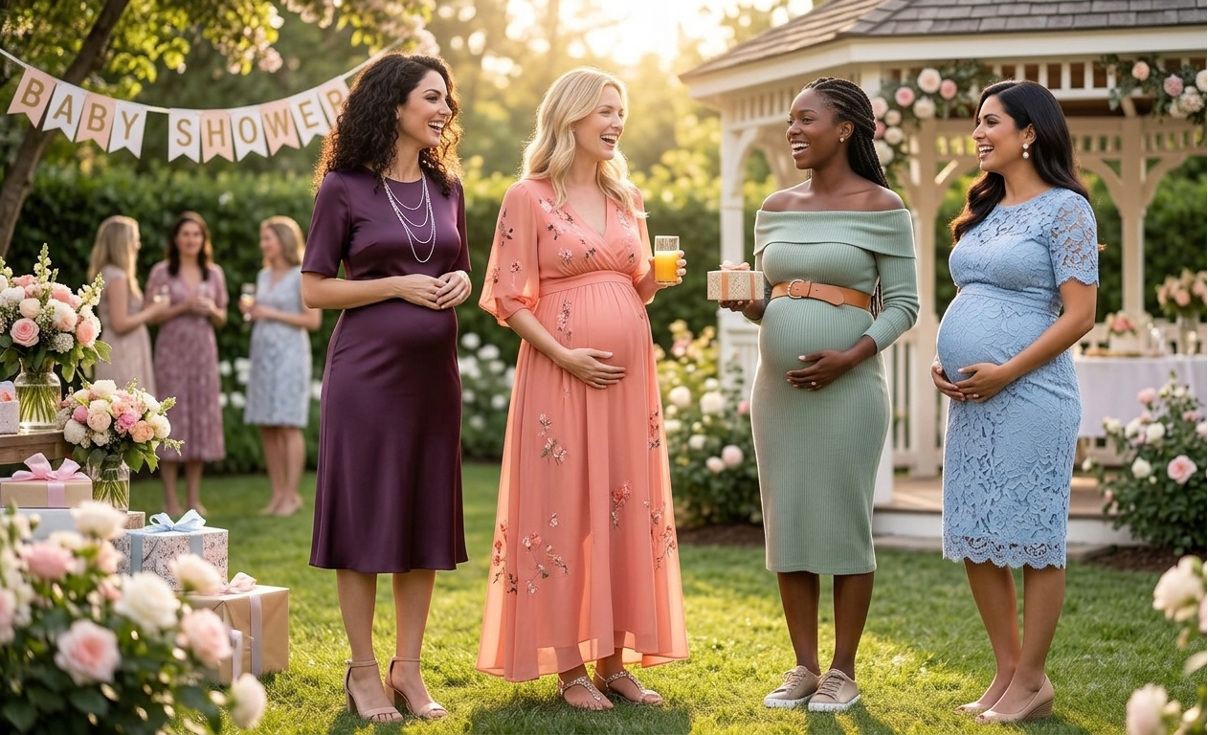
Casual daytime events like baby showers, brunches, and afternoon gatherings tend to share a few common threads. They are relaxed in tone, usually held earlier in the day, and built around comfort as much as style. Guests are often sitting for extended periods, moving around for photos, or holding food and drinks, so anything overly structured or restrictive tends to work against the day rather than for it.
Soft, breathable fabrics are the foundation here. Cotton blends, light jersey, and flowy chiffon all hold up well through a few hours of mingling without needing constant adjustment. Color also plays a bigger role than people expect. Pastels, soft florals, and light neutrals suit most casual daytime events, especially anything happening in spring or summer, while warmer, richer tones work just as well once the weather cools down.
If you are searching for pieces that fit this exact category, browsing a dedicated baby shower dresses collection tends to be far more efficient than sorting through general daywear, since it is already built around the comfort and tone this kind of event calls for. A-line silhouettes, wrap styles, and relaxed midi lengths consistently perform well here, since they move easily and photograph nicely without feeling overdone.
The Formal End: What Black Tie Actually Demands
Black tie sits at the complete opposite end of the spectrum, and it is one of the few dress codes with a genuinely specific meaning attached to it. Guests who show up underdressed at a black tie event tend to notice it immediately, and there is not much flexibility in how the term is interpreted.
Full length gowns are the expected standard, not dresses that only look formal from a distance. Fabric choice matters just as much as length. Satin, silk, velvet, and structured chiffon all read as appropriately formal, while casual materials like cotton or jersey simply do not belong at this level of dress code, regardless of the cut or design.
Color tends to follow a narrower, safer range at black tie events. Deep jewel tones, classic black, and metallics are almost always a safe choice for an evening formal event, while brighter or more playful colors are better saved for daytime or semi formal occasions. Finishing details carry real weight here too. Fine jewelry, a structured clutch, and proper heels complete the look in a way this dress code specifically expects, so they are worth treating as essential rather than optional.
This is exactly the gap Opal Dresses built their black tie wedding guest dresses collection to fill, since every piece in it is designed around genuine black tie formality rather than something that merely feels dressy enough. Starting your search there removes a lot of the trial and error that comes with shopping for formal wear in general.
Building a Wardrobe That Covers Both Ends
The most practical approach to a season with mixed invitations is to think in terms of a small, versatile range rather than one outfit per event. Start with the harder dress code first. A well made black tie gown can often be adapted for a slightly less formal occasion later by simplifying jewelry or switching to lower heels, but a casual daytime dress can never be elevated into true black tie, no matter what accessories are added.
Once your formal piece is settled, filling in two or three casual daytime options rounds out the range without requiring an entirely separate wardrobe for each type of event. Keeping a few reliable accessories on hand, a structured clutch, simple jewelry, and a couple of shoe options spanning both formality levels, makes transitioning between very different events far less stressful than treating each invitation as a brand new shopping trip.
Shopping with the specific occasion in mind, rather than browsing dresses broadly, consistently saves time here. Knowing exactly which collection to start with for a given event cuts down on second guessing and helps build a wardrobe that genuinely holds up across a season of mixed invitations rather than falling apart after the first unexpected one.
Final Thought
A season full of different invitations does not have to mean constant last minute shopping. Once you understand what casual daytime dressing actually calls for and what true black tie formality demands, everything in between becomes far easier to plan around. Start with the more formal end of the spectrum, build outward from there, and let the occasion guide the choice rather than scrambling each time a new invitation arrives.