Some city weekends are not built around one landmark. They start on a street near the hotel, move past a gallery, a live venue, a record shop, a riverside path, and eventually land somewhere after dark. That kind of city break is less about following a perfect itinerary and more about catching the rhythm of the city itself.
The problem is that city travel is often interrupted by movement. Places may look close on the map, but they can feel farther in real time. Rideshares mean waiting. Driving means parking. Walking can eat up the best part of the day. For festival weekends, short city escapes, and culture-heavy trips, the way people move between stops can shape the entire experience.
That is where street-ready electric rides begin to make sense. They are not the main event, but they can make those awkward in-between distances feel lighter.
City Travel Is More Than Moving Between Attractions
Traditional travel often focuses on where to go, but a good city weekend depends on how everything connects. The day might start with an exhibition, a coffee, or a few hours of wandering. The night might lead to a show, a club night, or a place a friend recommends at the last minute. The real experience happens between those points.
If every short move depends on a car, the pace gets broken by parking and waiting. If everything depends on walking, distance and energy start to shape the route. The appeal of a city is its density, but that same density also means more choices, faster changes, and more room for spontaneous decisions.
A strong city break does not have to cover more ground. It has to make each move feel easier. Getting from the hotel to the venue, from an afternoon neighborhood to a night event, or from one side of the city to another should not drain the momentum of the day.
Festival Weekends Are Full of In-Between Distances
A festival weekend is rarely about one single event. There may be a wristband pickup, a main venue, a place to grab food, a second show, a late-night room, or an after-party somewhere across town. Each distance may seem manageable on its own, but together they can wear down the weekend.
The frustrating part is not always distance. It is friction. Rideshare lines, temporary road closures, crowded parking, friends splitting off, and heavy foot traffic outside venues can slow everything down.
These in-between moves are part of the culture-weekend experience. They are not formal enough to feel like a major trip, but they happen constantly. When those gaps become easier to handle, the whole weekend feels more open.
Why an Electric Bike Fits the City Break Pace
In this kind of urban travel, an electric bike is most useful for distances that feel too slow to walk and too annoying to drive. It can connect hotels, neighborhoods, galleries, venues, riverfront paths, viewpoints, and last-minute stops without turning every move into a separate transportation decision.
Its value is not in packing the day tighter. It is in reducing the friction around each move. You do not have to call a car for a few blocks, and you do not have to skip a stop just because it sits slightly outside the easiest walking range. The route can shift with the crowd, the weather, and the mood.
That lightness matters on a city break. A city is not made only of destinations. Storefronts, posters, street noise, lines outside venues, late-night lights, and the feeling of a neighborhood after dark all become part of the trip. Riding keeps those details closer than a car window ever could.
Where a Big Tire Electric Bike Gets Its Street-Ready Feel
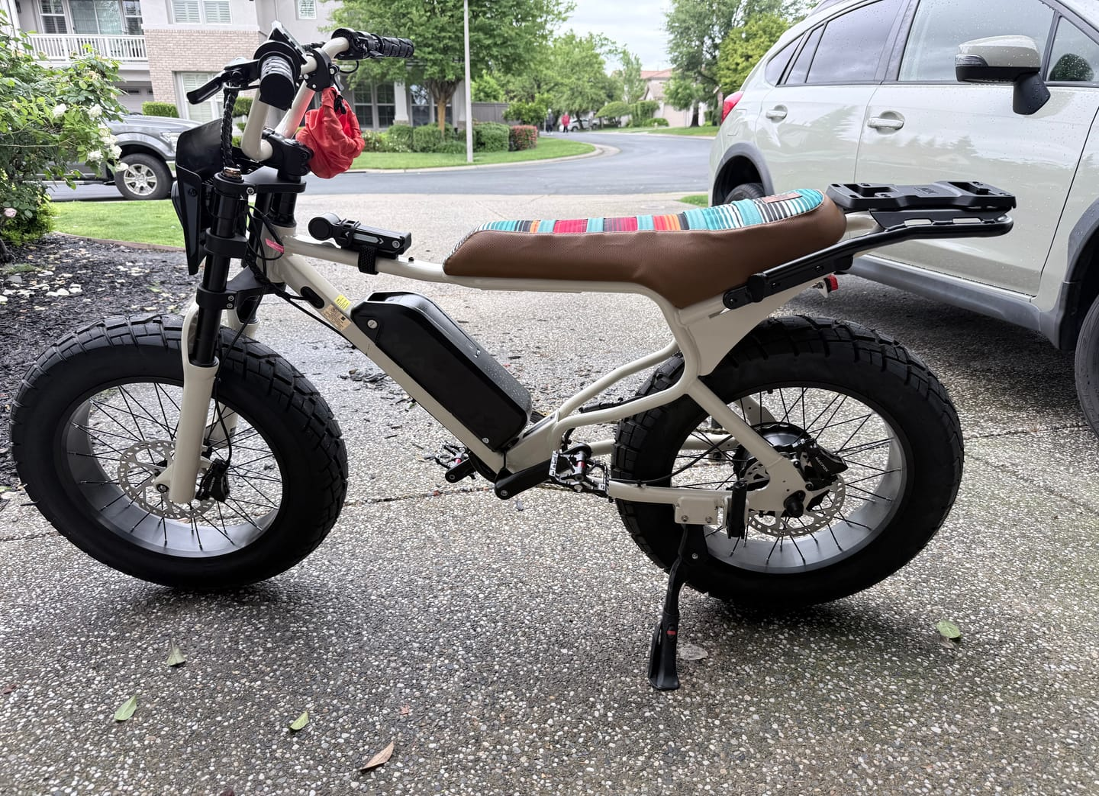
A big tire electric bike fits naturally into a street-ready city setting. Real urban surfaces are rarely perfect: older streets, brick sections, damp pavement, temporary festival-ground paths, small potholes, rough patches, and short hills can all change how a ride feels.
Wider tires can create a steadier, more comfortable, more present ride. They do not erase imperfect roads, but they can make the bumps and uncertainty of everyday city surfaces feel less disruptive.
The point is not a technical spec story. It is a visual and practical city-weekend presence: a ride that can move through different neighborhoods, handle less-than-perfect pavement, and still feel at home in the street.
Riding Should Match the City’s Rules and Rhythm
City riding works best when it respects the rules around it. Bike lanes, shared paths, venue areas, and park roads can vary from one city to another, so riders should know where riding is allowed before taking a shortcut.
Festival and live-event areas call for extra care. Slow down around crowds. Walk the bike when space gets tight. Stay out of restricted areas. Use proper lights after dark and stay visible. Electric riding should make movement smoother, not turn the city into a playground.
A good ride lowers the sense of disruption. It helps the rider reach the next stop without adding pressure to everyone else moving through the same space.
A Better City Weekend Has Less Movement Friction
The center of a city break or festival weekend is never the transportation itself. It is the music, the streets, the night air, the exhibition, the friends, the crowd, and the small decisions that happen along the way.
A big tire electric bike can make the space between those moments feel easier. It does not need to take over the day. It simply helps reduce waiting, detours, and the feeling of being stuck between places.
When movement stops interrupting the experience, the city feels more complete. You remember more than the venue you went to. You remember how the city opened up between one street and the next.