For a long time, travel status was measured in distance. The more remote the destination, the more impressive the trip appeared. Then came the era of the perfectly framed hotel room, the private terrace, the table by the sea, and the carefully edited beach photograph. But as travel culture becomes more visually saturated, the old signals are losing some of their power. Looking like you were there is no longer enough. Increasingly, people want to feel that they did something while they were there.
That is the quiet force behind the rise of immersive leisure. It is not the same as adventure travel, which often suggests endurance, risk, or a highly planned itinerary. Immersive leisure is softer and more flexible. It is a swim that turns into exploration, a hotel pool that becomes part of the day rather than a backdrop, a coastal weekend that feels more active without becoming demanding. It is less about proving something and more about participating.
This change makes sense in a culture shaped by experience. Younger travelers, creative professionals, families, and design-conscious holidaymakers are all looking for moments that feel specific enough to remember. A beautiful beach still matters, but the question has changed. What can you do there? What does the place allow you to feel? How does the day become more than a view?
Water is especially suited to this shift because it naturally changes the pace of a trip. It slows people down, pulls them away from screens, and creates a kind of focus that is hard to fake. Floating, swimming, snorkeling, paddling, and exploring shallow water all sit somewhere between relaxation and movement. They do not need to become extreme to feel transformative.
This is where brands such as ASIWO fit into a broader lifestyle conversation. The appeal is not simply that water devices exist, but that they make a more participatory version of leisure easier to access. A traveler does not need to be a professional diver to enjoy moving through the water with more confidence. A family does not need a full watersports schedule to make a pool day feel memorable. A group of friends does not need a complicated plan to turn a quiet cove into the best part of the trip.
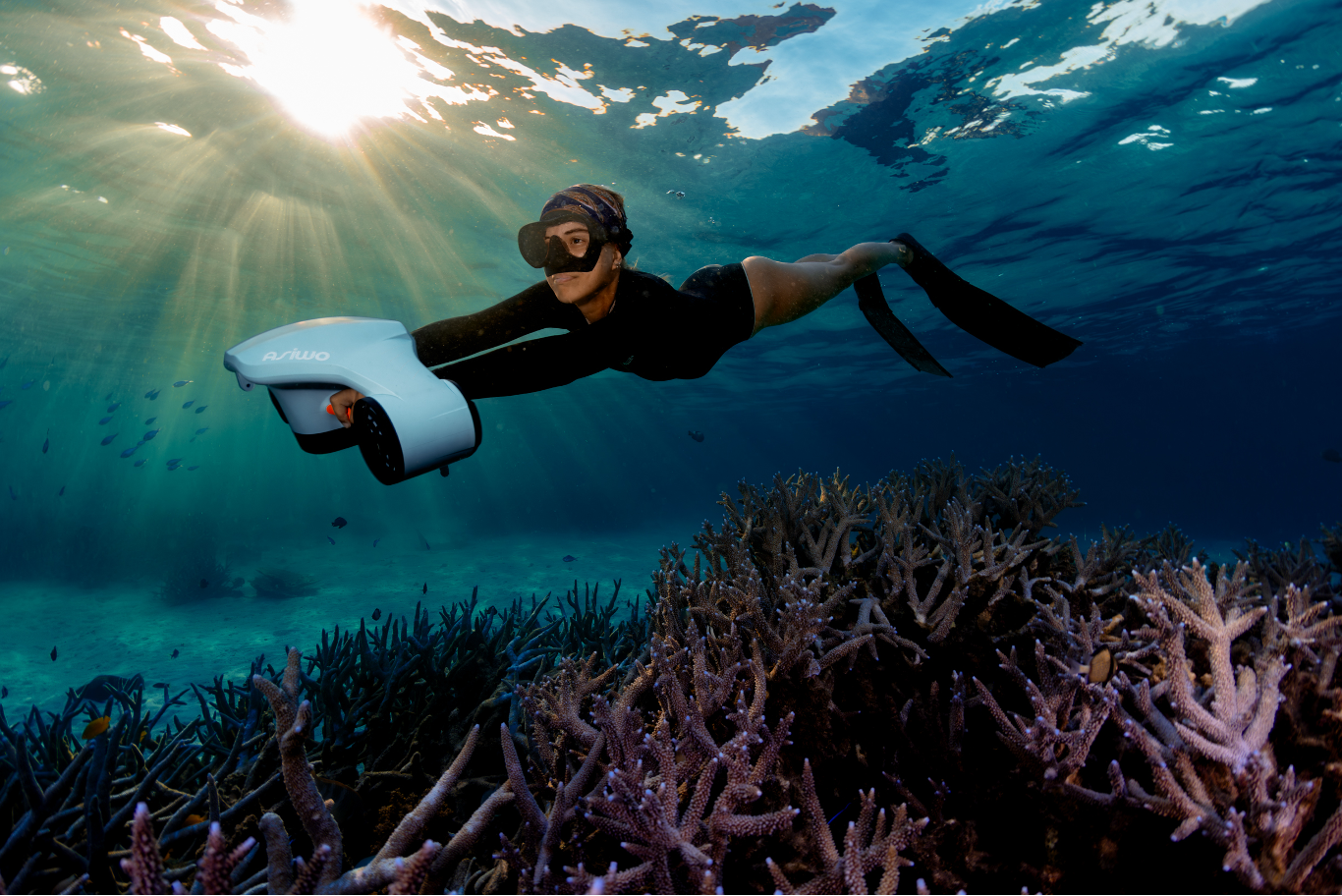
The same idea explains why sea scooters are moving beyond the language of niche equipment. At their best, they are not about speed for its own sake. They are about changing the relationship between the person and the water. They can make a familiar pool feel playful, a clear lagoon feel more explorable, or a beach afternoon feel less passive. That makes them part of a wider movement in travel and lifestyle: tools that make experiences more tactile, social, and memorable.
The interesting thing about immersive leisure is that it resists the usual performance of luxury. It is not always polished. Hair gets wet. Plans become loose. People laugh more than they pose. The most valuable moments often happen between the scheduled parts of a trip: before dinner, after breakfast, when the light changes, when someone decides to go back into the water one more time.
That kind of travel has a different rhythm. It prioritizes access over exclusivity, sensation over spectacle, and memory over display. A five-star hotel can provide the setting, but the experience still depends on what people do with the day. In that sense, the new status symbol is not simply where someone goes. It is how fully they enter the moment once they arrive.
There is also a wellness dimension, though not the kind that needs to be overexplained. Water-based activity can feel restorative because it combines movement with play. It gives the body something to do without turning the trip into a workout. It encourages people to be present without requiring a digital detox speech. For travelers who spend much of their daily life moving between screens, meetings, transport, and noise, that simplicity is part of the attraction.
Of course, immersive leisure still depends on judgment. Any powered water activity should be used with care, in suitable environments, and with respect for local rules, other swimmers, and marine life. The goal is not to dominate a natural setting. It is to experience it more attentively.
As travel continues to evolve, the most desirable trips may be the ones that balance beauty with participation. The view still matters, but it is no longer the whole story. The new luxury is the ability to step into the scene, move through it, and come home with a memory that belongs to the body as much as the camera.