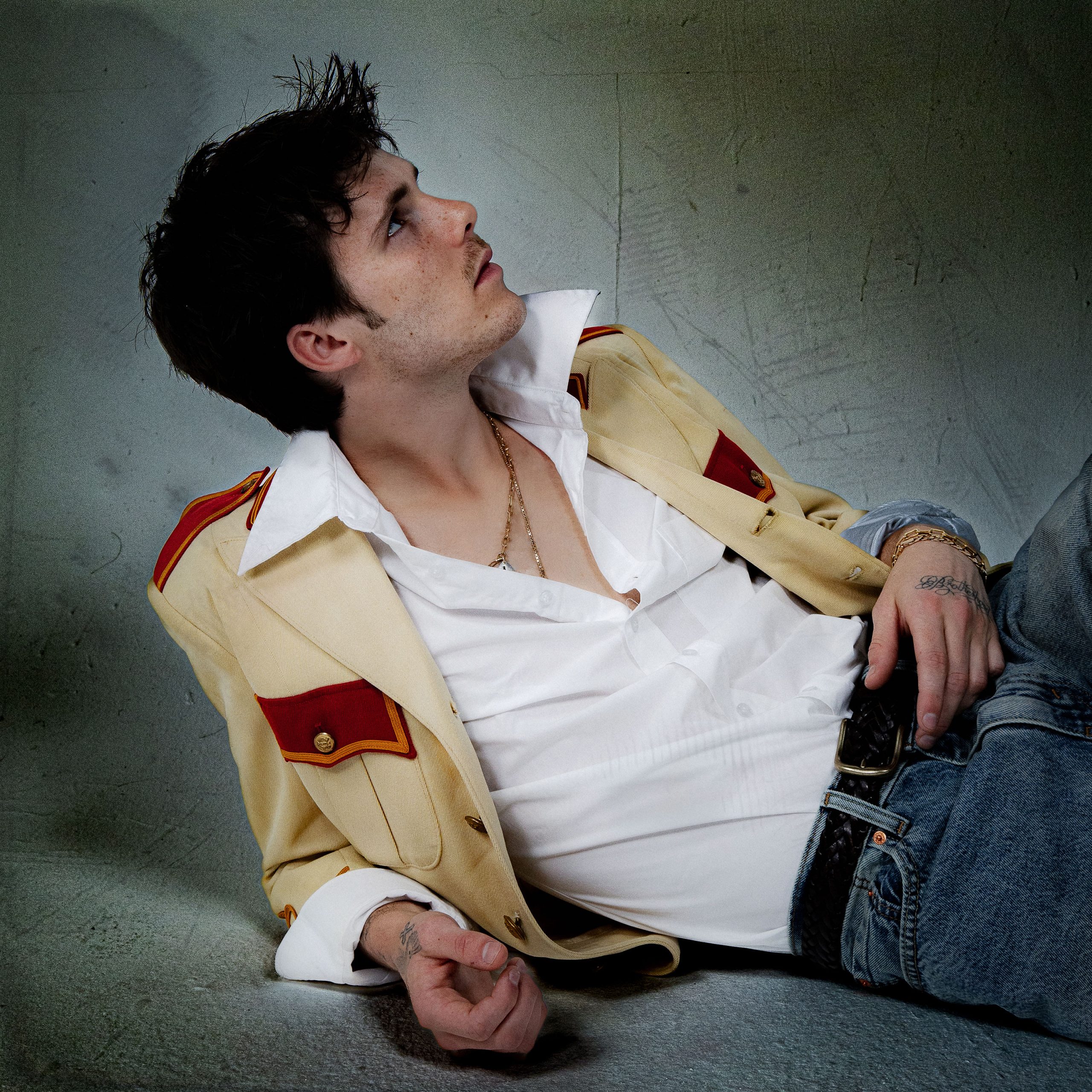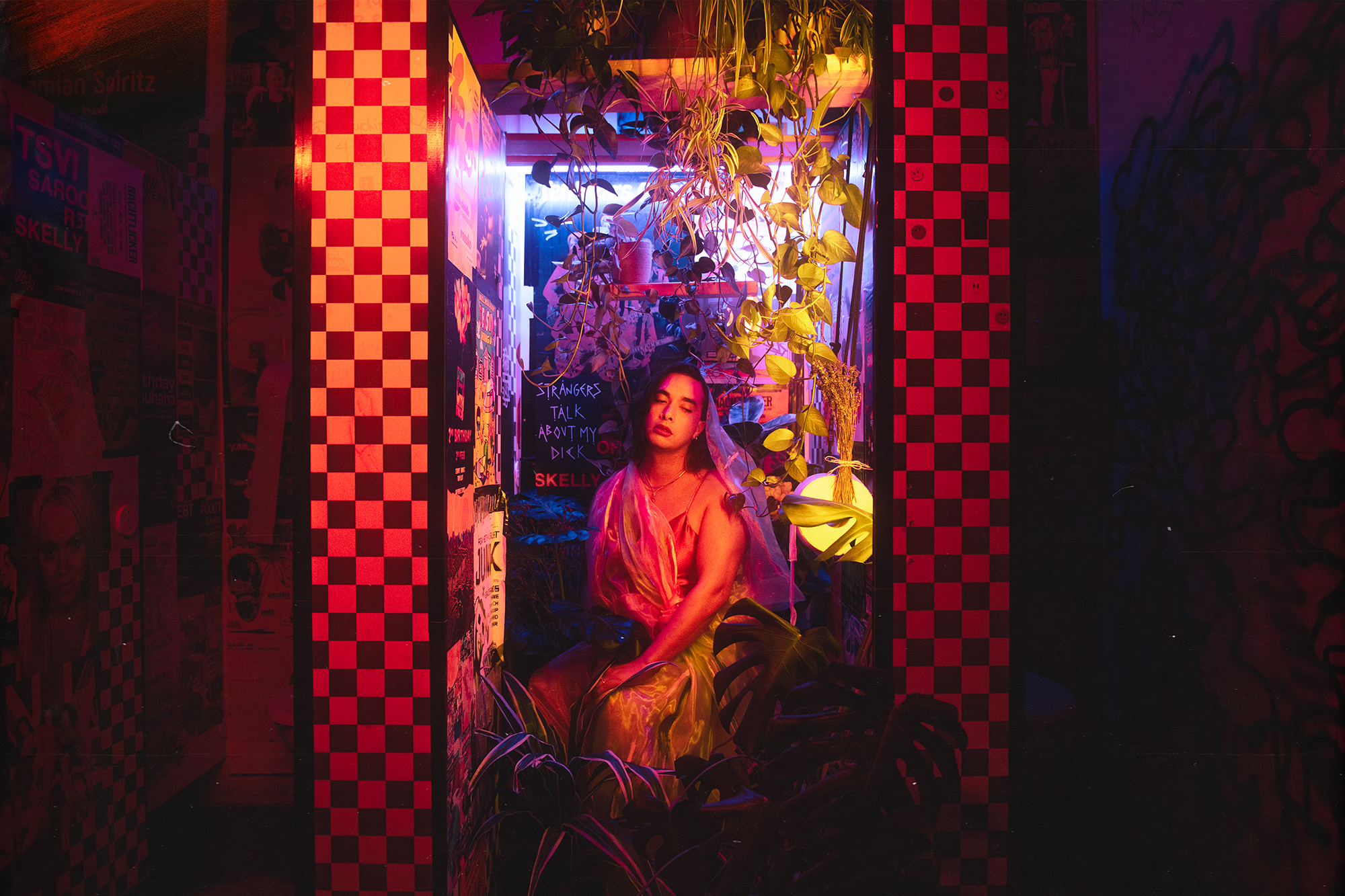
For Dyvr, Rebuild is a record about becoming. Three years in the making, the London-based electronic artist’s debut album takes in grief, anger, love, identity and healing, turning a period of profound personal change into nine tracks built for both the dancefloor and quieter moments of reflection.
Across the record, Dyvr moves between dreamy vocal textures, immersive synths and propulsive club production, creating a sound that can feel euphoric one moment and deeply intimate the next. Previous singles including ‘Sister’ and ‘Glass’ set the tone, while ‘Cry Baby’, a collaboration with vocalist Charles, confronts exclusionary attitudes within feminism while championing solidarity across the trans community.
The album arrives after a breakthrough period for Dyvr’s live show, with performances at Glastonbury, Boomtown and Trans Pride events across the UK and Ireland helping her build a reputation for creating spaces where music and community become inseparable. That commitment continues beyond the record, with Dyvr also curating a London Trans+ Pride after-party in support of trans+.
“This album has taken more than 3 years to complete,” Dyvr says. “It became the vehicle for my transition in so many ways.”
For 1883 Magazine, Dyvr takes us through Rebuild track by track, sharing the stories, experiences and transformations behind each song.

‘Glass’
Glass is a song about how masculinity can divide us. How it makes us into victims. When I started writing Glass, I was thinking about the men in my life. I watched them all go through some process that ended in them feeling isolated, and so likely to lash out in fear. This for me is the essence of masculinity as we understand it in our world. They were lonely, and vulnerable but also volatile and dangerous.
But as time passed and the song began to take its final shape, I discovered a second meaning. Glass is also about my own journey with gender. As a trans woman, I had also begun this process of isolation. I have felt that loneliness. Glass is a reflection on how being assigned male at birth impacted my ability to connect with the woman I am; it is also a plea for men to find a way to real connection.
‘EGLS’
I’ve always loved this song! It was written by The Korgis, and it’s been covered so many times but I’m not sure how many people know that the original meaning of it was about self-reflection and inner healing. It’s about accepting what has been and finding a way to move on.
The trans experience is often caught up in feelings of shame; about who you were, about how you appear to the world now. It feels so powerful to say to yourself “I need your lovin’ like the sunshine”
Transition is a process of learning to love yourself, and it is a gift.
‘TYE’
Whenever someone asks me to describe this song, I tell them it’s a ‘’sexy nightmare’’! Early on in my gender journey, I had so many strange interactions with people. But something that was consistent, was straight women perceiving me as a kind of alternative, feminine man, and flirting with me. The outcome was a surreal conversation where the woman talking to me thinks she is in a ‘sexy’ exchange, while I am having a gender trigger and disassociating.
I tried to capture these two overlapping stories in TYE. I wanted to show how a simple conversation for one person can be a complex and unsettling experience for a trans person.
This is why it’s great to ask someone’s pronouns, you can potentially dodge a very difficult moment for someone.
‘Rebuild’
In so many ways, Rebuild was the beginning of the whole journey. This song is the oldest one on the album. It has been through so many different versions and there were many moments that I thought we just weren’t going to get it right and I nearly cut it.
Rebuild marks a moment where I was realising what I needed to let go of if I was going to heal and move forward. I had so many stories in my mind about who I was, and I was coming to the realisation that many of them were holding me back from making choices that would make me
happy. There’s a bittersweet feeling in Rebuild for me; it holds hope and grief together in the same breath. This album is fundamentally about hope and grief co-existing, which is why I called it Rebuild.
‘Cry Baby’
Cry Baby was originally written as a joke! I’d just had a tricky experience with someone expressing some pretty TERF-y thoughts and I was a bit annoyed and emotional. For those who don’t know, TERF stands for Trans Exclusionary Radical Feminist.
My partner writes a lot of my lyrics with me and on this occasion we had gotten home late, a little drunk and were just having a bitch about this person. In the conversation we wanted to find a way to describe a TERF. I don’t know which one of us came up with it but someone yelled out ‘’CRY BABY”!
As the song developed though, it took on a second meaning for me. While it felt good to just let out some frustration about how some groups treat trans people (especially trans women), I also found some compassion for these women while writing the lyrics. I can imagine it being so hard
to look at a trans person and see the possibility that all gender is created. That ‘woman’ was just a word assigned to them and has been the basis for their suffering, and that their life could have been different. I think it’s easier for them to just call trans women ‘confused men in dresses’, than it is to confront the fact that their pain wasn’t inevitable. It’s a grief I think they’re unwilling to process, and so trans people pay the price.
‘Your Child’
This was far and away the hardest song to finish. I wrote it a long time ago about how my mum reacted when I told her I was queer. There was a disbelief from her that came out in the conversation as her voicing that “she knew who I was and this wasn’t me’’. I wrote the words thinking about how so many authority figures in our lives dismiss what we are saying is true about ourselves. Parents, healthcare systems, educational systems, legal systems, government systems; all of them telling us that they know us better than we know ourselves. The pain of this can be overwhelming.
What made things so much harder in the story of this song, is that while I was in the studio finishing it, my mum and I were in a new difficulty – one where she couldn’t accept that I was trans. This was one of the most painful parts of my journey and one that sadly didn’t end happily. Any distance that I’d had from the original moment of writing had disappeared and I was just bringing everything into the studio with me. I cried a lot in these sessions, and I considered cutting the song altogether. But this is the truth for so many trans people, and I decided that I didn’t want to hold back on something that is so real for so many of us.
I’m glad that Your Child is on the album, but to this day I still can’t play it live.
‘Permission’
I knew I wanted my partner’s voice on the album. She is one of the most community driven people I know. It’s actually inspirational how naturally she thinks in a communal way. I decided to interview her about queerness and community. We spoke for 2 hours and there was so much beauty in her words. What made it into Permission was just a fragment of how this incredible woman’s mind works. For me, it’s kind of an antidote to the difficult parts of Your Child. It reminds us why our parents struggle to see us, and how queer spaces step in to hold us when they don’t.
‘Sister’
Sister was written shortly after the Supreme Court ruling in the UK about the legal definition of the word ‘woman’ referring to ‘biological sex’.
The couple of weeks after the ruling came down were so difficult. Witnessing major news outlets embody transphobic positions on the conversation, having so many people message me in outrage and solidarity. What I struggled with was feeling like I was just discourse. Just a debate.
Then one night I was at a party, in the toilets – I had just washed my hands and I was about to leave. There was another trans girl in the doorway who saw me and stopped me and said “ you look so beautiful”. We hugged and when we did I think we both felt the weight of the last couple of weeks just drift away for a moment. We both held each other in recognition of how hard it had been. Then she said “ I love you sister”. It was an amazing thing, to just be witnessed in that moment. To have my humanity restored. To not be discourse, but just this girl’s sister.
I don’t think people understand how much they take from a person when they debate their basic rights. I also know how powerful a community can be thanks to that beautiful moment. I wrote Sister in gratitude to all of my trans siblings, but especially my trans sisters.
‘Harmonise’
As soon as I finished Harmonise, I knew it would be the last song on the album. I wrote it after I was harassed on the street by someone on my way to the studio. This is sadly a regular occurrence, and I was thinking about how it can feel scary just leaving the house some days.
I wanted to write about how out in the world, our differences make us scared of each other, and how sad that is. But somehow, in queer spaces, those differences become the way that we love and accept each other – our differences find a way to harmonise and create something beautiful.
I feel like Harmonise is a recognition of the fight we have in front of us, and how queer spaces help to build us up for that fight.
I have hope that the beauty and acceptance we share in queer spaces can find its way out into the world. I believe that queer and trans people hold the power to change the stories that have held us all back for so long.