The Language of Clothing
Fashion has always communicated something long before anyone speaks. Every era leaves behind recognisable silhouettes, colours and proportions that reflect the values shaping the culture around them. Clothing does more than respond to changing tastes; it quietly reveals how people choose to present themselves and, perhaps more importantly, how they understand themselves.
That relationship has become increasingly personal. Contemporary fashion no longer asks people to fit neatly within a single aesthetic or prescribed trend. Instead, individuality, authenticity and creative expression have become central to how many people approach what they wear. Recent editorial discussions in publications such as Vogue Business reflect this broader shift, noting that personal identity now exerts greater influence than traditional trend cycles. The observation feels less like a prediction than a description of fashion as it exists today.
People instinctively read clothing long before a conversation begins. A silhouette, colour palette or choice of proportion often creates an immediate impression, offering subtle clues about personality, values and creative influences. Fashion has always functioned as a visual language, allowing individuals to communicate aspects of themselves without relying on explanation. That silent exchange helps explain why clothing continues to matter even in an age when personal expression has become increasingly individual rather than collective.
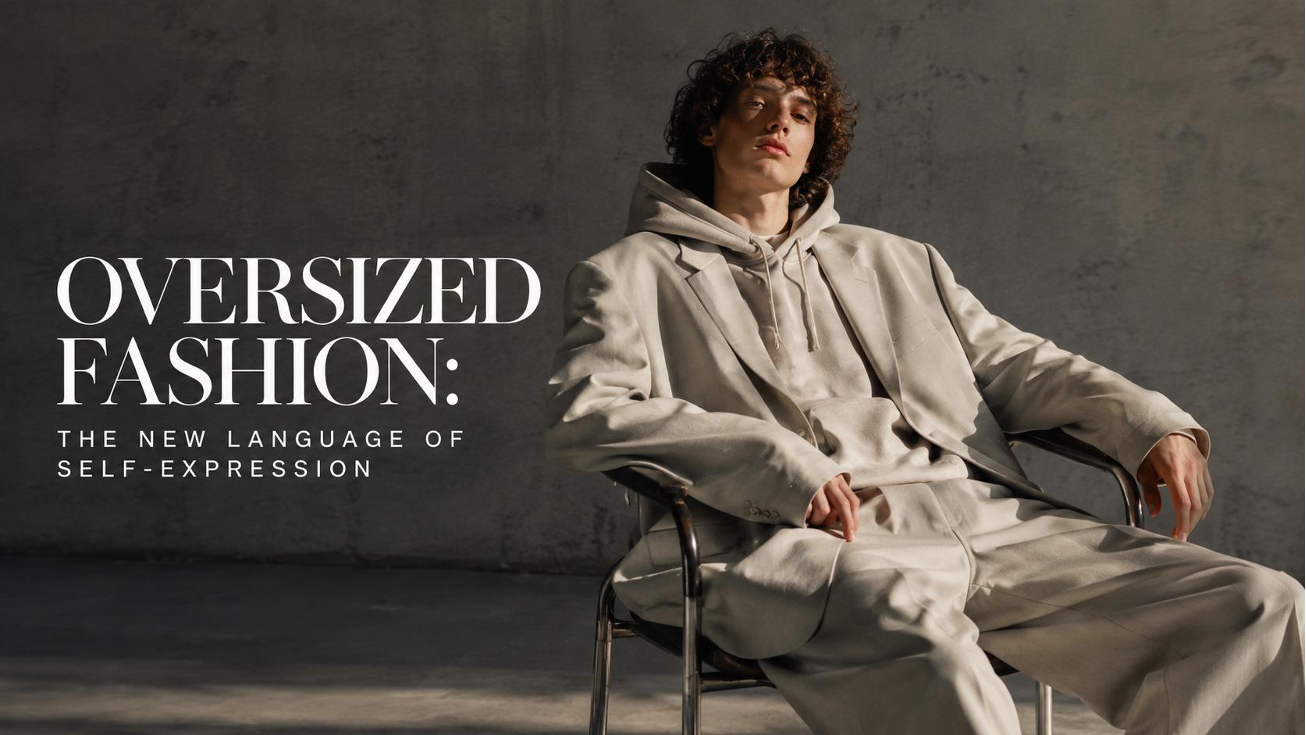
Few contemporary silhouettes illustrate that cultural change more clearly than oversized fashion. People don’t embrace oversized fashion simply because it feels comfortable or changes proportions. They embrace it because it communicates something more. Oversized clothing has evolved beyond a passing trend because it conveys more than the garments themselves. It suggests confidence without demanding attention, creativity without obvious performance and individuality without relying on convention. People now use the silhouette as part of a wider visual language through which people express identity before saying a single word.
Oversized fashion did not simply become fashionable.
It became meaningful.
When Fashion Stopped Asking For Permission
Oversized silhouettes never belonged to a single movement. Different creative communities arrived at them for different reasons, yet many reached remarkably similar conclusions about what those proportions could communicate.
Skaters valued freedom of movement, but they also rejected polished expectations around how clothing should fit or behave. Independent musicians recognised that silhouette could become part of a recognisable stage identity. Artists often treated clothing as another extension of their creative practice, while designers increasingly questioned traditional ideas about proportion, structure and convention. Although those communities differed in countless ways, they shared an understanding that clothing could communicate values as effectively as words.
Oversized fashion gradually became associated with creative independence rather than simply larger garments. Choosing a different silhouette suggested a willingness to step outside familiar expectations, and the proportions themselves became part of the message. Creative communities no longer waited for approval from traditional fashion institutions before defining their own visual identities. Independent scenes developed their own aesthetics, references and understanding of what felt authentic. Oversized silhouettes became one expression of that broader confidence because they resisted rigid ideas about how clothing should look while remaining remarkably adaptable across different creative disciplines.
What makes that shift particularly interesting is that it happened across communities that rarely shared the same creative goals. Musicians, designers, illustrators and photographers all developed distinct visual identities, yet many gravitated towards similar proportions because oversized clothing offered freedom rather than prescription. The silhouette refused to dictate a single interpretation. Instead, it adapted to diverse creative voices, allowing each community to express its identity in its own way while still belonging to a broader cultural conversation.
British fashion has long embraced that spirit of experimentation. Rather than treating fashion as something fixed, many designers and creative communities have approached clothing as an evolving conversation between culture, art and identity. Oversized silhouettes naturally found a place within that conversation because they created space for interpretation rather than prescription.
Fashion was no longer simply reflecting culture.
It had become one of culture’s own languages.
Clothing As A Creative Language
Once clothing begins to communicate identity, designers naturally start thinking differently about the role garments play in the creative process. A garment no longer exists solely as something to wear. It becomes another medium through which designers express ideas, values and personality.
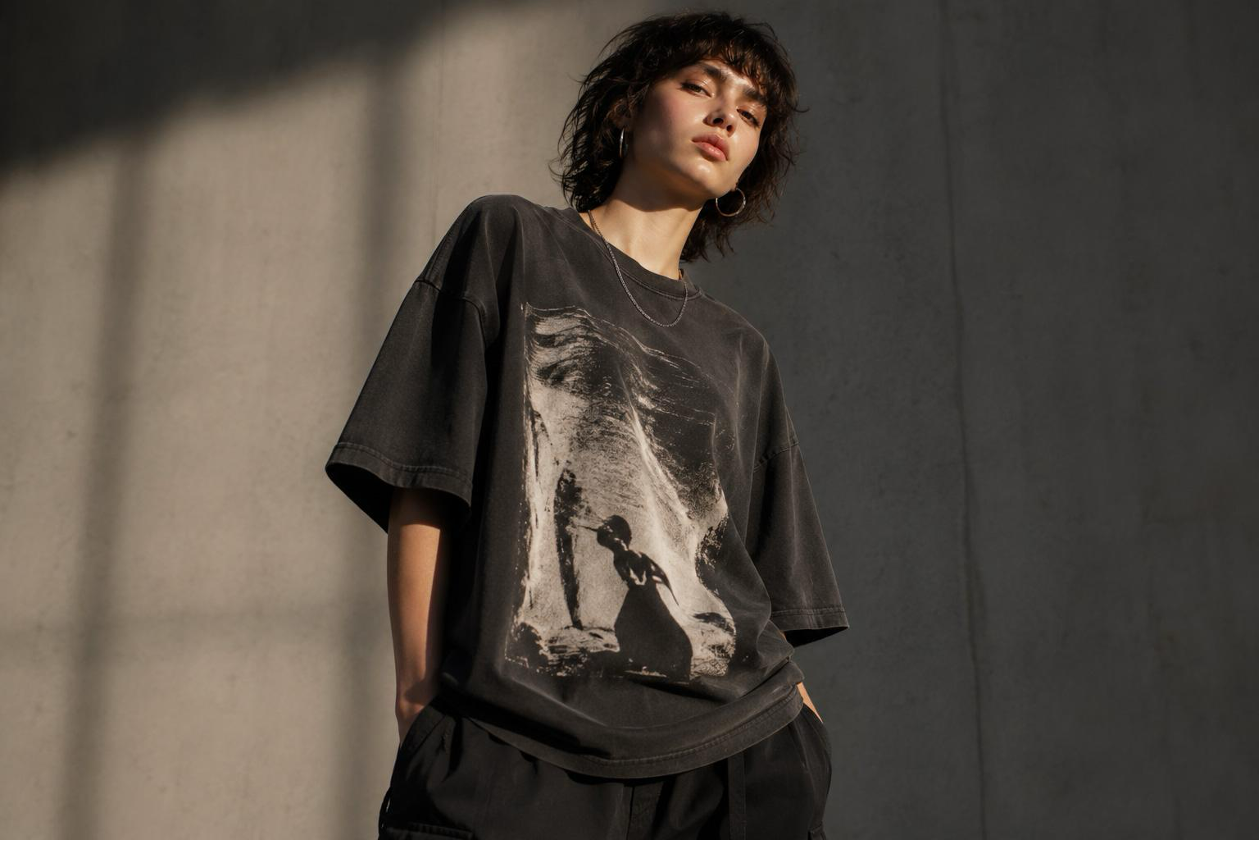
Fashion has communicated ideas for decades, although few British designers demonstrated that relationship more clearly than Katharine Hamnett. Her oversized slogan T-shirts became iconic because they showed that clothing could carry political, cultural and personal messages into everyday life. The oversized silhouette attracted attention, but the message transformed the garment into something much more significant than fashion alone.
Contemporary designers continue to build on that tradition, although today’s visual storytelling often extends beyond slogans. Proportion, silhouette, graphics and composition now work together to communicate identity in quieter, more personal ways. Once designers begin thinking beyond the silhouette itself, they naturally start asking a different question: not simply how a garment looks, but what it allows them to say.
“Oversized silhouettes have become a creative canvas rather than simply a fashion trend. The most memorable pieces are not defined by their size alone but by the stories, graphics and ideas that give designers room to express themselves. The silhouette might catch someone’s attention, but it’s the visual storytelling that gives them something to connect with.” – Matt Brussels, founder of The T-Shirt Bakery.
That perspective helps explain why oversized fashion continues to resonate across so many creative communities. People may notice the silhouette first, but they remember what it communicates. The proportions create space for designers, artists and independent labels to express ideas that extend beyond aesthetics, allowing clothing to serve as visual storytelling rather than mere decoration. Designers who approach fashion in that way rarely begin with the question, “What is trending?” They begin by asking what they want their work to communicate. The silhouette becomes one creative decision within a much larger process of shaping identity through design, ensuring that clothing reflects a point of view rather than simply following a familiar aesthetic.
Designing Beyond The Silhouette
Once oversized fashion became a language of identity rather than simply a style choice, designers naturally began to approach the creative process differently. The silhouette remained important, but it no longer carried the entire message. Instead, it created space for ideas, narratives and visual composition to take on greater significance.
That shift encouraged designers to think more holistically about the relationship between form and communication. Graphics, typography, illustration, colour and placement all began contributing to the story a garment could tell. Oversized proportions gave those creative elements room to breathe, allowing garments to communicate without overwhelming the wearer.
The result extends beyond aesthetics alone. A carefully considered oversized piece often feels deliberate rather than dramatic. It invites interpretation rather than demanding attention, giving people the freedom to express their personality through subtle visual choices rather than obvious statements. The silhouette supports the message instead of becoming the message.
That change has also influenced the creative process itself. Rather than treating silhouette as the final design decision, many designers now treat it as the starting point for a broader conversation about composition. They consider how typography interacts with negative space, how illustrations sit within the garment’s proportions, and how every visual element contributes to a coherent creative identity. Oversized fashion succeeds because it encourages that wider way of thinking, allowing every design decision to reinforce the story rather than compete for attention.
That approach explains why oversized fashion has remained relevant across so many different creative disciplines. Designers can adapt the same silhouette to express entirely different ideas because the garment functions as a flexible creative framework rather than a fixed visual identity. The proportions create possibility, while creative direction determines what that possibility communicates.
Why Independent British Clothing Brands Embraced The Shift
Independent labels have played an important role in that evolution because they have often treated clothing as a creative conversation rather than a finished product. Free from the expectations that sometimes shape larger fashion houses, many emerging designers have embraced oversized silhouettes as an opportunity to establish distinctive visual identities.
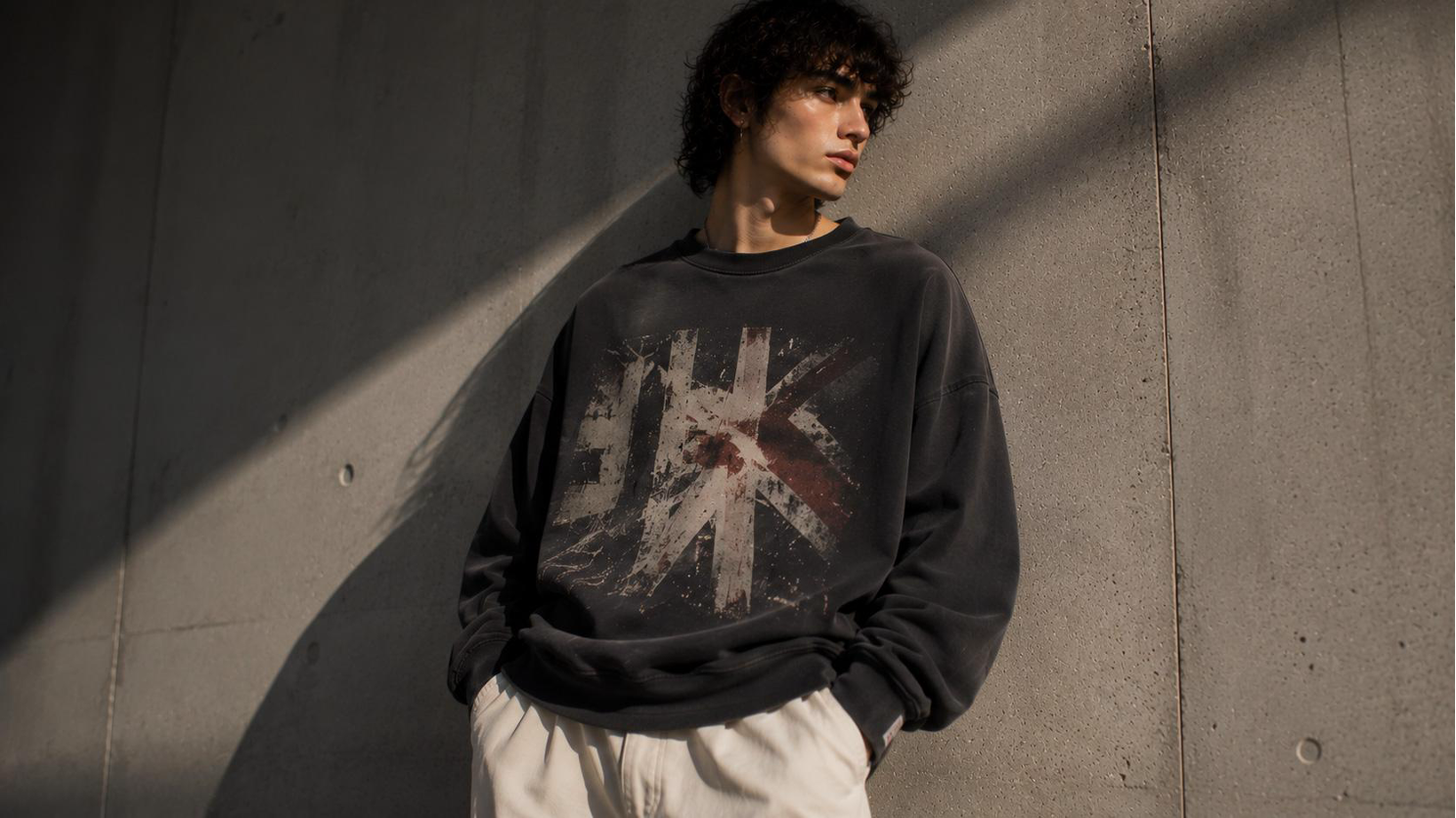
The appeal extends beyond proportion alone. Independent brands often value authenticity, experimentation and creative freedom above strict adherence to seasonal trends. Oversized garments complement that philosophy by encouraging designers to explore composition, graphics, and storytelling without relying solely on conventional tailoring or familiar silhouettes.
Many of today’s independent British clothing brands have adopted oversized silhouettes as part of that broader creative language. Rather than treating proportion as a passing trend, they use it to frame illustrations, typography and visual concepts that express a recognisable identity. The silhouette provides the canvas, while creative direction gives the garment its meaning.
That creative freedom helps explain why independent labels often leave such a distinctive impression. Larger fashion houses may need to balance heritage, commercial expectations and global audiences, but smaller labels frequently build collections around a single creative vision. Every decision, from silhouette to graphic language, supports that vision. Oversized fashion naturally complements that approach because it gives designers the freedom to communicate personality without relying on familiar formulas or obvious references.
That distinction matters because memorable fashion rarely succeeds through novelty alone. People respond to authenticity. They recognise when a collection reflects a genuine creative perspective rather than an attempt to imitate what already exists. Oversized fashion continues to resonate because it allows designers to communicate that perspective with confidence while leaving room for individual interpretation.
What We Say Without Words
Fashion constantly evolves, but its most enduring role remains remarkably consistent. People continue to use clothing to communicate who they are, what they value and where they feel they belong. Oversized fashion has become one of the clearest contemporary expressions of that instinct because it allows identity to emerge through proportion, composition and visual storytelling rather than through trends alone.
That helps explain why the silhouette has outlasted repeated predictions of its decline. Creative communities continue to reinterpret oversized fashion because they recognise its value as a language rather than simply a look. Every new collection adds another chapter to an ongoing conversation about identity, creativity and self-expression, proving that the meaning behind the silhouette continues to evolve even when its proportions remain familiar.
Perhaps that is why oversized fashion continues to feel so relevant. It never asks every wearer to communicate the same thing. Instead, it offers a flexible visual language that different people, communities and designers can interpret in their own way. Few contemporary styles have shown the same ability to balance individuality with shared cultural understanding.
The lasting significance of oversized fashion therefore lies beyond its proportions. Designers, artists and wearers have transformed it into a creative vocabulary that communicates ideas before conversations begin. Long after individual trends fade, that desire to express identity through clothing will remain one of fashion’s defining characteristics.